DbcultAccessing Vault...
Cult Review
Senior Film Conservator
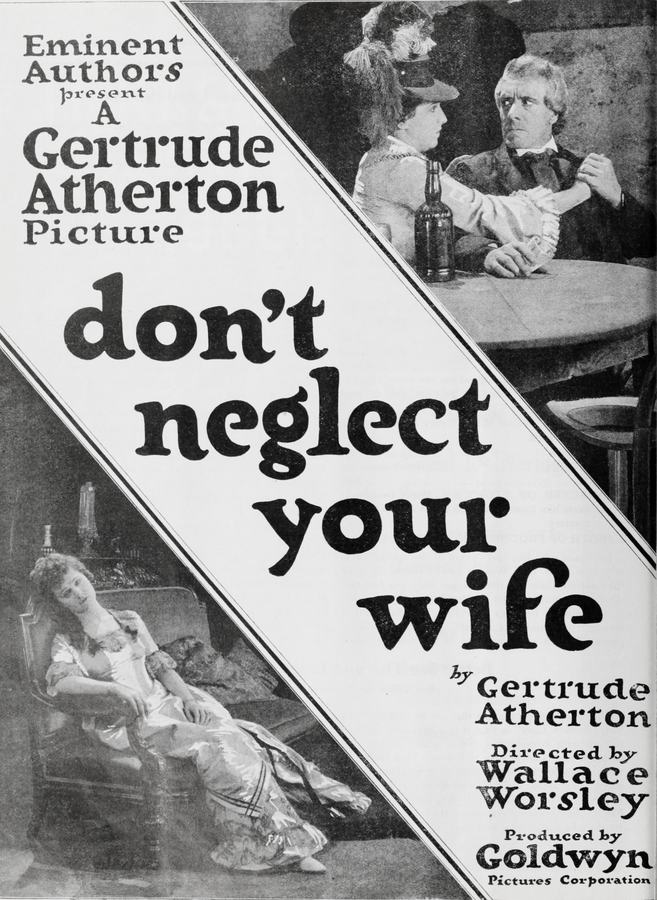
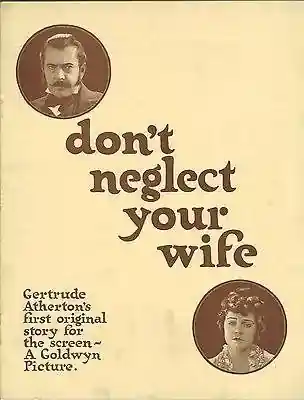
Don’t Neglect Your Wife (1928), a silent film directed by Gertrude Atherton and Louis Sherwin, is a study in emotional disintegration that transcends the conventions of its era. Set against the opulent yet stifling backdrop of 1920s San Francisco, the film dissects the psychological fissures in a marriage through the lens of a woman whose emotional starvation leads her to a morally precarious entanglement. The narrative, though rooted in classic Hollywood melodrama, avoids the didacticism of its contemporaries by emphasizing psychological realism over moralizing. This is not a story of sin and punishment but a meditation on how societal expectations warp human connection.
The film opens with a masterstroke of visual storytelling: the wife (Josephine Crowell) stands at a grand window, her figure dwarfed by the architectural grandeur of her husband’s (R.D. MacLean) medical practice. The interplay of light and shadow here is deliberate—a motif that recurs as the film traces her journey from literal and metaphorical darkness into a fractured pursuit of selfhood. Her attraction to the newspaper reporter (Richard Tucker) is not rendered as mere infidelity but as a yearning for intellectual companionship, a hunger the husband’s clinical pragmatism cannot satisfy. Tucker’s performance is a masterclass in understatement; his character’s every glance carries the weight of a man who senses he is both a savior and a transgressor.
The film’s most harrowing sequence occurs in the third act, when the husband’s vengeance takes a grotesque turn. In a scene reminiscent of The Torture of Silence, he forces the journalist into exile, not through violence but by weaponizing social disgrace. Tucker’s physical deterioration in New York—emphasized through stark, high-contrast cinematography—mirrors the wife’s own unraveling. The decision to frame his descent into alcoholism in a single, unbroken shot of him staggering through New York’s tenement shadows is a technical and emotional triumph, evoking the same visceral despair as Life’s Twist.
Crowell’s performance is the emotional linchpin of the film. Her portrayal of the wife’s guilt-ridden quest to find the exiled lover is neither histrionic nor sanctified. In one of the film’s most striking moments, she walks through a decaying neighborhood at night, her white gown a beacon against the grime—a visual callback to the purity she seeks to reclaim. This sequence, shot in a 1:33 aspect ratio that heightens the claustrophobia, is a direct homage to The Curse of Eve, though Atherton infuses it with a feminist urgency absent in her predecessors.
Technically, the film is a marvel of its time. The use of chiaroscuro in the husband’s scenes—a constant reminder of his moral and emotional opacity—contrasts sharply with the warmer tones used in the wife and journalist’s interactions. The score, though modest, employs a recurring leitmotif for the reporter, a melancholic violin line that becomes a ghostly presence even in his absence. These elements coalesce into a film that feels less like a product of the 1920s and more like a proto-existentialist work, anticipating the themes that would define 1940s film noir.
What elevates Don’t Neglect Your Wife beyond a cautionary tale is its refusal to vilify any single character. The husband is not a cartoonish villain but a man whose love has calcified into control; the wife is not a victim but a woman complicit in her own emotional neglect. This complexity is most evident in the final act, where the wife’s reunion with the reporter is not a romantic resolution but a tragic epiphany. Their dialogue, delivered in a near-wordless sequence of close-ups, speaks to the futility of their connection—a poignant echo of the wordless communication explored in Evidence.
The film’s legacy is complicated by its era’s gender politics. While modern audiences may bristle at the husband’s manipulation of the justice system to expel the reporter, the script’s insistence on portraying the wife as a flawed yet sympathetic figure is radical for 1928. This duality—its adherence to and defiance of period norms—makes it a fascinating artifact for film historians. It also invites comparison to Brændte vinger, though Atherton’s work is more grounded in domestic realism and less inclined toward gothic exaggeration.
Visually, the film’s San Francisco locations are rendered with a painterly precision that underscores the tension between the city’s progressive reputation and its repressive social codes. The contrast between the couple’s elegant home and the decaying New York streets is not merely aesthetic but thematic: the film suggests that emotional neglect can corrode even the most outwardly stable lives. This visual metaphor is best exemplified in the scene where the wife, returning home after finding the reporter, passes a billboard advertising a perfume with the tagline “Perfection is a fragrance.” The camera lingers on the billboard until it becomes a symbol of the society that demands perfection while tolerating hypocrisy.
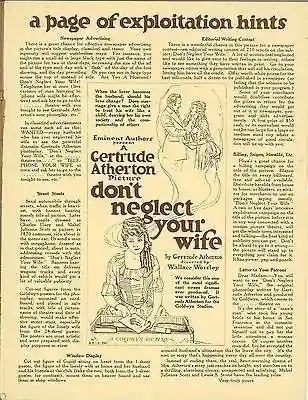
Performances are uniformly strong, though Lewis Stone’s brief role as a New York bartender adds a welcome layer of gravitas. His interactions with the reporter are sparsely dialogued but loaded with subtext, a testament to the film’s reliance on nonverbal storytelling. Meanwhile, the supporting cast, including Norma Gordon as the wife’s confidante, delivers nuanced performances that enrich the narrative without overshadowing the central trio.
For contemporary viewers, the film’s pacing may feel deliberate, even leisurely, but this is a strength rather than a weakness. The slow burn allows the emotional stakes to simmer, creating a tension that feels earned. This approach, akin to the measured pacing of The Four Feathers, rewards patience with a narrative that feels both intimate and epic in scope.
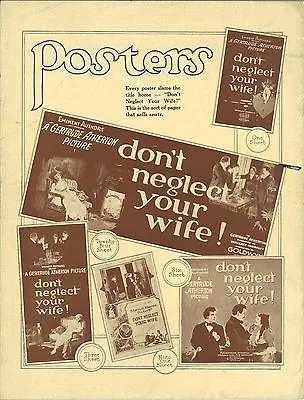
In conclusion, Don’t Neglect Your Wife is a masterclass in silent film storytelling, blending psychological depth with technical innovation. It is a film that asks uncomfortable questions about love, duty, and the cost of societal expectations, offering no easy answers but leaving an indelible mark. For those seeking to explore the emotional landscapes of pre-code cinema, this film is an essential journey—one that resonates with the same haunting beauty as Die schwarze Pantherin, though its themes are far more domestic in scale.
Final Verdict: A haunting exploration of marital decay and emotional redemption, Don’t Neglect Your Wife remains a testament to the silent film era’s capacity for psychological nuance and visual poetry.
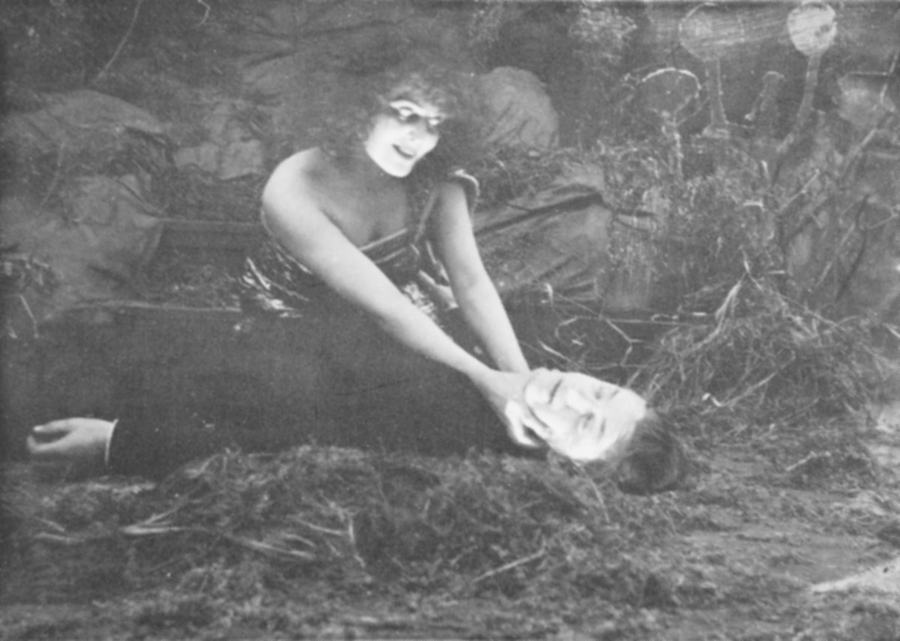
IMDb 5.6
1912
Community
Log in to comment.