DbcultAccessing Vault...
Cult Review
Senior Film Conservator
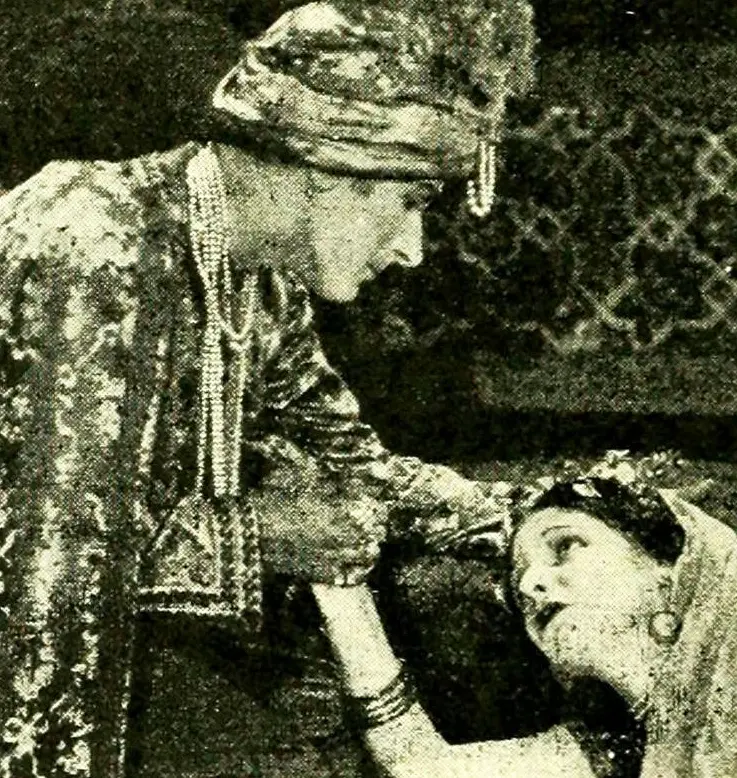
Is “Four Indian Love Lyrics” worth watching today? Short answer: yes, but with significant caveats. This early cinematic curiosity is less a conventional film and more a fascinating historical document, a window into the dramatic sensibilities and technical limitations of its era. It is unequivocally for film historians, students of early cinema, and those with a deep appreciation for the foundational elements of storytelling on screen. Conversely, it is decidedly not for viewers seeking modern pacing, intricate plot twists, or seamless production values.
Stepping into the world of “Four Indian Love Lyrics” means accepting a journey through time, where the cinematic language we now take for granted was still in its infancy. It demands patience and a willingness to interpret the broad strokes of emotion conveyed through a performance style that feels alien to contemporary audiences. Yet, within its antiquated charm lies a certain raw power, a testament to the enduring human desire to express love and sorrow, even when the tools were rudimentary.
This film works because of its audacious commitment to pure emotional expression, leveraging the nascent power of the close-up and the theatricality of its lead performers to convey grand romantic themes.
This film fails because its pacing is glacial by modern standards, its narrative coherence is secondary to its lyrical intent, and its cultural representations are undeniably dated and problematic.
You should watch it if you are a dedicated film archeologist, keen to observe the roots of cinematic romance and appreciate the silent era's unique performance artistry.
“Four Indian Love Lyrics” arrives from an era where cinema was still finding its voice, often borrowing heavily from stage conventions and operatic melodrama. The title itself suggests a series of dramatic tableaux, each unfolding like a sung verse, rather than a cohesive, unfolding narrative. This approach, while potentially jarring for contemporary viewers, was common for short films of the period, which frequently prioritized emotional impact over complex plotting.
The film’s likely setting in an idealized, exoticized 'India' speaks volumes about the cultural lens through which early Western filmmakers viewed distant lands. This was less about authentic representation and more about creating a backdrop for heightened emotion and dramatic spectacle. It’s a reflection of the popular orientalism of the time, a trope also seen in various forms across other early works, though perhaps less overtly than in a film titled “Indian Love Lyrics.” This context is crucial for understanding its artistic intentions and its limitations.
We are witnessing a nascent art form grappling with how to translate internal states onto a two-dimensional screen. The focus is not on what characters *do*, but what they *feel*. This emphasis on feeling, communicated through highly stylized gestures and facial expressions, is the film's primary mode of engagement. It’s an ambitious undertaking, even if the execution feels quaint to our modern eyes.
Peggy Shaw and Wheeler Dryden, the film's central figures, deliver performances that are undeniably products of their time. Their acting style, characterized by broad gestures and exaggerated facial expressions, is a direct inheritance from the stage, adapted for the silent screen where every emotion had to be writ large to be understood without dialogue. This isn't subtle Method acting; it's pure, unadulterated theatricality.
Shaw, in particular, captivates with a compelling earnestness. One can imagine her portrayal of a lovelorn figure, perhaps caught in a moment of despair, her hands clasped tightly against her chest, eyes cast upwards in a silent plea. This raw, almost operatic display of emotion, while potentially over-the-top by today's standards, was the very language of silent film melodrama. Her ability to convey deep sorrow or passionate longing through these physical cues is a testament to her craft within the conventions of the era.
Dryden complements this with a more restrained, yet equally intense, presence. His gaze, often directed off-camera or towards Shaw, would have been crucial. Picture a scene where he stands, seemingly frozen, but his eyes convey a world of unspoken devotion or simmering jealousy. This interplay of their distinct styles, one more overtly expressive, the other more internal, likely created a dynamic tension that was central to the film's emotional landscape. Their chemistry, though expressed through a different grammar, is the anchor for these lyrical segments.
Their performances remind us of the sheer effort required to communicate complex human emotions before synchronized sound. It’s a form of physical poetry, where the body and face become the primary instruments. Comparing their work to the more naturalistic performances in later cinema, such as the nuanced expressions of actors in A Gentleman of Leisure, highlights the rapid evolution of screen acting in just a few years.
The direction in “Four Indian Love Lyrics,” while likely constrained by the technology and conventions of its time, shows an ambition to transcend mere documentation. The director, whose name isn't readily available, would have faced the challenge of translating abstract 'lyrics' into compelling visual sequences. This likely involved a heavy reliance on tableau shots, where characters are arranged in aesthetically pleasing or dramatically resonant poses, much like living paintings.
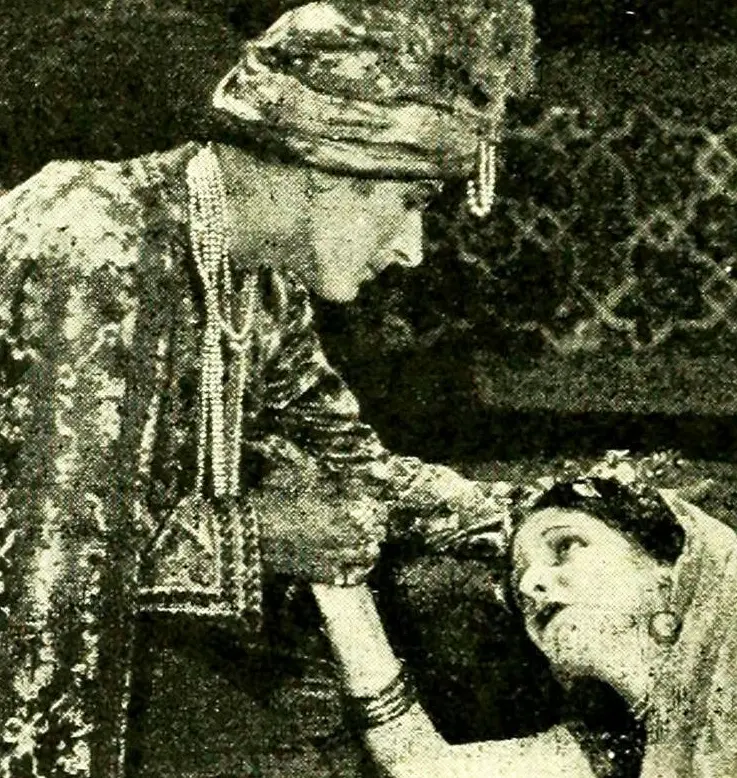
However, one can also infer moments of nascent cinematic innovation. The use of close-ups, for instance, would have been pivotal in conveying the intimate emotions central to the 'love lyrics'. Imagine a sequence where the camera slowly pushes in on Shaw’s face, isolating her tear-filled eyes or a trembling lip, amplifying the emotional impact far beyond what a wider shot could achieve. This technique, though rudimentary, laid the groundwork for the psychological depth we expect from cinema today.
The transitions between the 'lyrics' themselves would have been crucial for maintaining flow. Perhaps simple fades or dissolves were used to signify the passage of time or a shift in emotional focus, creating a dreamlike, almost ethereal quality. This visual fluidity, even if basic, would have been essential in linking the disparate emotional fragments into a cohesive, lyrical whole. The set design, while probably sparse, would have aimed for evocative rather than realistic, using minimal props to suggest a grander, more romanticized environment.
The pacing of “Four Indian Love Lyrics” is almost certainly deliberate and slow, a stark contrast to the rapid-fire editing and constant narrative propulsion of contemporary films. Each 'lyric' likely unfolds with a measured cadence, allowing the audience to fully absorb the emotional tableau presented before moving to the next. This meditative pace, while demanding, forces a deeper engagement with the visual information and the performers’ expressions.
The dominant tone is one of romantic melancholy, tinged with yearning and perhaps a touch of tragic grandeur. The 'love lyrics' imply a focus on the profound, often bittersweet, aspects of love—unrequited passion, separation, enduring devotion, and heartbreak. There's a certain theatrical earnestness to it all, a complete commitment to the heightened emotions of the subject matter. It doesn't shy away from grand sentimentality; it embraces it.
The thematic resonance, despite the film's age and potentially problematic cultural framing, remains surprisingly potent. The universal language of love and loss, of desire and despair, transcends the period-specific presentation. While the 'Indian' setting is a superficial overlay, the core human emotions explored are timeless. It's a testament to the fact that even in its earliest forms, cinema sought to grapple with the most fundamental aspects of the human condition. It works. But it’s flawed.
For the casual moviegoer accustomed to modern narrative conventions, “Four Indian Love Lyrics” will likely feel antiquated, slow, and perhaps even a bit comical in its dramatic earnestness. It’s not a film to pop on for a relaxed evening of entertainment.
However, for those with a genuine interest in film history, the evolution of acting, or the unique artistic expressions of the silent era, it is absolutely worth seeking out. It offers invaluable insight into how early filmmakers attempted to tackle complex emotional themes with limited tools. It’s a piece of the puzzle, revealing the foundational steps that led to the sophisticated cinematic language we enjoy today.
Think of it less as a finished masterpiece and more as an archaeological dig. You’re uncovering fragments, learning about the techniques and sensibilities of a bygone era. It’s a masterclass in how early cinema communicated without words, relying solely on visual storytelling and the raw power of performance. It’s a challenging watch, but a rewarding one for the right audience.
There's a surprising observation to be made about films like “Four Indian Love Lyrics”: their very imperfections and anachronisms become part of their charm. Unlike the polished, hyper-realistic narratives we’re accustomed to, these early works demand an active, imaginative participation from the viewer. You don't just watch; you interpret, you fill in the gaps, you marvel at the audacity of their creators.
I firmly believe that dismissing such films as merely 'old' or 'boring' is a disservice not only to cinematic history but to our own capacity for appreciation. There’s a raw, almost primal energy in the performances of Shaw and Dryden that transcends their theatricality. They are reaching, striving, trying to invent a new way of telling stories, and that effort itself is profoundly moving. It reminds me of the foundational efforts seen in other early shorts like Cupid's Brand or even the experimental nature of El apóstol, where the medium itself was the message.
It’s a peculiar form of beauty, one found in the struggle to articulate. This film, far from being a mere relic, is an eloquent, if understated, declaration of cinema's potential, whispered from the dawn of its existence. It’s a powerful reminder that sometimes, the most resonant stories are told with the simplest, most earnest tools.
“Four Indian Love Lyrics” is not a film for everyone, nor does it pretend to be. It is a niche experience, a journey back to the very origins of cinematic romance, presented through a lens that is both historically significant and undeniably challenging for modern audiences. Its value lies not in its ability to entertain by contemporary standards, but in its capacity to educate and illuminate the foundational efforts of an art form still in its infancy.
Peggy Shaw and Wheeler Dryden, despite the limitations of their era's acting conventions, offer performances that are earnest and indicative of the period's dramatic aspirations. While the pacing is slow and the cultural representations are problematic, the film's commitment to pure emotional expression through visual storytelling is commendable. It is an artifact that demands context and patience, but offers a unique, if demanding, insight into the early exploration of love on screen. For the right viewer, it’s an essential, albeit flawed, piece of cinematic heritage. It deserves to be seen, studied, and understood for what it represents.
IMDb 6.3
1935
Community
Log in to comment.