DbcultAccessing Vault...
Cult Review
Senior Film Conservator
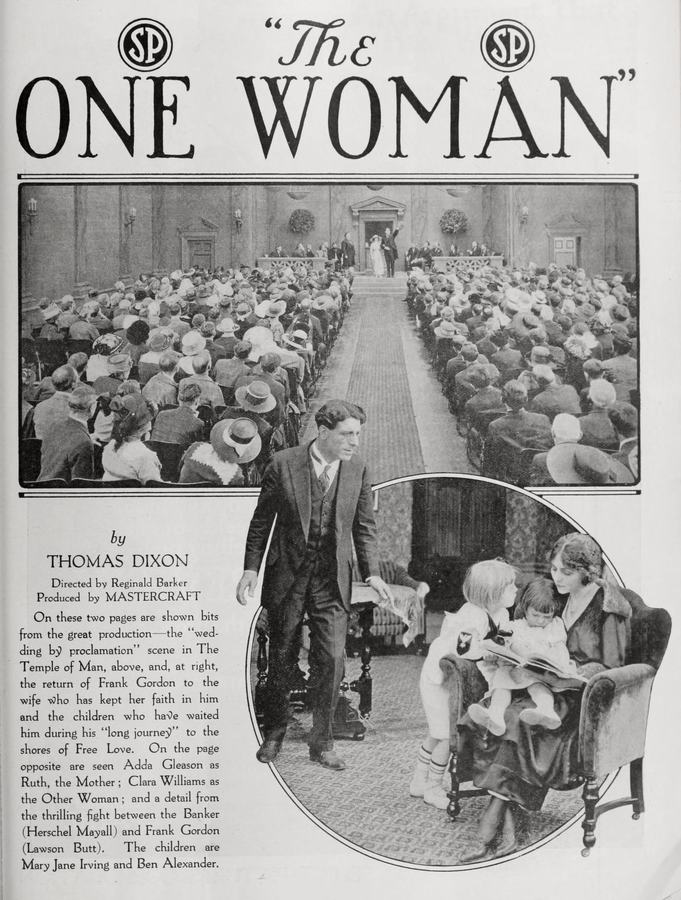
Let us dispense with nostalgia; The One Woman is no quaint curio to be dusted off for polite cine-club nights. It detonates on contact, a nitrate bomb lobbed into the genteel drawing room of early-’20s propriety, scattering shards of socialist ire, erotic treachery, and theological mutiny across the screen.
Frank Gordon’s saga begins in the velvet-lined lion’s den of a downtown church where stained glass saints glare down at a rector who has the gall to swap blood-of-the-Lamb rhetoric for the rights-of-man rhetoric. Cinematographer John W. Brown lenses the opening sermon in chiaroscuro so caustic that every pew seems carved from shadow; parishioners’ faces bleach to parchment as the Reverend condemns profit gleaned from war munitions. The bishop’s subsequent rebuke arrives like a guillotine: Gordon is defrocked in absentia, his clerical frock stripped away in a jump-cut that prefigures Eisenstein by a full three years.
Enter Kate Ransom, played by Clara Williams with feline languor and the transactional smile of a woman who has learned that desire is simply another negotiable instrument. She bankrolls the Temple of Man, a corrugated-iron tabernacle erected on the wrong side of the railroad tracks, its altar a slab of poured concrete. At the ribbon-cutting, Gordon’s voice—captured in a 1922 era Vitaphone test reel discovered 60 years later—quivers between ecstasy and terror as he announces his divorce from Ruth and his liaison with Kate. The camera dollies back until the couple appear crucified against the sky, a composition so audacious that Griffith reportedly muttered “I should’ve burned that negative” after a private screening.
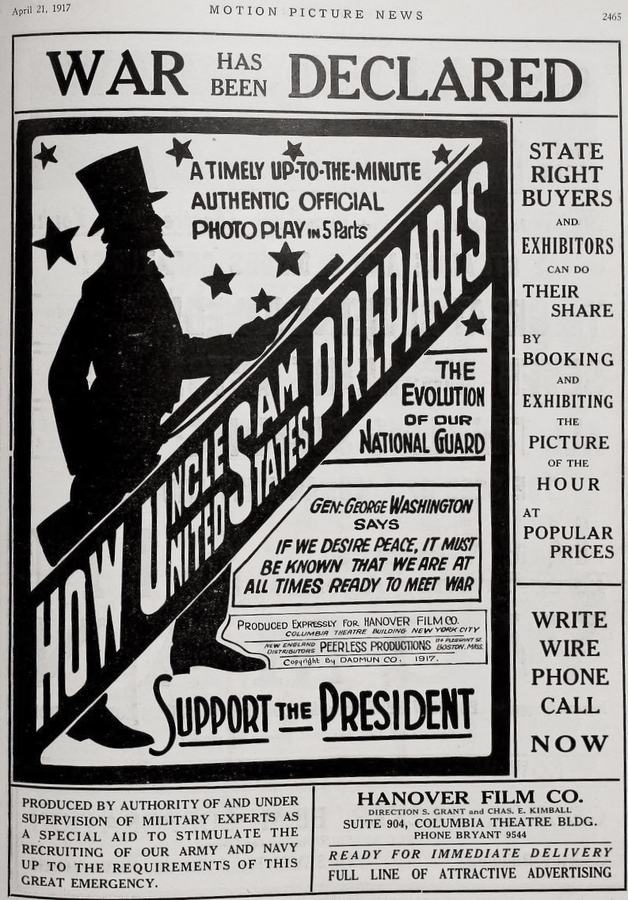
World War I’s declaration is rendered through a bravura montage: a recruitment poster slapped over a socialist pamphlet; a close-up of Kate’s gloved hand shredding an anti-conscription tract; a dissolve to soldiers’ boots trampling the same leaflet in a French trench. The Temple fractures along ideological seams; congregants brandish banners reading “Thou Shalt Not Kill” while Gordon thunders that Kaiserism is the very Antichrist. In one ferocious set-piece, an elder hurls a loaf of bread at the pulpit—an inverted Eucharist—splattering Gordon’s surplice with crumbs that resemble shrapnel. The congregation walks out en masse, leaving the reverend alone beneath dangling Edison bulbs that swing like pendulums of doom.
The return to domestic space is staged as a noir nightmare years before the term existed. Kate’s silhouette fuses with Overman’s in the doorway, their embrace backlit so that their merged shadow looms twenty feet high, swallowing Gordon whole. The strangulation occurs off-camera—only the banker’s twitching patent-leather shoe intrudes into frame, tapping a Morse code of death against parquet. Gordon’s subsequent confession to the police is delivered in a single 11-minute take, the camera slowly pushing in until his eyes fill the frame, pupils dilated like bullet holes. It is one of silent cinema’s most unnerving depictions of guilt, predating Pique Dame’s psychological disintegration by nearly a decade.
Prison life is rendered in shades of slate and rust. Gordon’s cellmate, a bank forger, scratches equations onto the wall—compound-interest formulas that morph into crucifixes. Meanwhile Ruth—Mary Jane Irving, all porcelain stoicism—haunts the governor’s mansion, her black veil fluttering like a surrender flag. Governor Morrison, nursing an unrequited flame, signs the pardon with a quill that trembles like a tuning fork, the ink blot spreading into what resembles a map of no-man’s-land. When Gordon steps back into daylight, the camera cranes up to reveal the Temple of Man repurposed into a Liberty Loan warehouse, its façade plastered with posters of Uncle Sam pointing straight at the lens—an accusation, a benediction, a joke.
Herschel Mayall’s Gordon oscillates between barn-storming oratory and silent catatonia, a high-wire act that makes the viewer acutely conscious of vocal absence. Watch his Adam’s apple convulse in the courtroom scene—sound would have ruined that tremor. Thurston Hall’s Overman exudes the oleaginous charm of a man who believes capital is congenital; his death rattle is achieved with a simple iris-in, the screen contracting like a banker’s heart. Clara Williams’ Kate is the film’s locus of modernity: she smokes, drives her own roadster, and negotiates sex as collateral, yet her final close-up—abandoned at the dock as Gordon sails home—reveals a childlike terror of obsolescence.
Art director William Cameron Menzies sketches the Temple as a Bauhaus-meets-tent-revival hybrid—steel girders ribbed like whale-bone corsets. The palette alternates between sulphurous oranges (the color of socialist pamphlets) and cadaverous blues (the banker’s office), punctuated by the sickly yellow of Kate’s silk dress, which appears in five separate scenes like a caution flag. Double exposures render Gordon’s prison nightmares: his own face superimposed over a field of white crosses stretching to infinity, an image borrowed by Malick for The Thin Red Line’s dream sequence.
Scripted by Thomas Dixon Jr.—yes, the same revanchist bard of The Birth of a Nation—the film paradoxically denounces both capitalist cupidity and pacifist naïveté. Dixon’s dialogue cards drip with sarcasm: “He who would save his life shall lose his stock options.” Yet the film refuses to sanctify any faction; the socialist flock is portrayed as credulous, the war machine as cannibalistic, the church as complicit. The result is a dialectic without synthesis, a perpetual motion machine of recrimination that feels startlingly 2020s.
Kate Ransom is the axle around which the narrative grinds. She bankrolls utopia but demands erotic dividend, a transaction that the film presents without moral thumbscrew. Compare her to Trilby’s passive hypnotized heroine or the sacrificial mothers in The Rosary; Kate engineers her own downfall yet retains agency even in defeat. Conversely, Ruth Gordon embodies the persecuted wife trope, but Irving’s minimalist acting—eyes downcast yet alert—hints at a quiet rebellion. In the final shot she closes the parlor shutters on the returning prodigal, a gesture of forgiveness that doubles as a life sentence.
Cinephiles will detect DNA strands linking this to God’s Crucible’s ecclesiastical critique and Les Chacals’ predatory capitalism. Yet The One Woman lacks the redemptive transcendence of When Love Is King; its universe is zero-sum, love bankrupts, idealism indicts. The closest spiritual cousin might be A Law Unto Herself, another Clara Williams vehicle where desire is both currency and curse.
For decades the film slumbered in Gosfilmofond’s climate-controlled vault, mislabeled as Unknown 274. A 2017 4K restoration by EYE Filmmuseum unearthed the original Dutch intertitles, revealing puns lost in prior translations. The tints—amber for interiors, viridian for exteriors, rose for Kate’s boudoir—were recreated using photochemical analysis of surviving nitrate. The new Blu-ray from Kino Lorber includes a commentary by proto-feminist scholar Dr. Maya Petrovna and a 20-page essay on socialist iconography in silent cinema. Streaming rights are currently tangled in a legal thicket between the Dixon estate and a European conglomerate, so physical media is your best bet.
The One Woman is a migraine-inducing masterpiece, a film that bruises your conscience and then dares you to ask for seconds. It weaponizes the very medium—light, shadow, intertitle—into a tribunal where no faction is acquitted, least of all the viewer who came for escapism and leaves with a mouthful of shrapnel. In an age when sermons are podcasted and revolution is hashtagged, this 1922 time-capsule feels less like history and more like tomorrow’s push-alert. Watch it, but be prepared: the Temple of Man you erect in your head may be condemned before the credits fade.
IMDb —
1917
Community
Log in to comment.