DbcultAccessing Vault...
Cult Review
Senior Film Conservator
Right off the bat, let's be clear: Fra mørke til lys isn't really for everyone. If you’re into Danish history, especially the nitty-gritty of early 20th-century social politics, or just a film buff curious about propaganda cinema, then you absolutely should give it a look. But if you’re hoping for a gripping silent drama with lots of twists and turns, you’ll probably find yourself checking your watch. It’s a very specific kind of movie, one made with a clear goal in mind. 🎬
This film, from 1929, is basically a cinematic pamphlet. It tracks Copenhagen's journey from the 'darkness' of the 1870s — a time of tough living under Jacob Brønnum Estrup — right up to the 'light' of social welfare, which the Social Democrats were pushing hard for. They even used it in an election campaign, which, hey, it worked. They won big that year. You can totally see why.
The whole thing is built around this love story that stretches across generations. It’s meant to be the engine for all this political change, showing how personal lives are impacted by big societal shifts. The romance itself, between the various incarnations of the main couple, feels a little, well, thin. Like, it's there to connect the dots, but you don't really get swept away by it, you know? It’s more of a narrative device than a deep emotional core.
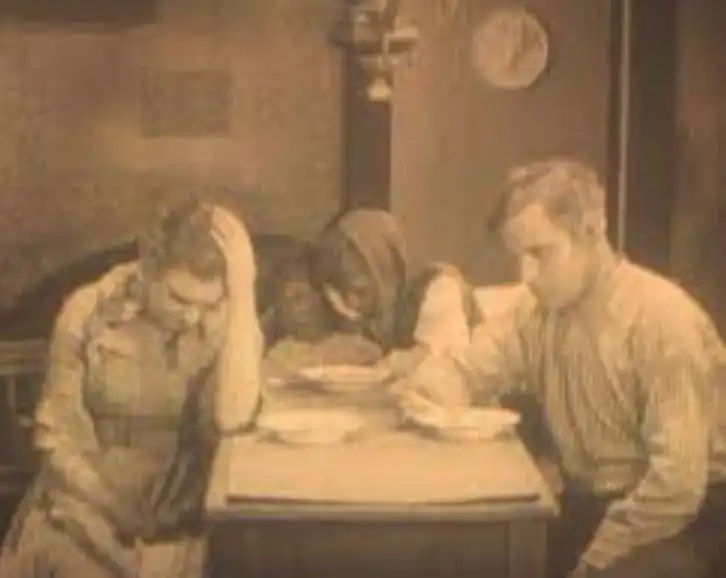
What really strikes you, watching it now, is how unsubtle it all is. The "darkness" scenes are pretty stark. Lots of shots of people looking weary, cramped living conditions, and the general struggle. The camera lingers on these grim faces. Then, when the "light" arrives, it’s all bright, clean, smiling families in new housing, kids playing in parks. It’s almost comically direct, but also, kind of effective in its own way for the time it was made. You don’t need subtitles to get the message.
There's this one sequence, I think it’s around the middle, where they show the same street or neighborhood, first looking really rundown, then later, voila! all cleaned up and bustling. The visual contrast is
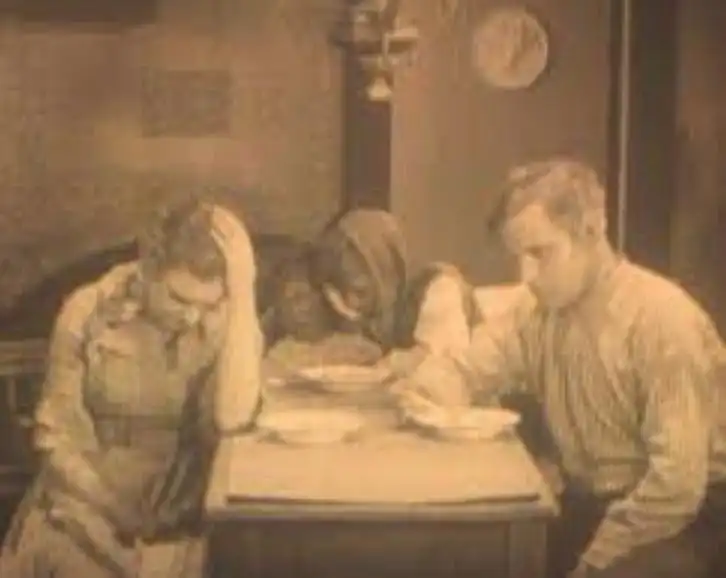
The acting, for a silent film, is pretty standard. Marie Dinesen and Carl Hillebrandt, and then their character's descendants, do a good job conveying the general emotions needed. Lots of wide-eyed hope or weary despair. But no one's really delivering a performance that’ll blow you away, or that you'll remember distinctly later. It’s more about the collective experience, the common person's journey, than individual star turns. You can feel the film trying to show everyman's progress.
I found myself particularly interested in the historical footage woven in. Or what felt like historical footage, even if staged. The shots of Copenhagen streets, the general hustle and bustle of the city, that’s where the film really comes alive as a historical document. It gives you this little glimpse into a world almost a century ago. The specific cars, the fashion, the sheer number of people walking around. It’s just neat to see.
Some parts drag a bit, for sure. There are moments where you can almost feel the filmmakers trying to pad out the runtime, showing another meeting or another slow procession. It’s not always perfectly paced. But then, you get another glimpse of the city, or a specific visual comparison, and you’re back in. It’s like watching an old slideshow sometimes, but one with a very clear, very passionate purpose. The subtitle "Filmsblade af Københavns municipale Historie" makes sense; it really does feel like pages from a history book.
This film is a fascinating artifact. It’s a window into how political messages were crafted and delivered long before TV ads and social media. It doesn’t try to be subtle; it just lays out its case in a way that feels earnest, almost innocent, compared to today’s political messaging. It's a reminder that films don't always need to be complex narratives to have power or importance.
So, if you're a student of film or history, or just someone who appreciates seeing how things used to be, Fra mørke til lys offers a unique experience. Just don't go in expecting Hollywood production values or a nail-biting plot. Go in expecting a very direct, very purposeful piece of cinematic history. You might learn a thing or two, and that's pretty cool. 👍
IMDb 4.8
1930
Community
Log in to comment.