DbcultAccessing Vault...
6.4/10
Senior Film Conservator
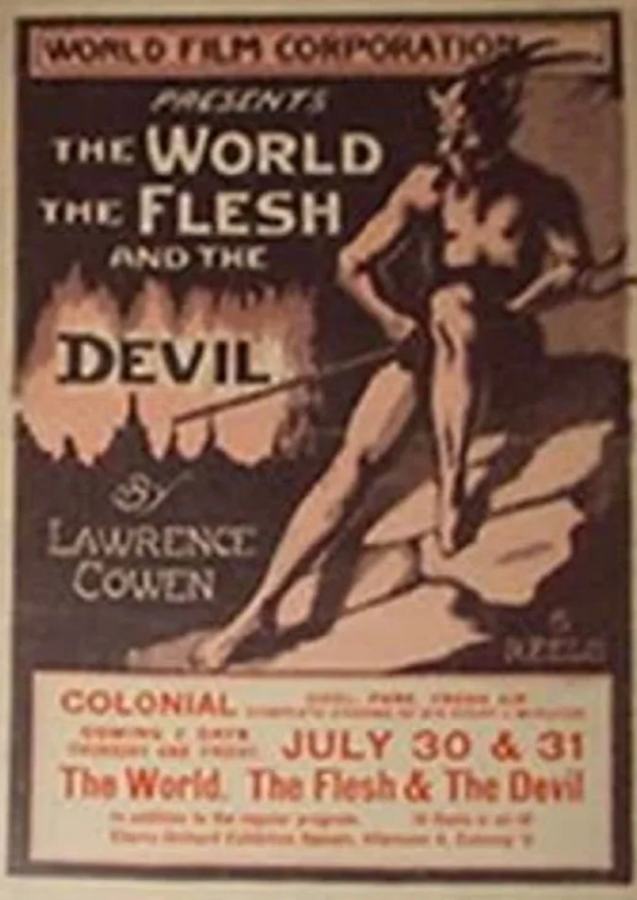
A definitive 6.4/10 rating for a film that redefined the boundaries of cult cinema. The World, the Flesh and the Devil remains a cornerstone of transgressive art.
To immerse oneself in the cinematic offerings of the early 20th century is to undertake a fascinating archaeological dig into the very genesis of a global art form. Laurence Cowen's 1914 production, 'The World, the Flesh and the Devil', stands as a compelling artifact from this foundational period, a silent drama that, despite its age, pulses with a vibrant energy and a timeless exploration of human morality. The evocative title itself – a tripartite division of earthly temptations – immediately signals a narrative ambitious in scope, promising a journey not merely through a legal quagmire but into the very heart of human fallibility and resilience. As a seasoned observer of film's evolutionary arc, I find these early features particularly captivating; they strip away the layers of modern cinematic complexity, revealing the raw, unadulterated power of visual storytelling. In an era devoid of synchronous sound and sophisticated special effects, filmmakers and performers relied solely on expressive physicality, carefully crafted intertitles, and the rhythmic cadence of editing to forge narratives capable of enthralling, challenging, and ultimately, enduring. This particular film, with its intricate plot revolving around deceit and the battle for a rightful legacy, offers a poignant window into the social anxieties and ethical dilemmas that resonated deeply with audiences of its time, and indeed, continue to echo in our contemporary consciousness.
At its intricate core, 'The World, the Flesh and the Devil' meticulously unfurls a chilling chronicle of calculated malfeasance. The narrative is driven by the insidious machinations of a purportedly respectable lawyer, a figure whose professional veneer artfully conceals a soul utterly consumed by rapacious greed. His meticulously chosen target is none other than the unsuspecting, legitimate heir to a venerable baronetcy, a position of both wealth and social standing. This is no mere impulsive act of larceny, but rather a meticulously orchestrated campaign designed to systematically sever a rightful lineage from its ancestral entitlements. The film masterfully builds a palpable sense of tension as this unscrupulous legal practitioner, portrayed with a quiet, chilling menace, executes a series of strategic maneuvers, each designed to incrementally dispossess the inheritor of his birthright. The genius of Cowen’s screenplay lies in its refusal to descend into simplistic good-versus-evil dichotomies. Instead, it delves into the more insidious nature of systemic corruption, highlighting how the very institutions established to uphold justice can be perverted and wielded as instruments of illicit gain. The heir, often depicted as a figure of vulnerable innocence, perhaps even naive in his initial trust, swiftly transforms into a symbol of the individual's desperate struggle against a predatory and seemingly intractable system. This profound battle for a rightful inheritance transcends the purely financial; it is a visceral fight for identity, for legacy, and for the very preservation of social order. Through its silent yet eloquent exposition, the film powerfully communicates the immense psychological toll exacted by this legal siege upon all involved, particularly the targeted heir, who faces the terrifying specter of ignominy and utter destitution. It compels the audience to confront uncomfortable questions about the inherent fairness of a societal framework that can be so readily manipulated by those entrusted with its safeguards. The titular themes – the allure of 'The World' (material gain, social status), 'The Flesh' (human weakness, temptation), and 'The Devil' (malicious intent, corruption) – are not just abstract concepts but are vividly embodied in the lawyer's actions and the heir's perilous journey. The corrupting influence of unchecked power, the precarious fragility of justice, and the indomitable human spirit in the face of overwhelming adversity are threads woven throughout this narrative, resonating with a timeless universality that still provokes contemplation today. One cannot help but draw parallels to other enduring tales of social injustice and the plight of the dispossessed, such as the poignant struggles depicted in adaptations like Oliver Twist or the expansive, revolutionary social commentary found in Les Misérables. While 'The World, the Flesh and the Devil' grounds its specific brand of villainy in the insidious betrayal of legal trust, its thematic echoes are undeniably profound.
The ensemble cast of 'The World, the Flesh and the Devil' navigates the unique, demanding landscape of silent cinema with a remarkable degree of finesse, each performer contributing significantly to the film's undeniable dramatic potency. Frances Midgeley, whose compelling presence often serves as the emotional anchor of the narrative, delivers a performance that speaks volumes without the utterance of a single audible word. Her meticulously calibrated expressions, graceful yet purposeful gestures, and nuanced body language masterfully convey the crushing weight of despair, the elusive flicker of hope, and the unyielding, steely resolve required to confront such an egregious and personal injustice. It is a portrayal of profound inner turmoil and quiet strength. Charles Carter, embodying the beleaguered and targeted heir, skillfully communicates a transformative journey from complacent security to bewildered struggle, ultimately discovering a deep-seated resilience born of sheer adversity. His ability to project vulnerability and evoke genuine empathy from the audience is a testament to his craft, ensuring that viewers are deeply invested in his perilous quest. Gladys Cunningham, often assuming a pivotal supporting role, provides crucial moments of both solace and urgent dramatic tension, her reactions serving as an authentic mirror for the audience's own anxieties and burgeoning sympathies. The film's central antagonist, the villainous lawyer, is brought to chilling life by H. Agar Lyons, who offers a masterclass in understated malevolence. Lyons eschews overt theatricality, opting instead for a far more unsettling portrayal of quiet, bureaucratic evil – a subtle, disingenuous smile that never quite reaches his eyes, a seemingly reassuring gesture that subtly belies sinister intent. This meticulously understated approach renders his character all the more menacing and psychologically disturbing. Nell Carter and Frank Esmond, alongside Stella St. Audrie, Mercy Hatton, Wellington Briggs, Frank Stather, Rupert Harvey, Jack Denton, and Roger Hamilton, collectively form a vibrant and believable tapestry of characters that populate this world, painting a vivid picture of a society grappling with its own precarious moral compass. Their intricate interactions, though necessarily conveyed through the exaggerated yet deeply expressive pantomime characteristic of the era, never once descend into crude caricature. Instead, they evoke genuine human emotion, allowing the audience to forge deep connections and invest wholeheartedly in the unfolding drama. In an era where acting was fundamentally a physical art form, relying almost entirely on facial expression, grand gestures, and precise body movements to communicate complex internal states, these performers collectively demonstrate an impressive and sophisticated command of their craft. They ensure that the narrative’s pivotal emotional beats resonate with considerable and lasting impact, serving as a powerful reminder that truly compelling storytelling transcends mere technological limitations, finding its most potent expression in the raw, unadulterated artistry of the human form.
Laurence Cowen, serving as both the film's writer and director, meticulously constructs a narrative that, despite its deceptively straightforward premise, blossoms into a rather intricate and emotionally gripping web of deceit. His screenplay for 'The World, the Flesh and the Devil' reveals a profound understanding of dramatic architecture and psychological pacing, building suspense not through cheap thrills, but through a series of escalating confrontations and carefully timed revelations. The omnipresent reliance on intertitles, an indelible hallmark of silent cinema, is employed by Cowen with judicious precision; they provide just enough exposition to propel the plot forward, clarify complex legal maneuvers, and deepen character insights, all without unduly interrupting the fluid visual narrative. The language of these intertitles often possesses a certain literary elegance, elevating the film’s overall artistic ambition and providing a poetic counterpoint to the visual drama. As a director, Cowen exhibits an astute eye for visual storytelling, frequently employing compositions that subtly underscore the shifting power dynamics and emotional states at play within a scene. Close-ups, though perhaps not as ubiquitous as in later cinematic developments, are utilized with strategic intent, serving to magnify moments of intense emotional expression or pivotal character realizations, thereby drawing the audience intimately into the characters’ inner worlds. The film’s mise-en-scène, while undeniably constrained by the nascent production capabilities of the early 1910s, is nevertheless remarkably effective in establishing both the precise setting and the pervasive atmosphere. From the austere, imposing grandeur of the legal offices, symbolizing the cold impartiality of the law, to the more intimate, vulnerable domestic spaces where personal dramas unfold, each location contributes meaningfully to the film’s overarching mood and thematic resonance. Cowen’s directorial approach is characterized by an unwavering commitment to narrative clarity, ensuring that even the most convoluted legal machinations are presented in an accessible and comprehensible manner for his contemporary audience. There is an inherent theatricality in silent film direction, and Cowen embraces this with a confident hand, affording his actors the necessary space and freedom to deliver their physically expressive performances with maximum impact. While 'The World, the Flesh and the Devil' may not be heralded for revolutionary cinematic techniques, it unequivocally stands as a robust and compelling example of competent, artful storytelling from its period. It serves as a vital showcase for the emerging visual language of film, where evocative visual cues, the deliberate rhythm of editing, and the sheer power of human expression were paramount. When considering other compelling narratives from this nascent cinematic era, such as the intriguing legal complexities in The Mystery of a Hansom Cab or the more direct criminal investigations in The Crime and the Criminal, one observes a shared dedication to crafting engaging, albeit still evolving, genre narratives. Cowen’s work here, while perhaps less epic in scale than grand historical spectacles like The Last Days of Pompeii or Cleopatra, is no less significant in demonstrating the rapidly growing sophistication of narrative filmmaking and its capacity to grip an audience with human drama.
To truly grasp the profound resonance of 'The World, the Flesh and the Devil', one must firmly situate it within its specific historical and cinematic context. Released in 1914, the film made its debut during a transformative epoch in the nascent art of cinema, a period marked by burgeoning innovation and experimentation. It predates the full consolidation of Hollywood's powerful studio system and the subsequent development of the more intricate narrative techniques and advanced production values that would come to define the illustrious 'Golden Age' of silent film. Yet, despite being a product of these formative years, it stands as a remarkably robust and artistically significant example of British filmmaking from the era, demonstrating a clear and compelling commitment to sophisticated dramatic storytelling. The film's potent thematic concerns, particularly the harrowing vulnerability of individuals to insidious institutional corruption and the relentless struggle for fundamental social justice, resonated profoundly with audiences of the time. These themes were deeply reflective of broader societal anxieties and the prevailing moral questions of the early 20th century. The legal drama genre, though not yet as meticulously codified as it would later become, found exceptionally fertile ground in narratives exploring complex issues of disinheritance, moral compromise, and ethical conflict. This particular period witnessed a veritable surge in both faithful adaptations of popular literature and compelling original stories that skillfully tapped into universal human experiences of struggle, perseverance, and eventual triumph. Comparing 'The World, the Flesh and the Devil' to contemporary productions of its time reveals fascinating shared stylistic and thematic elements. For instance, the film's intense dramatic focus and its unwavering exploration of profound moral dilemmas find echoes in the earnest narratives of films like The Prodigal Son, which also grappled with themes of redemption and familial strife, or even more overtly criminal narratives such as The Stranglers of Paris, albeit with differing scopes of societal critique. The performances, characterized by their expressive physicality and often grand gestures, were entirely typical of the silent era, where actors were tasked with conveying intricate layers of emotion and character motivation without the aid of spoken dialogue. The film's relatively straightforward, yet highly effective, narrative structure, while perhaps appearing deceptively simplistic by contemporary cinematic standards, was perfectly suited for its time, catering to audiences who were still actively learning and internalizing the nascent visual grammar of cinema. Its lasting legacy, though perhaps not as globally recognized or widely celebrated as some international blockbusters of the period like the visually stunning Quo Vadis? or the wildly popular American serials such as The Perils of Pauline, lies fundamentally in its significant contribution to the evolving development of the dramatic feature film. It powerfully underscores the enduring and universal appeal of stories centered on justice, profound betrayal, and the timeless fight for what is rightfully one's own. For dedicated cinephiles and meticulous historians alike, 'The World, the Flesh and the Devil' offers invaluable insights into the specific social concerns, prevailing moral codes, and distinctive artistic conventions of early 20th-century British cinema. It serves as compelling proof that truly captivating narratives of human struggle have always found a welcoming home on the silver screen, utterly irrespective of technological constraints. It stands as a profound reminder that the foundational elements of compelling storytelling – compelling character arcs, intricate conflict, and satisfying resolution – have remained remarkably constant, even as the medium of film itself has undergone radical and breathtaking transformations. The film thus contributes richly to a vast and diverse tapestry of early dramatic works, standing proudly alongside others like The Life and Death of King Richard III in its penetrating exploration of power, ambition, and fate, albeit translated into a more contemporary, yet equally compelling, social setting.
In its silent eloquence, 'The World, the Flesh and the Devil' emerges as a compelling testament to the foundational power of early narrative filmmaking. It is a work that, despite its century-old vintage and the inherent technical limitations of the silent era, succeeds admirably in delivering a genuinely gripping and emotionally resonant drama. Laurence Cowen’s meticulous plotting, coupled with the dedicated and expressive performances of his ensemble cast—most notably Frances Midgeley’s poignant portrayal and H. Agar Lyons’ chilling villainy—ensure that the arduous struggle for the baronetcy feels profoundly impactful and deeply personal. While it may not boast the groundbreaking technical innovations of some of its more avant-garde contemporaries, its enduring strength resides in its unwavering focus on a timeless human conflict: the perennial battle between integrity and avarice. For those willing to embark on a journey into the rich, unexplored archives of cinematic history, this film offers far more than a mere historical curiosity; it provides a potent, visceral reminder of cinema's foundational ability to delve into the intricate depths of human character and to illuminate the often-complex nuances of social justice. It’s a film that, through its wordless narrative, speaks volumes about the enduring nature of temptation and the timeless, universal fight for what is inherently right.
IMDb 6.1
1935
Community
Log in to comment.