DbcultAccessing Vault...
Cult Review
Senior Film Conservator
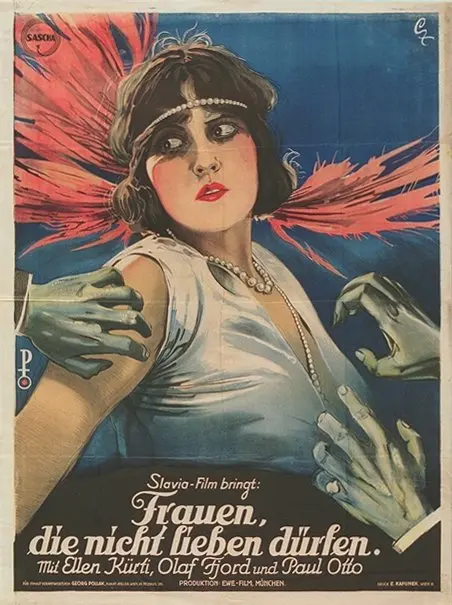
Should you seek out this 1925 relic? Short answer: No, unless you are a dedicated historian of Weimar-era social dramas. This film is for the archival completionist, not for someone looking for a casual Friday night watch.
While it offers a fascinating glimpse into the psychological landscape of pre-war Germany, its glacial pacing and rigid adherence to melodrama make it a difficult sit for modern audiences. It is an artifact, not an entertainment.
1) This film works because it captures the rigid, suffocating social hierarchy of the mid-20s without the safety net of modern irony, providing a raw look at systemic repression.
2) This film fails because the narrative inertia is overwhelming; Karl Bolwag’s script relies too heavily on static scenes that lack the visual dynamism of his contemporaries.
3) You should watch it if you are researching the evolution of the 'Sittenfilm' (morality film) or want to see Paul Otto at the height of his theatrical screen presence.
Frauen, die nicht lieben dürfen is worth watching only if you value historical context over narrative engagement. It provides a specific window into 1925 German society. For the average viewer, the experience will likely feel repetitive and overly sentimental. It lacks the timelessness of films like Tess of the D'Urbervilles, which managed to bridge the gap between silent era melodrama and universal human struggle more effectively.
The film’s title, which translates to 'Women Who Must Not Love,' promises a scandalous or at least emotionally volatile experience. Instead, we are treated to a series of polite, albeit tragic, interactions. The direction feels trapped in the theater. Characters enter rooms, exchange long looks of despair, and exit. It is a cycle of misery that lacks a release valve.
Take, for instance, a pivotal scene involving Helene von Bolvary. She stands by a window, framed by heavy velvet curtains that seem to swallow her whole. It’s a clear metaphor for her social imprisonment. But the shot lingers for thirty seconds too long. The metaphor becomes a chore. Unlike the fluid camera work found in Eye for Eye, this film remains stubbornly stationary.
The acting is equally stiff. Paul Otto, a veteran of the stage, brings a gravitas that feels almost too large for the medium. Every gesture is calculated. Every eyebrow raise is a paragraph of dialogue. It’s impressive, but it’s not natural. It feels like watching a museum exhibit come to life, only to realize the exhibit doesn't have much to say.
Karl Bolwag was a writer who understood the anxieties of the German middle class. In Frauen, die nicht lieben dürfen, he taps into the fear of social ruin. The stakes are high for the characters, but they feel low for the audience because the 'rules' being broken feel so antiquated. When a character's entire future is ruined by a single unchaperoned meeting, it's hard for a 21st-century viewer to feel the intended sting.
Compare this to Reputation, which handles similar themes of social standing with a bit more bite. Bolwag’s approach is softer, more mournful. He isn't angry at the system; he is just sad that it exists. This lack of bite makes the film feel toothless. It’s a tragedy without a villain, which often results in a story without a pulse.
The pacing is the film's greatest enemy. In an era where cinema was beginning to discover the power of the montage and rhythmic editing, this film feels like it was made a decade earlier. It refuses to hurry. It demands a patience that it hasn't quite earned.
Technically, the film is competent but uninspired. The lighting is flat, lacking the dramatic chiaroscuro that defined the better-known German films of the decade. There are no jagged shadows or distorted sets here. It is a film of right angles and bright rooms. This was likely a conscious choice to reflect the 'New Objectivity' movement, but it makes for a dull visual experience.
There is a brief moment of visual flair during a ballroom sequence. The camera actually moves, tracking the dancers in a way that suggests the chaotic energy of the Weimar nightlife. For three minutes, the film breathes. Then, it returns to the drawing-room and the oxygen is cut off again. It’s a frustrating tease of what might have been.
The cast, including Carl Walther Meyer and Ellen Kürti, do what they can with the material. Meyer, in particular, has a screen presence that hints at a more modern style of acting. He uses his eyes more than his arms. But he is drowned out by the theatricality of the rest of the ensemble.
Pros:
Cons:
When placed alongside Amor e Boemia, the lack of life in Frauen, die nicht lieben dürfen becomes glaring. While the former embraces the chaotic joy of the era, the latter seems terrified of it. Even a minor work like The Rough Lover has a sense of playfulness that is entirely absent here. This film is a funeral march for a society that didn't know it was already dying.
It is dull. But it’s an important kind of dull. It shows us what the 'standard' movie looked like when it wasn't trying to be a masterpiece. It’s the baseline of 1925 cinema. Without films like this, we wouldn't appreciate the leaps made by the greats.
Frauen, die nicht lieben dürfen is a difficult film to love, which is perhaps ironic given its title. It is a static, overly formal piece of work that prioritizes social commentary over narrative flow. While the performances of Paul Otto and Helene von Bolvary offer some interest, they are trapped in a film that refuses to move. It is a cinematic fossil—fascinating to look at under a microscope, but not something you want to spend two hours with in the dark. Watch it for the history, but keep your expectations grounded. It’s a stiff, somber journey into a world that has long since passed away.
IMDb —
1914
Community
Log in to comment.