DbcultAccessing Vault...
Cult Review
Senior Film Conservator
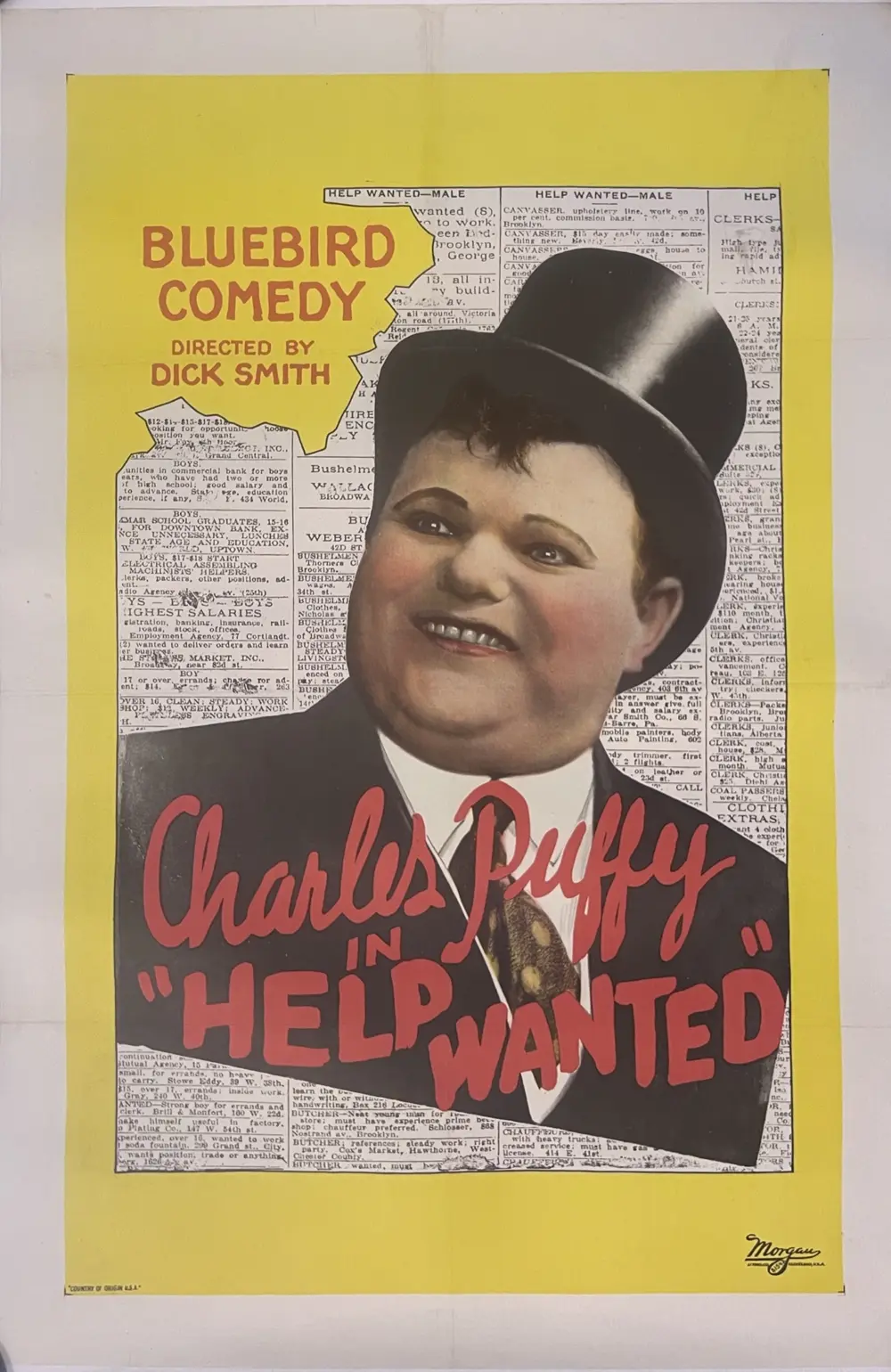
Is Help Wanted a lost gem of the silent era? Short answer: yes, but only if you have a high tolerance for narrative shortcuts and an appetite for the frantic physical comedy of the mid-1920s.
This film is specifically for those who study the evolution of the 'Puffy' persona in silent shorts and those who enjoy the chaotic energy of pre-Code slapstick. It is emphatically not for viewers who require logical character motivations or a plot that doesn't rely entirely on a cosmic-level coincidence to resolve its stakes.
1) This film works because Károly Huszár (known as Puffy) possesses a kinetic, round-faced desperation that makes the absurd premise of chasing a man for a piece of laundry feel like a life-or-death struggle.
2) This film fails because its resolution is a literal deus ex machina that renders the entire 'job hunt' theme irrelevant, opting for a lucky reward over character growth.
3) You should watch it if you want to see how 1920s filmmakers used the urban environment as a playground for escalating physical gags, similar to the work seen in Off the Trolley.
The central conceit of Help Wanted—writing a job address on a stranger’s collar—is the kind of high-concept nonsense that only works in the silent medium. In a modern context, Charley would just take a photo with his phone. In 1926, the lack of paper becomes a catalyst for a grand urban odyssey. The collar itself becomes a character, a white flag of hope that Charley must pursue through the streets.
There is a specific scene where Charley is tailing the man on a bus that highlights the era's technical limitations and creative strengths. The camera remains relatively static, but the choreography within the frame is dense. Huszár’s facial expressions, transitioning from hope to horror as the bus pulls away, are masterfully timed. It lacks the surrealist polish of Entr'acte, but it shares that film's obsession with movement and the breakdown of social order.
Károly Huszár, or 'Puffy' as he was marketed in the West, was a fascinating figure in silent comedy. Unlike the acrobatic grace of Keaton or the pathos of Chaplin, Huszár’s comedy was rooted in a sort of frantic, rotund vulnerability. In Help Wanted, he uses his physicality to emphasize the class divide. He is the man without paper, without a job, and without a collar, chasing a man who has all three.
The way Huszár moves through the city is a study in 1920s slapstick. He isn't just running; he is vibrating with anxiety. When the pedestrian reclaims his collar, the look of betrayal on Charley's face is genuinely funny. It is an unconventional observation, but Huszár’s eyes do more work than his legs in this film. He sells the stakes of a job hunt that feels more like a fever dream than a career move.
Director Richard Smith treats the city as a series of obstacles. The cinematography is functional, but it captures a specific grit of the mid-20s. The outdoor shots provide a fascinating historical document of transit and pedestrian life. The moment the man falls from the bus is captured with a jarring realism that briefly breaks the comedic tone. It’s a bit of a mess, honestly, but that messiness gives the film its personality.
Compare this to the more structured narrative of Bunty Pulls the Strings. While that film relies on character dynamics, Help Wanted relies on the physics of the chase. The pacing is relentless. Once the collar is stolen back, the film doesn't breathe until the final frame. This breathless quality is both its greatest strength and its most exhausting trait.
Yes, Help Wanted is worth watching for fans of silent comedy who want to see a non-Keaton, non-Lloyd approach to the 'man vs. city' trope. While the plot is thin and the ending is a massive coincidence, the physical performance of Károly Huszár is a compelling look at a forgotten star of the era. It is a short, punchy experience that captures the frantic spirit of 1926 filmmaking.
Pros: The film moves at a breakneck speed, ensuring it never overstays its welcome. The central gag of the collar is unique and visually distinct. It provides a raw, unpolished look at 1920s urban life.
Cons: The writing is incredibly lazy in the final act. The 'long-lost brother' trope was tired even in 1926. Charley doesn't actually 'solve' his problem; he just gets lucky.
Help Wanted is a fascinating relic. It works. But it’s flawed. The film is a testament to the power of a single, absurd prop—a detachable collar—to carry an entire narrative. While it lacks the emotional depth of a Chaplin short or the architectural genius of a Keaton feature, it offers a manic energy that is purely its own. It is a loud, silent shout into the void of the Great Depression's doorstep. If you can forgive the astronomical coincidence of the ending, you’ll find a charmingly desperate comedy that still manages to land its punches nearly a century later. It is a minor work, but one that deserves a spot in the conversation about the diversity of silent-era humor.
IMDb —
1923
Community
Log in to comment.