DbcultAccessing Vault...
Cult Review
Senior Film Conservator
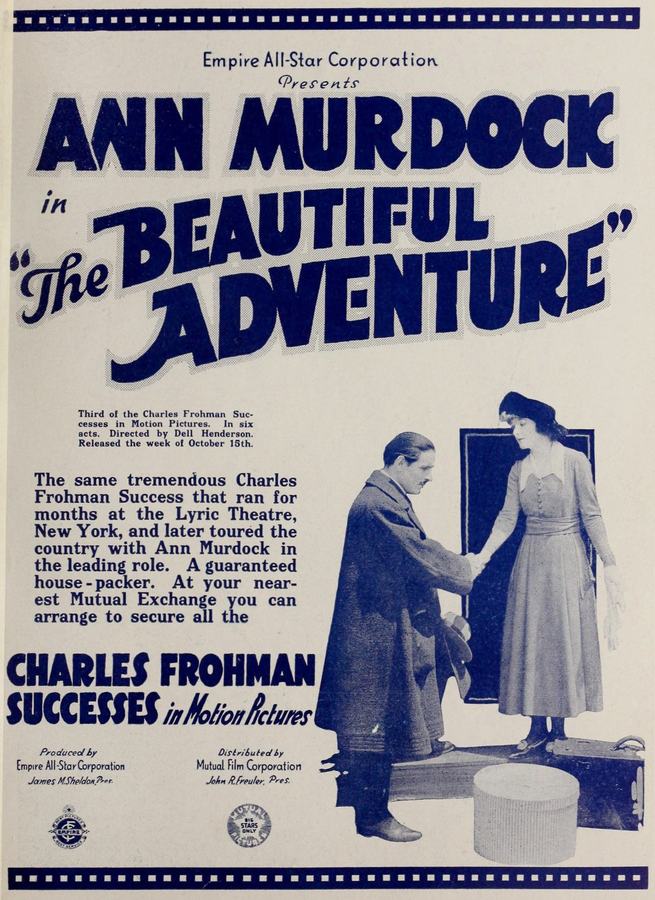
There's a certain ineffable charm to early cinema, a purity of storytelling that, even without spoken dialogue, manages to convey the deepest human emotions and the most intricate social dilemmas. 'The Beautiful Adventure' (slug: the-beautiful-adventure) stands as a testament to this, a delightful romantic comedy that, despite its vintage, feels remarkably fresh in its exploration of love, duty, and the unexpected twists life throws our way. Penned by the talented trio of Robert de Flers, Gaston Arman de Caillavet, and Joseph F. Poland, this film is a masterclass in elegant farce, a poignant reminder that true affection often blossoms in the most unconventional of gardens.
At its core, 'The Beautiful Adventure' presents us with Helene De Travillac, a young woman trapped by the societal expectations of her era. Engaged to the wealthy, methodical, and decidedly unromantic Valentin LeBarroyer, Helene's heart yearns for her handsome cousin, Andre D'Eguzon. This classic romantic conundrum is set against a backdrop of familial pressure, most notably from a 'scheming aunt' who clearly prioritizes financial security over genuine affection. The film wastes no time in establishing this tension, drawing the audience into Helene's predicament with empathetic strokes. The wedding morning arrives, fraught with an undercurrent of desperation, and it is here that Andre makes his dramatic entrance, a whirlwind of impassioned pleas that shatter Helene's resolve. The decision, though agonizing, is swift and definitive: a tear-streaked removal of the veil, a powerful symbol of rejection of her arranged fate, and a headlong flight into the unknown with her true love. This initial act of rebellion sets the stage for a narrative steeped in the delicious irony of mistaken identities and the unexpected joys of liberation.
Their escape leads Helene and Andre to the comforting embrace of her old country home, a sanctuary presided over by her grandmother. It is within these familiar, welcoming walls that the true comedic brilliance of the film begins to unfold. The grandmother, in her endearing naivety, makes the entirely natural, yet hilariously consequential, mistake of assuming Andre is Helene's lawfully wedded husband. This innocent misapprehension becomes the engine of a series of delightful complications, a veritable masterclass in farcical pacing. The film revels in these moments, allowing the audience to savor the irony and the delicate tightrope walk Helene and Andre must perform to maintain the illusion. The performances, particularly Merceita Esmond as Helene and Robert Entwistle as Andre, convey the delicate balance between their burgeoning love and the constant threat of exposure with exquisite subtlety, a testament to the power of non-verbal storytelling. The grandmother's character, played with warmth by Vera Fuller Mellish, acts as both an unwitting antagonist to the truth and a charming catalyst for much of the film's humor, her every well-meaning gesture inadvertently deepening the comedic predicament.
Helene De Travillac is far from a passive damsel in distress; she is a woman of quiet strength and burgeoning agency. Her initial hesitation, though brief, speaks volumes about the societal pressures weighing upon her. Yet, her ultimate decision to flee with Andre is an act of profound courage, a defiance of convention that resonates even today. Merceita Esmond imbues Helene with a captivating blend of vulnerability and resolve. We see her internal conflict, the tears that well up not just from sadness, but from the terrifying exhilaration of choosing her own destiny. Her journey throughout the film is one of self-discovery, learning to navigate the complexities of her choices and the consequences they bring. She is not merely running away from an unwanted marriage; she is running towards a life defined by genuine affection and personal liberty. Her character arc serves as a gentle critique of the era's restrictive marital norms, suggesting that true happiness lies beyond the confines of social obligation. This theme of a woman asserting her will in the face of societal pressure finds echoes in other period dramas, where female protagonists grapple with similar constraints, much like the quiet struggles depicted in certain narrative threads within films such as Idle Wives, although 'The Beautiful Adventure' approaches it with a decidedly lighter, more hopeful tone.
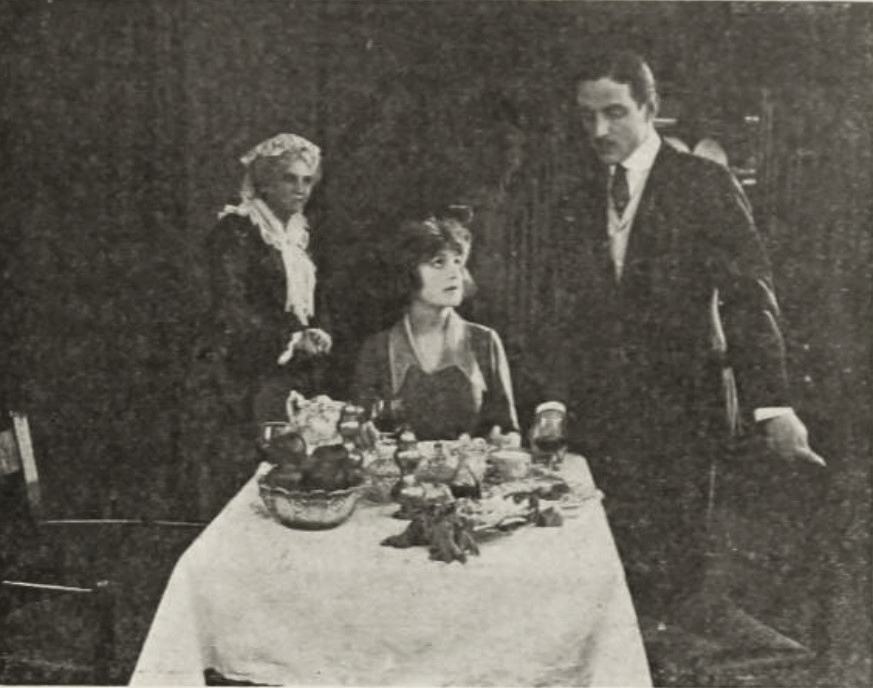
Andre D'Eguzon, portrayed by Robert Entwistle, is the quintessential romantic hero of the era: handsome, passionate, and utterly devoted. His sudden appearance on Helene's wedding day is not just a plot device; it's the embodiment of fate intervening, a disruptive force against the preordained. Andre's pleas are born of genuine love, an urgent desire to save Helene from a life he knows will make her miserable. His impulsiveness, while perhaps imprudent, is undeniably charming, reflecting a belief in the power of emotion over calculation. He is the catalyst for Helene's 'beautiful adventure,' the hand that guides her towards freedom. Entwistle captures Andre's youthful ardor and his slightly mischievous delight in their shared deception, even as he grapples with the potential repercussions. He is willing to face societal censure for love, a noble trait that solidifies his heroic status in the audience's eyes. The dynamic between Andre and Helene is one of undeniable chemistry, a visual poetry that transcends the silent screen, making their forbidden romance feel both urgent and utterly believable. Their immediate flight to the country, while chaotic, is portrayed with a sense of joyous liberation, a stark contrast to the stifling atmosphere of the impending arranged marriage.
Perhaps the most fascinating character arc in 'The Beautiful Adventure' belongs to Valentin LeBarroyer, played by Victor Le Roy. Initially introduced as a 'methodical, statistic-loving 'stick,'' Valentin is the embodiment of everything Helene wishes to escape. His wealth is his primary asset, his personality seemingly devoid of warmth or spontaneity. He represents the pragmatic, often cold, calculations of arranged marriages, a man who views a wife as another acquisition to be cataloged. However, the film's true genius lies in its refusal to leave him as a mere caricature. When Valentin finally arrives, hunting for his vanished bride, he is no longer just the jilted fiancé; he is a man whose world has been upended, forced to confront the emotional vacuum of his existence. His pursuit is initially driven by indignation and perhaps a sense of proprietary loss, but as the narrative unfolds, we witness a profound transformation. The shock of rejection, the public humiliation, and the very 'adventure' Helene has embarked upon, inadvertently awaken something within him. He is forced to move beyond his statistics and confront raw human emotion. When he finally finds Helene, the manner in which he handles the revelation of her true feelings, and the discovery of Andre, is nothing short of an epiphany. He 'proves himself a man,' not by force or coercion, but by an act of unexpected grace and understanding. This pivotal moment elevates the film from a simple farce to a nuanced exploration of character, suggesting that true nobility can emerge from the most unlikely of individuals. Valentin's transformation is arguably the most 'beautiful adventure' of all, a journey from emotional arithmetic to genuine humanity. This surprising depth in a seemingly secondary character is a hallmark of well-crafted narratives, much like how certain characters in films such as The Alster Case or Driftwood, despite their initial portrayals, reveal hidden complexities that drive the story beyond its surface plot.
Beyond the delightful comedic elements, 'The Beautiful Adventure' is rich with thematic resonance. It is, first and foremost, a celebration of romantic love, positioning genuine affection as the ultimate arbiter of matrimonial happiness, a sentiment that resonates powerfully across generations. The film subtly critiques the societal pressures that often forced individuals into loveless unions for financial or social gain. Helene's flight is a powerful statement against such constraints, a demand for personal freedom that, while perhaps scandalous at the time, is presented as entirely justified. The mistaken identity trope, a staple of comedic narratives, is deployed with particular skill here, not just for laughs but to highlight the arbitrary nature of social constructs. The grandmother's acceptance of Andre as Helene's husband, despite the truth, underscores the idea that love, not legality, is the foundation of a true partnership. Furthermore, the film champions the idea of personal evolution. Valentin's journey from a 'stick' to a man of understanding is a powerful testament to the transformative power of experience and perhaps, even heartbreak. It suggests that even the most rigid individuals can be softened and enlightened by life's unexpected challenges. The film's resolution, where all parties find a measure of peace and happiness, speaks to a deeply optimistic worldview, one where love, courage, and unexpected grace ultimately prevail. This kind of optimistic resolution, even after significant dramatic tension, can be seen in other films that explore the complexities of human relationships and societal expectations, such as in the charming, if sometimes challenging, domestic narratives found in early productions like Beulah, though 'The Beautiful Adventure' maintains a lighter, more overtly comedic tone throughout its narrative.
The success of 'The Beautiful Adventure' hinges significantly on the nuanced performances of its cast and the intelligent direction that guides their non-verbal storytelling. In the era of silent film, actors like Victor Le Roy, Robert Entwistle, and Merceita Esmond had to convey entire emotional landscapes through gesture, facial expression, and body language. Their ability to articulate Helene's conflict, Andre's passion, and Valentin's eventual enlightenment without a single spoken word is truly remarkable. The pacing of the film is expertly handled, building the initial tension of the arranged marriage, accelerating into the joyous chaos of the elopement, and then settling into the delightful comedic rhythm of the mistaken identity. The visual composition, even with the technical limitations of the time, is thoughtful, using settings like the elegant city home and the rustic country abode to reflect the shifting emotional states and social contexts of the characters. The use of intertitles is judicious, providing necessary exposition without interrupting the flow of the visual narrative. This careful craftsmanship ensures that the story remains engaging and emotionally resonant, a testament to the enduring power of classic filmmaking techniques. The film exemplifies how a well-structured plot, combined with compelling performances, can transcend the absence of sound, delivering a narrative that is both entertaining and thought-provoking, a characteristic shared with other masterfully crafted silent films that relied on visual storytelling and emotional depth, such as the epic scope of Chûshingura or the fantastical journeys in The Fairylogue and Radio-Plays, albeit in vastly different genres and narrative styles.
In an age often defined by cynicism, 'The Beautiful Adventure' offers a refreshing dose of optimism and charm. It reminds us that love, in its purest form, is worth fighting for, and that even the most rigid of hearts can be touched by human connection. The film's enduring appeal lies in its universal themes: the clash between duty and desire, the humor found in human error, and the unexpected transformations that define our lives. The performances are captivating, the plot is ingeniously crafted, and the resolution is deeply satisfying, not just for the lovers but for all involved. It's a film that leaves you with a smile, a gentle reminder that life's greatest adventures are often those of the heart. For anyone seeking a cinematic escape into a world of romance, laughter, and surprising depth, 'The Beautiful Adventure' remains a truly delightful discovery, a timeless piece of cinematic artistry that continues to charm and engage audiences, much like the enduring appeal of other classic romantic narratives, even those with more tragic undertones such as Romeo and Juliet, which also explores the profound power of love against societal barriers, albeit with a different outcome. It’s a testament to the power of storytelling that a film from so long ago can still speak so eloquently to the human condition, offering a beautiful, albeit silent, conversation on what it means to truly live and love.
IMDb —
1926
Community
Log in to comment.