DbcultAccessing Vault...
Cult Review
Senior Film Conservator
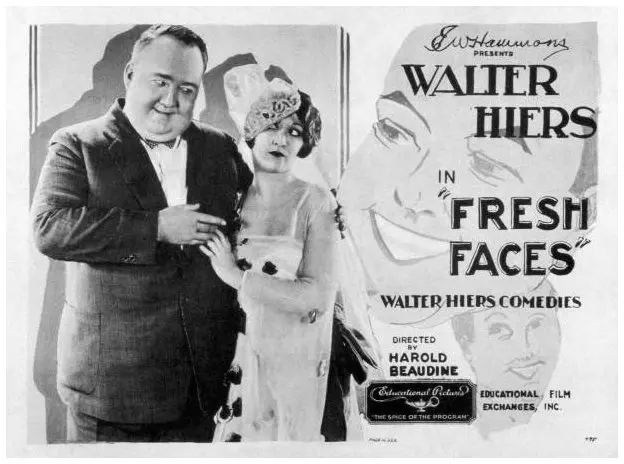
Is Fresh Faces worth watching in an era of sophisticated, nuanced comedy? Short answer: absolutely, but with significant caveats. This early silent comedy, a relic from an era where physical gags reigned supreme, offers a fascinating glimpse into the foundations of screen humor, but it's unequivocally not for everyone.
It’s a film custom-made for cinephiles, historians of comedy, and those with an appreciation for the raw, unpolished energy of silent-era slapstick. If your cinematic palate leans towards intricate plots, subtle character development, or dialogue-driven wit, then Fresh Faces might feel less like a nostalgic trip and more like a historical chore. It demands a specific kind of engagement, a willingness to meet it on its own terms.
This film works because its central premise, while simple, is universally understood: the corruptibility of power and the absurdity of human vanity. The escalating tension, fueled by Judge Walter's blatant dishonesty, is genuinely well-crafted, leading to a payoff that, despite its predictability, is executed with infectious energy. The sheer physical commitment of the cast, typical of the era, makes even the thinnest narrative feel vibrant.
This film fails because its characters are largely archetypes, lacking any real depth beyond their immediate motivations. The humor, while effective for its time, relies heavily on broad strokes and exaggerated reactions that can feel dated to a modern audience. Furthermore, the resolution, while chaotic and amusing, doesn't offer much in the way of lasting satisfaction beyond the immediate spectacle.
You should watch it if you are interested in the evolution of screen comedy, enjoy the unbridled physicality of silent-era performers, or simply want a light, undemanding diversion that offers a window into a bygone cinematic age. It's a curiosity more than a profound experience.
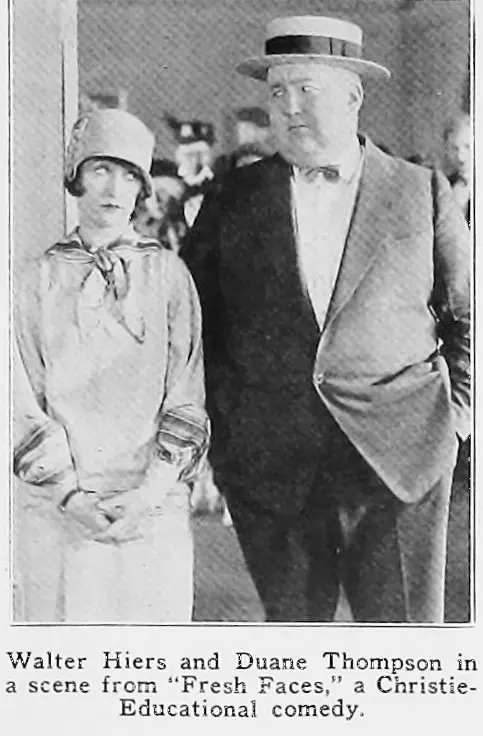
The narrative core of Fresh Faces is a wonderfully cynical exploration of human nature, specifically the venality of those in positions of authority and the desperate longing for recognition. The small town of Bingville becomes a microcosm of societal vanity, all centered around a seemingly innocuous beauty contest. The genius, if one can call it that, lies in the character of Walter, the contest judge, played with a delightful smarminess by Walter Hiers.
Walter isn't merely a judge; he's a master manipulator, a man who understands the currency of false promises. His dual assurances—first to Eddie, Dora's hopeful suitor, that Dora will win, and then to the Village Vamp and her father that she will be crowned—set up a brilliant, albeit simple, comedic engine. This isn't just a plot device; it's a commentary on how easily people are swayed by the promise of glory, and how readily those in power exploit that desire for their own amusement or perceived benefit.
The film’s strength here is its directness. There are no convoluted subplots. The entire setup is focused on this impending revelation of Walter’s duplicity. It’s a ticking time bomb, and the audience is privy to the fuse shortening with each lie. This simple, linear progression allows the film to build tension effectively, making the eventual explosion of anger feel earned, even inevitable.
One might argue that the plot is too thin, a mere scaffold for gags. And to an extent, that’s true. However, for a film of its era, its clarity of purpose is commendable. It doesn't overstay its welcome, nor does it attempt to be more profound than it needs to be. It understands its job: to set up a chaotic payoff.
In the silent era, acting was a language of the body, a symphony of exaggerated gestures, wide-eyed expressions, and physical comedy. The cast of Fresh Faces embraces this wholeheartedly, delivering performances that are both broad and surprisingly effective within their context. Duane Thompson, as Mary, embodies an innocent charm, a stark contrast to the more overtly ambitious Dora and the 'Village Vamp'. Her eventual victory, therefore, carries a subtle undercurrent of unexpected virtue triumphing over calculated ambition.
Walter Hiers, as the duplicitous judge Walter, is a standout. His performance is a masterclass in silent-era villainy. Observe his shifting expressions when making his false promises: a conspiratorial wink to Eddie, followed by an overly confident, almost theatrical assurance to the Village Vamp's father. He manages to convey a sense of self-satisfaction and casual dishonesty that is both infuriating and amusing. He’s not a villain in the traditional sense, but rather a mischievous provocateur, thriving on the chaos he creates.
Natalie Joyce and Yola d'Avril, as Dora and the Village Vamp respectively, are equally committed to their roles, each bringing a distinct flavor to their characters. Joyce’s Dora likely carried a more conventional beauty, while d'Avril's 'Vamp' persona would have leaned into a more alluring, perhaps even scandalous, appeal for the period. Their reactions during the final announcement, particularly the building fury and disbelief, are palpable, driving the chaotic conclusion.
Eddie Baker, as Dora's beau, Eddie, serves as the audience's initial point of entry into Walter's web of lies. His earnestness and subsequent outrage are crucial in grounding the more outlandish comedic elements. The physical comedy, especially during the climactic mêlée, is a testament to the actors' ability to convey emotion and narrative without a single spoken word, relying entirely on their bodies and faces. This kind of performance is a lost art, frankly, and seeing it executed with such gusto is a genuine pleasure.
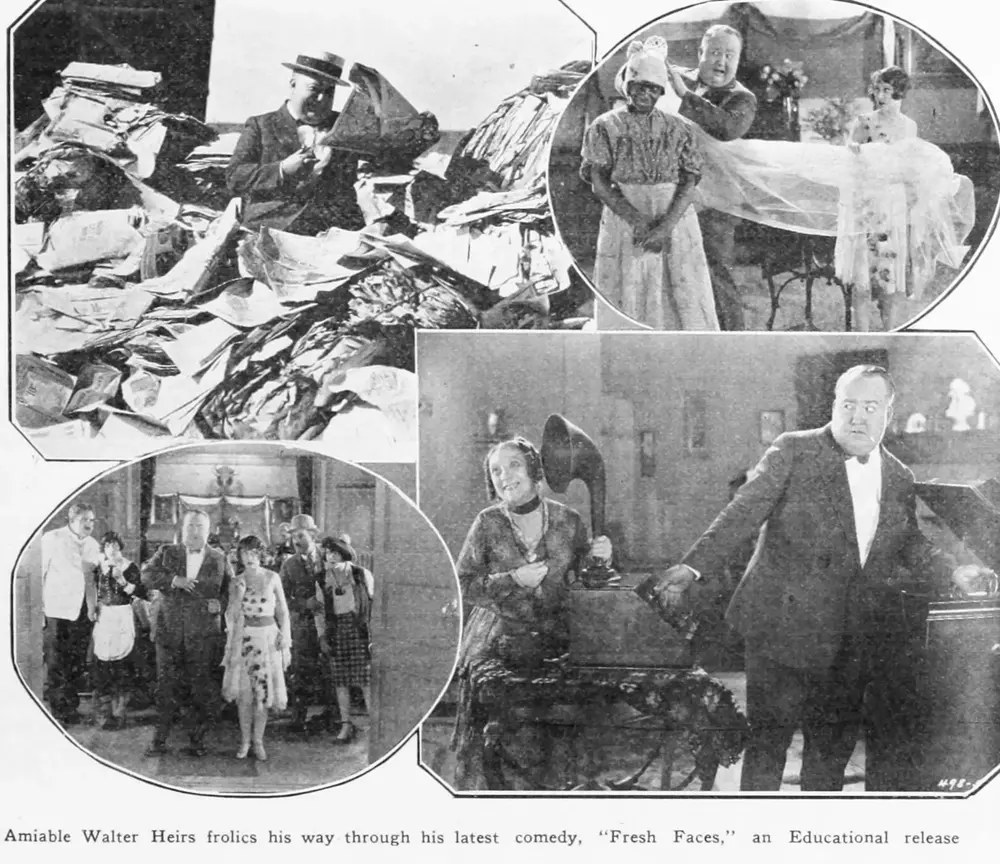
Sig Herzig, as the film's writer, crafted a tight, focused narrative, and the direction, while uncredited in the provided context, clearly understands the script's intent. The pacing of Fresh Faces is one of its stronger attributes. The initial setup is deliberate, allowing the audience to understand the stakes and Walter's cunning. We see the judge's journey, his two-faced assurances, and the growing anticipation among the contestants and their supporters.
This measured build-up gives way to a rapid-fire, almost frenetic pace in the final act. The moment Walter announces Mary as the winner, the film shifts gears entirely. The cuts become quicker, the action more frantic, and the physical comedy explodes onto the screen. This sudden acceleration is crucial for the impact of the mêlée, preventing it from feeling drawn out or repetitive. Consider the scene where the crowd descends upon the prize roadster; the sheer speed of its destruction is part of the comedic punch, a visual shorthand for complete pandemonium.
There's a raw, almost documentary-like quality to some of the shots during the climax, capturing the unbridled energy of the moment. While not employing the groundbreaking techniques of a Buster Keaton in Sherlock Jr., the direction here is effective in its simplicity, ensuring the audience is always aware of the escalating chaos. It's a testament to the understanding of how to build and release comedic tension purely through visual means.
As with many silent films of its vintage, the cinematography of Fresh Faces is functional and clear, prioritizing the narrative and the actors' expressions over elaborate stylistic flourishes. The camera is largely static, framing scenes to allow the physical comedy to unfold within the shot. This isn't a criticism; it's a reflection of the filmmaking language of the time, where the stage play's influence was still very strong.
Despite this simplicity, the visual storytelling is remarkably effective. The use of close-ups, particularly on Walter's face as he delivers his deceitful promises, is crucial for conveying his character. Intertitles are employed sparingly but effectively, providing essential plot points and character dialogue, allowing the action to speak for itself for extended periods. This balance ensures that the audience can follow the story without feeling overwhelmed by text.
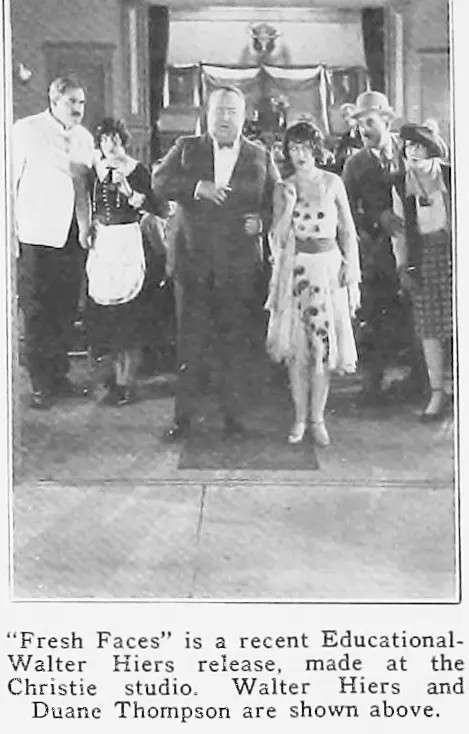
The visual contrast between the orderly anticipation of the contest and the subsequent chaotic destruction is stark and memorable. The pristine roadster, initially a symbol of triumph, quickly becomes a victim of collective rage, its dismantling a vivid, if exaggerated, metaphor for shattered expectations. The clarity of the shots, even during the frenzied climax, ensures that every punch, every fall, and every piece of the car's destruction is visible, enhancing the comedic impact.
Slapstick, at its core, is primal. It taps into a universal understanding of physical pain and embarrassment, exaggerated for comedic effect. Fresh Faces is a prime example of this genre at an early stage. Its humor isn't intellectual; it’s visceral. The audience doesn't need to understand complex motivations or witty wordplay to grasp the joke when a car is torn to pieces by an angry mob. It’s simply funny because it’s absurd and destructive.
However, this reliance on pure physical comedy is also where the film faces its biggest challenge for a modern audience. We've become accustomed to more sophisticated humor, often layered with irony, satire, or character-driven wit. The straightforwardness of Fresh Faces can feel simplistic, even childish, to those not attuned to the conventions of silent film.
Yet, there's an undeniable charm in its unpretentiousness. It doesn't aspire to be anything more than a short, sharp burst of comedic energy. It works. But it’s flawed. My unconventional observation is that the film, inadvertently, acts as a fascinating commentary on the fragility of public consensus and the explosive potential of dashed hopes, all wrapped in a comedic package. The prize, the car, becomes a symbol of collective desire, and its destruction, a cathartic release of collective frustration. It’s almost sociological in its depiction of mob mentality, even if played for laughs.
One might even argue that the film's simple message—don't trust a crooked judge, and don't promise what you can't deliver—is timeless, echoing through every generation's political and social landscape. The film doesn't delve deep into these themes, but their presence is undeniable, adding a surprising layer of resonance beneath the slapstick.
Yes, Fresh Faces is worth watching today, but with specific expectations. It's a foundational piece of silent comedy. It offers a clear, energetic narrative. It showcases early slapstick humor effectively. However, its humor is dated. Its characters lack depth. It's a short film, so it's not a huge time commitment.
Fresh Faces is a delightful, if slight, piece of silent comedy that serves as a charming historical artifact. It perfectly encapsulates the straightforward, physical humor that defined much of early cinema. While it won't challenge your intellect or stir your emotions deeply, it delivers exactly what it promises: a quick, funny, and ultimately chaotic look at small-town vanity and the consequences of a judge's duplicity. It’s a film that demands a generous spirit and an appreciation for its historical context.
For those who cherish the roots of cinematic comedy, or simply want a brief escape into a bygone era of pure, unadulterated slapstick, Fresh Faces is a worthwhile, if not essential, watch. Just don't expect the nuanced brilliance of a Chaplin or the breathtaking stunts of a Keaton; expect instead a raucous, good-natured romp that reminds us where so much of our modern humor began. It’s an interesting curio, a laugh, and a lesson in film history, all rolled into one.

IMDb 3.5
1927
Community
Log in to comment.