DbcultAccessing Vault...
Cult Review
Senior Film Conservator
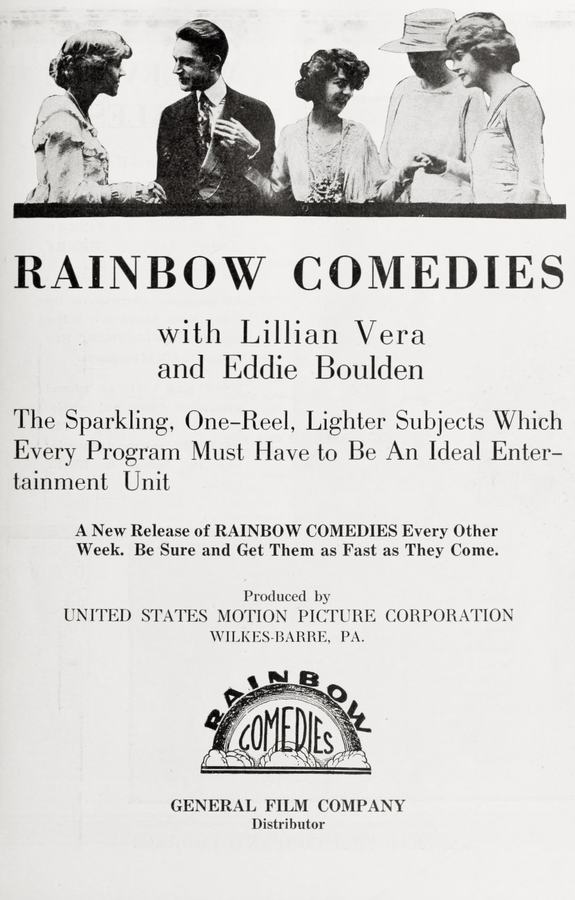
From the very first frame, 'The Camouflaged Baby' plunges its audience into a world steeped in profound ethical dilemmas and heart-wrenching human choices, cementing its place as an indelible cinematic experience. This isn't merely a film; it’s a meticulously crafted psychological odyssey that dissects the very fabric of maternal love, identity, and the harrowing lengths to which individuals are driven when confronted with insurmountable threats. The film, starring the incandescent Lillian Vera and the formidable Edward Boulden, transcends genre conventions, offering a narrative tapestry woven with threads of suspense, drama, and an almost unbearable emotional intensity that lingers long after the credits roll. It’s a testament to the power of storytelling when every element, from the understated score to the poignant cinematography, conspires to create something truly unforgettable.
The film’s brilliance lies in its unflinching portrayal of Elara, brought to life with astonishing vulnerability and fierce resolve by Lillian Vera. Elara is not just a character; she is a crucible of human emotion, a woman trapped in a perilous existence dictated by a shadowy syndicate, her life a constant tightrope walk between survival and utter despair. When she discovers her pregnancy, the stakes are ratcheted up to an almost unbearable degree. The child, an innocent beacon of hope, simultaneously becomes the ultimate liability, a living testament to her forbidden humanity within a world that demands absolute subservience. Vera’s performance is nothing short of masterful; her eyes convey volumes of unspoken terror, her every gesture a silent scream of anguish and determination. This isn't the kind of over-the-top melodrama one might find in a lesser production like The Girl Without a Soul, but rather a nuanced, deeply internalised portrayal of a woman on the brink, her spirit tested by the most unimaginable circumstances.
The 'camouflage' of the baby, the central narrative device, is not merely a plot contrivance; it's a profound metaphor for the masks we wear, the identities we shed, and the sacrifices we make in the name of protection. The intricate plan, conceived with the help of the morally ambiguous Dr. Silas Thorne, played with chilling precision by Edward Boulden, involves faking the infant’s death and orchestrating a clandestine swap with another family. Boulden, often celebrated for his more overt villainous roles, as seen in the menacing undertones of Darkest Russia, here delivers a performance of subtle, unsettling complexity. Dr. Thorne is neither purely benevolent nor entirely malevolent; he exists in the grey, a pragmatist whose actions, while aiding Elara, are tinged with an almost clinical detachment that keeps the audience guessing his true motives. His quiet intensity provides a perfect foil to Vera’s raw emotionality, creating a dynamic tension that propels the narrative forward with relentless momentum.
The film’s direction is impeccable, meticulously building suspense not through cheap jump scares but through the slow, agonizing reveal of information and the constant threat of exposure. Every whispered conversation, every furtive glance, every near miss is imbued with a palpable sense of dread. The visual language is equally compelling, employing a palette of muted tones and stark contrasts that mirror Elara’s internal world. Shadows cling to corners, enveloping characters in an almost claustrophobic embrace, reflecting the secrecy that defines their lives. The cinematography, at times intimate and at others sweeping, captures both the minute details of Elara’s torment and the vast, oppressive world she inhabits. This visual sophistication elevates the film beyond a mere thriller, positioning it closer to the contemplative, atmospheric dramas like The Lost Chord, albeit with a much darker, more urgent undercurrent.
One of the most profound aspects of 'The Camouflaged Baby' is its exploration of identity, not just for the infant, whose true parentage is hidden, but for Elara herself. She must adopt new personas, suppress her maternal instincts in public, and live a life constantly on guard. This psychological burden is immense, and Vera conveys it with heartbreaking authenticity. The film brilliantly questions what it means to be a mother when societal constraints and existential threats deny one the most fundamental expression of that role. It’s a compelling study in resilience, but also in the corrosive nature of prolonged secrecy. The narrative skillfully avoids easy answers, presenting a moral landscape where 'right' and 'wrong' are blurred by necessity and love. This nuanced approach to morality echoes the complex characterizations found in films like In the Balance, where characters are forced to make impossible decisions with far-reaching consequences.
The supporting cast, though less prominent, provides crucial texture to this intricate world. The adoptive family, initially portrayed as unwitting participants, slowly begins to unravel the threads of the deception, adding another layer of tension to the already taut narrative. Their growing suspicions and the emotional fallout from their discovery are handled with a delicate touch, avoiding caricature and instead presenting them as sympathetic figures caught in a web not of their own making. This ensemble work, though subtle, is vital in grounding the extraordinary circumstances in a semblance of relatable human experience.
The film's pacing is deliberate, allowing moments of quiet reflection to punctuate the more intense sequences. This ebb and flow creates a rhythm that draws the audience deeper into Elara’s plight, making her struggles feel intensely personal. There’s a masterful use of silence, particularly in scenes where Elara observes her child from afar, a silent sentinel of love and longing. These moments, devoid of dialogue, are among the film’s most powerful, communicating the depth of her sacrifice more effectively than any spoken word could. It's a stark contrast to the often verbose and exposition-heavy narratives of films like The County Chairman, demonstrating a confidence in visual storytelling that is truly commendable.
Beyond the immediate thrills of its suspenseful plot, 'The Camouflaged Baby' delves into profound thematic territory. It’s a meditation on the nature of sacrifice – not merely in the grand, heroic sense, but in the quiet, agonizing daily renunciations that Elara endures. Her love for her child is a force so potent it compels her to dismantle her own life, sever her own identity, all for the sake of another. This theme of self-effacement for a greater, more fundamental love is explored with a depth rarely seen, perhaps only rivaled by the profound spiritual journeys depicted in films like A Child of God, though here the divinity is found in the fierce protective instinct of a mother.
The film also subtly critiques societal structures and the inherent vulnerability of individuals caught within systems of power that seek to control and exploit. The syndicate, while never fully detailed, looms as an omnipresent, almost abstract threat, a symbol of the larger forces that often dictate the fates of the marginalized. Elara’s struggle is not just against specific antagonists but against the very fabric of an oppressive reality. This broader social commentary adds another layer of richness to the narrative, inviting viewers to consider the real-world implications of such desperate acts of survival. It’s a more nuanced take than the clear-cut good-vs-evil narratives of films like William Voß. Der Millionendieb, where the antagonists are overtly villainous; here, the system itself is the primary antagonist.
The sound design is another unsung hero of 'The Camouflaged Baby'. The judicious use of ambient noise, the subtle shifts in the musical score – composed with haunting melodies that ebb and flow with Elara's emotional state – all contribute to the immersive quality of the film. There are moments when the silence is deafening, amplifying the internal turmoil of the characters, and moments when the score swells, not to manipulate, but to underscore the profound emotional stakes. This careful crafting of the auditory experience ensures that the audience is not merely watching a story unfold, but actively participating in Elara’s journey, feeling her fear, her hope, and her enduring love.
Ultimately, 'The Camouflaged Baby' is a triumph of cinematic artistry and emotional storytelling. It's a film that demands your attention, rewards your patience, and challenges your perceptions of love, family, and survival. Lillian Vera delivers a career-defining performance, matched by Edward Boulden’s understated yet impactful presence. The narrative is complex without being convoluted, the themes are universal yet deeply personal, and the execution is nearly flawless. It stands as a powerful counterpoint to more straightforward adventure tales such as Cavanaugh of the Forest Rangers, offering instead a profound exploration of internal landscapes. This is not just a film to be watched; it is a film to be experienced, to be felt, and to be pondered long after the final scene fades. It leaves an indelible mark, prompting introspection about the nature of parenthood, the power of resilience, and the sometimes-terrible beauty of human connection under duress. It is, without hyperbole, a modern classic that will be discussed and analyzed for years to come, a testament to the enduring power of cinema to reflect and refract the complexities of the human condition.
In a landscape often saturated with superficial narratives, 'The Camouflaged Baby' emerges as a beacon of profound cinematic achievement. Its intricate plot, driven by characters so richly drawn they feel utterly real, avoids the pitfalls of predictability. The film’s conclusion, rather than offering a facile resolution, provides a nuanced culmination that resonates with the complexities of life itself. It leaves the audience not with definitive answers, but with a profound understanding of the enduring power of love and the sacrifices it sometimes demands. This is a film that demands revisiting, revealing new layers with each viewing, much like a great novel. Its impact is akin to the deep emotional resonance found in classics that explore profound human dilemmas, offering a mirror to our own fears and hopes. It truly stands apart.
The creative choices made in 'The Camouflaged Baby' regarding its visual style are particularly noteworthy. The film utilizes a muted color palette, occasionally punctuated by stark, almost expressionistic lighting that emphasizes the emotional states of the characters. When Elara experiences moments of fleeting hope or intense fear, the lighting shifts to reflect this internal turmoil, drawing the audience into her psychological space. This deliberate use of light and shadow, reminiscent of early film noir, enhances the sense of peril and the constant threat of discovery. The urban landscapes are depicted with a gritty realism, portraying a world that is indifferent, if not hostile, to the individual struggles unfolding within it. This aesthetic choice ensures that the setting is not just a backdrop, but an active participant in the narrative, exerting pressure on the characters and amplifying the feeling of entrapment.
Moreover, the narrative structure itself is a marvel of intricate planning. Flashbacks are sparingly used, but when they appear, they serve to deepen our understanding of Elara’s past and the circumstances that led her to her current predicament, rather than merely providing exposition. This non-linear storytelling technique, when employed correctly, can elevate a film from good to exceptional, and 'The Camouflaged Baby' executes it with precision. It avoids the disjointed feel that sometimes plagues films attempting such structures, maintaining a coherent and compelling flow. The interplay between past revelations and present dangers creates a rich tapestry of cause and effect, where every decision, no matter how small, carries immense weight. The writers clearly understood that a complex story requires equally complex methods of revelation, ensuring that the audience is constantly engaged in piecing together the full picture.
In conclusion, 'The Camouflaged Baby' is an absolute triumph. It is a film that will undoubtedly provoke discussion, evoke strong emotions, and solidify its place as one of the most compelling dramas of its era. Its masterful blend of suspense, character-driven storytelling, and profound thematic exploration makes it an essential viewing experience for anyone seeking cinema that challenges, moves, and ultimately, enriches. Lillian Vera and Edward Boulden deliver performances that are nothing short of extraordinary, anchoring a story that is as heartbreaking as it is thrilling. This is not just entertainment; it's a profound artistic statement, a powerful testament to the indomitable spirit of human connection and the lengths to which love will go to protect its most vulnerable. It stands as a beacon of intelligent, emotionally resonant filmmaking in an industry often starved for such depth.
IMDb —
1917
Community
Log in to comment.