DbcultAccessing Vault...
Cult Review
Senior Film Conservator
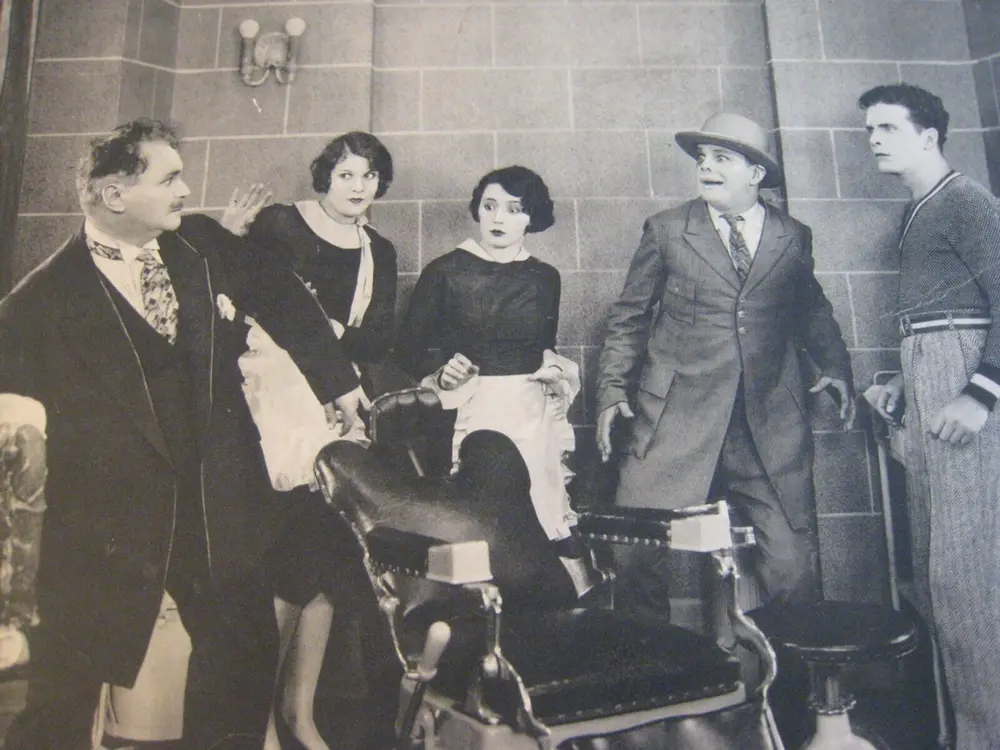
Fresh Hair Fiends is only worth your time if you have an academic interest in the 'Beauty Parlor' comedy series or a high tolerance for the loud, repetitive rhythms of late-1920s slapstick. It is not a forgotten classic, nor does it possess the sophisticated physical choreography of a Keaton or Lloyd production. This is a film for the completionist who enjoys seeing the mechanics of low-budget silent comedy, but general audiences will likely find the relentless mugging and predictable gags more exhausting than entertaining.
The film works as a frantic snapshot of 1920s service-industry humor, but it fails to find a unique voice in a decade that was already perfecting the art of the short-form gag. You should watch it if you want to see how Al Cooke and Kit Guard functioned as a comedic unit before the talkies changed the landscape. You should skip it if you require a plot that does more than move characters from one shaving cream accident to the next.
Fresh Hair Fiends belongs to the 'Beauty Parlor' series produced by Larry Darmour, a staple of the late silent era that served as a training ground for various comedic talents. Unlike the more polished efforts coming out of the Hal Roach or Mack Sennett lots, these shorts often feel a bit rougher around the edges. There is a bluntness to the humor here. It isn't about the grace of movement; it’s about the indignity of the customer.
The shop setting allows for a specific kind of domestic-adjacent chaos. When Al Cooke gets to work with a pair of scissors, the audience knows exactly what is going to happen—a botched haircut, a nicked ear, or a face full of foam. There is no subversion of expectation. While some might find this comforting, it highlights the film's lack of ambition. Compared to a film like A Broadway Cowboy, which attempts a bit more narrative friction, Fresh Hair Fiends is content to stay in its lane of predictable service-worker incompetence.
The chemistry between Al Cooke and Kit Guard is the film’s primary engine. Cooke is the more expressive of the two, often playing the frantic lead whose internal panic drives the pacing. Guard acts as the foil, though the distinction between their roles is often blurred by the sheer speed of the action. They don't have the clear 'brain and brawn' or 'smart and stupid' dynamic of more successful duos. Instead, they both seem equally prone to disaster.
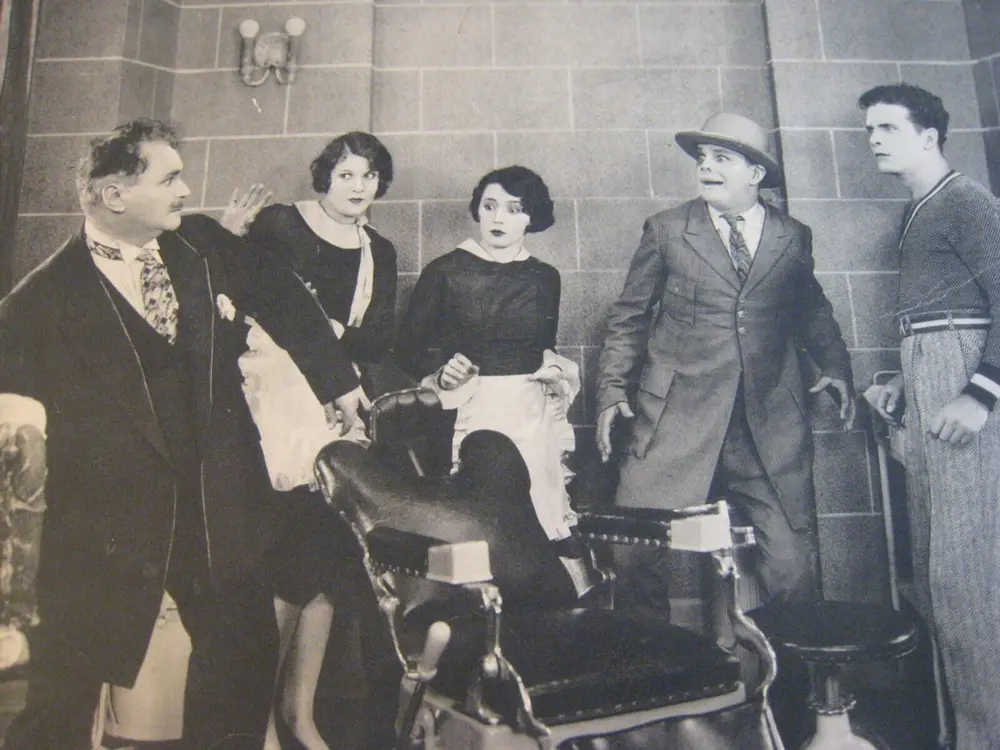
One of the film's debatable points is whether Al Cooke was actually a talented physical comedian or just a very fast one. He moves with a jittery intensity that suggests he’s trying to outrun the thinness of the script. In scenes where he is interacting with Lorraine Eason, there is a missed opportunity for a more grounded comedic tension. Eason, who showed more range in films like The French Doll, is largely used as a visual anchor here, a straight-woman to the lunacy that rarely gets her own moment to shine.
"The film treats the beauty parlor not as a place of transformation, but as a site of inevitable mutilation."
The biggest hurdle for Fresh Hair Fiends is the repetition. By the second time a customer is subjected to a disastrous treatment, the joke has already peaked. Unlike Just a Good Guy, which manages to vary its situational humor, this short stays locked into a singular mode. The cinematography is functional but uninspired, mostly sticking to medium shots that capture the full-body movement of the actors without adding any visual wit to the proceedings.
There is a certain honesty in how little the film cares about its plot. It knows why people bought tickets: to see people fall over and get things thrown at them. However, by 1928, the audience’s palate was becoming more sophisticated. The looming arrival of sound would soon make this brand of broad, silent mugging feel like a relic of a simpler, cruder time. It lacks the cleverness found in Stolen Goods, opting instead for the easiest laugh available.
Pros:
- High-energy performances from the lead duo.
- Interesting look at the 'Beauty Parlor' series aesthetics.
- Short runtime prevents it from becoming truly unbearable.
Cons:
- Derivative gags.
- Lorraine Eason is severely underutilized.
- The humor feels dated even by 1928 standards.
Fresh Hair Fiends is a loud, messy, and ultimately forgettable comedy that serves as a reminder that not everything from the silent era is a lost treasure. It’s a work-a-day short that did its job in 1928 but offers very little to a modern viewer beyond a few frantic chuckles. It’s a bit of cinematic junk food—fast, greasy, and devoid of any real substance. If you've already exhausted the catalogs of the greats, you might find a few minutes of diversion here, but don't expect it to stick with you once the foam settles.
IMDb 5.6
1932
Community
Log in to comment.