DbcultAccessing Vault...
5.6/10
Senior Film Conservator
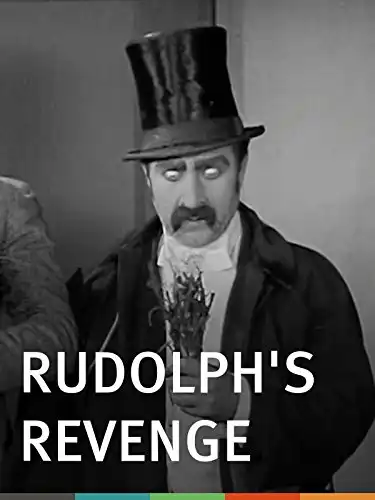
A definitive 5.6/10 rating for a film that redefined the boundaries of cult cinema. Rudolph's Revenge remains a cornerstone of transgressive art.
If you're looking for a quiet evening with an old movie, something that feels like pulling a forgotten gem from a dusty attic, then "Rudolph's Revenge" might just hit the spot. This one is absolutely for the folks who appreciate the dramatic flair of early cinema, the kind of melodrama where every gesture feels huge. If you need modern pacing or subtle performances, though, you’ll probably find yourself drumming your fingers by the ten-minute mark. It's a specific taste, for sure.
The plot itself is simple enough: Bad Guy Rudolph wants Good Girl Belinda, so he blackmails her father. But Belinda loves Good Guy Harry, who will, naturally, save the day. This kind of setup, from writer C.W. Kahles, always feels so wonderfully direct, almost like a stage play transferred straight to film.
Vincent Brownell as Rudolph really leans into the villainy. He’s not just a little bit bad; he’s full-on, twirling-his-imaginary-mustache bad. There’s this one shot where he's explaining his demands to Belinda’s father, holding a document that looks suspiciously like a grocery list, and the way his eyes just gleam — it’s honestly quite chilling for a film of this vintage. You can almost feel the movie trying to convince you this moment matters, and because Brownell commits, it kind of does. His sneer is practically a character all its own.
Belinda, played by Wanda Sibbald, does a fantastic job of looking distressed, then hopeful, then distressed again. Her wide-eyed pleas to her father are heartbreaking in that exaggerated, silent-film way. It’s not a performance full of nuance, but it absolutely sells the damsel-in-distress angle. Her hands wringing, the quick glances off-camera for help – it’s all there, big and bold.
Then there's Harry, our hero, played by Roger Moore (no, not that Roger Moore, but a different, earlier one, mind you). His commitment to saving Belinda is pretty intense. There's a scene where he’s trying to sneak into Rudolph’s mansion, scaling a wall that’s clearly just a painted canvas, and he almost trips over a potted plant placed rather awkwardly by the edge. It’s a tiny moment, but it makes him feel a bit more human, less of a perfect hero, which I actually quite liked. 🪴 He’s determined, yes, but also a little clumsy, a little real.
The pacing is what you’d expect from this era. Some scenes linger a bit, letting the emotion sink in, or maybe just because that’s how they did things. The build-up to Harry's big rescue feels a bit drawn out, especially the sequence where he rides his horse through what looks like the same three trees over and over. There's a long shot of Harry just... standing, thinking, before he finally makes his move. You almost want to yell, "Go, Harry, go!" 🏃♂️
Bud Duncan and Jimmy Aubrey provide some welcome comic relief, often through exaggerated physical comedy that feels very much of its time. Their characters are always popping up at just the right — or wrong — moment, adding a lightness that keeps the melodrama from becoming too heavy. One bit where Duncan tries to hide behind a ridiculously small bush, then peeks out with one eye, made me genuinely chuckle. It’s these little, sometimes accidental, moments that really stick with you. They feel like the movie's little winks at the audience.
The film has this charm to it, even with its very obvious budget constraints. The sets are simple, often just painted backdrops or slightly rickety furniture, but they do their job. You don’t need elaborate visuals when the actors are giving it their all with those expressive faces. The whole thing feels a bit like watching a play where the actors are really going for it.
I did notice one odd thing: the continuity around Belinda's hair ribbon. It seems to appear and disappear in a few quick cuts during a particularly frantic scene where she's trying to escape. Small detail, yes, but once you see it, you can't unsee it. 🎀 Also, the camera work, while mostly static, occasionally throws in a surprising close-up on a character's face that feels quite modern for the time. It really punches home an emotion.
The whole "blackmail for marriage" plot feels so wonderfully old-school. It’s not about complex motivations; it’s just pure, unadulterated villainy meeting pure, unwavering love. There’s a certain comfort in that simplicity. No moral gray areas here.
The ending, while predictable, delivers exactly what you'd want from a story like this. It doesn't reinvent the wheel, but it gives a satisfying little flourish, tying everything up neatly with a bow. It's not trying to be anything more than what it is, and honestly, that's refreshing.
Overall, "Rudolph's Revenge" is a neat little time capsule. It's not going to change your life, but it offers a genuine look at early storytelling. It's earnest, a little goofy, and has its heart in the right place. Good for a rainy afternoon, especially if you're curious about how films used to tell stories. 🌧️ It's certainly a more engaging watch than some of the other historical pieces I've stumbled upon lately, like maybe even Die Unschuld ohne Kleid which, well, that's a whole other story.

IMDb —
1930
Community
Log in to comment.