DbcultAccessing Vault...
Cult Review
Senior Film Conservator
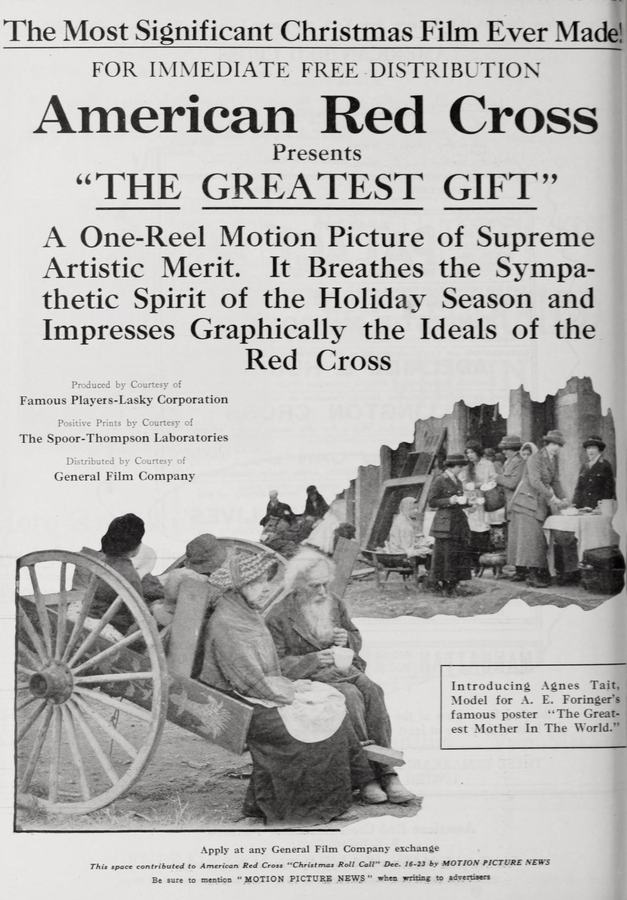
In the pantheon of early non-fiction cinema, few works possess the unvarnished gravity of The Greatest Gift. While the contemporary viewer might be habituated to the high-definition polish of modern advocacy media, there is something uniquely haunting about the grainy, flickering frames of this documentary. Written by the astute Hamish McLaurin, the film functions as both a historical record and a moral manifesto. It does not merely show us the work of the American Red Cross; it immerses us in the very ethos of intervention. Unlike the scripted melodrama of Mickey, which relies on the charm of its protagonist to drive the narrative, this film finds its soul in the collective, the anonymous, and the systemic. It is a study of power—not the power of the individual, but the power of the institution to mitigate the cruelties of fate.
The documentary’s structure is fascinatingly episodic, yet it maintains a cohesive thematic undercurrent that ties disparate disasters together. Whether the camera is lingering on the aftermath of a flood or the sterile corridors of a field hospital battling influenza, the message remains constant: suffering is universal, but so is the capacity for relief. McLaurin’s writing provides a framework that elevates the footage from mere newsreel to a philosophical inquiry into the 'gift' of the title. What is this gift? It is the sacrifice of time, the mobilization of resources, and the unwavering presence of a safety net in an era where social security was a nascent concept. It stands in stark contrast to the escapist fantasies of the time, such as the whimsical The Fates and Flora Fourflush, demanding that the audience look directly into the eyes of their suffering neighbors.
To understand the impact of The Greatest Gift, one must contextualize it against the broader cinematic landscape of its era. In a time when audiences were captivated by the exoticism of East Is East or the romantic entanglements of Gretna Green, a documentary focusing on disease and disaster was a bold, almost confrontational choice. Where a film like Face Value might explore the superficialities of social standing, McLaurin’s work strips away all class distinctions. In the face of a pandemic or a hurricane, everyone is reduced to their most primal state of need. This egalitarian view of suffering was revolutionary, positioning the Red Cross as a truly democratic force.
Furthermore, the film’s portrayal of duty and morality offers a fascinating counterpoint to the era's crime dramas. While The Criminal Path or the detective intrigue of Stuart Webbs: Das Panzergewölbe sought to entertain through the exploration of deviance, The Greatest Gift seeks to inspire through the exploration of virtue. It posits that the true mystery of the human condition is not why we fail, but why we choose to help. This didacticism is never heavy-handed; instead, it is woven into the very fabric of the visual storytelling. We see the tired eyes of the nurses, the mud-caked boots of the relief workers, and the trembling hands of the survivors. These are not actors; they are the living embodiment of a narrative that is still being written today.
Technically, the film is a marvel of early documentary filmmaking. The cinematography utilizes wide shots to establish the overwhelming scale of disaster, effectively dwarfing the individual and emphasizing the magnitude of the task at hand. However, it is in the close-ups that the film finds its emotional resonance. The focus on a single loaf of bread being handed to a hungry child or a bandage being applied to a wound provides a micro-level intimacy that balances the macro-level tragedy. This interplay between the vast and the minute is a testament to McLaurin’s sophisticated understanding of visual rhythm. It is a far cry from the static, stagey compositions often found in contemporary features like The Trufflers.
The editing, too, plays a crucial role in maintaining the film's momentum. In an age where long takes were the norm, the rapid cutting between different relief efforts creates a sense of urgency and global reach. We move from the rural devastation of a flood to the urban crisis of a plague with a fluidity that suggests a world interconnected by its shared vulnerabilities. This sense of global community is something rarely seen in the more insular narratives of the time, such as the localized melodrama of Chernaya lyubov. The Greatest Gift argues that no tragedy is isolated, and therefore, no relief effort should be either.
One of the most striking aspects of the film is its refusal to indulge in sentimentality. While a film like A Mother's Ordeal might lean heavily on emotional manipulation to elicit a response, The Greatest Gift relies on the inherent drama of reality. There is no need for exaggerated performances when the truth is this compelling. The 'ordeal' here is not a singular domestic tragedy, but a collective human experience. By focusing on the logistical reality of the Red Cross—the shipping of supplies, the setting up of tents, the coordination of volunteers—the film highlights the intellectual and physical labor required to sustain hope. It is a celebration of competence as much as it is a celebration of kindness.
This focus on the 'work' of relief also serves as a subtle critique of the 'get-rich-quick' mentality that was beginning to permeate American culture. While films like Get-Rich-Quick Wallingford poked fun at the schemes and scams of the era, The Greatest Gift presents a different kind of investment—one that yields dividends in human lives saved rather than dollars earned. It asks the audience to reconsider their definition of wealth, suggesting that the true 'greatest gift' is the ability to contribute to the well-being of others. This moral clarity is refreshing, providing a sturdy foundation for a documentary that could have easily devolved into mere propaganda.
Viewing The Greatest Gift today, one is struck by how little the fundamental nature of humanitarian work has changed. The technology has evolved, certainly, but the core challenges—logistics, communication, and the sheer unpredictability of nature—remain the same. The film serves as a precursor to the modern 'impact' documentary, setting the template for how organizations can use cinema to advocate for their cause. It lacks the cynicism of The Black Envelope or the fatalism of Amor fatal, offering instead a vision of proactive optimism. It is a film that believes in the possibility of a better world, provided we are willing to work for it.
In the context of early cinema, where the medium was still finding its voice as a tool for social change, this documentary is a towering achievement. It avoids the pitfalls of being overly dry or academic, maintaining a visceral connection to the subject matter throughout its runtime. Even when compared to the silent thrillers like Der stumme Zeuge, the tension in The Greatest Gift is palpable—not from a fictional threat, but from the very real threat of extinction that disease and disaster represent. The 'silent witness' here is the camera itself, documenting a struggle that is as old as humanity.
Perhaps the film's most enduring quality is its ability to humanize the statistics. We often hear about the 'thousands affected' by a crisis, but McLaurin’s script ensures we see the faces behind those numbers. We see the innocence of American Buds reflected in the children receiving vaccinations, their eyes wide with a mix of fear and wonder. We see the resilience of the elderly, who have survived the worst that nature can throw at them and still stand tall. These moments of individual humanity are what make the film so much more than a corporate video for the Red Cross. They are what make it a work of art.
As the final frames flicker out, the viewer is left with a profound sense of gratitude—not just for the work of the Red Cross, but for the filmmakers who had the foresight to document it. The Greatest Gift is a reminder that cinema has always been more than just entertainment; it is a mirror, a window, and a call to action. In the vast library of film history, this documentary stands as a quiet but powerful testament to the fact that, even in our darkest hours, the impulse to help remains our most defining characteristic. It is a gift that keeps on giving, both to the subjects of the film and to the audiences who continue to be moved by it nearly a century later.
In conclusion, Hamish McLaurin has crafted a narrative that transcends its era. By focusing on the perennial struggle against disease and disaster, he has created a film that is as relevant today as it was upon its release. It is a masterclass in documentary storytelling, proving that the most compelling stories are often the ones that are true. Whether you are a student of film history or simply someone interested in the history of humanitarianism, The Greatest Gift is essential viewing. It is a stark, beautiful, and ultimately hopeful look at what happens when we choose to care for one another.
IMDb 5.2
1937
Community
Log in to comment.