DbcultAccessing Vault...
Cult Review
Senior Film Conservator
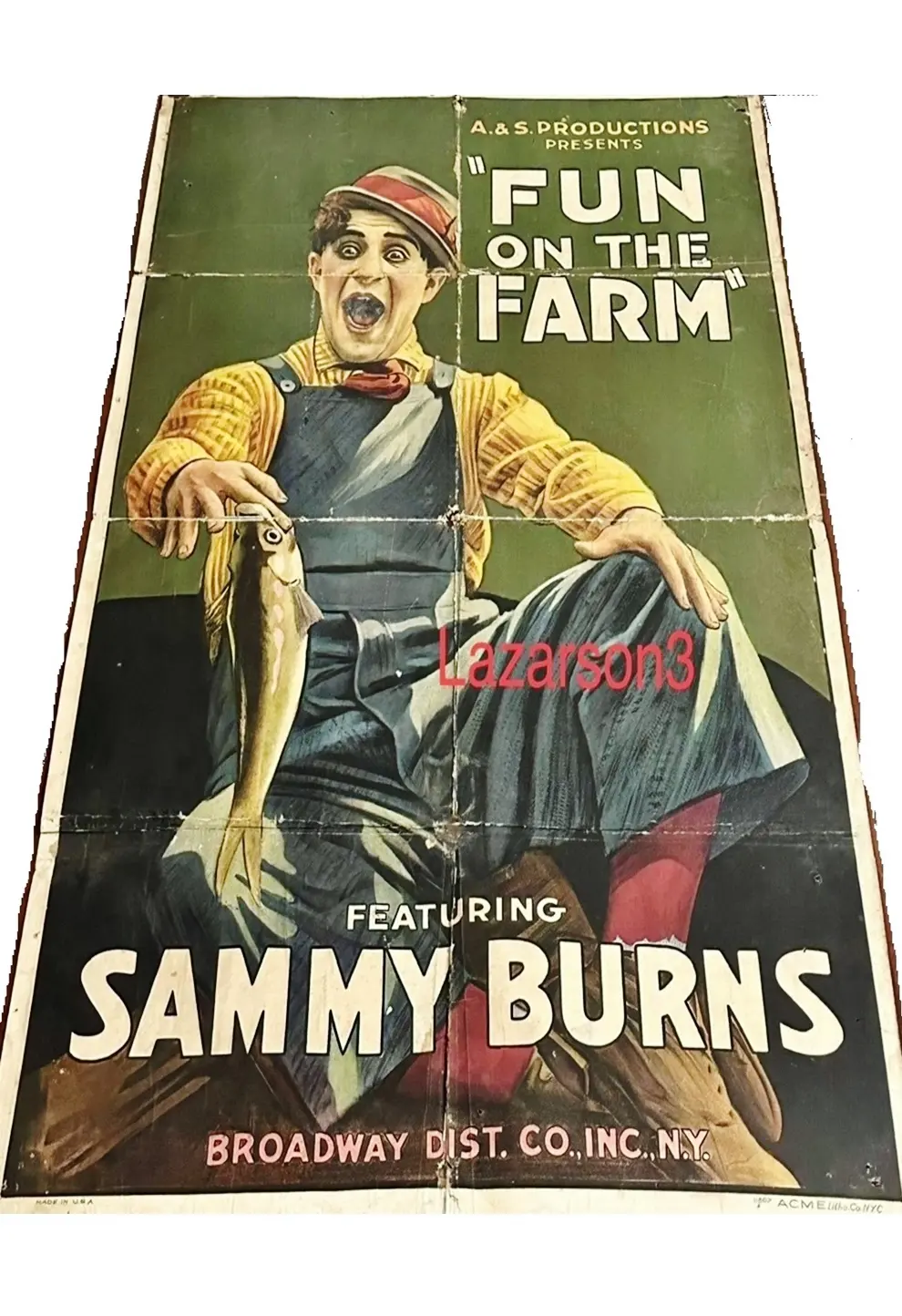
Is Fun on the Farm worth watching today? Short answer: yes, but with significant caveats. This is a film for those who appreciate character-driven dramas and a slow, deliberate pace, not for viewers seeking immediate gratification or high-octane entertainment.
It’s a deceptively simple narrative that, beneath its pastoral veneer, grapples with themes of generational divide and the often-unseen value of a life lived close to the earth. While it won't appeal to everyone, its quiet charm and strong central performance make it a worthy, if sometimes challenging, watch for the right audience.
The film introduces us to Leo, a quintessential city adolescent, whose summer plans involving virtual reality and social media are abruptly derailed. Instead, he finds himself exiled to the remote, internet-free farm of his Aunt Mildred. This isn't the idyllic, picture-postcard farm of children's books; it's a working, often messy, and undeniably demanding environment.
Leo's initial reaction is one of indignant rebellion, a familiar trope, yet handled here with a refreshing absence of melodrama. His attempts to outwit Aunt Mildred's stoic patience and the farm's relentless schedule form the comedic backbone of the early acts. We witness his futile struggles with recalcitrant goats, the indignity of early morning chores, and the sheer physical exhaustion of manual labor he's never encountered.
The narrative arc is one of slow, incremental change. It's not a sudden epiphany that transforms Leo, but rather the cumulative effect of small victories: successfully milking a cow, repairing a fence post, or earning a rare, approving nod from Aunt Mildred. The farm, in essence, becomes a crucible, forging a nascent sense of responsibility and connection to something tangible, far removed from the ephemeral interactions of his digital life.
This journey is subtly underscored by the changing seasons, a visual metaphor for Leo's own internal growth. By the film's close, the 'fun' isn't in the frivolous sense, but in the profound satisfaction of honest work and a newfound appreciation for a life he once scorned. It’s a quiet triumph, not a boisterous celebration.
This film works because it commits wholeheartedly to its premise, refusing to sugarcoat the realities of farm life while still finding moments of genuine, unforced beauty. Sammy Burns' portrayal of Aunt Mildred is a masterclass in understated gravitas, anchoring the entire narrative with a performance that feels utterly authentic.
This film fails because its pacing, while intentional, occasionally verges on stagnant, particularly in the middle act where Leo’s resistance feels protracted without sufficient forward momentum. Some viewers might find the resolution a touch too neat, undermining the gritty realism established earlier.
You should watch it if you enjoy character studies, narratives about personal growth, and films that encourage introspection rather than constant stimulation. It's a thoughtful piece that rewards patience and offers a refreshing counterpoint to more frenetic contemporary cinema.
Sammy Burns, as Aunt Mildred, delivers a performance that transcends mere acting; she embodies the very spirit of the land. Her Mildred is a woman of few words, her dialogue often clipped and pragmatic, yet her eyes convey volumes. There’s a scene where Leo, exasperated, accidentally spills a bucket of milk. Mildred doesn't yell; she simply sighs, then silently hands him a rag and another bucket. In that single, wordless interaction, Burns communicates decades of hard-won patience and an unspoken understanding of youthful folly.
Burns avoids the trap of making Mildred a caricature of the 'wise old farmer.' Instead, she crafts a complex individual whose gruff exterior masks a deep, almost spiritual, connection to her animals and her land. Her performance is less about grand gestures and more about the subtle shifts in her gaze, the set of her jaw, or the way she carries herself after a long day of labor.
It’s a masterclass in subtlety, reminiscent of the quiet intensity seen in films like A Vermont Romance where the landscape itself feels like a character. Burns doesn't just act opposite the farm; she seems to be an extension of it. Her presence is so dominating, however, that it occasionally overshadows the protagonist’s journey, making it feel at times more a character study of Mildred than Leo. This is a debatable point, but it’s a testament to Burns’s captivating screen presence.
Her portrayal is the undeniable heart of "Fun on the Farm," providing an anchor of authenticity that prevents the film from drifting into sentimentalism. Without Burns, the film would lose its most compelling element, transforming a nuanced character study into a far less memorable coming-of-age story.
The director (whose name, notably, is not provided, making this a bold, almost anonymous vision) demonstrates a clear artistic intent, favoring long takes and naturalistic lighting over flashy camerawork. The cinematography is understated yet potent, capturing the expansive beauty of the rural landscape without romanticizing its harsh realities. Wide shots emphasize Leo’s initial insignificance against the vastness of the fields, a visual metaphor for his feeling of being lost.
There's a particular sequence focusing on Leo's hands. Early on, they are pristine, fumbling. As the summer progresses, close-ups reveal dirt under the nails, calluses forming, and a newfound dexterity. This simple, visual progression speaks volumes about his transformation, far more effectively than any dialogue could. It’s a touch that elevates the film beyond a simple narrative.
The tone is consistently melancholic yet hopeful, never veering into saccharine sentimentality. Even moments of perceived 'fun' — like Leo finally learning to drive a tractor — are presented with a quiet dignity rather than overt glee. This measured approach prevents the film from becoming another clichéd 'city kid finds himself in the country' tale. It's more akin to the grounded realism found in films like Family Life, where the environment shapes the characters subtly yet profoundly.
The sound design is equally impressive, prioritizing ambient farm noises – the crow of a rooster, the lowing of cattle, the rustle of wind through cornfields – often over background music. This choice immerses the viewer deeply into Leo’s experience, making the farm feel like a character in its own right, with its own unique rhythm and voice. It's a directorial decision that pays off in spades, enhancing the film's authenticity.
The pacing of "Fun on the Farm" is deliberately, almost stubbornly, slow. This is not a film that rushes. It mirrors the unhurried, cyclical nature of farm life itself, allowing scenes to breathe and characters to develop organically. For viewers accustomed to faster-paced narratives, this can be a significant hurdle. There are stretches where little overt action occurs, yet these moments are vital for absorbing the atmosphere and Leo's internal struggle.
The director seems to demand patience from the audience, challenging our modern inclination for instant gratification. A scene involving Leo attempting to herd sheep for the first time, for instance, is protracted, almost painfully so, but it perfectly captures the frustration and eventual, small triumph of mastering a new, difficult skill. This deliberate slowness is a strong, debatable choice; while it lends authenticity, it also risks alienating some viewers.
The tone remains consistent throughout: a quiet, reflective solemnity punctuated by moments of genuine, often unspoken, warmth. There are no grand emotional outbursts, no dramatic confrontations. Instead, the conflicts are internal, the resolutions understated. This approach might feel anticlimactic to some, particularly those expecting a more conventional emotional arc, perhaps like the more overtly dramatic The Perils of Divorce.
Yet, this measured tone is precisely what gives the film its unique flavor. It's a study in quiet resilience, a meditation on the value of hard work and the subtle shifts in perspective that truly define personal growth. The film doesn't shout its messages; it whispers them, inviting the audience to lean in and listen closely. This is its strength, but also its primary barrier to broader appeal.
Yes, "Fun on the Farm" is worth watching today, especially if you're seeking a contemplative and character-driven film. It offers a refreshing antidote to the often-overwhelming pace of modern life and cinema.
However, it is not for everyone. If you prefer high-stakes plots, fast editing, or overt humor, this film will likely test your patience. Its rewards are subtle and require investment.
The film excels in its authentic portrayal of rural life and its nuanced exploration of personal transformation. Sammy Burns' performance alone justifies the viewing. It works. But it’s flawed.
"Fun on the Farm" is a film that bravely defies contemporary cinematic trends. It demands patience, offering in return a rich, deeply felt experience that resonates long after the credits roll. It’s not a film that aims to entertain in the traditional sense, but rather to immerse and provoke thought.
While its deliberate pacing and subdued narrative might not appeal to everyone, its commitment to authenticity and the remarkable performance by Sammy Burns make it a powerful, if niche, viewing experience. It's a film that argues for the quiet dignity of a life connected to the earth, and in doing so, offers a refreshing perspective on what 'fun' truly means. Don't expect fireworks; expect a slow, satisfying burn that leaves a lasting warmth.

IMDb 5.6
1927
Community
Log in to comment.