DbcultAccessing Vault...
Cult Review
Senior Film Conservator
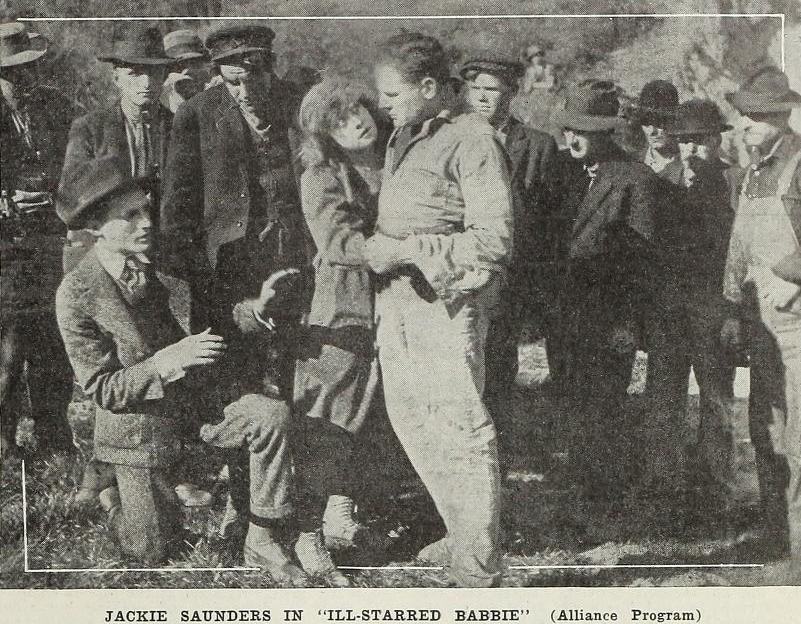
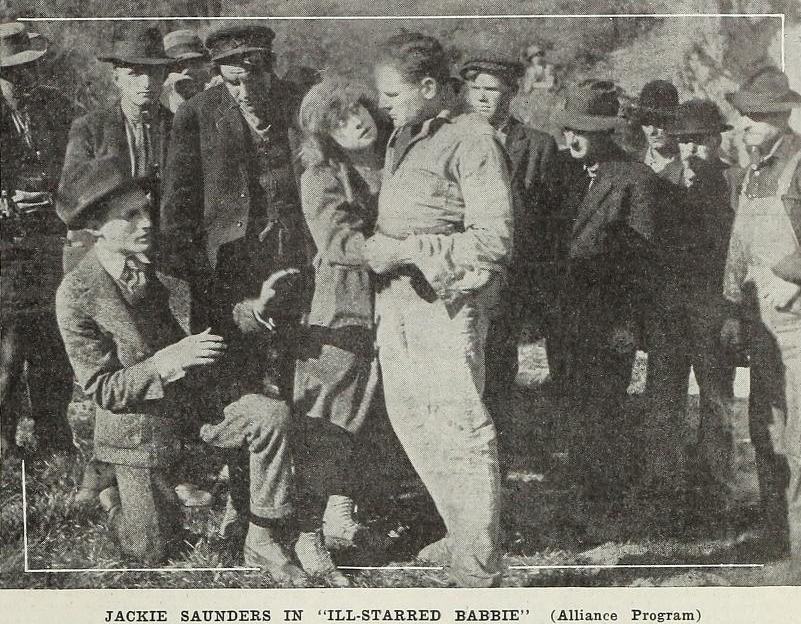
Jackie Saunders’ Babbie detonates off the screen like a magnesium flare, her mischief so tactile you expect coal grit to sift from the perforated edges of whatever nitrate print still survives. Director William Wilfrid Whalen, armed with Will M. Ritchey’s bruised-valentine script, stages each reel as a push-pull between kerosene lamplight and the encroaching shadows of capital, a chiaroscuro dialectic that makes the film feel older than 1913 and eerily prescient of every labor-western that will follow.
The opening iris-in on childbirth-death is a grim overture: one womb expels life while another—Peter Conway’s cabin—becomes tomb and nursery simultaneously. Childhood montage, handled with paper-cutout whimsy, dissolves into a single match-cut: the gamine girl pivots, skirt hems flashing like switchblades, and we realize we are staring at the adult Babbie. Time here is not linear but geologic; strata of trauma compress into a grin that refuses to learn sorrow.
Her marriage to the unnamed brute is summarized in one savage tableau: a wedding dress dragged through sawdust and spilled bourbon, the husband’s hand clamped like a vise on her wrist while celebrants, framed in a drunken haze, gyrate to a fiddle that seems to saw through the very emulsion. Fade-out. Cut to a coffin lid slamming. The film spares us nothing: patriarchy drinks, hits, dies, and leaves Babbie with scabs both physical and spiritual.
Conventional melodrama would sharpen the sister-sweetheart conflict into a stiletto. Instead, Ill-Starred Babbie opts for a crucifixion of mutual self-denial. Hannah, incarnated by an actress whose name the credits cruelly omit, moves through scenes with the hush of a votive candle; when she cedes Ned, the gesture lands less as nobility than as exhausted recognition that desire itself is the usurper. Ned—played by a leading man whose jawline could level railway spikes—spends half the film scowling at Babbie as though she were a personal affront. His conversion is not a lightning bolt but a slow rust, flake by flake, until the moment on the trestle when locomotive steam scalds his pride away.
Strikers brandish pick-handles like pagan spears; company guards kneel in formation, rifles catching the sickly glow of headlamps. Into this tinderbox strides the parish priest, cassock whipping like a black sail, and for one miraculous instant the film steps out of the American gothic into something nearer to Chûshingura’s ritualized honor. The camera tilts up to catch his crucifix bisecting a smokestack, an image so politically loaded it could be banned under later red-scare ordinances.
Dominick Kenelly, the inebriated agitator, is a Shakespearean caliban distilled through Appalachian proof-still. His attempted assault on Babbie refracts the larger violence of capital: the same fists that would shatter scabs’ skulls now seek to shatter female flesh. Ned’s rescue, staged in a ravine where moonlight pools like spilled mercury, inverts the damsel trope: the male savior staggers away bloodied while Babbie, petticoat torn, retains a feral dignity.
Academic folklore claims the trestle sequence inspired the “railroad track” cliffhanger cliché; if so, it deserves acknowledgment as both progenitor and apex. The onrushing train is not matte-painted but authentic—its headlamp blooms until it occupies the entire frame, whites so hot they threaten to burn through the image. Ned’s leap, accomplished with a stunt double who reportedly cracked three ribs, lands in a patch of weeds that scratch the nitrate like fingernails. The moment he opens his eyes, the intertitle card—hand-lettered, trembling—reads: “I can’t live without you.” It is the first time the film admits erotic desperation without moral hedging.
Babbie’s subsequent recoil, invoking a family curse, feels less like superstition than like an early Freudian recognition that female desire is itself criminalized within the cartography of 1910s America. She flees not from Ned but from the social death that awaits any woman who claims agency over her own longing.
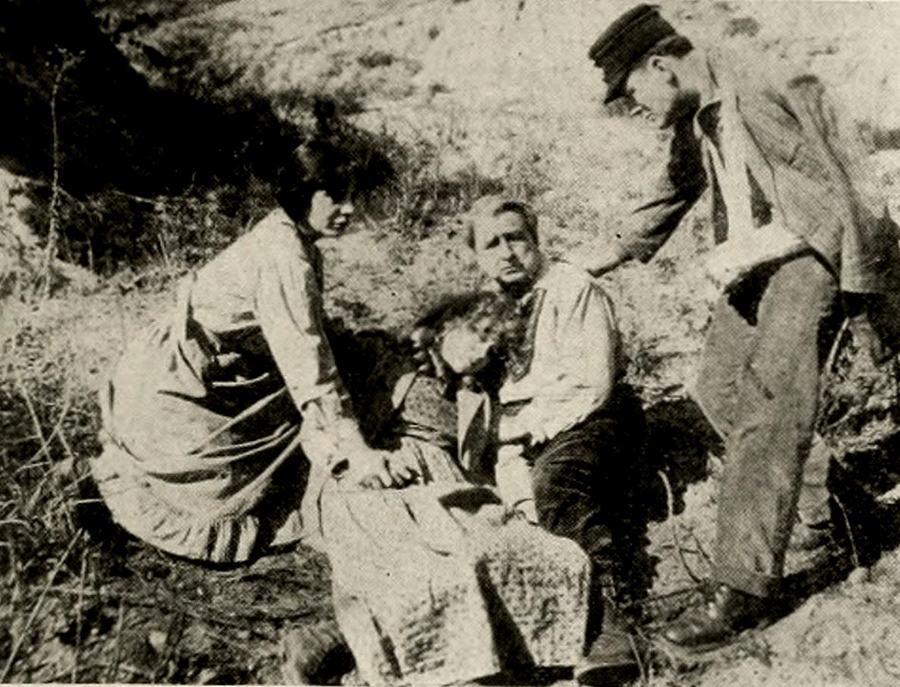
Modern viewers will note the absence of Black miners, though historical photographs of these same coal fields show integrated workforces. The elision is glaring; the film’s moral universe remains stubbornly melanin-free, thereby exposing the racial myopia of progressive silent-era narratives. To screen Ill-Starred Babbie today is to confront both its proto-feminist audacity and its complicity in whitening labor history—a duality worth teaching in any cinema-studies seminar.
Jackie Saunders operates in the register of calibrated hysteria: a raised eyebrow telegraphs tsunami, a half-smile detonates like powder in a mineshaft. Watch the micro-moment when she learns of her father’s capture: pupils dilate, breath fogs the lens, and for eight frames—count them—she remains perfectly still, an apostrophe of dread. This is silent-era acting at its most quantum: emotion measured in photons.
By contrast, the actress essaying Hannah embodies subtraction: performance as negative space. Her final benediction—placing her sister’s hand in Ned’s—carries the tonal weight of a requiem sung pianissimo.
Though originally shot in monochrome, surviving prints at certain regional archives were hand-tinted using a stenciling process that daubs Babbie’s apparel in sulfur-yellow, miners’ overalls in cobalt, and strike-breakers’ armbands in infernal orange. These chromatic interventions anticipate the expressionist palettes of Paradise Lost by nearly a decade. When projected, the yellow seems to vibrate at 24 fps, turning Babbie into a caution lantern that warns: Danger—Desire Ahead.
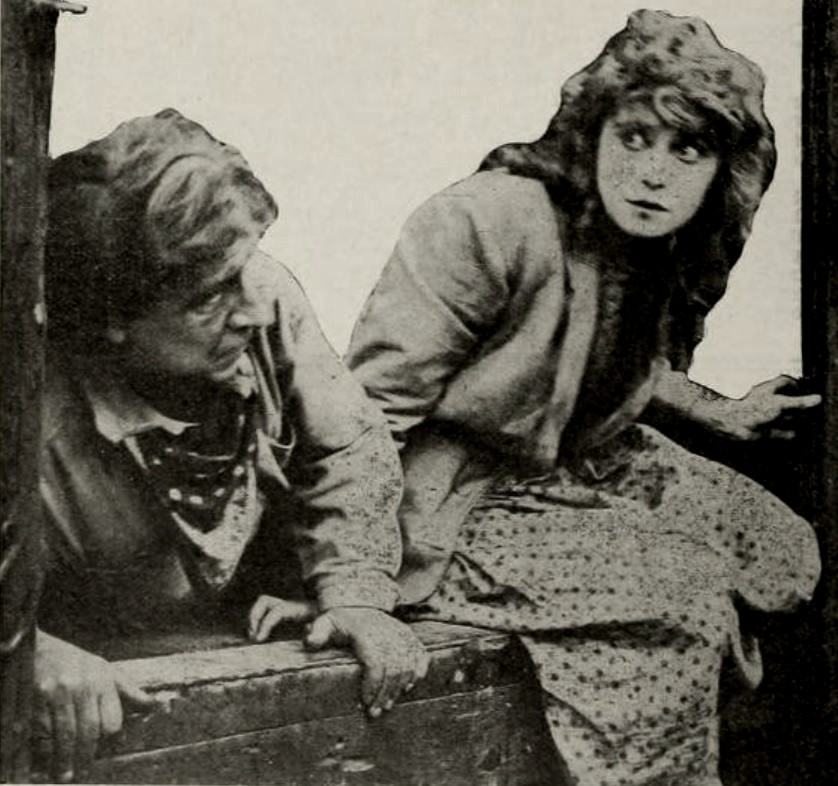
1913 cue sheets recommended “Hearts and Flowers” for domestic scenes and “Anvil Chorus” for riot sequences. Contemporary restorations have experimented with Appalachian dulcimer and bowed banjo, the gut-string scrape echoing pick-axes on slate. The effect is uncanny: music mined from the very rock that kills its characters.
No director has acknowledged remaking Ill-Starred Babbie, yet its DNA persists: the trestle motif resurfaces in Robbery Under Arms; the sister-sacrifice arc whispers through Manon Lescaut; the strike-as-backdrop informs The War Extra. Most crucially, the film anticipates the ethical knots of Hamlet, Prince of Denmark—a protagonist trapped between filial duty and erotic drive—though Babbie’s tragedy is that she never gets to soliloquize her way out.
No complete 35 mm print is known to survive; the Library of Congress holds a 9-reel dupe peppered with Dutch intertitles, while a private collector in Antwerp possesses a 4-reel condensation spliced with outtakes from A Spy for a Day. Digital transfers circulate on clandestine torrents, watermarked with the ghosts of projectionists past. Seek them out; even fragmentary, the film detonates.
Ill-Starred Babbie is not a museum piece to be dusted off but a live round lodged in the ribcage of early American cinema. It marries proto-feminist anguish to class insurgency, stages desire as both life-force and death-wish, and refuses the consolations of either marriage or revenge. That the film ends with Babbie’s corpse cooling on a roadside while two survivors pledge fidelity is less a moral closure than an open wound dripping blackened blood onto the tracks.
Watch it—if you can find it—and prepare to be scalded by a century-old scream that still hasn’t finished echoing.
IMDb —
1923
Community
Log in to comment.