DbcultAccessing Vault...
Cult Review
Senior Film Conservator
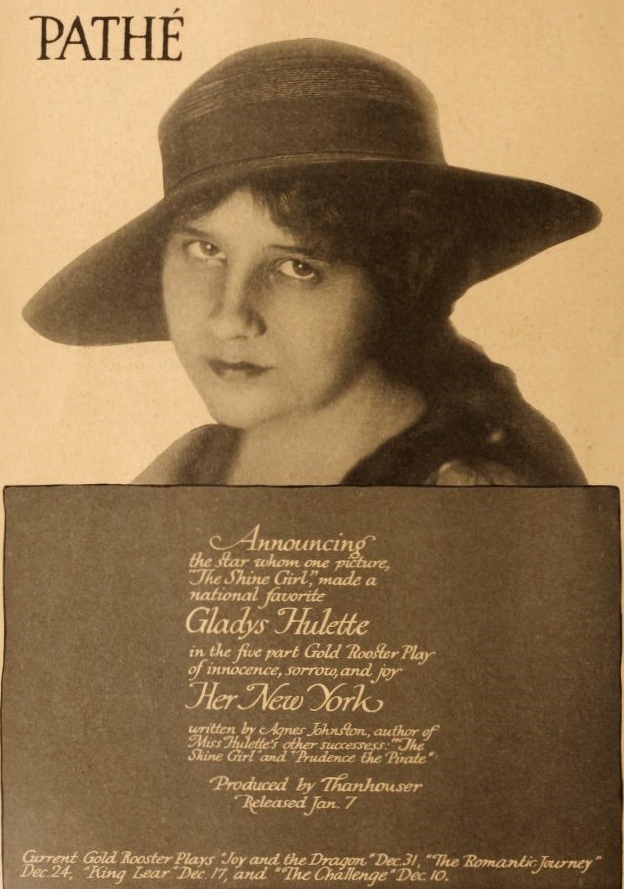
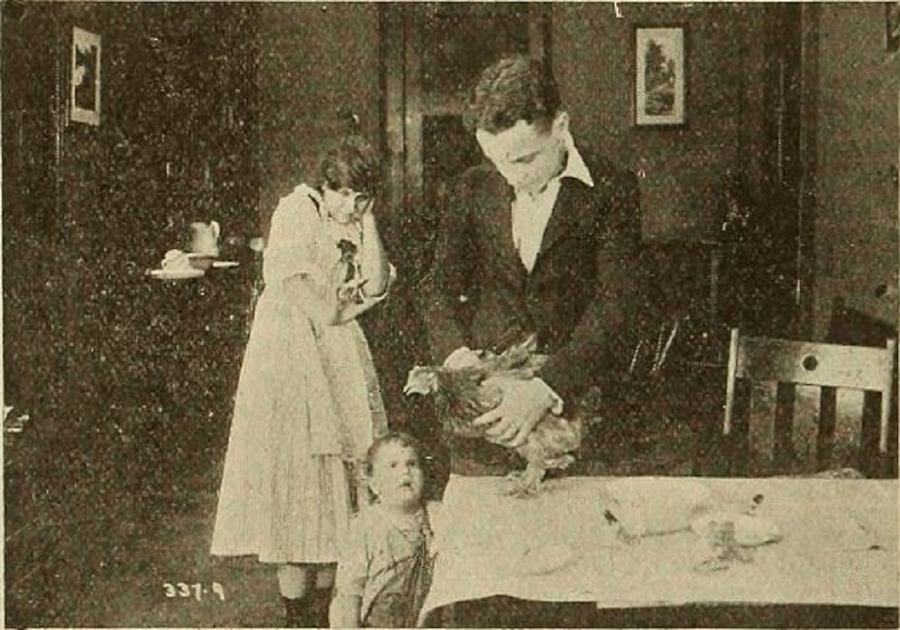
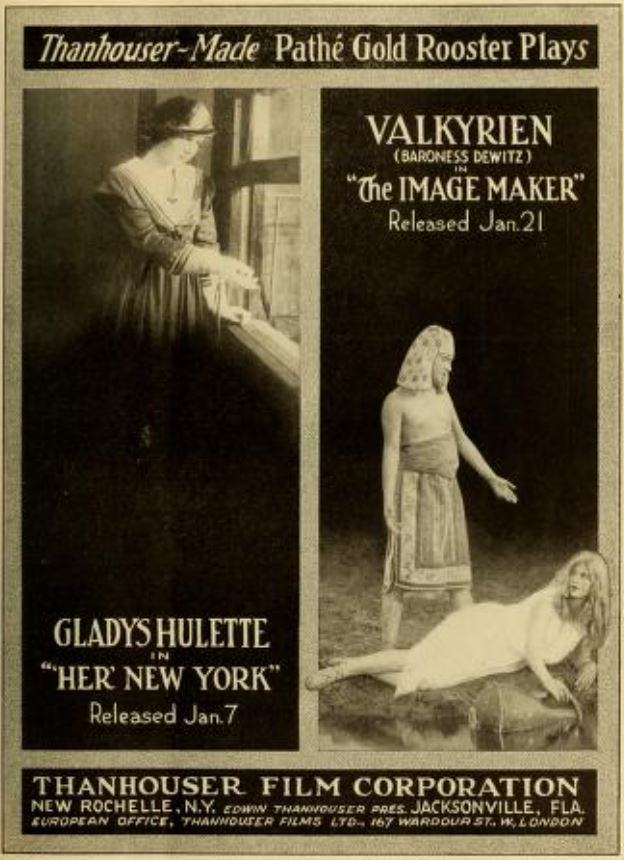
The 1917 one-reeler that nobody screened at Cannes yet somehow out-glimmers half the streaming landfill—William Parke Jr.’s Her New York—opens on a dirt-road Eden where the sound of a hen laying an egg passes for cathedral bells. Agnes Christine Johnston’s scenario treats the moment like Genesis: cut to Phoebe (Gladys Hulette, all freckles and foxfire eyes) whispering to her pullet as though the bird were Delphi’s hottest oracle. In that instant, the film announces its governing dialectic: country authenticity versus the city’s seductive artifice, yolk versus neon.
Parke, a director history books file under “competent studio hand,” actually moonlights here as a proto-Malick. Observe the montage where Philip (William Parke Jr., looking like Keats on a hunger strike) scribbles verses on wrapping paper while Virginia breezes ruffle his hair—intercut with the hen’s cloacal triumph. It’s Eisenstein’s intellectual montage before Eisenstein bought his first hammer and sickle. The egg becomes capital, ticket, promise, poem—every transmutation rendered without title cards, only the grammar of gazes.
Once the narrative railroads us northward, Johnston’s script turns Marxist fairy-tale: the agrarian surplus (egg) converts to liquid currency (train ticket) propelling our heroine into the proletarian maw. But the film refuses to wallow in soot-grit miserabilism. Instead, New York surfaces as a fever dream of electric ads and promiscuous strangers—a place where even the air tastes carbonated. Phoebe’s first cab ride is shot through a Vasco-smeared lens, horse-drawn carriages streaking past like comets. The metropolis is both wonderland and abattoir, a duality Johnston will weaponize for her third-act emotional detonation.
Enter Laura (Ethyle Cooke), a flapper before the term existed, cigarette holder perched like a fencing foil. She embodies the city’s transactional eros: she’ll gift Phoebe a silk frock, but the price tag is written in invisible ink. Their dressing-room scene—a single take held in medium close-up—lets us watch innocence commodified in real time. Hulette’s micro-expressions flicker from gratitude to suspicion to vertigo in under fifteen seconds, a masterclass silent-era acting schools should xerox.
Every paradise demands its serpent. Owen (Robert Vaughn, no relation to the later spy-show icon) arrives impeccably tailored, eyes glittering with the boredom of a man who’s already bought everything except a soul. He’s the first to recognize that Philip’s poetry is merely the packaging; the actual commodity is Phoebe’s unblinking faith. Vaughn plays him with velvet menace—voiceless yet audible, a feat achieved through posture alone: shoulders angled like guillotine blades.
But Johnston refuses melodramatic boilerplate. Owen’s corruption scheme—luring Philip into an illegal poker den—doubles as meta-commentary on artistic patronage. The pot is seeded with “borrowed” cash; the IOUs are poems. In 1917, when modernism was busy fracturing syntax, Her New York imagines art as poker chip, love as collateral. It’s a cynical equation, yet the film flirts with sincerity, too. When Owen forges a perfumed letter implying Philip’s infidelity, the camera lingers on the envelope’s wax seal—an ostensibly innocuous detail that foreshadows the rupture of every social contract.
Yes, the bird escapes again—because narrative determinism demands it. The frantic chase across Lower Broadway is staged like Keystone slapstick dunked in noir. Phoebe’s gingham dress flutters against Model-T metal; the hen skitters between wheels with suicidal aplomb. Cue Officer Murphy (Riley Chamberlin), corpulent guardian angel whose billy club metamorphoses into bridesmaid bouquet at the city hall wedding. The sequence is only ninety seconds, yet it compresses class tensions, urban chaos, and providential grace into a single breathless gag.
Fast-forward: marital bliss, tenement sunlight sliced by fire-escape iron. Philip discovers Johnny (Gerald Badgley) inside a dumb-waiter, swaddled in newsprint headlines screaming WAR. The foundling is narrative nitroglycerin—an instant catalyst for economic fortune. Within a reel, Philip’s verses sell, Owen morphs into benevolent capitalist, and the trio relocates to a gramophone-equipped flat. Critics who dismiss this as sentimental hokum overlook the film’s subtle indictment: only the appearance of patriarchal responsibility (baby) legitimizes the poet’s labor in the marketplace.
Yet happiness bloats into hubris. Owen, addicted to puppeteering, engineers one final temptation: a high-stakes roulette soirée where Philip must gamble his newfound security. Johnston stages the den as chiaroscuro bacchanal—shadows gouged by kerosene lamps, wheel spinning like a skull’s orbit. The sequence feels grafted from a different film, perhaps The Boss or House of Cards, but its purpose is moral, not atmospheric: to prove that even Eden has backroom trapdoors.
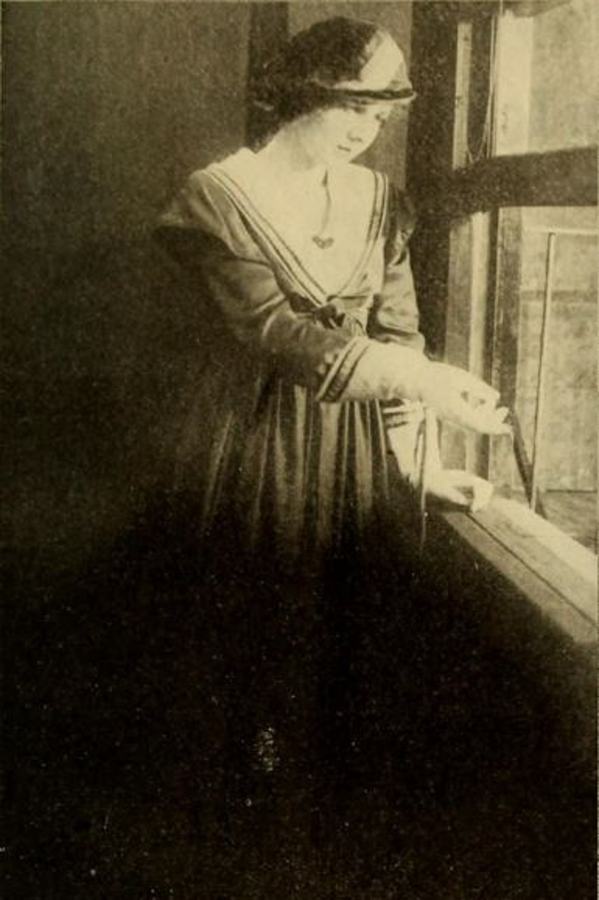
Crucially, the rupture is filtered through Phoebe’s consciousness, not Philip’s. She deciphers the forged letter, hears Owen’s poisoned condolences, and—bereft—boards a southbound train. The farewell platform scene is a masterstroke: no tearful embraces, only the clanging of couplers and a single close-up of her suitcase—inside which nest the hen’s original golden egg, now cracked, yolk ossified. It’s the film’s most brutal image: the talisman of innocence turned to chalk.
Yet her departure catalyzes Owen’s anagnorisis. In a daring reversal, the tempter becomes supplicant, racing after the caboose like a repentant devil. Johnston denies us cathartic violence; instead, Owen bares his neck, offers his bankruptcy as dowry. The scene, played in dusk half-light, is suffused with a queer tenderness—two men negotiating the price of a woman’s trust without her present, a indictment of patriarchy so subtle it almost escapes indictment.
The final tableau eschews fairy-tale restoration. Reunited, the couple occupy modest rooms again—no gramophone, no silk. Johnny crawls between them, gurgling. The hen, now graying, pecks at crumbs on the windowsill. Parke frames the shot so that Manhattan’s distant skyline flickers through gauze curtains—an irreversible reminder that the city’s seductions persist, merely held at bay. Love survives not through purity but through negotiated fragility.
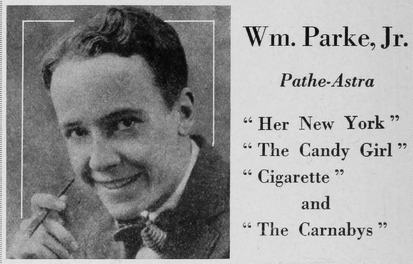
Gladys Hulette, unjustly forgotten, operates in the interstice between Pickford’s moonbeam and Gish’s neurasthenic grace. Watch her listening—eyebrows vaulted, breath visibly hitching—as though every spoken title card were a weather front. William Parke Jr. is less actor than silhouette, yet his hollow cheeks do the narrative work, suggesting tuberculosis chic before it became a runway trope. Robert Vaughn steals focus with the economy of a single raised eyebrow—proof that villainy need not gnaw scenery.
Surviving prints are marbled with decomposition, yet the damage amplifies the film’s poetics: scratches resemble lightning over country fields; nitrate shrinkage produces stroboscopic jitters, as though the frame itself were anxious. The photochemical bruises collaborate with Johnston’s themes—progress wounds everything it touches. Restorationists might scrub them; I say the scars are inextricable.
Released months after America’s entry into WWI, Her New York channels national vertigo: rural boys shipped to trenches, urban women entering factories, social contracts rewritten overnight. Its uneasy marriage of cornfield moralism and metropolitan sleaze anticipates the following year’s The Battle of the Sexes, while its preoccupation with forged identity shadows The Impostor. Cinephiles hunting proto-feminist texts should program it beside The Return of Helen Redmond for a double bill on women navigating male economic boards.
Her New York is not a relic; it’s a seed bomb. Beneath its bucolic whimsy lies a shrewd autopsy of American mythmaking: the country girl as commodity, the poet as pawn, the city as rigged roulette. It foreshadows every post-war disenchantment, every Instagram influencer who peddles authenticity by the yard. Seek it out in whichever archive still allows you to smell vinegar syndrome—then watch your nostalgia curdle into recognition.
Streaming tip: Turner Classic Movies occasionally runs a 2K scan during silent Sundays. Bring a chicken for good luck.
IMDb 6.3
1936
Community
Log in to comment.