DbcultAccessing Vault...
7/10
Senior Film Conservator
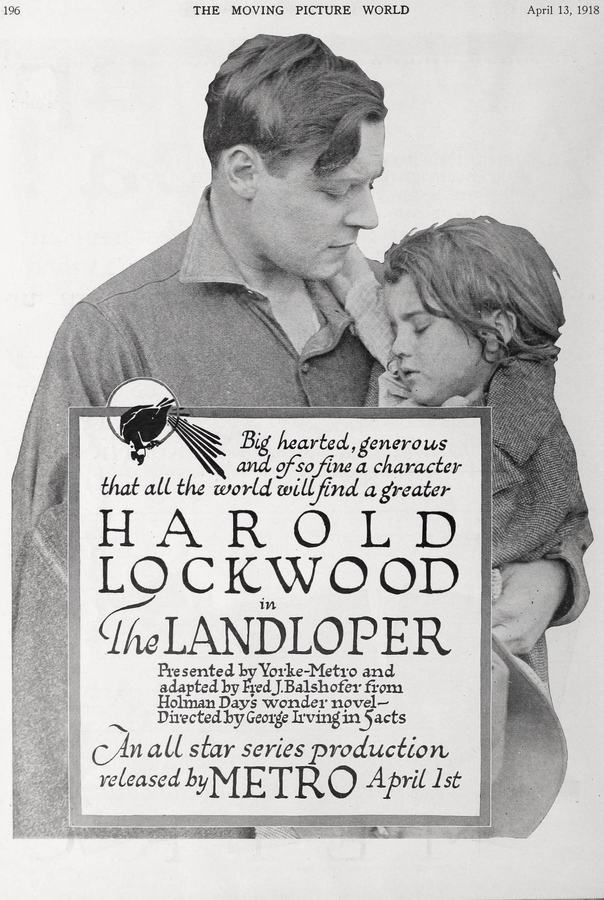
A definitive 7/10 rating for a film that redefined the boundaries of cult cinema. The Landloper remains a cornerstone of transgressive art.
In the pantheon of early American cinema, few narratives capture the intersection of aristocratic ennui and proletarian struggle as vividly as The Landloper (1918). Directed by Fred J. Balshofer, this film serves as a poignant swan song for Harold Lockwood, an actor whose burgeoning career was tragically curtailed by the Spanish Flu shortly after production. The film transcends the mere 'wealthy-man-turned-hobo' trope found in lighter fare like The Boy Girl, instead delving into a gritty, almost Zola-esque examination of municipal corruption and the fragile sanctity of the working class.
The premise begins with a luncheon in Palm Beach, a setting rendered with the requisite opulence to contrast Farr’s eventual descent. The wager—that a man can find happiness without a cent—is a quintessentially American conceit, echoing the transcendentalism of Thoreau but filtered through the melodramatic lens of 1910s Hollywood. Unlike the whimsical escapades in Judy Forgot, Farr’s journey into the interior of the American landscape is fraught with visceral hardship and moral awakening. The cinematography by Balshofer captures the dust of the road with a tactile quality that grounds the film’s more idealistic tendencies.
The narrative’s emotional core crystallizes when Walker Farr arrives in Marion. It is here that the film sheds its lighthearted 'bet' structure and adopts the gravity of a social realist drama. The introduction of Etienne Pickerone, played with a hauntingly cheerful resilience by Stanton Heck, provides a foil to Farr’s self-imposed poverty. Pickerone is a man deformed by life but unbroken in spirit, a character archetype that resonates with the empathy found in The Children in the House. Together, they navigate the tragedy of a woman’s suicide, leading Farr to adopt the orphaned Rose-Marie.
"The visual storytelling in the scenes involving Rose-Marie is masterfully understated. Lockwood’s transition from an idle dilettante to a grieving, protective father-figure is handled with a nuance that was rare for the era’s often hyperbolic acting styles."
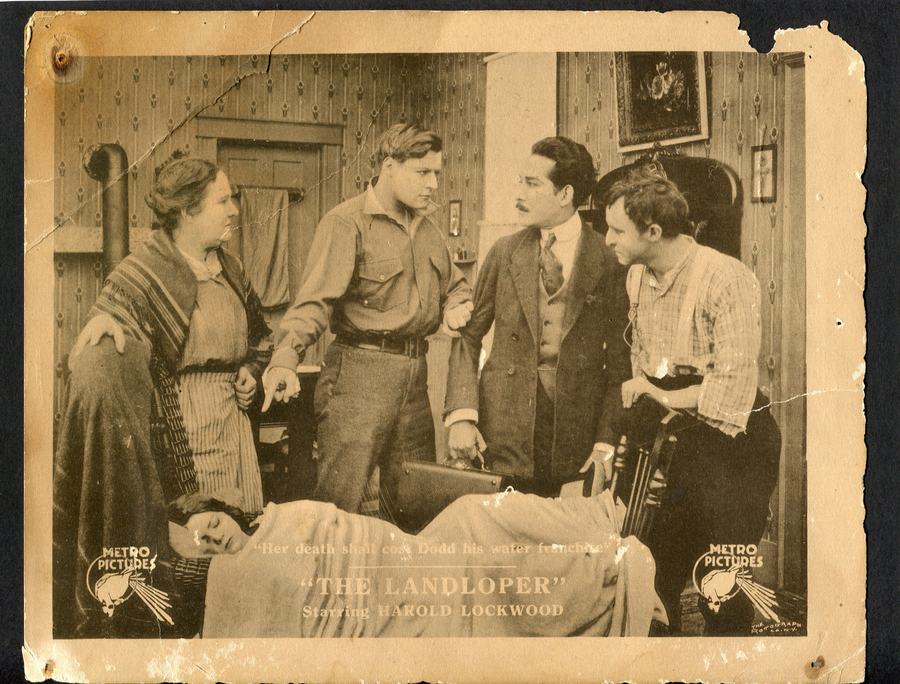
The decision to have Farr work as an ice wagon driver—a grueling, physical labor—highlights the film’s commitment to showing the dignity of work. This isn't the pastoral fantasy of Under the Greenwood Tree; it is a depiction of the exhausting reality of the urban poor. When the typhoid epidemic strikes, the film pivots into a terrifyingly relevant critique of how systemic negligence and corporate greed directly result in the loss of innocent life. The death of Rose-Marie is not merely a plot point to evoke tears; it is the catalyst for Farr’s radicalization.
The antagonist of the piece, Col. Simon Dodd, represents the corrupt 'old guard' that plagued many American towns during the Gilded Age. His uncle-nephew dynamic with Richard Dodd creates a web of personal and political entrapment for Kate Kilgour (Pauline Curley). While films like The Evil Eye deal with superstition and fear, The Landloper deals with the cold, hard mathematics of contaminated water and stolen votes. The typhoid outbreak serves as a harrowing reminder of the era's public health crises, grounding the melodrama in a terrifying historical reality.
Farr’s election campaign is a thrilling sequence of grassroots mobilization. It mirrors the burgeoning suffrage and labor movements of 1918, showcasing the power of the 'common man' when led by a figure of moral clarity. The film’s pacing accelerates here, moving from the slow, contemplative shots of the river to the kinetic energy of political rallies. The contrast between the Dodds' sterile, oppressive wealth and the vibrant, if struggling, community Farr builds is visually striking. The use of sea blue (#0E7490) tones in the night scenes and the vibrant dark orange (#C2410C) of the sunset over the river highlights the emotional shifts from despair to hope.
When placed alongside contemporaries like Broadway Love, which focuses on the glitter and grit of the stage, The Landloper feels more expansive, more terrestrial. It shares the thematic DNA of The Girl by the Roadside in its exploration of destiny and chance encounters, but it possesses a sharper political edge. Even when compared to international works like the Hungarian A csikós or the Danish En Søns Kærlighed, Balshofer’s film stands out for its uniquely American obsession with self-reinvention and the 'great equalizer' of the democratic process.
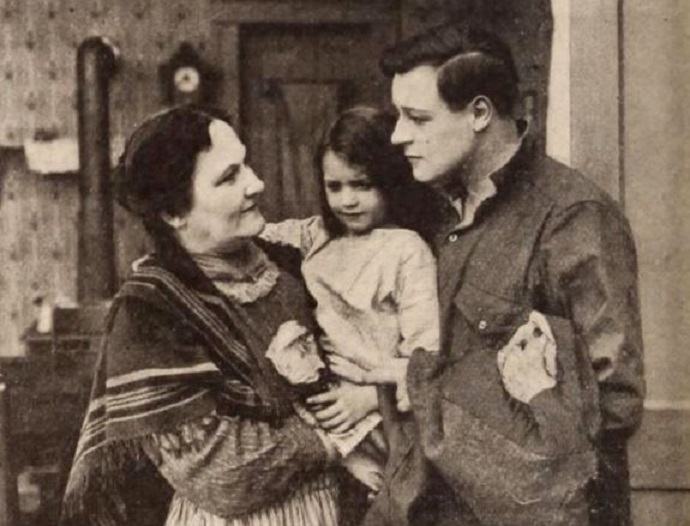
The character of Kate Kilgour, portrayed with a delicate strength by Pauline Curley, avoids the pitfalls of the helpless damsel. Her struggle against the $5,000 debt owed to Richard Dodd is a realistic portrayal of the economic shackles placed upon women of the time. Her eventual liberation is not just a romantic victory but a financial and social one, echoing the themes of independence seen in Miss Peasant. The chemistry between Lockwood and Curley is palpable, even through the flickering grain of a century-old master, providing a warmth that balances the film’s darker explorations of death and disease.
Technically, the film is a marvel of its time. The lighting in the scene where Farr reads the suicide note is particularly evocative, using shadows to emphasize the weight of the moment. This use of chiaroscuro anticipates the noir aesthetics of later decades. The editing during the election climax creates a sense of mounting tension that rivals the suspense found in The Beloved Traitor. One cannot discuss this film without acknowledging the tragic context of its star. Harold Lockwood was the quintessential 'matinee idol,' yet in The Landloper, he proves his range as a character actor. His ability to inhabit the skin of a hobo without it feeling like a caricature is a testament to his dedication.
The film’s conclusion, while adhering to the 'happily ever after' requirements of 1918 audiences, feels earned. The reveal of Farr’s identity is less about his return to wealth and more about his realization that his wealth can now be used for genuine altruism rather than idle bets. It is a synthesis of his two lives—the resources of the elite and the empathy of the traveler. This resolution is far more satisfying than the somewhat forced endings of The Gay Lord Waring or the somber depths of Eternal Love.
Produced during the height of World War I, the film’s focus on domestic reform and the internal health of the American 'body politic' is fascinating. While many films of 1918 were preoccupied with the overseas conflict or provided pure escapism like Tom Sawyer, The Landloper demanded that its audience look at the corruption in their own backyards. It suggests that the true enemy is not always a foreign power, but the greed that allows a child to die from a preventable disease. This level of social commentary is what elevates the film from a standard melodrama to a significant piece of cinematic history.
In summary, The Landloper is a multifaceted gem. It is a romance, a tragedy, a political thriller, and a philosophical treatise all rolled into one. Its narrative complexity and visual sophistication make it a mandatory watch for anyone interested in the evolution of visual storytelling. It stands as a powerful reminder of the ephemeral nature of life and the enduring power of a conscience awakened. For those who enjoy the intricate plotting of El drama del 15 de Octubre, the emotional and social layers here will provide a similarly rich experience. This film is not just a relic; it is a resonant, beating heart from the dawn of the silver screen.
A virtuosic performance by Harold Lockwood elevates this social drama into a timeless critique of class and corruption. Its blend of pathos and political fervor remains strikingly modern, even a century later.
IMDb 2.3
1934
Community
Log in to comment.