DbcultAccessing Vault...
Cult Review
Senior Film Conservator
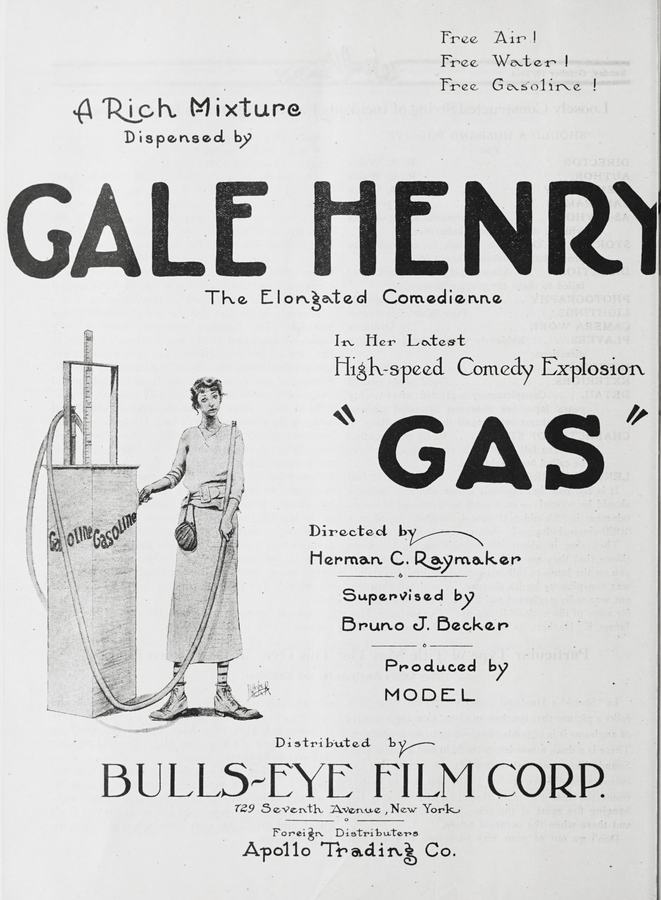
In the annals of early cinema, where grand narratives of romance and adventure often dominated the silver screen, there occasionally emerged a gem so understated, so acutely observed, that it cut through the prevailing theatricality to deliver a potent dose of social realism. Such is the case with 'Gas', a film whose unassuming title belies the profound, almost melancholic, insights it offers into the human condition and the evolving landscape of labor in the nascent automobile age. This isn't a spectacle of dramatic flair or heroic triumph; rather, it's a quiet, persistent hum of everyday struggle, a cinematic lament for the unseen and unappreciated efforts that grease the wheels of societal progress. It's a film that, despite its apparent simplicity, speaks volumes about the transactional nature of human interaction and the often-invisible burdens borne by those in service.
The premise, at first glance, appears almost absurdly mundane: the trials and tribulations of a woman gasoline attendant. Yet, within this seemingly pedestrian setting, the film constructs a powerful allegory. Our protagonist, embodied by the remarkable Gale Henry, navigates a world where her primary commodity – gasoline – is secondary to the ancillary services she provides. Motorists, in a striking display of economic opportunism and casual disregard, patronize her station not for the fuel that powers their journeys, but for the complimentary air and water it affords. This singular observation forms the narrative backbone, transforming a simple service station into a crucible for examining societal values, labor ethics, and the insidious nature of consumer entitlement. One might draw a parallel to the silent suffering depicted in The Woman Thou Gavest Me, though here the hardship is less about moral judgment and more about economic invisibility. The attendant's plight resonates with a quiet dignity, a stoicism born of necessity rather than choice.
The casting, though minimal, is exceptionally effective. Gale Henry, a name perhaps less celebrated in contemporary discourse than some of her peers, delivers a performance that is nothing short of masterclass in silent film acting. Her expressions, subtle yet profound, convey a spectrum of emotions – weariness, resignation, fleeting hope, and an underlying resilience – without a single spoken word. She is not merely playing a character; she embodies the very spirit of overlooked labor. Her interactions with the parade of motorists, each a fleeting encounter, become micro-dramas of their own. The motorists, portrayed with a collective air of self-importance and casual indifference by actors like Hap Ward and Eddie Baker, are not villains in the classical sense. Instead, they represent a broader societal malaise, a collective unconsciousness regarding the value of another's toil. Their obliviousness is the true antagonist, a pervasive force more insidious than any single malicious act. Milburn Morante, too, contributes to this ensemble of transient figures, each playing their part in the attendant's daily grind.
What makes 'Gas' particularly compelling, beyond its immediate narrative, is its sharp, albeit implicit, commentary on the economic realities of its era. The early 20th century was a period of immense industrial and social upheaval, with new technologies like the automobile rapidly reshaping daily life and creating entirely new categories of labor. For a woman to be working as a gasoline attendant was itself a departure from conventional gender roles, a silent assertion of independence and economic necessity. The film subtly critiques the societal structures that place such a disproportionate burden on the working class, particularly women, who often found themselves in precarious positions, their efforts undervalued and their contributions taken for granted. In this regard, it shares a thematic thread with films like Back to the Kitchen, though 'Gas' offers a more stark, less overtly didactic portrayal of a woman carving out a space for herself in a world not designed for her.
The film's exploration of labor extends beyond mere gender. It delves into the universal experience of being in a service role, where the provider's needs and dignity are often secondary to the customer's demands. The constant stream of requests for air and water, devoid of actual fuel purchases, highlights a fundamental imbalance. It’s a microcosm of a larger capitalist system, where perceived 'free' services are often subsidized by the unseen labor of others. The attendant's weary, repetitive motions – checking tire pressure, filling water jugs – become a poignant ballet of unrewarded diligence. There's a certain Sisyphean quality to her work, a relentless cycle that offers little in the way of respite or recognition. This quiet struggle for economic survival, devoid of grand pronouncements, makes the film's message all the more powerful and resonant.
From a purely cinematic perspective, 'Gas' is a masterclass in economy and visual storytelling. The direction, though uncredited in the available information, demonstrates a keen understanding of how to convey complex themes through simple, repetitive actions and nuanced facial expressions. The camera often frames the attendant in wide shots, emphasizing her isolation against the backdrop of the bustling road, or in close-ups that magnify her internal emotional landscape. There's a distinct lack of melodramatic flourishes, a refreshing departure from some of the more overtly theatrical films of the era. This restraint allows the film's core message to emerge organically, without being overshadowed by excessive histrionics.
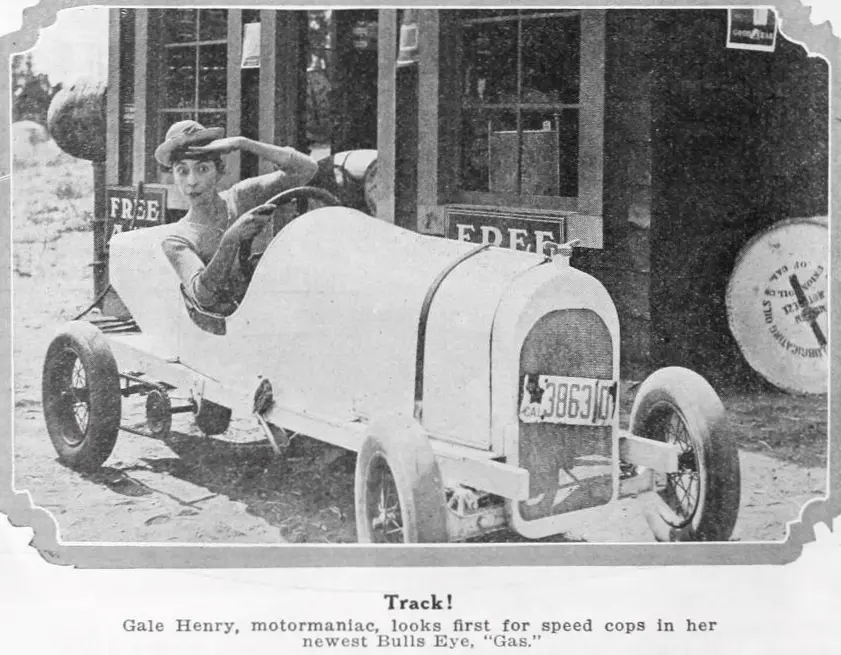
The pacing of the film, deliberate and unhurried, mirrors the monotonous rhythm of the attendant's day. Each interaction with a motorist, though brief, is given its due, allowing the viewer to absorb the subtle power dynamics at play. The film doesn't rush to a dramatic climax or a tidy resolution; instead, it leaves us with an enduring impression of persistent, quiet struggle. This narrative choice, while perhaps less commercially appealing than the grand spectacles of the time, grants 'Gas' a timeless quality. Its observations about human nature and economic exploitation remain as pertinent today as they were a century ago. One might even argue that its lack of overt narrative complexity is its greatest strength, allowing the viewer to project their own experiences and interpretations onto the protagonist's silent saga.
While 'Gas' stands powerfully on its own, its thematic resonance finds echoes in various corners of early cinema. The idea of an individual's struggle against larger, indifferent forces can be seen in films that tackle social commentary, albeit often through different lenses. Consider Little Orphant Annie, which also explores the hardships faced by a young woman, though its narrative often leans into more overt melodrama and eventual triumph. 'Gas', however, offers a grittier, less romanticized view of adversity. The silent, almost invisible labor depicted here is a far cry from the more dramatic conflicts in films like The Great Love or The Spy, where the stakes are grander and the personal agency more pronounced. Our attendant's struggle is not against a tangible enemy, but against a pervasive societal oversight.
The film also subtly touches upon themes of perception and value, akin to the societal misjudgments explored in Little Miss Nobody, where a character's true worth is obscured by circumstance. Here, it’s the attendant’s labor that is rendered invisible, her essential service overshadowed by the trivialities of free air and water. This dynamic of underestimation and exploitation can be further contextualized by films like The Price, which often delve into the true cost of human endeavors and desires. The film’s minimalist approach, focusing on the repetitive nature of work, also brings to mind the silent era’s capacity for depicting mundane realities with profound depth, an artistic choice that paved the way for later neorealist movements.
Moreover, the film’s portrayal of human cunning and the desire for something for nothing, even if small, can be humorously or darkly paralleled with narratives of larger schemes, such as those found in The Great Diamond Robbery. While the scales of ambition differ wildly, the underlying human impulse to extract maximum benefit with minimal outlay remains a constant. The subtle power play between the attendant and her customers, a silent battle of wills over a few cents or a moment of convenience, is remarkably insightful. It's a testament to the film's nuanced writing, even without explicit dialogue, that these complex social dynamics are so clearly articulated.
What ultimately elevates 'Gas' beyond a mere historical curiosity is its timeless message. In an age where the gig economy thrives on fragmented services and often precarious labor, the film's central premise resonates with startling contemporary relevance. How often do we, as consumers, overlook the individual behind the service, reducing them to a function rather than recognizing their humanity? The attendants at our drive-thrus, the delivery drivers, the customer service representatives – all perform essential tasks that are frequently taken for granted, their value measured solely by efficiency and cost, rather than the effort and dedication they entail. This film, nearly a century old, serves as a poignant reminder to look beyond the immediate transaction and acknowledge the human element in every exchange.
The film doesn't preach; it simply observes. It presents a slice of life, allowing the viewer to draw their own conclusions about the societal implications of such interactions. The subtle indignity of her situation, the way her primary product is ignored in favor of gratuitous offerings, speaks volumes about consumer behavior and the often-unseen exploitation inherent in service industries. It’s a quiet tragedy unfolding minute by minute, punctuated by the arrival and departure of indifferent vehicles. This nuanced portrayal of economic hardship, devoid of overt melodrama, distinguishes it from more dramatic narratives of suffering like The Tides of Fate or The Destroying Angel, which often rely on heightened conflict. Instead, 'Gas' finds its dramatic weight in the mundane.
In its brevity and simplicity, 'Gas' achieves a remarkable depth. It's a film that stays with you, not for its dazzling special effects or star-studded cast, but for its honest depiction of a universal truth: that often, the most essential labor is the most overlooked. It invites us to pause, to reflect on our own interactions, and to perhaps see the quiet dignity in every person who serves, regardless of the perceived value of their offering. It's a powerful argument for empathy and recognition in a world that often rushes past the very foundations upon which it is built. This film, in its profound quietness, speaks louder than many of its more boisterous contemporaries, cementing its place as an invaluable piece of cinematic social commentary. It’s a testament to the power of early cinema to transcend its technical limitations and deliver a message that resonates through the decades, urging us to consider the true 'price' of convenience and the unseen hands that facilitate our daily lives.
IMDb —
1914
Community
Log in to comment.