DbcultAccessing Vault...
6.4/10
Senior Film Conservator
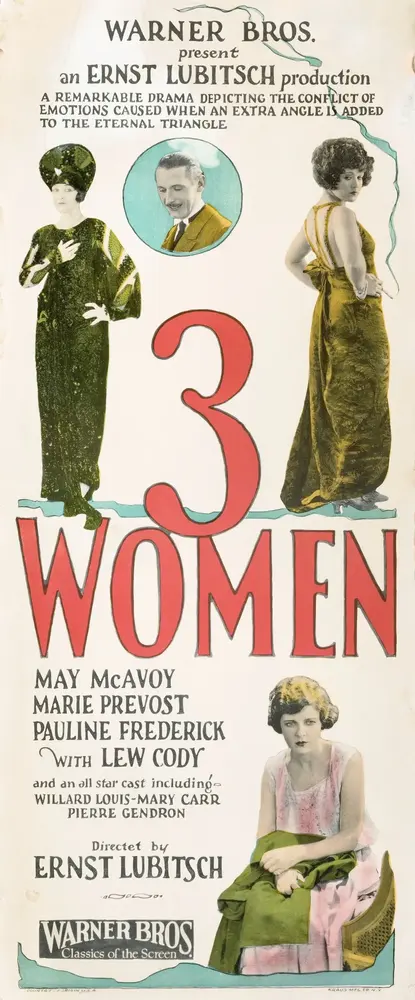
A definitive 6.4/10 rating for a film that redefined the boundaries of cult cinema. Three Women remains a cornerstone of transgressive art.
When we speak of the Lubitsch Touch, we often conjure images of champagne corks popping behind closed bedroom doors or the sly, sophisticated banter of the 1930s talkies. Yet, to truly understand the architectural precision of Ernst Lubitsch’s cynicism, one must revisit his silent American period, specifically the 1924 masterwork Three Women. This is not the whimsical Lubitsch of later years; this is a director wielding a scalpel, dissecting the American upper class with a clinical, almost cruel, detachment that predates the darker hues of film noir.
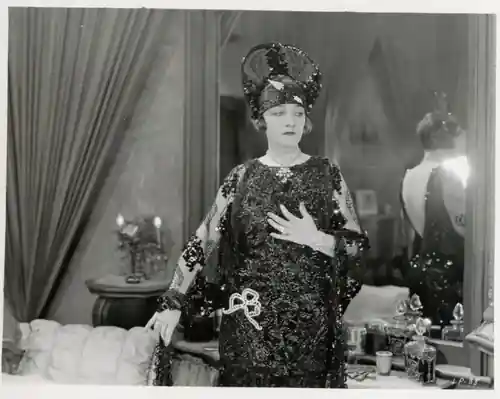
The film centers on Mabel Wilton, played with a haunting, frantic energy by Pauline Frederick. Mabel is a woman who has converted her identity into a currency that is rapidly devaluing. In the opening sequences, Lubitsch captures the ritualistic artifice of her life—the corsets, the cosmetics, the performative gaiety of a woman who fears the shadow of her own daughter. Unlike the more straightforward moralism found in films like The Easiest Way, Three Women refuses to judge Mabel for her vanity; instead, it mourns the social structures that make such vanity her only defense against obsolescence.
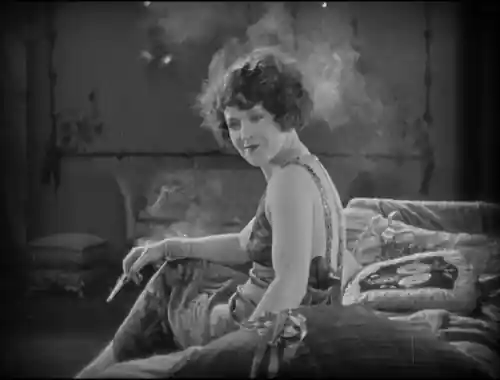
When Jeanne (May McAvoy) arrives, she is the physical manifestation of Mabel’s expiration date. The visual storytelling here is sublime. Lubitsch uses the geometry of the Wilton mansion to isolate the characters, creating a sense of domestic entrapment. While Broken Bubbles dealt with the fragility of youthful dreams, Three Women examines the jagged shards left behind when those bubbles burst in the hands of a predator.
Enter Edmund Lamont, portrayed by Lew Cody with a slick, reptilian charm that makes one’s skin crawl. Lamont is the quintessential Lubitsch villain—not a mustache-twirling caricature, but a man who treats human emotions as a series of levers to be pulled for financial gain. His transition from Mabel to Jeanne is handled with a terrifying lack of sentimentality. He doesn't love Jeanne; he loves the inheritance she represents and the fresh vitality she offers to his jaded palate. This dynamic echoes the darker thematic undercurrents of The Snarl, where the primal instincts of survival and conquest override any semblance of social decorum.
"In the world of Wilton and Lamont, love is not a sanctuary; it is a transaction where the terms are dictated by the person with the least to lose."
The technical prowess of Three Women cannot be overstated. Working with cinematographer Charles Van Enger, Lubitsch employs a visual vocabulary that communicates volumes without the need for excessive intertitles. Note the way the camera lingers on Mabel’s face during the wedding of Lamont and Jeanne. The lighting shifts, casting her into a half-shadow that mirrors her internal fracturing. It is a moment of pure cinematic chiaroscuro, far more effective than the overt histrionics seen in contemporary melodramas like Die Teufelskirche.
The editing, too, is a masterclass in tension. The juxtaposition of the lavish wedding festivities with the mounting despair of those discarded in Lamont’s wake creates a rhythmic dissonance that is profoundly unsettling. Lubitsch understands that the most impactful violence in cinema is often emotional rather than physical, though the film’s climax certainly provides a visceral release for the built-up pressure.
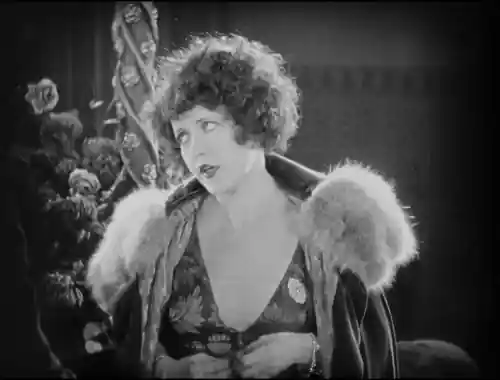
The third act of the film shifts gears into a courtroom drama, a narrative pivot that could have felt disjointed in the hands of a lesser filmmaker. However, Hanns Kräly’s screenplay ensures that the legal proceedings are merely an extension of the moral decay we have witnessed. When Mabel finally takes matters into her own hands, it is not an act of heroism, but an act of total surrender. She destroys the predator to save the daughter she has both loved and loathed, effectively erasing herself in the process. This resolution is far more complex than the simplistic endings of films like Nancy from Nowhere or Love's Battle.
Released in 1924, Three Women arrived at a time when Hollywood was beginning to grapple with more adult themes. While the industry was still producing light fare like All at Sea or the adventurous Plunder, Lubitsch was importing a European sensibility that demanded more from the audience. He wasn't interested in the simple morality of By Indian Post; he wanted to explore the gray areas where desire and desperation meet.
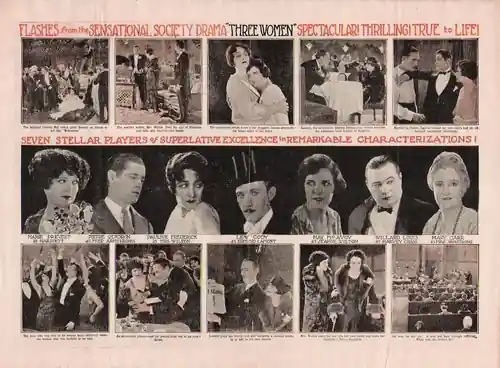
The film also serves as a fascinating companion piece to the political and social shifts of the era. While it doesn't have the explicit historical weight of Gira política de Madero y Pino Suárez, it captures the internal revolution of the American family and the shifting roles of women in the post-Victorian world. The "three women" of the title—Mabel, Jeanne, and the third, Lamont’s other mistress (played by Marie Prevost)—represent different stages of female vulnerability and agency in a patriarchal trap.
The set design by Hans Dreier is another highlight. The interiors are opulent yet strangely cold, emphasizing the emotional distance between the characters. The use of mirrors throughout the film is particularly effective, constantly forcing the characters (and the audience) to confront the disparity between their public personas and their private realities. It’s a visual motif that Lubitsch would continue to refine, but here it feels particularly raw and essential. Unlike the more exoticized settings of The Vermilion Pencil, the Wilton mansion is a familiar prison of high-class expectations.
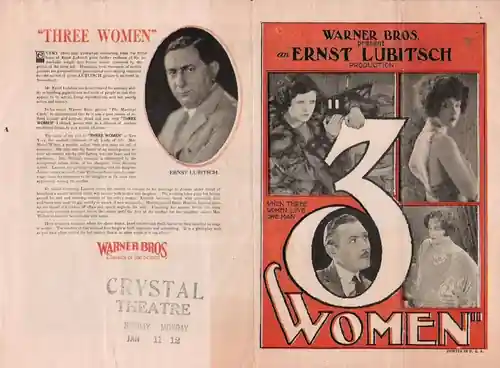
Even the smaller roles, such as the boyfriend played by Raymond McKee, are handled with care. His heartbreak is not the focus of the film, yet Lubitsch gives it enough space to breathe, adding to the overall sense of a world where everyone is collateral damage in someone else's war. This attention to detail is what separates a Lubitsch production from the more generic output of the era, such as The Bar Fly or A Self-Made Widow.
In the grand tapestry of silent cinema, Three Women stands as a bridge between the expressionistic shadows of Europe and the burgeoning psychological realism of Hollywood. It lacks the supernatural intrigue of Das Geheimnis der Mumie, but it replaces it with something far more frightening: the reality of human cruelty. The film is a reminder that the most dangerous monsters are not found in tombs or ancient legends, but in the polished mirrors of a Park Avenue penthouse.
As the film reaches its final, somber notes, we are left with a profound sense of loss. Not just the loss of life, but the loss of innocence and the death of a certain kind of feminine identity that could only exist in the fleeting light of youth. Three Women is a demanding watch, one that requires the viewer to sit with discomfort and contemplate the transactional nature of beauty. It is, without question, one of the most sophisticated and uncompromising films of the 1920s, a testament to a director who could see through the glitter of the Jazz Age to the profound loneliness beneath.
For those seeking the roots of modern psychological drama, this Lubitsch classic is essential viewing. It avoids the easy exits and comfortable lies of its contemporaries, offering instead a cold, clear look at the cost of vanity. Whether compared to the social satire of The Sultan of Djazz or the darker melodramas of the time, Three Women remains a singular achievement in silent storytelling.
IMDb —
1916
Community
Log in to comment.