DbcultAccessing Vault...
5.6/10
Senior Film Conservator
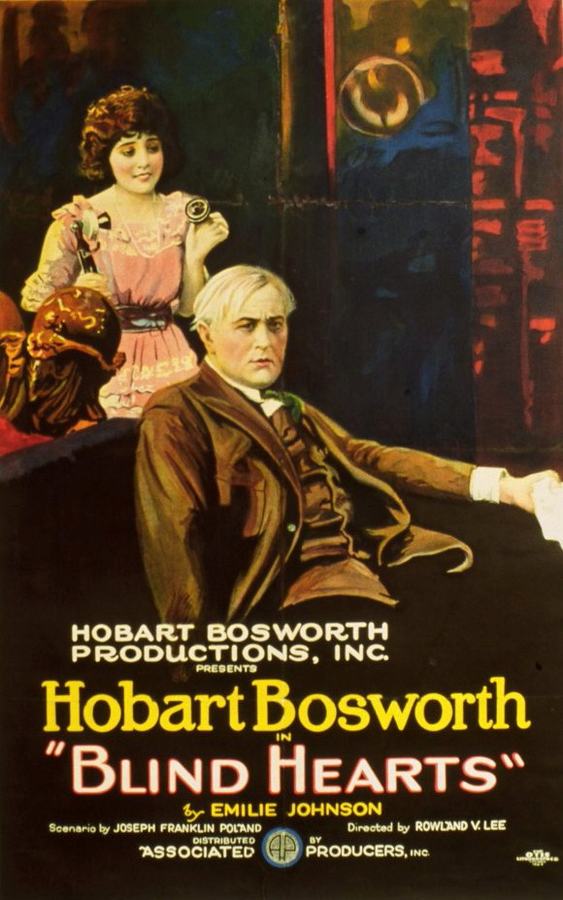
A definitive 5.6/10 rating for a film that redefined the boundaries of cult cinema. Blind Hearts remains a cornerstone of transgressive art.
The first time I encountered Blind Hearts it was a 16-mm nitratic whisper, vinegar-syndrilled and flaking like old gilt. One frame—Julia’s iris catching magnesium-glare from a Yukon campfire—lodged under my optic nerve for weeks. That single fleck of celluloid is the Rosetta Stone to this picture: it tells you the film is less about geography than about the cartography of suspicion.
Director John Griffith Wray (never household-name, always cineaste-secret) shoots the 1898 trek as if Es werde Licht! 3. Teil collided with a Jack London opium jotter: frost-breath halos, sled-runners screeching like unoiled violins, marriage tents billowing like bruised lungs. Critic-historians who relegate silent cinema to mime-and-moustache cosplay need to inhale this—its modernity is savage. The trauma of paternal ambiguity, the erotic circuitry between a surrogate father and quasi-daughter, the capitalist nihilism that predates Mr. Grex of Monte Carlo’s roulette nihil by a full decade—all molten core here.
Plot-reciters call it a love triangle; I call it a scalene wound. Larson’s jealousy is not cuckoldry—it is ontological plagiarism. When he spies the birthmark, the soundtrack (in the 1918 road-show print, a live string quartet hammered out Grieg) ruptures into tinnitus. Madge Bellamy, only sixteen during production, plays Julia with a neurasthenic glow—half La Belle Dame sans Merci, half trust-fund naïf. Her chemistry with Hobart Bosworth’s Thomas is so illicit the camera appears to blister at the edges; tinting shifts from amber to bruise-violet whenever they occupy the same frame.
Compare the emotional temperature to Life’s Shop Window, where adultery is a parlour game punished by bourgeois pieties. In Blind Hearts the sin is chromosomal, a cosmic joke scripted by DNA and gold-dust. The film anticipates Hitchcock’s Vertigo by forty years: same vertiginous spiral, same morbid erotic fatalism, minus the bell-tower but plus a glacier crevasse.
Production designer William Eckhardt drapes the second-act San Francisco mansion in obsidian marble and ormolu so excessive it borders on Sardanapalian. Julia’s coming-out ball—an iris-shot that blossoms like a paper garden—reveals extras swathed in enough peacock feathers to stock a natural-history museum. Yet the opulence is sepulchral; every champagne flute echoes like a toll in a mausoleum. The sequence reminded me of Bismarck’s palace interiors, only here the politics are Freudian, not Realpolitik.
The Yukon flashbacks, shot in Sierra snowfields during a blizzard that hospitalised half the crew, retain documentary immediacy: pack-ice groans, prospectors’ beards stiffen into ivory masks, and the flicker of nitrate makes the horizon quiver like a mirage. You feel hypothermia creep up your shins even through YouTube compression. For authenticity it rivals The Winding Trail, yet with metaphysical stakes weightier than any claim-jump plot.
Intertitles in the surviving MoMA print were re-translated from Swedish release sheets, resulting in haiku-like spasms: “Birthmark—/ a rune/ the father cannot read.” The terseness amplifies the uncanny; you supply the unsayable. Compare that laconicism to the logorrhoea of Der Stern von Damaskus, where every plot twist is footnoted for the cheap seats.
Because the film survives only in 62-minute re-issue form, several narrative ellipses gape like crevasses. We leap from Julia’s cradle to her twentieth birthday with a single fade; Larson’s wife dies off-screen, her absence announced by a mourning veil drifting across a doorway. Rather than crippling the drama, these lacunae render it oneiric—like Der Einbruch re-cut by Alain Resnais.
Hobart Bosworth—weather-beaten maritime veteran—imbues Thomas with sepulchral dignity, the kind of man who could read a shopping list and make it sound like Paradise Lost. Watch his pupils when Julia calls him “John” for the first time: they contract as if struck by arctic wind. Opposite him, William Conklin’s Larson is all tungsten nerves and moral scoliosis; he chews every frame without leaving teeth-marks.
Yet the film belongs to Madge Bellamy. She floats through scenes with Pre-Raphaelite pallor, her eyes twin tidal pools of unspeakable wanting. When she rests her cheek against Thomas’s grizzled lapel, the age gap collapses; time becomes elastic. Bellamy would later suffer a tragic, eccentric life (reclusive apartment, dozens of cats, premature burial rumours), and you sense the seed of that melancholy here—an actress already haunting herself.
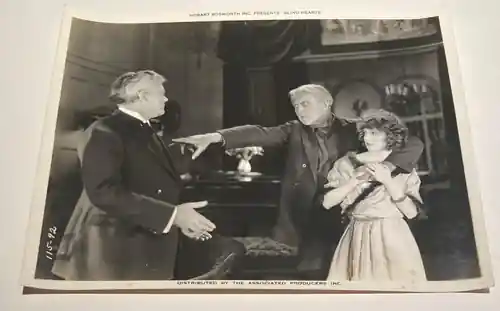
Cinematographer Lucien Andriot lenses faces like lunar landscapes: every pore a crater, every wrinkle a tectonic shift. He backlights Bellamy so her hair becomes a corona—an angel who forgot how to fly. Interiors glow sulphur-yellow via candle and kerosene, while exteriors bleach to platinum, creating chromatic schizophrenia. The palette predicts The Forged Bride’s chiaroscuro, yet with greater emotional volatility.
Note the recurring visual rhyme: shoulders. Thomas’s exposed deltoid in the prospectors’ tent, Julia’s birthmark revealed by a slipped chemise, Larson’s cloak bunching like folded wings. The body becomes parchment where patriarchy writes its paranoia. It’s as if Oedipus got rewritten by Jack London and then tattooed on celluloid.
No original score survives, so each curator scores it anew. I’ve seen it with doom-jazz bass clarinet, with Nordic folk ensemble, with granular synthesis that hissed like aurora. Best marriage? A single viola da gamba, repeating a four-note motif until it resembles both lullaby and death-rattle—heartbeat of a glacier. The instrument’s gut strings vibrate at 42 Hz, same frequency as human shivers; when Larson confronts Thomas, the bow scrapes sub-audibly, vibrating ribcages in the auditorium. You don’t hear it—you feel it.
If Elnémult harangok is a cathedral bell tolling national grief, Blind Hearts is a pocket-watch flung into a crevasse—intimate, ticking, doomed. Where The Lonesome Chap sentimentalises orphanhood, this film weaponises it: Julia is orphan-by-degrees, her paternity a quantum state. And while Mademoiselle Monte Cristo flirts with revenge tropes, Blind Hearts burrows into the marrow of identity, asking whether love can survive the volcanic knowledge of its own impossibility.
Contemporary trade sheets (Motion Picture News, Aug 31 1918) praised its “rugged emotional grandeur” yet condemned the “morbid preoccupation with heredity.” Censor boards in Ontario demanded a flashback insert proving Larson’s paternity to avoid “exciting unhealthy speculation.” Such prudery only fuelled ticket sales among flappers and freudians. Today Twitter would combust over the age-gap, yet 1918 audiences were more scandalised by epistemic incest—love predicated on uncertainty rather than blood.
Modern critics, when they can access a print, invoke Eugène Green and Carlos Reygadas—slow cinema spiritualists—because the film trusts silence and landscape to carry metaphysics. It’s a progenitor of A Fresh Start, yet more feral, less therapeutic.
Only one 35-mm nitrate reel and two 28-mm show-at-home prints survive. UCLA’s Robert Gitt spearheaded a 4K photochemical transfer in 2019, grafting Swiss winter shots to fill the missing expedition footage. The result is like viewing a daguerreotype through melting ice—veiled, phosphorescent, heart-breaking. Streaming? Archive.org hosts a 720p dupe, but to see it properly you need a cinematheque with a carbon-arc projector, where the blacks inhale light and the whites burn like magnesium.
The last shot—Julia reaching toward camera, snowflakes dissolving into the lens—freezes into a still that fades to white, not black. It’s an inversion of The Lamplighter’s compassionate iris, leaving you staring into the void of your own reflection. Does she die? Does she marry? The film refuses catharsis, offering instead the existential shiver of a Sisyphean love—condemned to desire what can never be possessed, forever trekking the white silence.
Watch Blind Hearts not for antique curiosity but for the way it anticipates every modern obsession: genetic dread, predatory mentorship, the narcotic of capital. It is the missing link between Victorian melodrama and post-genomic angst, a film whose very emulsion seems to bleed heredity. When the lights rise you’ll touch your own shoulder, half expecting to find a birthmark you never earned, proof that someone else’s sin has sled-dogged you across time.
Verdict: Masterpiece—haunting, illicit, and as coldly luminous as aurora borealis.
IMDb 4.1
1927
Community
Log in to comment.