DbcultAccessing Vault...
Cult Review
Senior Film Conservator
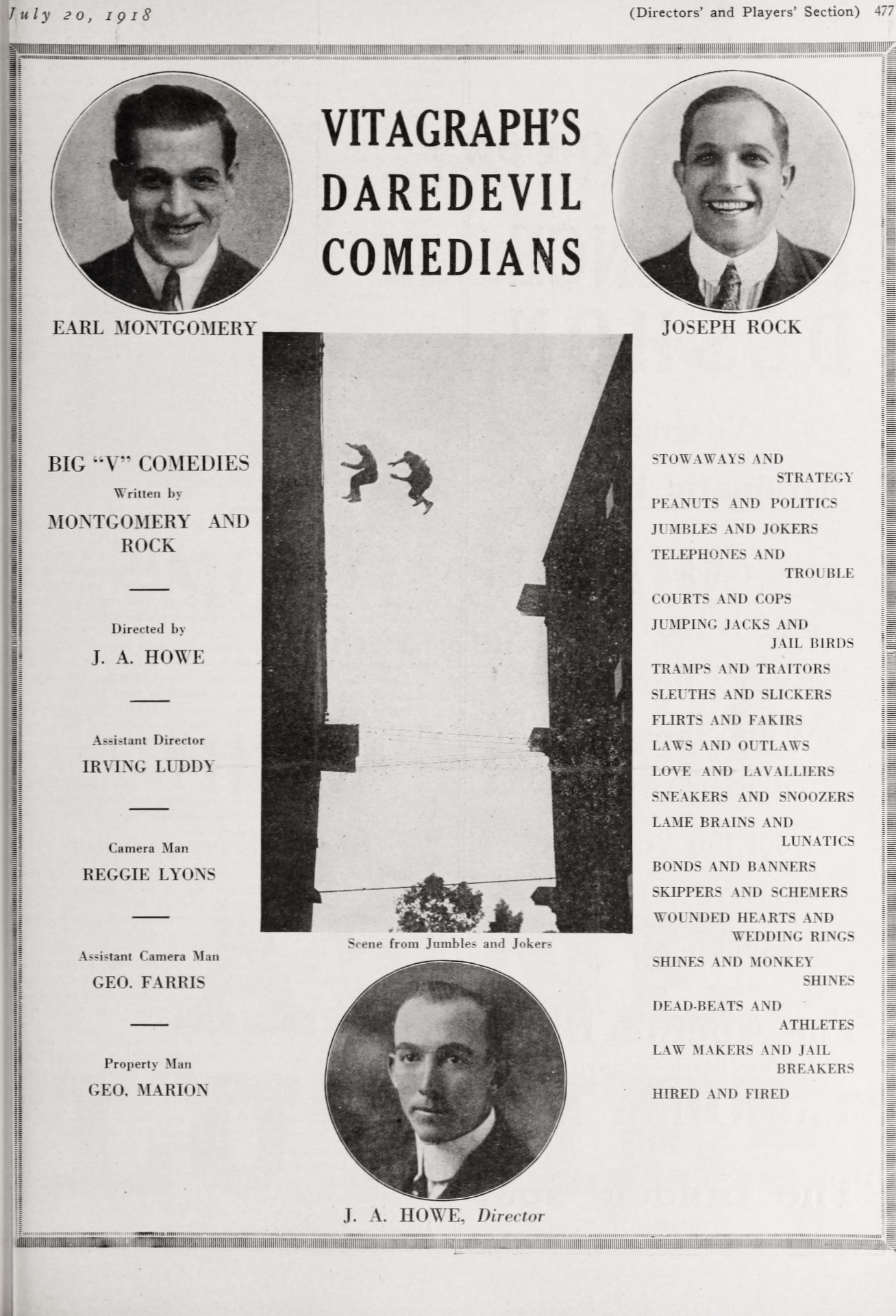
The silver screen has, throughout its storied history, often served as a canvas for the exploration of duality: light and shadow, hero and villain, truth and artifice. Few films navigate these treacherous waters with the nuanced dexterity of Sleuths and Slickers, a cinematic gem that, while perhaps not always occupying the zenith of popular discourse, certainly merits a re-evaluation for its intricate narrative architecture and profound thematic resonance. Penned and brought to life by the formidable duo of Joe Rock and Earl Montgomery, this film transcends its apparent genre trappings to deliver a compelling dissertation on moral ambiguity and the elusive nature of justice in a world perpetually cloaked in shades of grey.
From the very first frame, the film plunges the viewer into a meticulously crafted urban labyrinth: Veridia. This isn't merely a backdrop; it's a character in itself, a sprawling, rain-slicked metropolis that pulsates with a palpable sense of decay beneath its veneer of metropolitan grandeur. The cinematography, a masterclass in chiaroscuro, ensures that every alleyway, every neon-drenched street corner, every opulent interior, feels charged with a silent narrative, hinting at secrets whispered in the dark and conspiracies brewing beneath the surface. It immediately establishes an atmosphere reminiscent of the classic noir era, yet with a distinctly modern edge that feels both familiar and unsettlingly fresh. The opening sequence, devoid of exposition, relies instead on visual storytelling, drawing us into the world through the weary eyes of Silas "Slick" Malone, portrayed with a captivating blend of world-weariness and simmering resolve by Earl Montgomery.
Montgomery's Malone is a portrait of a man adrift, a private investigator whose once-sharp instincts have been blunted by a past failure that haunts his every step. He embodies the archetypal noir detective, cynical and jaded, yet possessing an underlying current of integrity that refuses to be fully extinguished. His performance is a study in understated power, conveying volumes with a glance, a sigh, or the almost imperceptible slump of his shoulders. It’s a compelling counterpoint to Joe Rock’s Julian "Jules" Vane, a character who is, in many ways, Malone’s mirror image, albeit distorted through a prism of refined criminality. Rock imbues Vane with an effortless charisma, a suave intellectualism that masks a profound moral complexity. Vane is not simply a villain; he is an artist, a craftsman whose forgeries are so meticulously perfect they challenge the very notion of authenticity. This dichotomy between the pragmatic, grounded Malone and the sophisticated, ethereal Vane forms the beating heart of the film's character dynamics, driving much of its intellectual and emotional conflict.
The central conceit of the film, the replication of the fabled "Sapphire of Seraphina," serves as a brilliant MacGuffin, a catalyst for a far grander narrative about power, corruption, and the fight for societal truth. The jewel itself, with its mythical allure, becomes a symbol of the very essence of Veridia's soul, coveted by those who seek to exploit it and defended by those who, against all odds, still believe in its intrinsic value. The Baron Von Hess, though often operating from the shadows, emerges as a truly formidable antagonist, a puppet master whose threads of influence extend into every facet of the city's political and social fabric. His plot to destabilize the government through the gem's manipulation is not merely a criminal enterprise; it's an ideological war, fought with subterfuge and deception rather than open conflict.
One of the film's most remarkable achievements lies in its screenplay, co-written by Montgomery and Rock. It is a masterclass in tension building and narrative intricacy, weaving together multiple plot threads with surgical precision. The dialogue crackles with wit and sardonic humor, echoing the best traditions of the genre, yet never feeling anachronistic. Every line serves a purpose, advancing the plot, revealing character, or deepening the thematic exploration. The pacing is deliberate, allowing moments of quiet introspection to breathe before accelerating into sequences of heart-pounding suspense. This careful equilibrium ensures that the audience remains fully invested, not just in the outcome of the heist, but in the moral journeys of its protagonists.
The uneasy alliance forged between Malone and Vane is a narrative triumph. Initially adversaries, their forced collaboration allows for a fascinating exploration of their respective worldviews. Malone, ever the pragmatist, sees the world in stark terms of right and wrong, even if those lines are blurred by his own past. Vane, the artist, approaches the world with a more philosophical detachment, his morality fluid, yet ultimately guided by an unexpected sense of justice that transcends mere legality. Their dynamic, a complex interplay of distrust, grudging respect, and eventual camaraderie, is the emotional anchor of the film. It's in their shared glances, their terse exchanges, and their unspoken understandings that the film truly shines, revealing the humanity beneath their hardened exteriors.
The supporting cast, though perhaps less prominent, delivers performances that are uniformly strong, adding layers of texture to Veridia's underbelly. The idealistic art historian, whose plight draws Malone into the fray, serves as a vital moral compass, a reminder of the innocence that stands to be crushed by the machinations of power. Even the Baron's ruthless enforcers, often relegated to mere henchmen in lesser films, possess a chilling efficiency that underscores the formidable threat they represent, elevating the stakes in every encounter.
The film's technical prowess is equally commendable. The production design meticulously recreates a world that feels both fantastical and grittily real. From the opulent, art deco-inspired interiors of the Baron's estate to the grimy, rain-swept streets where Malone plies his trade, every set piece contributes to the immersive atmosphere. The score, a haunting blend of jazz inflections and orchestral swells, perfectly complements the visual narrative, underscoring moments of tension, melancholy, and triumph without ever overpowering the action. It's a testament to the filmmakers' holistic vision that every element, from the script to the sound design, works in concert to create a cohesive and deeply affecting cinematic experience.
In comparing Sleuths and Slickers to other works, one might draw parallels to the intricate plotting of films like Der lebende Leichnam, particularly in its exploration of identity and the societal pressures that can lead individuals down unconventional paths. The moral quandaries faced by Malone and Vane, and their eventual, albeit reluctant, collaboration against a greater evil, also resonate with the thematic depth found in The Redemption of White Hawk, albeit in a vastly different genre context. Both films delve into the complexities of personal integrity when confronted with systemic corruption or deeply ingrained prejudices. The stark contrasts between the protagonists, too, might evoke a sense of the classic buddy cop dynamic, yet here it is elevated by intellectual sparring and a profound exploration of philosophical differences rather than mere comedic relief.
The climactic heist sequence, set against the backdrop of a high-society gala, is a tour de force of suspense and meticulously choreographed action. It's not a sequence reliant on brute force, but rather on timing, cunning, and the intricate interplay of multiple moving parts. The genuine and the counterfeit Sapphires become more than just objects; they are symbols of the truth and the lies that have shaped the entire narrative. The tension is almost unbearable as Malone and Vane execute their plan, their individual skills converging in a desperate gamble to expose the Baron and save Veridia. This scene, in particular, showcases the directorial prowess, orchestrating a complex web of characters, motives, and misdirections with masterful control. It’s a sequence that demands repeated viewings to fully appreciate its ingenious construction.
Beyond the thrilling plot and compelling characters, Sleuths and Slickers offers a poignant commentary on the nature of truth and artifice. In a world where a forgery can be indistinguishable from the original, where appearances are constantly deceiving, the film forces us to question what constitutes authenticity, not just in art, but in human character and societal structures. Vane, the forger, paradoxically becomes a purveyor of truth by exposing the lies of others, while Malone, the detective, must navigate a landscape where every clue is potentially a fabrication. This philosophical underpinning elevates the film beyond a simple genre piece, transforming it into a work of enduring intellectual curiosity.
While some might argue that the film occasionally veers into slightly melodramatic territory, particularly in its portrayal of Veridia’s pervasive corruption, such moments are consistently anchored by the grounded performances of Montgomery and Rock. Their chemistry is undeniable, their shared scenes crackling with an energy that transcends the written word. They don't just act; they inhabit these roles, bringing a depth and authenticity that makes even the most fantastical elements of the plot feel entirely believable. The film’s exploration of the personal costs of fighting for justice, the scars it leaves on individuals, is particularly resonant, reminding us that heroism often comes at a steep price.
The lasting impact of Sleuths and Slickers lies in its refusal to offer easy answers. The resolution, while providing a sense of closure, leaves a lingering question about the true cost of integrity in a corrupt world and the perpetual struggle against unseen forces of power. It's a film that stays with you long after the credits roll, prompting reflection on the nature of good and evil, and the often-blurred lines that separate them. It's a testament to the power of well-crafted storytelling and compelling character development that a film, perhaps overshadowed by more bombastic contemporaries, continues to provoke thought and inspire discussion decades after its initial release. Its intricate narrative, coupled with stellar performances and a rich thematic tapestry, solidifies its position as a truly significant contribution to the cinematic landscape. It stands as a powerful reminder that sometimes, the greatest truths are unearthed in the darkest corners, by the most unlikely of heroes, or anti-heroes, who navigate the murky waters between the law and its shadows. This is a film that demands to be seen, discussed, and ultimately, celebrated for its audacious vision and enduring artistic merit.
IMDb —
1921
Community
Log in to comment.