DbcultAccessing Vault...
5.9/10
Senior Film Conservator
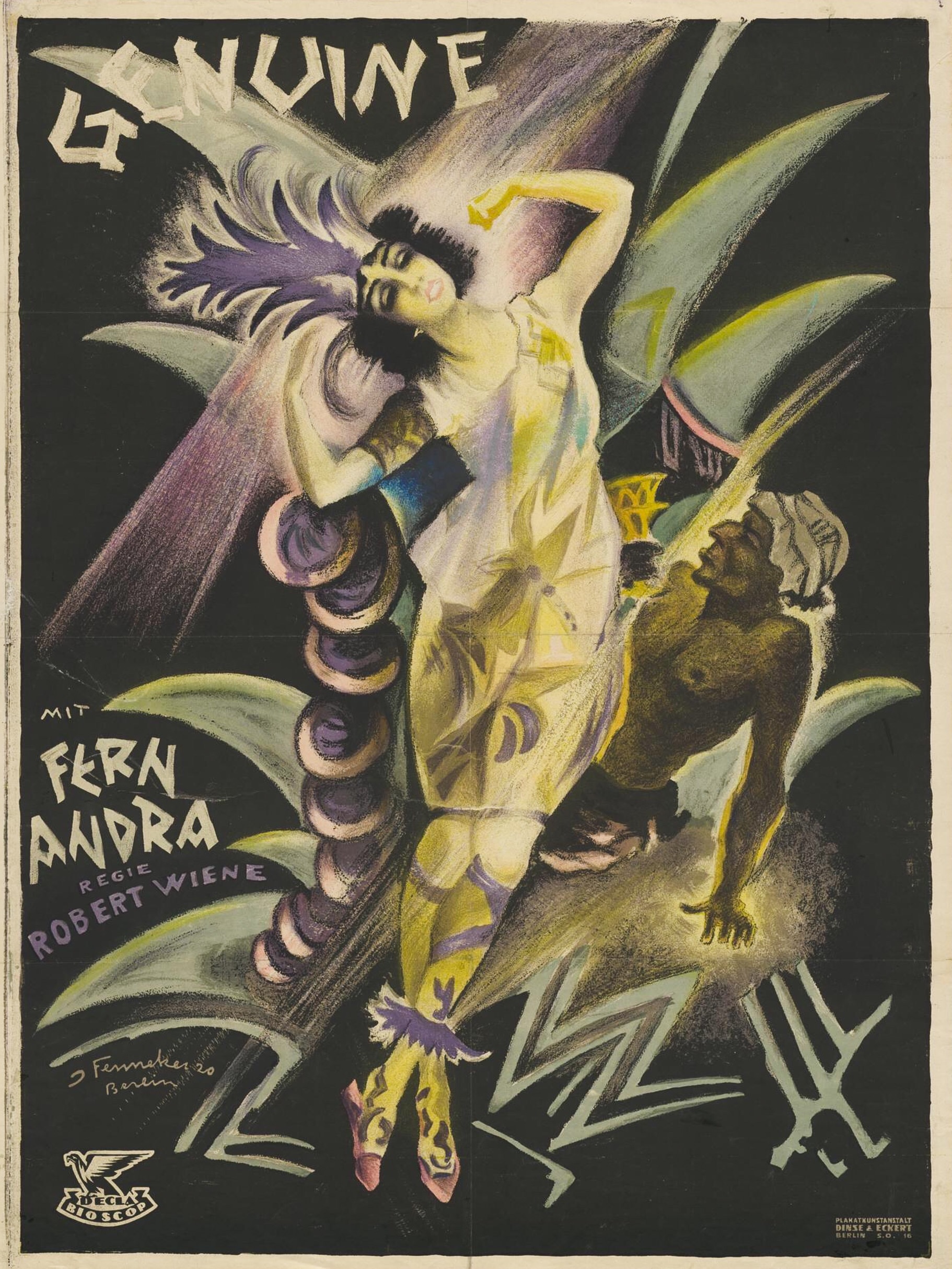
A definitive 5.9/10 rating for a film that redefined the boundaries of cult cinema. Genuine: The Tragedy of a Vampire remains a cornerstone of transgressive art.
Step into the phantasmagoric realm of early 20th-century German cinema, and you'll encounter a film that defies easy categorization, a work that is simultaneously a grotesque fairy tale, a psychological thriller, and a profound meditation on the destructive nature of obsession. Robert Wiene's 1920 silent classic, Genuine: The Tragedy of a Vampire (genuine-the-tragedy-of-a-vampire), unfurls a narrative steeped in the disorienting aesthetics of German Expressionism, a movement that sought to externalize inner turmoil and subjective reality through distorted visuals and exaggerated performances. It is a film that, even a century later, retains its unsettling power, largely due to the singular vision of its writer, Carl Mayer, and the unforgettable, if often overlooked, performance by John Gottowt.
At the heart of this cinematic nightmare is Genuine, a character who is less a traditional vampire and more an ancient, cruel divinity, a succubus of the soul. Her very presence exudes an intoxicating, almost suffocating, allure. She doesn't merely bite; she seduces, she manipulates, she utterly possesses the minds and wills of men, bending them to her sinister purpose. Mayer's script, a testament to his genius for psychological horror, paints Genuine not as a creature of bloodlust, but of a far more insidious hunger: the desire for absolute, unquestioning devotion, validated by the ultimate sacrifice. This 'proof of love' demands murder, turning affection into a weapon and desire into a death sentence.
The film opens with a framing device, a common trope of the era, where a writer, exhausted by his craft, conjures Genuine from his imagination, inadvertently unleashing her malevolent spirit into his own reality. This meta-narrative layer immediately blurs the lines between fiction and madness, preparing the audience for the surreal journey ahead. Genuine, portrayed by the mesmerizing Fern Andra, embodies this destructive beauty with an almost ethereal detachment. Her eyes, often wide and unblinking, convey both innocence and an ancient, knowing malevolence. She is a siren, her song not of sound, but of pure, unadulterated charisma, drawing men into her orbit where their free will slowly atrophies, replaced by an unholy compulsion.
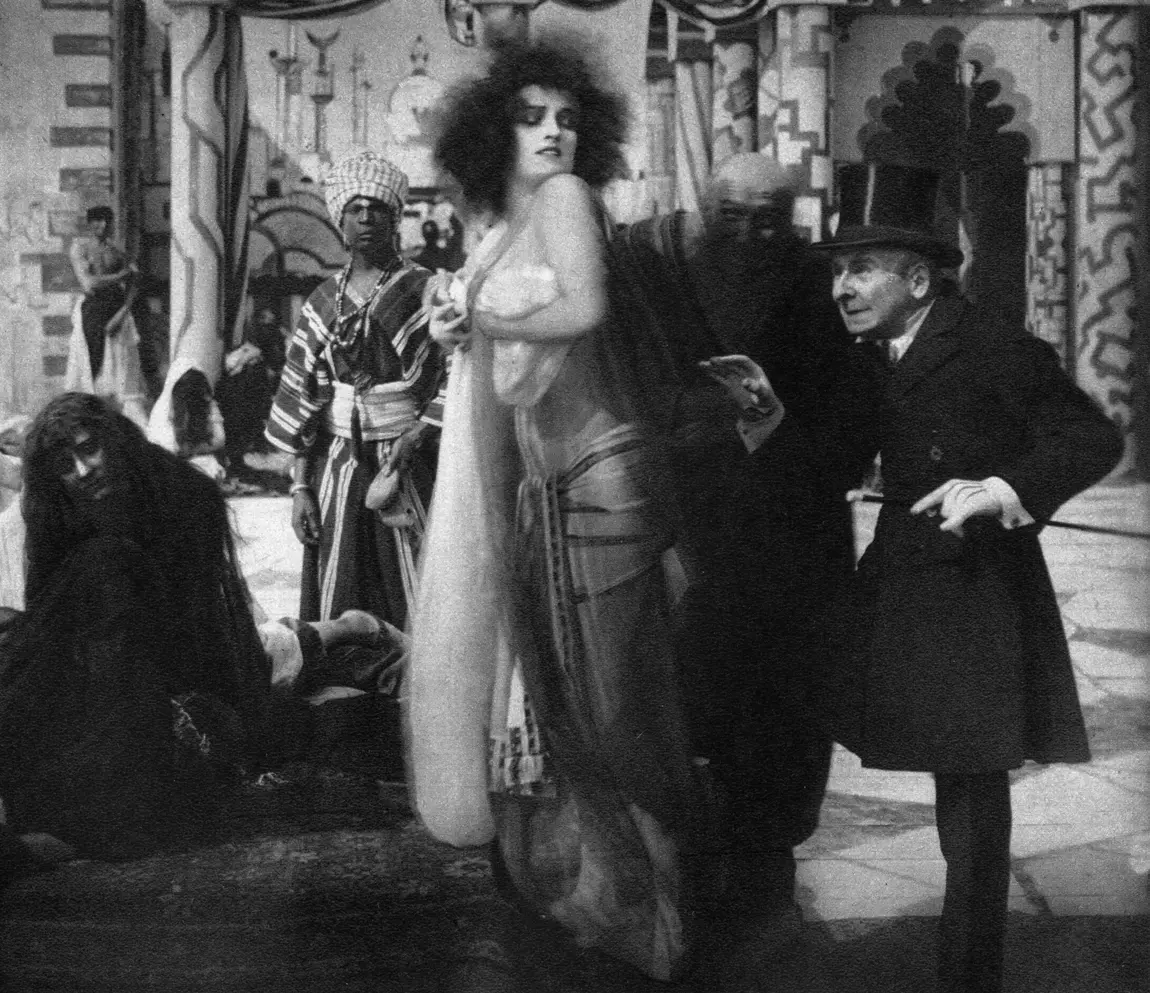
The tragedy inherent in the film's title isn't solely Genuine's; it extends to every man who falls under her spell. Each becomes a pawn in her macabre game, driven to madness and murder in a desperate attempt to prove their love. The narrative skillfully introduces us to a series of these unfortunate souls, each spiraling into a vortex of psychological torment. John Gottowt, known for his iconic portrayal of Dr. Caligari, here delivers a nuanced performance as the barber, an early victim whose descent into Genuine's thrall is particularly poignant. His initial fascination quickly morphs into a desperate, almost pathetic servitude, culminating in acts of violence that are both horrifying and pitiable.
Consider the character played by Hans Heinrich von Twardowski, a young nobleman whose youthful idealism is utterly shattered by Genuine's influence. His transformation from an ardent admirer to a tormented killer is depicted with a chilling intensity, showcasing the insidious nature of Genuine's power. It’s a stark reminder that her 'love' is not nurturing but corrosive, consuming the very essence of those who offer it. Louis Brody, too, contributes to this ensemble of the damned, his character another victim caught in Genuine's web, further illustrating the indiscriminate reach of her malevolence. These performances, though silent, speak volumes through their exaggerated gestures, expressive facial contortions, and the stark contrast between their initial states and their ultimate degradation.
The film's depiction of these men is not merely to showcase Genuine's power, but to explore the fragility of the human psyche when confronted with an overwhelming, supernatural force of desire. It questions the very nature of love, asking whether true devotion can exist where free will has been obliterated. The 'tragedy' is not just that Genuine is a vampire, but that she forces others to become monsters in her name, twisting their purest emotions into the darkest deeds.
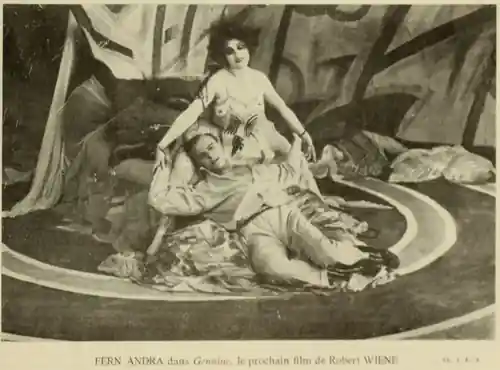
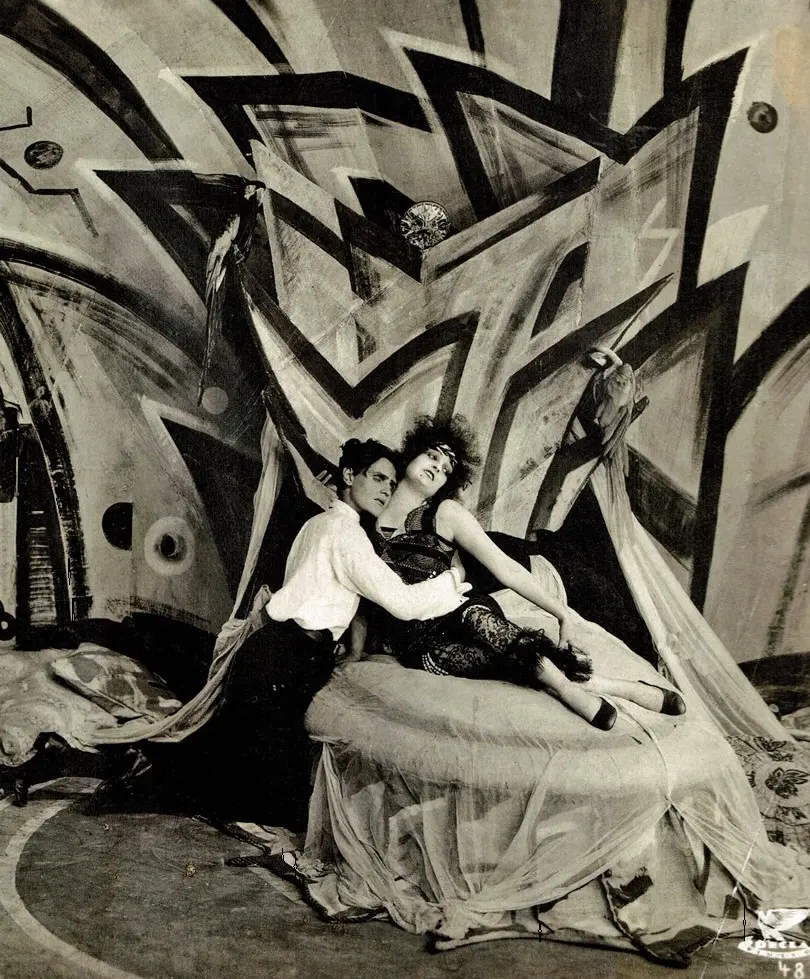
Visually, Genuine is a tour de force of German Expressionism. The film's sets, designed by Walter Reimann, are a testament to the movement's aesthetic principles. Gone are realistic backdrops; in their place are angular, distorted, almost hallucinatory environments that mirror the characters' internal states. Walls lean precariously, staircases twist into unsettling spirals, and shadows stretch and warp, creating a world that is inherently unstable and menacing. The use of light and shadow is particularly masterful, creating stark contrasts that heighten the drama and emphasize the psychological fragmentation. Genuine's lair, in particular, is a masterpiece of architectural menace, a cage of desire from which escape seems impossible.
The costumes, too, are integral to the film's Expressionist vision. Genuine's attire, often flowing and dramatically styled, emphasizes her otherworldly nature and her status as a figure of irresistible, dangerous beauty. Her garments are not merely clothes; they are an extension of her enigmatic power, designed to captivate and disorient. The makeup, a hallmark of silent cinema, is pushed to its extreme here, with exaggerated features that underscore the characters' emotional turmoil and their descent into madness. This deliberate artificiality serves not to detach the audience, but to immerse them deeper into the film's subjective reality, where external appearances are a direct manifestation of internal chaos.
The film's visual language is a critical component of its horror. It doesn't rely on jump scares or graphic violence in the modern sense. Instead, it creates an atmosphere of pervasive dread through its unsettling aesthetics. The distorted perspectives, the jarring angles, and the dreamlike quality of the mise-en-scène combine to create a sense of unease that lingers long after the credits roll. This is horror rooted in psychological disquiet, where the world itself seems to conspire against sanity, a characteristic shared with other masterpieces of the era, such as The Cabinet of Dr. Caligari, though Genuine carves out its own unique, unsettling niche.
Carl Mayer, the brilliant mind behind the screenplay, was a titan of German Expressionist cinema, known for his profound psychological depth and innovative narrative structures. In Genuine, he takes the nascent genre of horror and twists it into something far more complex than mere monster-flick fare. He deconstructs the traditional vampire mythos, stripping away the fangs and the capes to reveal a creature whose power lies not in physical predation, but in psychological manipulation. Genuine is not merely a bloodsucker; she is a soul-sucker, feeding on the very essence of human love and devotion, corrupting it into something monstrous.
Comparing it to other films of its time, such as Der Alchimist, which also delves into themes of arcane power and moral corruption, Genuine stands out for its unique focus on the psychological rather than the purely supernatural. While the alchemist might seek forbidden knowledge for material gain, Genuine's quest is for emotional dominion, a far more insidious and personal form of control. Her tragedy, and that of her victims, lies in this profound perversion of human connection. Mayer’s brilliance lies in his ability to make the intangible horror – the corruption of the soul – more terrifying than any physical threat.
Though perhaps less widely known than some of its Expressionist contemporaries, Genuine: The Tragedy of a Vampire remains a pivotal work in the history of horror cinema and German Expressionism. It offers a unique, unsettling vision of vampirism, reinterpreting the creature not as a fanged monster, but as a psychological force of nature, a cruel divinity demanding ultimate, destructive proof of love. The film's audacious visuals, combined with Carl Mayer's profoundly disturbing script and the committed performances of its cast, particularly Fern Andra and John Gottowt, coalesce into a cinematic experience that is both mesmerizing and deeply unsettling.
Its influence, while subtle, can be felt in subsequent explorations of psychological horror and the dark side of human obsession. The film serves as a potent reminder of the power of silent cinema to convey complex emotions and terrifying concepts without uttering a single word. It challenges viewers to confront the darker aspects of desire and devotion, forcing an introspection into the very nature of love when it becomes an instrument of control. In a world saturated with explicit horror, Genuine whispers its terrors, relying on atmosphere, suggestion, and profound psychological insight to leave an indelible mark on the psyche.
To watch Genuine: The Tragedy of a Vampire today is to engage with a piece of film history that is as artistically bold as it is thematically rich. It’s a journey into the heart of darkness, guided by the unsettling beauty of Expressionist art and the tragic narrative of a divinity whose love is a curse. For those seeking a horror experience that transcends mere jump scares and delves into the profound anxieties of the human condition, this silent masterpiece offers an unforgettable, chilling encounter with true cinematic artistry. It is a testament to the enduring power of early cinema to explore the most profound and disturbing facets of existence, leaving audiences to ponder the true cost of absolute devotion and the devastating consequences of a cruel, ancient love.
IMDb 6.7
1933
Community
Log in to comment.