DbcultAccessing Vault...
6/10
Senior Film Conservator

A definitive 6/10 rating for a film that redefined the boundaries of cult cinema. Gesetze der Liebe remains a cornerstone of transgressive art.
Is Gesetze der Liebe worth watching in the 21st century? Short answer: absolutely, but not for the reasons one might typically seek out a feature film. This isn't a cinematic experience for casual entertainment seekers or those accustomed to traditional narrative arcs and character development. Rather, it stands as an essential, if challenging, viewing experience primarily for film historians, social scientists, and anyone fascinated by the evolution of public discourse on human sexuality and scientific communication through early cinema.
It demands an audience willing to engage with a film as a historical document, a window into a pivotal moment of societal awakening, rather than as a vehicle for escapism. For those with a keen interest in the history of science, medicine, or the Weimar Republic, its value is immeasurable. However, if your preference leans towards contemporary storytelling, fast pacing, or conventional dramatic tension, you may find its deliberate, lecture-style approach less engaging.
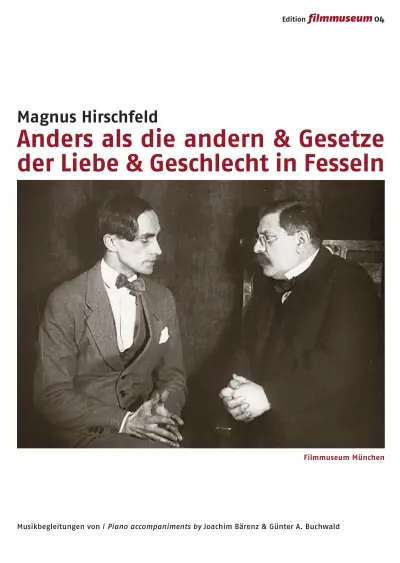
Gesetze der Liebe, or 'Laws of Love,' emerges from the vibrant, often tumultuous, intellectual landscape of Weimar Germany, a period ripe for challenging established norms. At its core, the film is a direct extension of Dr. Magnus Hirschfeld’s groundbreaking work at the Institute for Sexual Science in Berlin, an institution that was both lauded for its progressive research and vilified by conservative elements.
The film’s structure is unapologetically didactic. It presents itself as a series of lectures, with Hirschfeld himself often taking center stage, explaining the biological realities of sex and reproduction across the animal kingdom. This isn’t a subtle exploration; it’s a direct, scientific exposition, using footage of various creatures, anatomical diagrams, and early animation to illustrate complex concepts.

This film works because of its audacious premise and historical significance. In an era where public discussion of sexuality was largely taboo, Gesetze der Liebe dared to bring scientific understanding to the masses, pushing boundaries that even today feel remarkably progressive. Its very existence is a testament to the intellectual courage of its creators.
This film fails because its educational intent often overshadows any conventional cinematic artistry. The pacing is slow, dictated by the rhythm of a lecture rather than a dramatic narrative, and the 'performances' are primarily illustrative. For a modern audience, accustomed to dynamic visuals and intricate plots, it can feel like a protracted academic exercise.
You should watch it if you are deeply interested in the history of science, social reform, or the unique cinematic output of the 1920s. It offers an unparalleled glimpse into a specific historical moment and a pioneering approach to public education. If you seek entertainment, look elsewhere. If you seek enlightenment and historical context, prepare to be fascinated.
The true protagonist of Gesetze der Liebe isn't a character in a traditional sense, but the guiding intellect of Dr. Magnus Hirschfeld. His presence, whether through direct address or implied through the film's curated content, lends it an undeniable authority. Hirschfeld was not merely a physician; he was a social reformer, a tireless advocate for sexual minorities, and a pioneer in the field of sexology. His vision permeates every frame, transforming what could have been a dry scientific presentation into a powerful statement on human understanding and tolerance.

The film’s 'directing,' if we can even call it that in a conventional sense, is focused entirely on clarity and impact of information. There are no elaborate camera movements or experimental editing techniques designed for artistic expression. Instead, the camera is a steadfast observer, framing Hirschfeld with a straightforward, almost journalistic gaze. When it shifts to animal footage or diagrams, the composition is functional, designed to highlight the specific biological point being made.
Consider the segments detailing the reproductive cycles of various insects or aquatic life. The cinematography, while basic by today’s standards, manages to capture the intricate details necessary to convey the biological mechanisms. It's not about beauty for beauty's sake, but precision for the sake of education. This functional aesthetic is a defining characteristic.
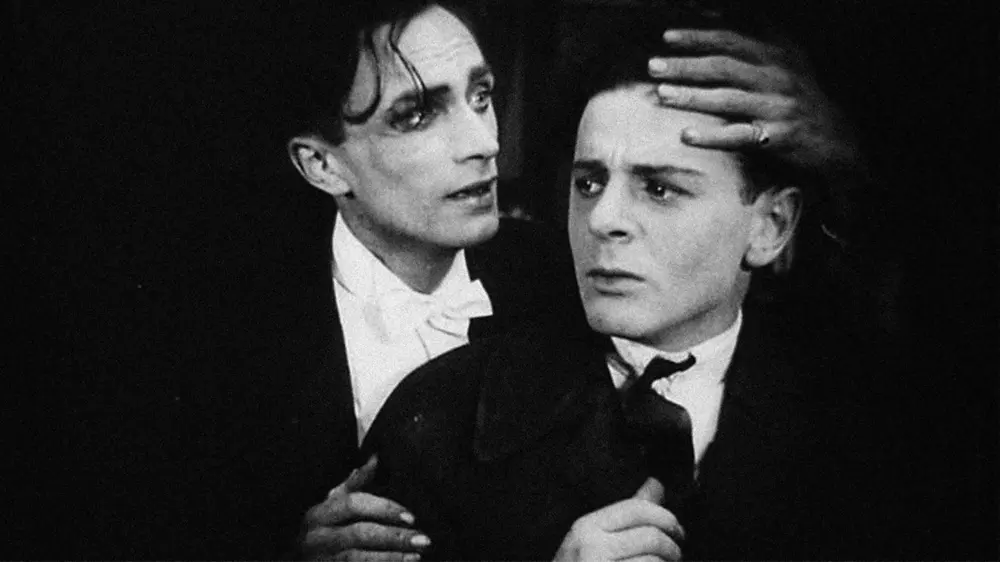
The 'acting' from the featured experts, including Hirschfeld himself and his colleagues like Fritz Schulz and Conrad Veidt (who, despite his later fame in narrative films, here serves a purely expository role), is less about embodying a character and more about embodying scientific authority. Their delivery is measured, articulate, and devoid of theatricality. They are presenters, not performers, and this commitment to a pedagogical tone is surprisingly effective in conveying the film’s serious intent.
The pacing of Gesetze der Liebe is perhaps its most challenging aspect for contemporary viewers. It moves at the deliberate speed of a formal lecture, allowing ample time for each concept to be introduced, explained, and illustrated. There are no sudden cuts, no rapid-fire montage sequences. Each segment flows logically from the last, building a cumulative argument for the naturalness and universality of sexual phenomena.
This methodical rhythm, while potentially taxing, is also crucial to the film’s purpose. It forces the audience to slow down, to absorb the information, and to confront ideas that might have been new or even scandalous at the time. It’s a pacing designed for contemplation, not passive consumption.
The tone is one of unwavering scientific objectivity, yet with an underlying current of humanistic empathy. Hirschfeld's aim was not just to inform, but to destigmatize. By framing human sexuality within the broader context of the natural world, he implicitly argues against moralistic judgments and for a more understanding, evidence-based approach to sexual diversity. This is where the film transcends mere biology and becomes a powerful social statement.
One might observe, quite unconventionally, that the film’s greatest triumph isn’t its scientific content itself – which inevitably becomes dated – but its sheer audacity as a public act. To project these images and ideas onto a cinema screen in 1927 was nothing short of revolutionary. It was a direct challenge to the prudish sensibilities of the era, a cinematic gauntlet thrown down by science against superstition.
To truly appreciate Gesetze der Liebe, one must place it firmly within its historical context. Weimar Germany, while a period of great artistic and intellectual freedom, was also a society grappling with profound social and political anxieties. Hirschfeld's work, including this film, represented the cutting edge of progressive thought, often clashing with conservative and proto-fascist ideologies that would soon plunge Germany into darkness.
The film’s release was met with predictable controversy, facing censorship in various regions. Yet, its very existence, and its ability to reach audiences, however limited, speaks volumes about the era's brief window of openness. It stands as a stark reminder of what was possible before the Nazi regime, which would later burn Hirschfeld's books and dismantle his institute, sought to erase all traces of such progressive thinking.
The film’s legacy is complex. As a scientific document, much of its content has been superseded by modern understanding. However, as a historical artifact, a piece of early educational cinema, and a testament to the courage of its creators, it remains invaluable. It offers a unique perspective on how complex, sensitive topics were first introduced to a mass audience through the nascent power of film.
It works. But it’s flawed. Its brilliance lies in its intent and its historical footprint, not necessarily its cinematic polish.
Yes, Gesetze der Liebe is absolutely worth watching today, but with specific expectations. It is not a film designed for casual entertainment. Its value is primarily historical and academic. It offers a unique insight into early cinematic education.
For those interested in the history of science, particularly sexology, it’s a crucial primary source. For film scholars, it demonstrates an unconventional use of the medium. For anyone curious about the social history of the early 20th century, it provides a window into a daring moment of public enlightenment.
It serves as a powerful reminder of how far public discourse on sexuality has come, and perhaps, how much further it still needs to go. Its didactic nature, often seen as a drawback, is precisely what makes it so valuable as a historical record of scientific communication.
Gesetze der Liebe is not a film to be enjoyed in the conventional sense. It is a film to be studied, admired for its courage, and understood within the crucible of its creation. It is a cinematic relic that speaks volumes not just about sex and reproduction, but about the very nature of progress, censorship, and the power of film as a tool for social change. Its value is less in its entertainment factor and more in its profound significance as a historical document and a testament to the audacious spirit of intellectual freedom in a volatile era. For those willing to approach it as such, it offers a remarkably insightful and surprisingly resonant experience, proving that some lessons, even when delivered as lectures, can echo through the decades with enduring power.

IMDb 5.9
1923
Community
Log in to comment.