DbcultAccessing Vault...
7.4/10
Senior Film Conservator
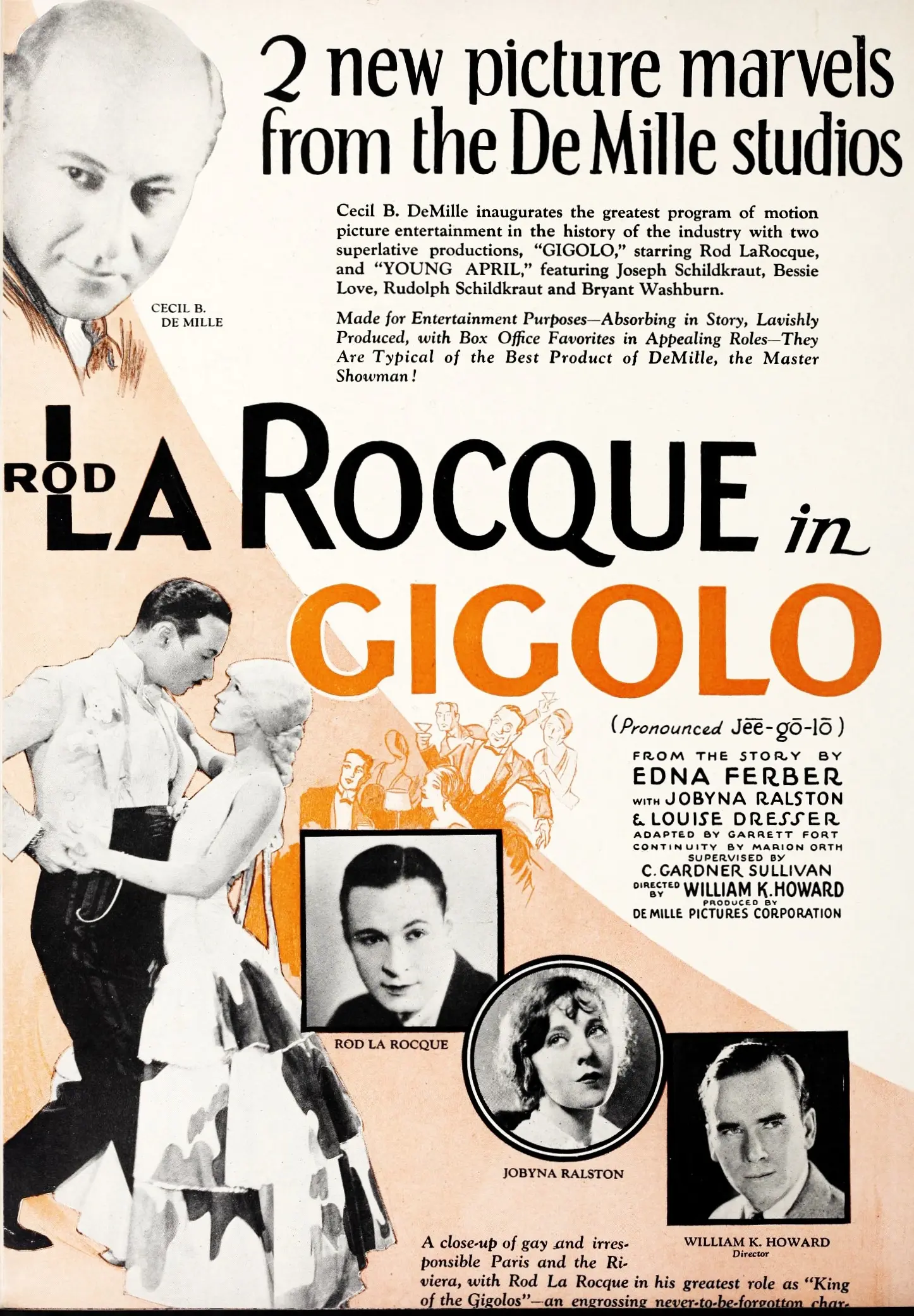
A definitive 7.4/10 rating for a film that redefined the boundaries of cult cinema. Gigolo remains a cornerstone of transgressive art.
Is Gigolo a forgotten gem or just another relic of silent-era melodrama? Short answer: It is a fascinating, if occasionally heavy-handed, study of generational decay that remains surprisingly relevant for its cynicism.
This film is for viewers who appreciate dark irony and the dismantling of the 'American Dream' in a European setting. It is certainly NOT for those seeking a lighthearted romantic romp or a traditional hero's journey.
This film works because it treats the 'gigolo' lifestyle as a desperate survival mechanism rather than a glamorous choice, grounding the drama in post-war economic reality.
This film fails because the third-act reliance on social embarrassment as the primary conflict feels somewhat dated compared to the psychological depth of the first half.
You should watch it if you want to see a silent film that dares to explore the transactional nature of love and the crushing weight of family expectations.
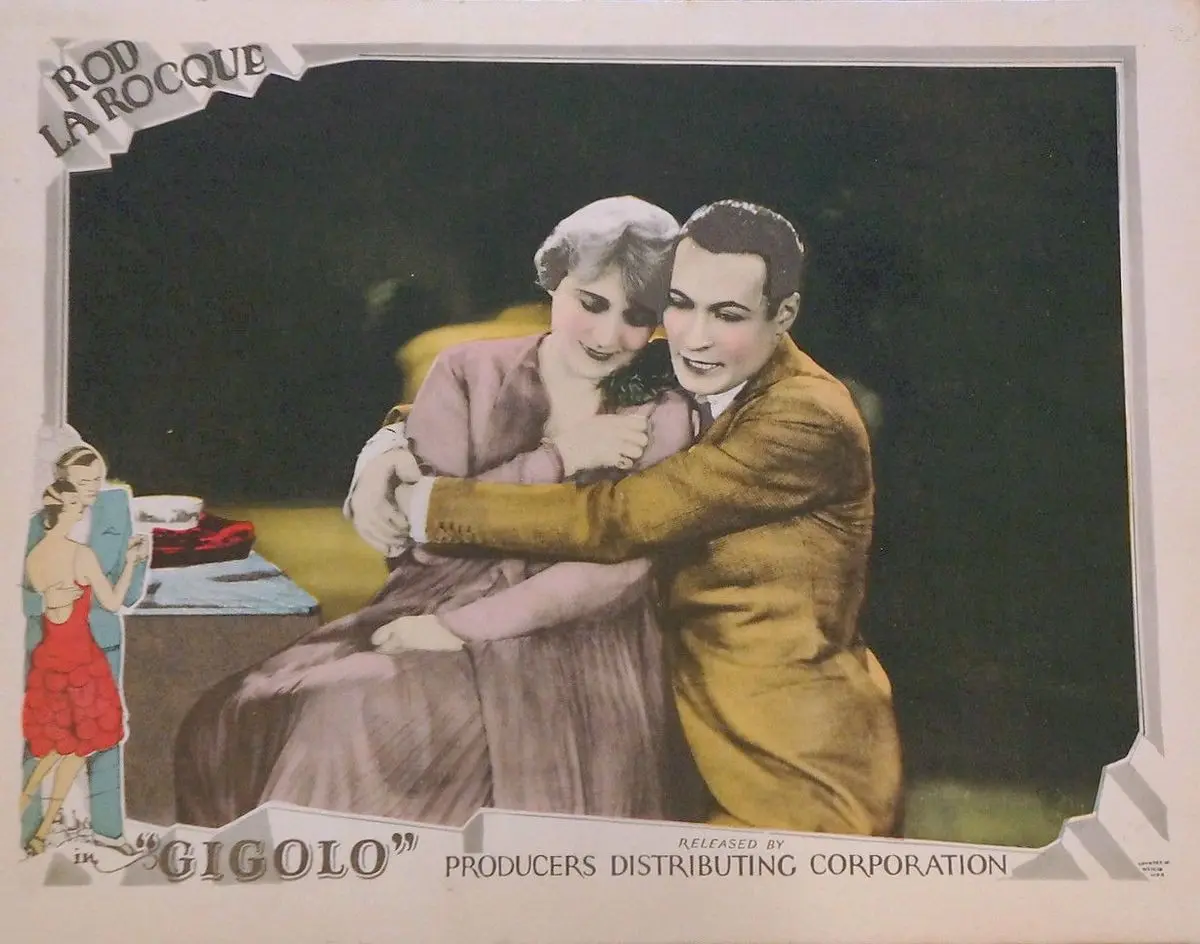
The most striking element of Gigolo is its structural irony. We begin with Gideon Gault as the moral compass of the family, the one attempting to save his mother from a parasite. By the end, he has become the very thing he loathed. This isn't just a plot twist; it is a caustic commentary on how the sins of the parent are visited upon the child.
Unlike His Father's Son, which explores the redemptive power of family ties, Gigolo suggests that those ties are more like a noose. The film doesn't shy away from the ugliness of Gideon's transformation. There is a specific scene where Gideon looks at his mother's empty jewelry box—a visual metaphor for her hollowed-out soul—that perfectly sets the stage for his own moral compromise.
The irony is thick, and the film plays it for all it is worth. It works. But it’s flawed. The pacing in the middle section, particularly Gideon's time at war, feels rushed, serving more as a plot device to facilitate the family’s bankruptcy than as a formative character experience.
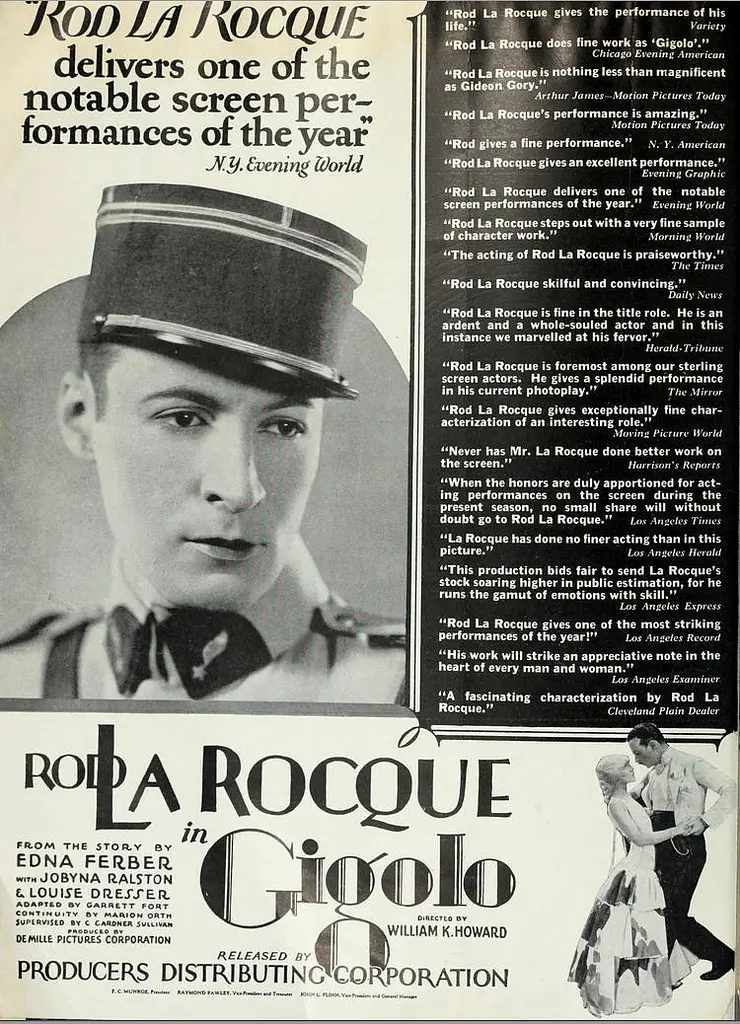
Rod La Rocque delivers a performance that is surprisingly modern in its restraint. In an era often characterized by wild gesticulation, La Rocque uses his eyes to convey the mounting humiliation of his character. When he is 'squired' around the Parisian nightlife by wealthy older women, his posture remains rigid, a physical manifestation of his internal resistance to his new profession.
Compare this to the more traditional heroics found in The Fear Fighter. While both films deal with men facing their insecurities, Gigolo is much more interested in the social cost of failure. La Rocque’s chemistry with Louise Dresser, who plays his mother, is uncomfortable in exactly the right way. Dresser is brilliant as a woman whose obsession with youth has blinded her to the destruction of her son's future.
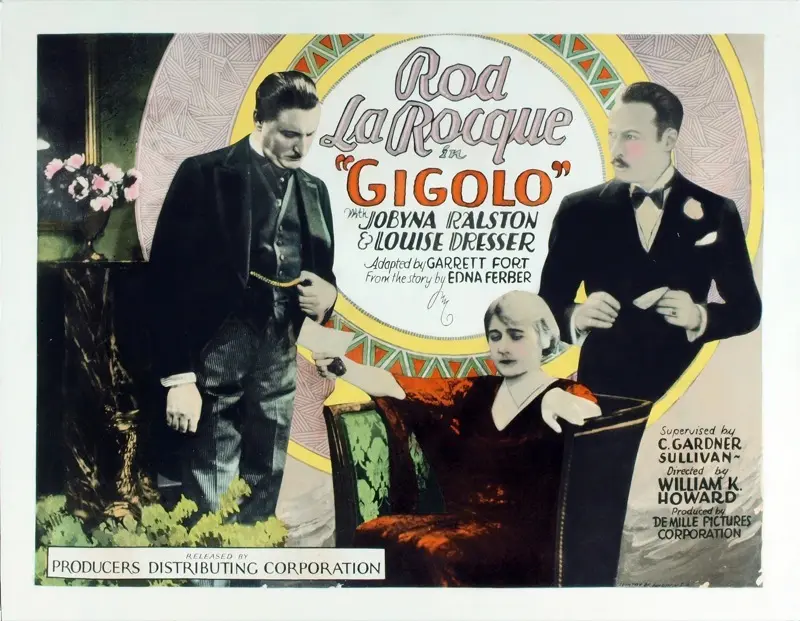
Dresser’s performance is actually the secret heart of the film. She isn't just a victim; she is a co-conspirator in Gideon's downfall. Her refusal to acknowledge the reality of their poverty is what pushes Gideon onto the streets of Paris. It’s a brutal depiction of maternal narcissism that feels decades ahead of its time.
Based on a story by Edna Ferber, the film carries a literary weight that many of its contemporaries lacked. Ferber was always keen on exploring the intersection of class and character, and Gigolo is no exception. The screenplay by John W. Krafft and Garrett Fort preserves much of that social bite. It asks a difficult question: What is the price of keeping up appearances?
The film’s portrayal of Paris is also noteworthy. This isn't the romanticized city of lights often seen in silent cinema. Instead, it’s a predatory playground. The cinematography by William K. Howard captures the claustrophobia of the nightclubs, using shadows to hide the faces of the 'patrons' while keeping the 'gigolos' in a harsh, unforgiving light.
This visual contrast highlights the transactional nature of the setting. It reminds me of the social anxieties explored in The Other Woman, though Gigolo is far more cynical in its conclusion. There is no easy out for Gideon, and the film is brave enough to sit in that discomfort for much of its runtime.
Yes, Gigolo is worth watching because it provides a rare, cynical look at the post-WWI era that avoids the typical 'lost generation' tropes in favor of a more personal, family-driven tragedy. It captures a specific moment in history where the old world's values were being sold off piece by piece.
While the ending may feel a bit too much like a stage play, the journey there is filled with genuine tension and psychological insight. If you are a fan of silent cinema that pushes boundaries, this is a must-see. It is a film that values character over spectacle, which is a rarity for its time.
William K. Howard’s direction is focused and unsentimental. He avoids the flowery title cards that often bogged down silent dramas, letting the images do the heavy lifting. One particularly effective sequence involves a montage of Gideon’s various 'clients,' each more demanding and faceless than the last. It’s a dizzying display of his loss of identity.
The film’s use of space is also clever. The Gault family mansion is shot with wide, empty frames to emphasize their lack of resources, while the Parisian clubs are crowded and overwhelming. This shift in scale reflects Gideon’s internal state: he goes from having too much space and no purpose to having no space and a purpose he despises.
In terms of tone, the film is remarkably consistent. It never veers into slapstick or excessive sentimentality. Even the presence of Jobyna Ralston, often a source of light in silent films, is tempered by the gravity of the situation. Her character represents the life Gideon could have had, making his current state all the more tragic.
Gigolo is a surprisingly acidic piece of silent cinema that deserves more attention than it currently receives. It is not a comfortable watch, nor is it a particularly hopeful one, but its exploration of the cost of vanity is as sharp today as it was in 1926. While it lacks the sheer visceral power of something like The Moral Sinner, it makes up for it with a sophisticated understanding of social dynamics.
The film stands as a testament to the versatility of Rod La Rocque and the enduring relevance of Edna Ferber’s themes. It’s a story about the masks we wear to survive and the devastating moment when those masks are ripped away. Despite its age, the film’s central question—what are you willing to sell to keep your pride?—remains hauntingly unanswered. It is a cynical, well-crafted, and ultimately rewarding experience for the serious cinephile.
IMDb —
1917
Community
Log in to comment.