DbcultAccessing Vault...
5.6/10
Senior Film Conservator
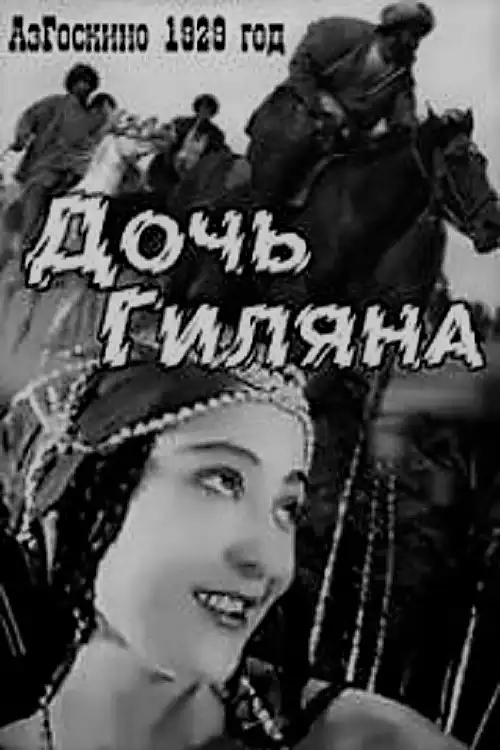
A definitive 5.6/10 rating for a film that redefined the boundaries of cult cinema. Gilan qizi remains a cornerstone of transgressive art.
If you're looking for something to watch while you fold laundry, Gilan qizi is definitely not it.
It’s one of those silent films that demands you actually look at the screen because if you blink, you’ll miss a very important piece of paper or a guy pointing dramatically at a hill.
Honestly, it's a bit of a tough sell for people who only like modern blockbusters, but if you have a soft spot for grainy history and people wearing very heavy wool in the desert, you'll get a kick out of it.
I wouldn't recommend it if you're feeling sleepy, though. The the pacing is a bit like a tractor trying to go uphill.
The story is about a girl in the Gilan province of Iran during a time of big political shifts, and it was made by the Azerbaijan film industry back in 1928.
It feels very different from something like Anne of Green Gables, which is much more polite and clean.
The first thing I noticed was the dirt. Everything looks dusty and real, which is a nice change from the plastic sets you see in some old movies.
The main actress, S.A. Makuxina, has these eyes that just burn through the film grain. 👁️
She doesn’t even have to say anything—well, she can't, it's silent—but you know exactly how she feels about the revolution just by her posture.
There's this one scene where she’s standing on a ridge and the wind is blowing her hair, and it feels more 'epic' than a lot of CGI stuff I've seen lately.
I did find the the editing a bit confusing at points. Sometimes a character is in a room, and then suddenly they are outside on a horse with no explanation.
It’s like the editor just decided that walking through doors was too boring to include.

The villains are pretty easy to spot because they usually have the most ridiculous mustaches and they spend a lot of time sneering at poor people.
It reminded me a bit of the dramatic villains in The Captive God, where you don't really need subtitles to know who the jerk is.
There are so many horses in this movie. I started counting them and then I got distracted by how many people were wearing those big fuzzy hats.
The horses actually look pretty tired. You can see their ribs in some shots, which makes the whole thing feel much more grounded and a bit sad.
It’s not quite as wild as Vengeance of the Wilds, but it has that same raw energy where you feel like the actors might have actually been in danger once or twice.
The landscape is a big character here. The mountains look absolutely massive and completely indifferent to the humans fighting at their feet.
I loved the shots of the villages. They look so lived-in, with chickens wandering around and people just doing their thing in the background.
One guy in the back of a scene was just staring directly at the camera for about five seconds before he realized he should be acting.
It made me laugh because it’s such a human moment in a movie that tries to be very serious and important.
The revolutionary politics can get a bit heavy-handed. It’s definitely a movie with a specific point of view.
It isn't trying to be a balanced documentary; it's trying to get you fired up about the struggle.
If you've seen The Hundredth Chance, you know how some movies just feel like they are checking boxes, but this feels like it has a soul.
Even when the plot gets a bit tangled, the visual style keeps you hooked.
There’s a scene near the end involving a chase that is surprisingly well-choreographed for 1928.
I mean, the cameras back then were basically giant wooden boxes, so seeing them move at all is impressive.
The lighting is mostly natural, which means some scenes are very dark. I had to squint at my laptop a few times to see who was stabbing who.
It adds to the atmosphere, though. It feels like you’re eavesdropping on a secret meeting in a basement.
It's definitely a better time than Scared Stiff, which is just a different vibe entirely.
I think what I liked most was how unpolished it felt. There are mistakes and weird jumps, but it feels like a real artifact.
The ending is a bit abrupt, like they ran out of film or the sun went down and they just called it a day.
But that’s okay. Life is kind of like that too.
Overall, it’s a fascinating little slice of history that most people have completely forgotten about.
If you have an hour and a half and you want to feel like a cultured film historian without actually going to school, give it a go.
Just make sure you have some coffee nearby to keep you through the slow bits. ☕
It’s a world away from Dumb Luck, that's for sure. It’s serious, it’s dusty, and it’s actually pretty cool.
IMDb 5.1
1936
Community
Log in to comment.