DbcultAccessing Vault...
7.1/10
Senior Film Conservator
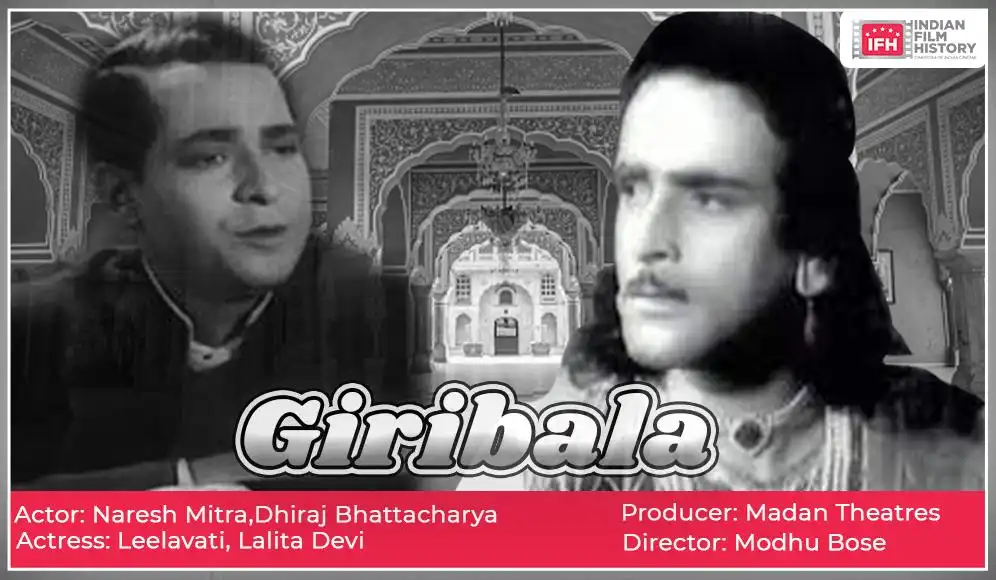
A definitive 7.1/10 rating for a film that redefined the boundaries of cult cinema. Giribala remains a cornerstone of transgressive art.
Alright, so we’re talking about Giribala from way back in 1929. Is it worth tracking down today? For sure, if you’re into digging up early cinematic gems that actually have something to say. It’s a quiet film, but the themes? They’re still pretty loud. Anyone interested in women’s stories from a different era, or just curious about how silent films handled complex emotions, will find something here. If you need explosions or rapid-fire dialogue, well, this isn't your movie. You’ll probably find it a bit slow.
The story kicks off with Giribala, a wife who’s clearly not getting much attention from her husband, Gopinath. He’s more into Labanga, a stage actress. You see Giribala at home, often just _dressing herself up_. Not for anyone, really. Just for the act of it. It’s this almost **melancholy ritual** that struck me, a woman finding solace in silk and jewelry because her actual life feels so empty. 😔
Her husband, Gopinath, is a piece of work. He practically ignores her. The movie doesn't need words to tell you this; his posture, the way he just _looks past_ her, says it all. You can almost feel the air between them.
One night, Giribala decides to follow him to the theater. This is where things really shift. It’s like a whole new world just *opens up* for her. The lights, the costumes, the drama – it’s a stark contrast to her quiet, lonely home. You see her face, a mix of curiosity and a little bit of wonder. It’s a subtle change, but
Then, Gopinath does the predictable thing: he runs off with Labanga. This part felt almost *too easy*, but I guess that’s the point. It’s a common story, right? But what happens next isn’t.
Giribala, instead of just fading away, steps into Labanga's place on stage. And she becomes famous! It’s such a bold move, especially for that time. The film really leans into her transformation. She carries herself differently, with a newfound confidence that wasn't there when she was just arranging her sari in solitude.
The pacing here felt right. It builds up her career, shows her success, but doesn't rush it. You believe she’s earned it. There's a particular scene where she's performing, and the camera just holds on her, letting her presence fill the screen. It’s powerful.
The big moment arrives when Gopinath sees her on stage. Her veil drops, and he recognizes her. The look on his face! It’s a brilliant mix of shock, disbelief, and maybe, just maybe, a hint of shame. It’s a very satisfying payoff after all the quiet suffering Giribala endured.
This film, from Rabindranath Tagore, really digs into the
I also kept noticing the way certain characters held their hands. It’s a small thing, but it seemed to convey so much. Like, the primness of Giribala before, and the more expressive gestures she uses on stage. Details like that just stick with you.
While some of the acting can feel a bit melodramatic by today's standards – it *is* a silent film, after all – Lilabati Davi as Giribala carries the emotional weight beautifully. Her eyes do a lot of the talking. You really root for her.
It's not a perfect film, no. Some of the transitions feel a bit abrupt, and a few scenes linger maybe a touch too long. But for what it is, a silent film from almost a century ago tackling these kinds of themes? It’s surprisingly effective. It’s a neat little piece of history that doesn't just feel like a dusty artifact.
It reminds me a bit of the quiet rebellion you find in some other early films about women making their own way. Like, it doesn't shout, but it definitely makes its point. If you’re ever curious about the early days of cinema and want something with genuine heart, give Giribala a shot. You might be surprised. ✨
IMDb —
1921
Community
Log in to comment.