DbcultAccessing Vault...
6.6/10
Senior Film Conservator

A definitive 6.6/10 rating for a film that redefined the boundaries of cult cinema. Khanuma remains a cornerstone of transgressive art.
Is Khanuma worth watching in today’s hyper-saturated cinematic landscape? The short answer is a resounding yes, but with a significant caveat: this classic Georgian comedy-drama demands a specific kind of viewer. It’s a film for those who appreciate the theatricality and social commentary of early 20th-century cinema, reveling in sharp dialogue and character-driven satire, rather than modern pacing or visual spectacle.
This isn't a film designed for casual scrolling or background noise; it requires attention, a willingness to engage with its historical context, and an appreciation for storytelling rooted in stagecraft. If you seek fast-paced action or complex special effects, look elsewhere. If you’re a cinephile keen on understanding the origins of narrative film and social critique through humor, then Khanuma is an essential experience.
Khanuma, based on Avqsenti Tsagareli’s beloved play, offers a window into a specific socio-economic moment in Georgian history, yet its themes remain remarkably universal. We follow Prince Levan Pantiashvili, a character who embodies the decaying aristocracy, clinging to past glory while his present crumbles around him. His solution to financial ruin is not innovation or hard work, but a calculated marriage of convenience, a common trope, yet handled here with a distinctive Georgian flair.
The film’s central conflict, the forced betrothal of the young, spirited Elo to the older, financially desperate Prince, against her true love for the humble school-teacher Ilo, is a narrative engine that never truly loses its power. It’s a classic love triangle, certainly, but one imbued with a sharp social commentary that elevates it beyond mere romantic melodrama. The film isn't just telling a story; it's dissecting a society.
What truly distinguishes Khanuma is its refusal to shy away from the uncomfortable truths of its setting. The Prince isn't just a lovable rogue; he's a symbol of aristocratic entitlement and irresponsibility. Adam Varakhidze, the wealthy merchant, represents the rising class, yet his eagerness to marry his daughter into nobility reveals his own social aspirations, making him a complex figure rather than a simple antagonist.
The screenplay, adapted by Tsagareli himself with Aleksandre Tsutsunava, retains the theatricality of its source material, a choice that, surprisingly, works in its favor. Rather than attempting to completely cinematicize the play, it embraces its stage origins, allowing for heightened performances and a focus on dialogue that is both witty and revealing. This approach might feel alien to those accustomed to modern film language, but it offers a unique, almost voyeuristic, experience of a live performance captured on celluloid.
The performances in Khanuma are a masterclass in period acting, delivered with a theatrical flourish that serves the material perfectly. Vaso Abashidze as Prince Levan Pantiashvili is simply magnetic. He doesn't just play a character; he embodies an archetype. His portrayal of Levan is a delicate balance of pathetic desperation and a residual, almost charming, arrogance. You pity him, you laugh at him, and at times, you even resent him.
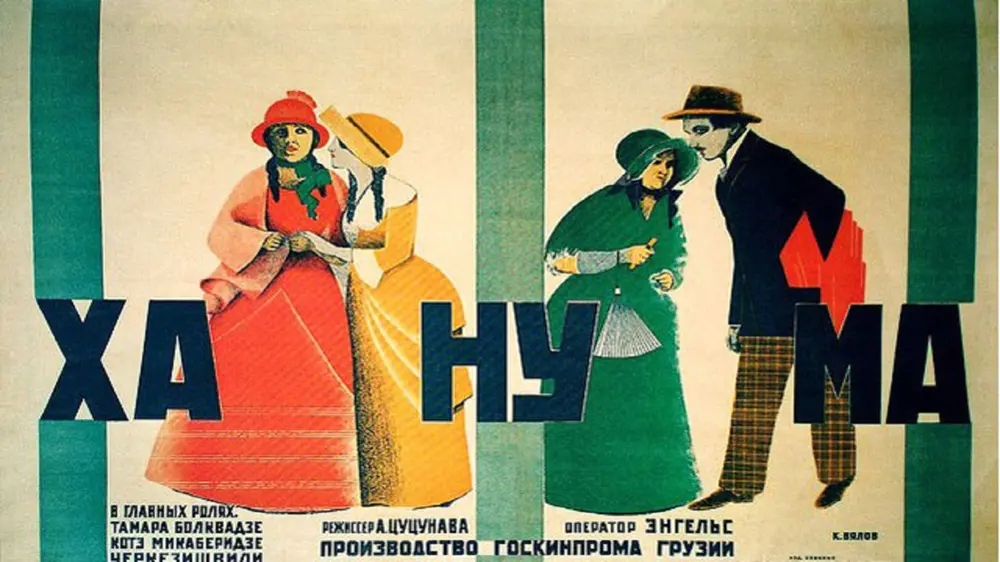
His physicality, his bombastic pronouncements, and the subtle shifts in his demeanor as his schemes begin to unravel are a testament to Abashidze’s skill. He manages to make Levan both a figure of ridicule and a poignant representation of a fading social order. It’s a performance that anchors the entire film, providing both its comedic backbone and its underlying dramatic tension.
Vladimir Trapaidze as Adam Varakhidze provides an excellent foil. Trapaidze’s merchant is not merely a source of wealth; he’s a man caught between two worlds. He possesses the pragmatism of the emerging capitalist class but yearns for the social legitimacy that only marriage into the old aristocracy can provide. His interactions with Prince Levan are a highlight, a dance of veiled contempt and mutual exploitation, each man trying to leverage the other for his own gain.
The young lovers, Elo (Q. Chechelashvili) and Ilo (Taso Abashidze), while perhaps less overtly theatrical, provide the emotional core. Their romance is portrayed with a sincerity that cuts through the societal machinations around them. Chechelashvili brings a quiet strength to Elo, a young woman who, despite her societal constraints, possesses an inner resolve to follow her heart. Taso Abashidze’s Ilo is earnest and principled, representing a moral compass in a world often driven by greed and social climbing. Their chemistry, though understated by modern standards, feels genuine and provides a vital counterpoint to the more flamboyant performances.
“The film’s strength lies in its ability to paint a vibrant, often hilarious, portrait of a society in flux, where money clashes with lineage, and true love fights for survival against the tide of convenience.”
Aleksandre Tsutsunava’s direction is marked by a deep respect for the source material, which is both a strength and, for some, a potential hurdle. Rather than attempting to radically reinvent the play for the screen, Tsutsunava leans into its theatricality. This means longer takes, less emphasis on dynamic camera movement, and a focus on staging and dialogue delivery that feels distinctly stage-bound. For instance, many scenes unfold with characters entering and exiting the frame as if on a stage, allowing for extended conversational sequences that build character and plot through verbal exchange.
This approach, while not conforming to later cinematic conventions, gives Khanuma a timeless quality, preserving the essence of the original play. It highlights the power of the written word and the actor's craft, allowing the audience to truly immerse themselves in the unfolding drama and witty banter. It reminds us of a time when the spectacle was often in the performance itself, not just the visual effects. This is a film that values the spoken word and the actor’s presence above all else, a stark contrast to a film like Tyrant Fear, which might prioritize grand visual scale.
One could argue that this directorial choice, embracing the stage, is an unconventional one for a film. Yet, it serves to make Khanuma a unique artifact. It’s less about cinematic innovation and more about capturing a cultural touchstone. Tsutsunava's skill lies in making this theatricality feel natural within the film's own world, never letting it become a mere filmed play, but rather an experience that is both theatrical and intrinsically cinematic in its own right.
The cinematography, likely black and white and characteristic of its era, serves the narrative rather than dominating it. The camera is often static, framing scenes with a painterly composition that allows the actors and their interactions to take center stage. This isn't the sweeping, dynamic imagery of modern blockbusters, nor is it the experimental artistry of an avant-garde piece. Instead, it’s functional, clear, and effective in conveying the setting and the characters' emotions through their expressions and body language.
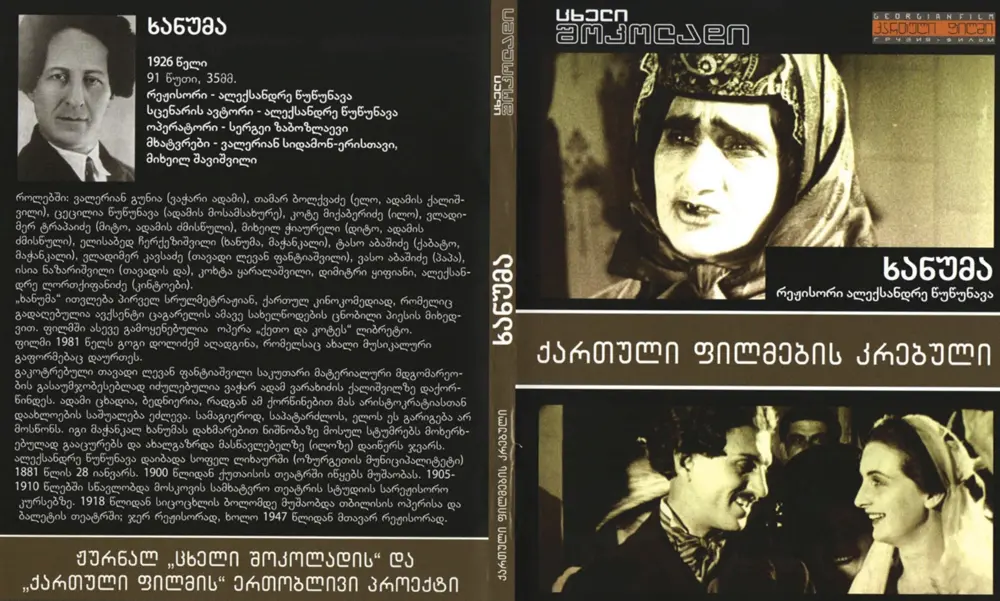
Consider a particular scene where Prince Levan is attempting to impress Adam Varakhidze; the camera holds steady, allowing the full comedic effect of Abashidze's exaggerated gestures and Trapaidze's subtle reactions to play out without distraction. This deliberate framing enhances the theatrical feel, making every gesture and facial expression significant.
The pacing, as mentioned, is deliberate. It builds slowly, allowing the humor and the dramatic tension to simmer and develop naturally. This might be a sticking point for some viewers used to the rapid-fire editing of contemporary cinema. However, for those willing to adjust their expectations, the slower pace allows for a deeper appreciation of the intricate plot developments and the nuanced character interactions. It’s a rhythm that invites contemplation, much like reading a classic novel, allowing you to savor each moment and each line of dialogue.
It works. But it’s flawed. This deliberate pacing isn't for everyone, but it’s integral to the film’s identity. It demands patience, rewarding it with a richer, more immersive experience. It's a stark contrast to the often frenetic energy of films like Paris or While London Sleeps, which prioritized speed and action.
Yes, Khanuma is absolutely worth watching today, especially for specific audiences. It offers a unique blend of historical insight, sharp social satire, and endearing romance. Its theatrical roots are evident, but they contribute to its distinct charm, not detract from it. The film stands as a testament to the power of character-driven storytelling.
It’s a valuable piece of cinematic history, showcasing early Georgian filmmaking and the enduring appeal of a well-crafted narrative. While its pacing and visual style are of its era, the themes of class conflict, love versus money, and personal integrity remain as relevant as ever. It’s a delightful, thought-provoking experience that transcends its historical context.
Khanuma is far more than a historical curiosity; it is a vibrant, intelligent, and often hilarious piece of cinema that holds up remarkably well. While it demands a certain level of patience and an appreciation for its theatrical roots, the rewards are substantial. The film’s biting social commentary, delivered through superb performances and razor-sharp dialogue, ensures its relevance even today. It’s a bold claim, but I’d argue that its enduring popularity in Georgia is entirely justified, and it deserves broader recognition.
It’s a film that reminds us that truly great storytelling, whether on stage or screen, transcends time and technological advancements. Go into Khanuma with an open mind and a willingness to embrace its unique rhythm, and you will find yourself thoroughly entertained and intellectually stimulated. It’s a genuine gem, a testament to the power of classic narrative and the enduring human comedy of errors and aspirations.
IMDb —
1934
Community
Log in to comment.