DbcultAccessing Vault...
Cult Review
Senior Film Conservator
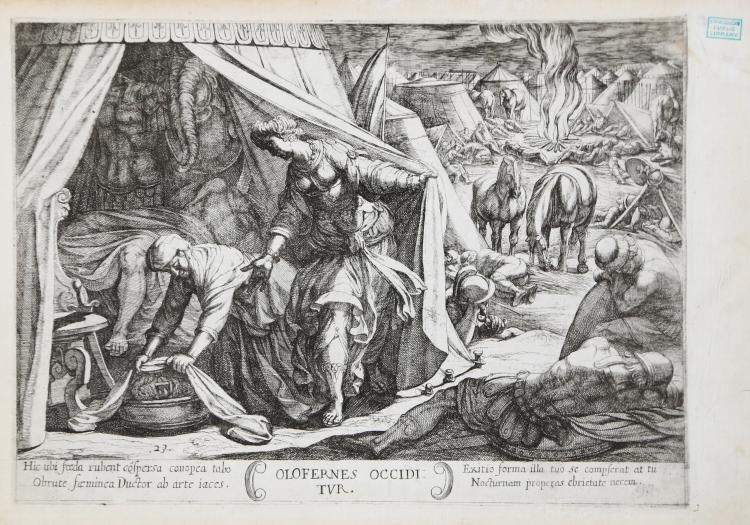
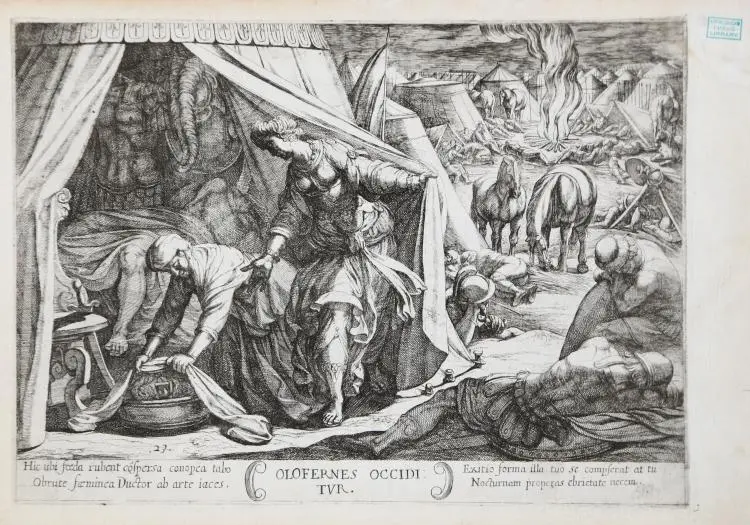
Shadows stretch like confessionals across the Italian silent era, but few flickers brand the retina quite like Giuditta e Oloferne. Imagine Caravaggio’s canvas hurled into motion: candle-kissed flesh, velvet doom, a blade that arcs through history and emerges dripping with proto-feminist defiance. Directors of this 1928 curio—names dissolved by the vinegar of time—wed the Apocrypha to Grand-Guignol spectacle, birthing a film that feels equal parts liturgy and cabaret.
Alfredo Bracci’s Oloferne is a bacchanalian war-machine, his eyelids leaden with mead and megalomania; every breath billows like forge-smoke inside the crimson tent. Guido Guiducci’s Achior—a wary Ammonite advisor—skulks at the periphery, conscience carved in worry-lines. Yet the magnetic pole is Ileana Leonidoff’s Giuditta, a widowed aristocrat who weaponizes grace the way assassins thumb daggers. Leonidoff, a Moldovan-born étoile accustomed to Stravinsky’s thunder, here trades arabesques for apocalypse, her cheekbones cutting shafts of light that seem to etch the very celluloid.
The narrative, skeletal in scripture, mushrooms into fever: Bethulia starved, children skeletal, elders clamoring for surrender. Enter Giuditta, veiled in dusk, slipping through Assyrian outposts while flares hiss overhead like malignant comets. Cue the tent sequence—an intoxicating pas de deux where erotic choreography and political subterfuge entwine. Close-ups linger on Leonidoff’s gloved fingers drumming against a goblet; each tap a Morse of sedition. When she finally hacks Oloferne’s jugular, the frame blossoms with a crimson so lurid it borders on cartoon, yet the silence of the medium transmutes gore into ritual.
Shot on the stingy backlots of Tirrenia Studios, the film compensates budgetary anemia with chiaroscuro bravura. Cinematographer Ubaldo Arata—future lensman for La Dolce Vita—bathes faces in tungsten pools while letting backgrounds drown in Stygian blur. Result: a diorama that feels vaster than its plywood ramparts, an empire conjured from negative space. Compare this to The Mother and the Law, where Griffith’s Babylon teems with thousands; here, suggestion eclipses excess, proving that intimation can fell spectacle as surely as Judith felled Holofernes.
Tinted prints survive only in fragments—cyan nocturnes, amber bacchanals, rose sequences for domestic tranquility. Each dye bath syncs to emotional barometry: the sea-blue (#0E7490) of Giuditta’s desert trek chills the marrow, foreshadowing the cadaverous pallor of her captive audience; the sulfuric yellow (#EAB308) of Assyrian revelry throbs with hedonistic peril. Restorers at Bologna’s L’Immagine Ritrovata estimate missing meters equal to three reels, yet extant shards pulse enough chromatic voltage to ignite contemporary retinas.
Though marketed as silent, the premiere rode a tidal live-score: ondes Martenot, kettle-drums, a choir of thirty intoning Assyrian faux-cuneiform. Contemporary critics balked at the cacophony, yet the clamor prefigures modern surround experiments. Today’s viewers, robbed of orchestra, confront the vacuum—only the rustle of projector sprockets and the viewer’s own pulse—to discover how menace can germinate in pure absence. Try syncing your own playlist of Low’s Double Negative or Hildur Guðnadóttir’s Chernobyl score; the marriage is uncanny, as though the film were waiting a century for its true bone-conductive lullaby.
Silent cinema rewards thespians who can semaphore novels with a shrug. Leonidoff’s arsenal includes:
Each micro-gesture is caught in proto-CU, her lace collar scratching the fourth wall as though inviting 2020s viewers to lean in and smell the myrrh.
Post-#MeToo debates swirl around Judith narratives: is decapitation of the male ogre revolutionary or merely patriarchal ventriloquism? Giuditta e Oloferne complicates verdicts. The camera ogles Leonidoff’s nape, but the same gaze lionizes her tactical supremacy. Moreover, she refuses a romantic coda—no courtly eulogy, no betrothal to a bland deliverer. Instead, the final intertitle brands her “La Casta Eroina,” then abandons her to the desert, alone, heroic chastity intact. The film thus straddles epochs: a 1920s concession to virtue, yet a presage of autonomous feminine mythmaking.
“I did not seduce to love; I feigned love to assassinate.”—intertitle, Giuditta e Oloferne
Stack this against Balettprimadonnan, where backstage melodrama cages its danseuse, or The Amazing Woman, whose flapper heroine conquers via wit rather than steel. None traffic in the same apocalyptic stakes. Conversely, Der Galeerensträfling offers a male revenge arc; place it beside Judith’s gendered insurrection and you map how Mediterranean cinema anticipated conversations current in global gender studies seminars.
Shot during Mussolini’s ventennio, the film’s imperial iconography—Assyrian standards, eagle insignias, triumphal marches—ventriloquizes contemporary hunger for expansionist grandeur. Yet the narrative’s terminus is imperial evisceration, suggesting subliminal dissent. Scholars like Gian Piero Brunetta read the beheading as wish-fulfillment against dictatorship, while others decry the Orientalist kitsch: turbans codified as savage plumage, leering eunuchs, libidinous pageantry. The truth writhes between, a serpent devouring its own interpretative tail.
Prints were vaulted in Rome’s Cinecittà, then requisitioned for WWII stock, melted into glycerin—a literal case of cinema dying for celluloid war. What survives is a Swiss-abridged 35mm (two reels) and a Spanish censorship negative snipped to protect Catholic mores. Digital clean-ups reveal fungal etchings, rain-scars, frame-line jitters; nevertheless, ghostly beauty pushes through. Compare to Tender Memories, whose nitrate was lost entirely—here, at least, phoenix-embers remain.
Contemporary Roman censors applauded its “moral utility” for showcasing divine retribution; critics at Cinema Illustrazione dismissed it as “biblical Grand-Guignol.” Flash-forward to 2022’s Pordenone Silent Film Festival: a packed auditorium gasped at the decapitation, then rose in rapturous ovation. Cinephiles tweeted stills captioned “Baroque Barbie,” proof that memetic afterlives can sprout from 93-year-old corpses.
As of press, Giuditta e Oloferne streams only on archival niche sites—often geo-blocked. Physical media hunters can snag the Region-0 PAL DVD from Il Cinema Ritrovato, though English intertitles are fan-translated via optional subs. Curate a double feature: pair with The Majesty of the Law for contrasting moral didacticism, or chase it with In the Python’s Den for pulp exoticism overload. Serve Chianti in goblets heavy enough to decapitate inhibitions.
Some films entertain; others exhume. Giuditta e Oloferne is a blood-spattered love-letter to the notion that images—frail, flammable, immortal—can sever epochs as cleanly as any sword. Enter tent at own risk; exit carrying a headful of questions.

IMDb —
1923
Community
Log in to comment.