DbcultAccessing Vault...
Cult Review
Senior Film Conservator
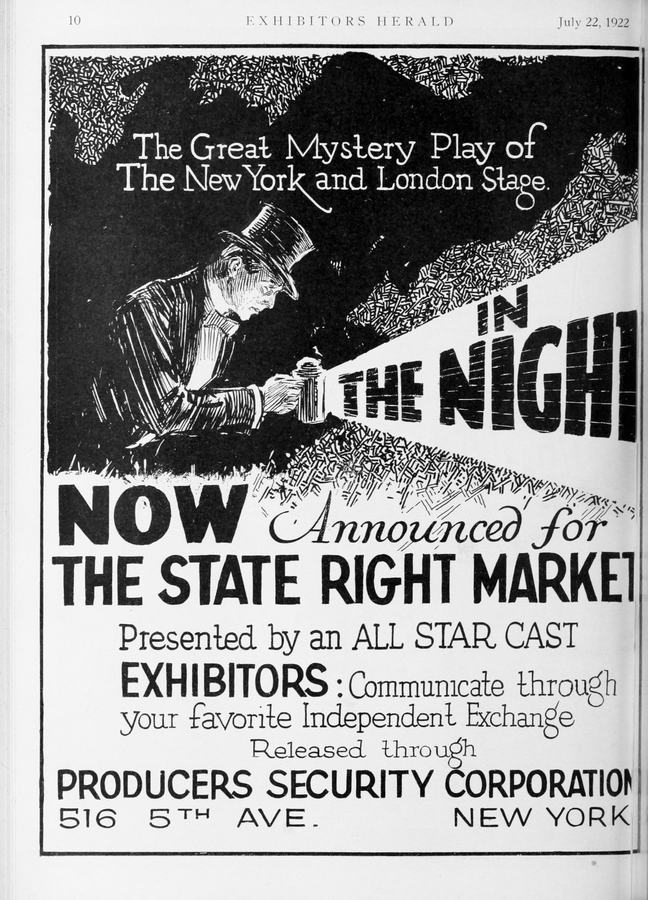
The flickering luminescence of early cinema often served as a canvas for grand melodramas, tales of moral quandaries, and the enduring human spirit. Among these, In the Night, a 1918 production, emerges as a particularly potent exploration of love, betrayal, and the crushing weight of societal injustice. Penned by Cyril Harcourt and Frank Powell, this silent film, starring Adelqui Migliar, Hayford Hobbs, and Dorothy Fane, dives headfirst into the tumultuous emotional landscape of a woman caught between an unfaithful husband and a genuine, albeit forbidden, connection.
At its core, In the Night orchestrates a narrative symphony around the plight of a young wife, whose existence is largely defined by the spiritual and emotional void created by her husband's chronic infidelity. This is not merely a story of marital discord; it delves into the profound sense of isolation and disillusionment that can permeate a relationship devoid of genuine affection and respect. Dorothy Fane, in her portrayal of the wife, masterfully conveys this quiet desperation, her eyes often reflecting a deep-seated yearning for something more, for a connection that transcends the superficiality of her gilded cage. Her performance, typical of the era, leans into expressive physicality and nuanced facial gestures, communicating volumes without uttering a single word. It’s a testament to the power of silent acting, where every glance, every subtle shift in posture, becomes a vital piece of the emotional puzzle.
The narrative then introduces a stark contrast to her husband’s moral bankruptcy: a poor man, played with earnest conviction by Hayford Hobbs. This character represents an antithesis to the husband’s world – a realm of authenticity, integrity, and simple, unvarnished goodness. Their burgeoning connection is not one born of immediate passion but rather a gradual recognition of kindred spirits, two souls adrift in different currents but yearning for the same harbor of genuine understanding. The film takes a cruel turn when this innocent man is unjustly framed for theft, a plot device that serves to amplify the themes of injustice and the precariousness of truth in a world governed by power and deceit. This framing is not just a plot point; it's a symbolic representation of how easily purity can be sullied and how swiftly the vulnerable can be crushed by the machinations of the corrupt. One might draw parallels to the pervasive sense of injustice explored in films like Conscience (1917), where moral rectitude often finds itself at odds with a flawed legal or social system, or even the struggles against false accusations seen in The Saintly Sinner.
Adelqui Migliar’s portrayal of the faithless husband is crucial to the film’s dramatic tension. He embodies the societal archetype of the privileged man whose moral compass is perpetually adrift, his actions driven by self-interest and a casual disregard for the emotional well-being of those around him. Migliar imbues the character with a certain charm that makes his transgressions all the more insidious, illustrating how outward appearances can mask a hollow core. This duality provides a rich psychological backdrop against which the wife's internal struggles are magnified. Her loyalty is tested not by a lack of love on her part, but by the profound absence of it from her marital partner. The film, through its characters, paints a vivid picture of the early 20th-century social strata, where women, particularly those of a certain standing, were often trapped by convention and economic dependence, their emotional lives relegated to a secondary concern.
The silent era, often underestimated in its narrative sophistication, truly shines in its ability to convey complex emotional states through visual storytelling. Directors and writers of this period, like Frank Powell and Cyril Harcourt here, were masters of using mise-en-scène, body language, and carefully crafted intertitles to build suspense, evoke empathy, and drive the plot forward. In the Night is no exception. The subtle shifts in lighting, the framing of close-ups to emphasize a character's internal turmoil, and the dramatic staging of confrontations all contribute to a rich cinematic experience. The film's aesthetic choices, even within the technical limitations of its time, are deliberate, aiming to heighten the emotional stakes and immerse the audience in the characters' plights. The stark contrast between the opulent, yet emotionally barren, home of the husband and the more humble, yet potentially fulfilling, world of the poor man is visually underscored throughout.
The theme of forbidden love, central to the narrative, resonates deeply. It’s a love born not of transgression but of necessity – a desperate reaching for genuine human connection in a landscape of emotional desolation. This is a common thread in many melodramas of the era, where societal strictures often clashed with individual desires. Films like The Unattainable or A Girl Named Mary similarly explore the complexities of love that defies convention or circumstance. In In the Night, the wife's affection for the wrongly accused man is not merely an affair of the heart; it's an act of defiance against a life that has offered her little solace. It's a quest for affirmation, for a love that sees and values her, unlike her husband who views her more as an accoutrement to his lifestyle than a partner.
The legal drama surrounding the poor man’s framing adds another layer of tension and social commentary. It exposes the vulnerability of those without means or influence when confronted by a system that can be easily manipulated by the powerful. C.M. Hallard and Frank Dane, in their supporting roles, contribute to the tapestry of characters, some complicit, some unwitting, in the unfolding tragedy and eventual quest for justice. The film challenges its audience to question the nature of guilt and innocence, and the often-blurry lines between them when influenced by prejudice and social standing. This aspect of the narrative could be fruitfully compared to the class struggles and moral dilemmas depicted in a film like Burning Daylight, where the harsh realities of life often dictate one's fate, or even the dramatic twists of fate in Alias Mary Brown, where identity and reputation are constantly under threat.
The writers, Cyril Harcourt and Frank Powell, deserve commendation for crafting a story that, despite its melodramatic flourishes, maintains a keen sense of psychological realism. They delve into the emotional intricacies of their characters, allowing the audience to empathize with the wife’s predicament and root for the unjustly accused. Their screenplay, translated into visual narrative, speaks to universal human experiences: the longing for love, the pain of betrayal, and the fight for truth against overwhelming odds. The structure of the film builds suspense effectively, drawing the viewer deeper into the mystery of the theft and the struggle for the innocent man’s exoneration, all while keeping the emotional journey of the wife at the forefront.
Gladys Jennings, though perhaps in a smaller role, adds to the ensemble’s dynamic, further illustrating the interconnectedness of lives in this dramatic tableau. Each character, no matter how minor, serves a purpose in advancing the plot or enhancing the thematic resonance of the film. The interplay of these performances creates a believable, if heightened, world where human emotions run high and consequences are dire. The film’s ability to weave together these individual threads into a cohesive and compelling whole is a hallmark of strong storytelling, characteristic of the era’s best productions. One might consider the intricate character dynamics found in films such as Brothers Divided, which also explored complex relationships and moral choices.
Viewing In the Night today offers a fascinating glimpse into the social mores and cinematic techniques of a bygone era. It serves as a powerful reminder of the enduring nature of certain human predicaments and the timeless appeal of stories that explore the depths of the heart and the complexities of justice. The film’s silent format, far from being a barrier, encourages a more active engagement from the viewer, prompting them to interpret emotions and nuances from the visual cues alone. This immersive quality is what often makes silent cinema so captivating, allowing for a more subjective and deeply personal connection to the narrative. It’s a form of storytelling that demands attention to detail, rewarding the observant viewer with profound emotional insights.
Ultimately, In the Night is more than just a historical artifact; it is a vibrant piece of cinematic art that continues to speak to contemporary audiences about the search for truth, the courage to love, and the imperative of justice. Its narrative, while rooted in the specific social landscape of its time, transcends temporal boundaries through its universal themes. The film’s legacy lies not just in its dramatic plot, but in its nuanced portrayal of human vulnerability and resilience. It reminds us that even in the darkest of circumstances, illuminated only by the faint glow of hope, the human spirit yearns for connection and justice. The performances, particularly Fane's, elevate the material, transforming a potentially straightforward melodrama into a poignant study of character and societal critique. It stands as a testament to the power of early cinema to craft narratives that are both entertaining and deeply thought-provoking, inviting us to reflect on the enduring nature of human struggles and triumphs. The film’s exploration of the moral ambiguities and the stark contrasts between appearances and reality provides a rich ground for discussion, making it a valuable piece for any cinephile interested in the foundations of narrative filmmaking.
IMDb —
1926
Community
Log in to comment.