DbcultAccessing Vault...
Cult Review
Senior Film Conservator
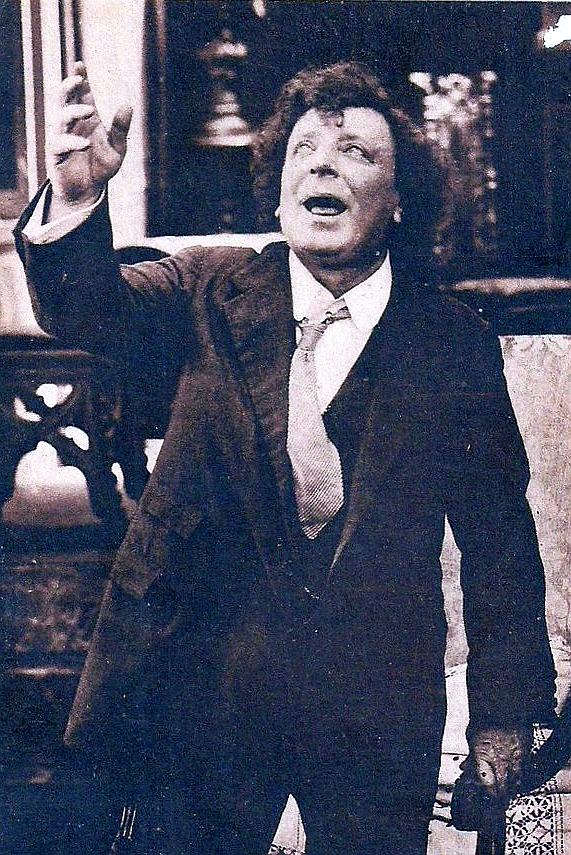
To plunge into the cinematic rendition of Henrik Ibsen's Gli spettri (Ghosts) is to confront a vortex of inherited suffering, societal hypocrisy, and the relentless, suffocating grip of the past. This silent film, emerging from an era where melodrama often reigned supreme, dares to tackle Ibsen's revolutionary, often scandalous, dissection of bourgeois morality with a gravitas that belies its lack of spoken dialogue. It's a testament to the power of visual storytelling and the raw, unvarnished talent of its cast, particularly Ermete Zacconi, that such a profoundly psychological and dialogue-heavy play could translate with such piercing clarity onto the silver screen.
The narrative, as meticulously crafted by Guglielmo Zorzi and Ibsen himself, unfurls within the claustrophobic confines of Mrs. Alving’s estate, a setting that functions as much as a character as any of the individuals inhabiting it. Here, every shadow seems to harbor a secret, every creak of the floorboards a whisper of past transgressions. Elisa Finazzi, as Mrs. Helen Alving, delivers a performance of profound, internalized anguish. Her portrayal is not one of overt histrionics, but rather a slow, agonizing unraveling of a woman who has spent her entire adult life constructing an elaborate charade of respectability. She is a woman perpetually at war with the 'ghosts' of her marriage to Captain Alving, a man whose public persona of uprightness utterly contradicted his private debauchery. Finazzi communicates this internal conflict with a quiet intensity, her eyes often conveying volumes that no intertitle could fully capture. The subtle tremors in her hands, the almost imperceptible flinching at certain memories, all paint a portrait of a soul under immense strain.
The central conflict, the insidious nature of inherited sin and disease, finds its tragic embodiment in Oswald Alving, played with a captivating blend of youthful idealism and encroaching despair. His return from Paris, ostensibly to escape the stifling atmosphere of his home, instead brings him face-to-face with the very specters his mother sought to banish. Oswald’s artistic sensibilities, his joy for life, are tragically juxtaposed against the inexorable progression of a hereditary illness, a direct consequence of his father’s wanton lifestyle. The film excels in visually representing this internal decay, perhaps through subtle changes in his demeanor, the darkening of his expressions, or the increasing fragility of his movements. It’s a harrowing depiction of fate’s cruel hand, unyielding and unforgiving.
No discussion of Gli spettri would be complete without acknowledging Ermete Zacconi, a titan of the Italian stage, whose presence in this silent film adaptation would have undoubtedly been a major draw. While his specific role isn't explicitly detailed in the provided cast list for a primary character like Oswald or Pastor Manders, his inclusion signifies a commitment to high-caliber dramatic performance. Zacconi was renowned for his naturalistic, psychologically nuanced acting style, a stark contrast to the more theatrical conventions of his time. One can only imagine the intensity he would have brought to any role, imbuing it with a raw, visceral truth that would have amplified Ibsen's challenging themes. His presence alone elevates the film, promising a depth of characterization that transcends the limitations of silent cinema.
The supporting cast, including Emilia Mechi-Gracci and Felicita Prosdocimi, contribute to the intricate web of deceit and moral compromise. Pastor Manders, the epitome of rigid, conventional morality, serves as a crucial antagonist, albeit one driven by what he perceives as righteousness. His inability to confront uncomfortable truths, his unwavering adherence to social decorum over genuine human compassion, directly contributes to Mrs. Alving’s lifelong torment. The film, through the performances of these actors, masterfully exposes the suffocating grip of societal expectations and the destructive power of unexamined faith. The character of Engstrand, the opportunistic carpenter, and his daughter Regine, further complicate the moral landscape, revealing layers of deceit and manipulation that have festered for generations. Regine's unwitting romantic entanglement with Oswald, her half-brother, is perhaps the most shocking and tragic 'ghost' of all, a direct consequence of Captain Alving's unchecked desires, echoing the thematic resonance found in films like Bella Donna, where illicit passions lead to unforeseen, devastating consequences.
The adaptation's success lies in its ability to translate Ibsen's powerful, often shocking, dialogue into visual cues and emotional expressions. Silent cinema, in its purest form, relies on the universal language of the body and the face, and Gli spettri leverages this to its full potential. The burning of the orphanage, a symbolic act of purging the past that tragically fails to cleanse, would have been a visually arresting sequence, representing the futility of trying to erase historical transgressions through superficial gestures. It’s a powerful metaphor for the inescapable nature of one's heritage, a theme explored in various forms across cinematic history, from the personal struggles in Her Secret to the broader societal critiques in The Kaiser, the Beast of Berlin, albeit with vastly different contexts.
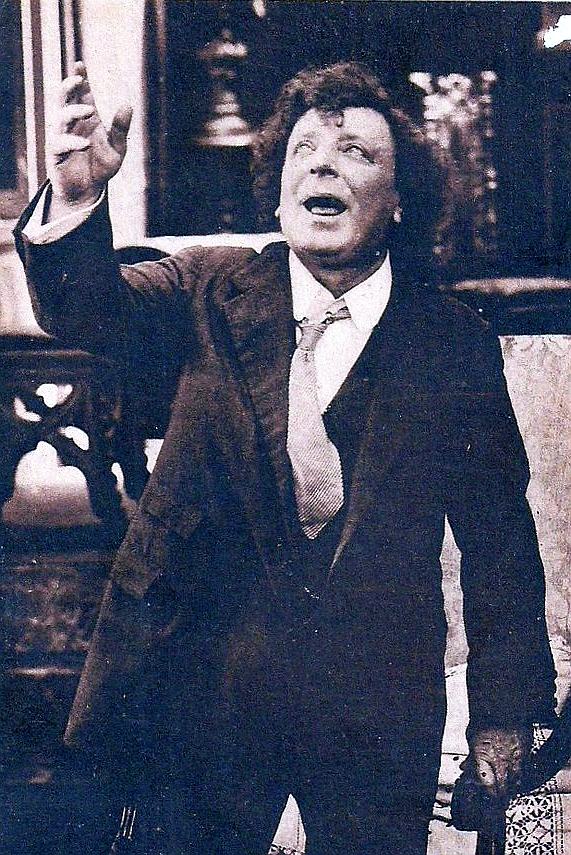
The film’s exploration of heredity, particularly the then-controversial depiction of venereal disease as an inherited curse, was groundbreaking and likely deeply unsettling for contemporary audiences. Ibsen's original play was banned and censored across Europe for its perceived immorality, and the film adaptation, even in its silent form, would have carried this same potent, subversive charge. It forces viewers to confront uncomfortable truths about the consequences of moral laxity and the corrosive effects of a society that prioritizes appearances over truth. This unflinching look at human frailty and the tragic ripple effects of past actions is what gives Gli spettri its enduring power, making it a precursor to later, more explicit cinematic explorations of social ills, such as those found in Beyond the Wall.
The performances, particularly from Finazzi, are a masterclass in silent film acting, conveying a spectrum of emotions from quiet resignation to explosive despair. The climactic moments, where Oswald's mental deterioration becomes undeniable, and Mrs. Alving is faced with an unbearable choice, would have been rendered with an almost unbearable tension. The final image, Mrs. Alving left alone with the wreckage of her life and the harrowing plea of her son, is one of profound, existential horror. It’s a moment that resonates with the same gut-wrenching despair found in Ibsen’s original text, a testament to the film’s fidelity to its source material’s emotional core. This kind of raw, uncompromising portrayal of human suffering is rarely seen, even in modern cinema, and it speaks volumes about the artistic courage of the filmmakers involved.
What makes Gli spettri particularly compelling is its timeless relevance. The questions it poses about the nature of truth, the burden of the past, and the suffocating pressure of societal expectations remain as pertinent today as they were in Ibsen's time, and indeed, in the era of silent cinema. The film serves as a powerful reminder that while the medium of storytelling evolves, the fundamental human dilemmas remain constant. It's a rich tapestry woven with threads of tragedy, moral quandary, and the enduring struggle for authenticity in a world obsessed with appearances. The film, like the play, doesn't offer easy answers or convenient resolutions; instead, it leaves the audience to grapple with the uncomfortable truths it so boldly illuminates.
The meticulous attention to detail in the set design and costuming would have also played a significant role in establishing the oppressive atmosphere of the Alving household. Every piece of furniture, every framed portrait, would have contributed to the sense of a world trapped in its own history, unable to break free from the shackles of convention and deceit. This visual language is crucial in silent film, where objects and environments often carry symbolic weight, enhancing the narrative without the need for extensive intertitles. The contrast between the pristine, almost sterile public spaces and the hidden, decaying private realms would have been visually striking, mirroring the internal dichotomy of Mrs. Alving herself.
The film’s legacy, much like Ibsen's play, lies in its courage to dissect the very fabric of society, revealing the rot beneath the polished surface. It challenged audiences to look beyond the superficial and confront the uncomfortable realities of human nature and societal constructs. In an era where cinema was still finding its voice, Gli spettri stood as a bold, uncompromising work of art, pushing the boundaries of what was considered acceptable subject matter. Its influence can be seen in later films that dared to tackle social realism and psychological drama, solidifying its place as a significant, albeit perhaps underappreciated, entry in early cinematic history.
Ultimately, Gli spettri is more than just a film adaptation; it is a cinematic echo of a theatrical masterpiece, translating its profound themes and searing emotional intensity into a visual medium with remarkable success. It reminds us that the 'ghosts' of the past, whether they be personal traumas, inherited conditions, or societal hypocrisies, are never truly buried. They linger, they haunt, and they demand to be confronted, often with devastating consequences. The film's conclusion, an open-ended, agonizing question, leaves an indelible mark, forcing a contemplation of moral responsibility and the unbearable choices that life sometimes demands. The sheer weight of its thematic content, combined with the powerful performances, makes Gli spettri a profoundly moving and intellectually stimulating experience, a testament to the enduring power of Ibsen's vision and the artistry of silent cinema. It stands as a stark reminder that some truths, however painful, refuse to remain silent, forever echoing through generations, much like the indelible impact of The Matrimonial Martyr in its own exploration of marital endurance and suffering.
IMDb —
1918
Community
Log in to comment.