DbcultAccessing Vault...
Cult Review
Senior Film Conservator
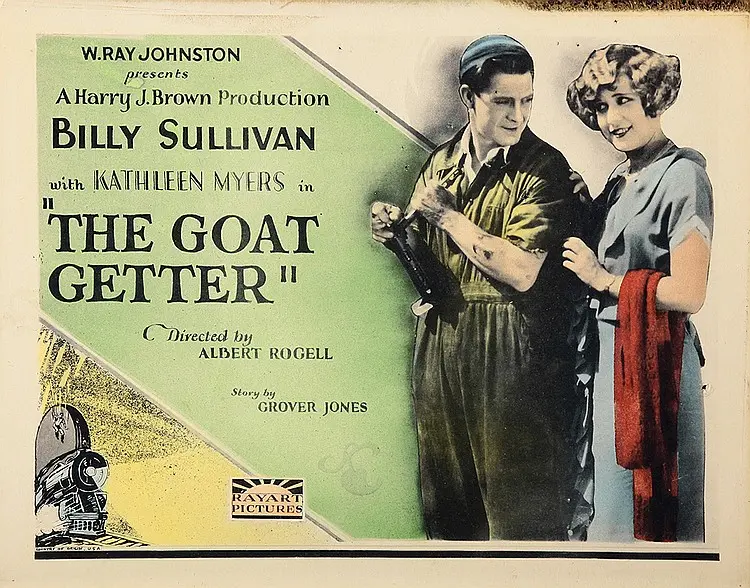
Is 'Goat Getter' worth watching today? Short answer: absolutely, but with a significant caveat. This silent era boxing comedy, while undeniably a product of its time, still possesses a surprising amount of charm and a narrative drive that can captivate the right audience. It’s a film for silent cinema enthusiasts, those fascinated by the nascent days of Hollywood, and anyone who appreciates a simple, spirited underdog story with a dash of physical comedy.
However, it is decidedly not for viewers accustomed to the rapid-fire pacing, complex character arcs, or sophisticated visual effects of modern cinema. If you lack patience for intertitles, period acting conventions, or the occasional narrative simplicity, 'Goat Getter' might feel more like a historical artifact than engaging entertainment.
This film works because... it captures a delightful, almost primal energy in its central rivalry, driven by Billy Morris's sheer, unadulterated persistence and the comedic frustration of "Lightning" Bradley.
This film fails because... its pacing occasionally sags, particularly during the episodic 'chase' sequences, and some of the humor relies on slapstick that hasn't entirely aged gracefully.
You should watch it if... you crave a genuine glimpse into 1920s popular entertainment, appreciate the foundational elements of the sports film genre, and enjoy a narrative where sheer grit triumphs over established power.
At its core, 'Goat Getter' is a narrative about an unconventional challenge to an established order. We are introduced to "Lightning" Bradley, the lightweight champion, whose exhibitions are less about true competition and more about showcasing his dominance. This initial setup immediately positions him as a figure ripe for comeuppance, a common trope that the film leans into with surprising effectiveness.
The inciting incident, Bradley's casual knockout of Billy Morris in a dusty Western town, is deceptively simple. It’s not just a defeat; it's an indignity. Morris isn't just seeking revenge for a loss; he's seeking to reclaim his pride, to prove that his spirit, if not his skill, is equal to the champion's.
The film’s central conceit, Morris's relentless pursuit and taunting – 'getting his goat' – is where its comedic engine truly fires. This isn't a conventional training montage or a dramatic build-up to a rematch. Instead, it’s a series of escalating provocations, each designed to chip away at Bradley's composure. This episodic structure, while at times feeling a little drawn out, genuinely builds anticipation for the inevitable confrontation.
The journey to Hollywood, where Bradley is dabbling in filmmaking, adds an intriguing layer. It’s a subtle nod to the burgeoning cross-pollination between sports and entertainment, a phenomenon that only grew exponentially in the decades to follow. The idea of a staged fight for the cameras, intended to be a mere spectacle, only to be subverted by genuine athletic prowess, is a brilliant narrative turn that pays off handsomely.
The resolution, with Morris not only winning the fight but also outsmarting Bradley's manager and winning the girl, Virginia Avery, feels earned. It’s a classic underdog triumph, executed with a charming simplicity that doesn't overstay its welcome. The plot, while predictable in its broad strokes, is carried by the sheer energy of its characters and the escalating tension of their rivalry.
Silent film acting is often misunderstood, dismissed as overly theatrical or exaggerated. In 'Goat Getter,' however, the performances, particularly from Billy Sullivan as Billy Morris and Eddie Diggins as "Lightning" Bradley, demonstrate a nuanced understanding of physical storytelling. Sullivan imbues Morris with an infectious, almost manic energy. His taunts are not merely written; they are embodied through his posture, his facial expressions, and his relentless shadowing of Bradley.
Consider the scenes where Morris follows Bradley from town to town. Sullivan doesn't need dialogue to convey his character's unwavering determination. A simple, persistent grin, a pointed finger, or a mock boxing stance from afar communicates everything. He's an irritant, yes, but one you can't help but root for due to his sheer audacity.
Eddie Diggins, as Bradley, provides the perfect foil. His initial arrogance is palpable, conveyed through a confident swagger and dismissive gestures. As Morris's antics escalate, Diggins expertly portrays Bradley's crumbling composure. The champion’s exasperation isn't just internal; it's visible in his furrowed brow, his clenched fists, and his increasingly frantic attempts to escape Morris's shadow. This dynamic, this push and pull between annoyance and persistence, is the true heart of the film.
Virginia Vance, as Virginia Avery, while not given the most complex role, brings a charming presence. Her character serves primarily as the romantic prize and a witness to Morris's triumph, but Vance delivers it with an appealing sincerity. The chemistry between Sullivan and Vance, though subtle, adds a sweet layer to Morris's victory, making it about more than just a boxing match.
The supporting cast, including Joe Moore as Bradley's beleaguered manager, adds to the film's comedic texture. Moore's frantic attempts to control the narrative after Bradley's unexpected defeat in Hollywood are a highlight, showcasing the early anxieties of image management in a burgeoning star system. It’s a testament to the era’s acting that these broad strokes can still land with comedic precision today.
While 'Goat Getter' credits Grover Jones for its writing, the visual direction, a collaborative effort in many silent productions, is surprisingly effective in conveying its narrative and humor. The film’s strength lies in its clear, unpretentious visual storytelling, which prioritizes character interaction and comedic timing.
The boxing sequences, for instance, are staged with a realism that belies the film's comedic tone. The punches, though clearly choreographed, carry a visceral weight. The camera angles during these bouts are straightforward, focusing on the action without unnecessary flourish, allowing the audience to follow the ebb and flow of the fight. This directness ensures that the climax, when Morris delivers his unexpected knockout, feels genuinely impactful, not just a gag.
The visual contrast between the small, dusty Western towns and the burgeoning glamour of Hollywood is also well-executed. The transition isn't just a change of scenery; it's a shift in atmosphere, subtly highlighting Bradley's aspirations beyond the ring and Morris's fish-out-of-water determination. The sets, though simple, effectively establish the environment, from the sparse boxing rings to the bustling film studio.
One particularly effective directorial choice is the consistent visual emphasis on Morris's persistent presence. Whether he's peeking from behind a pillar, shadowing Bradley down a street, or appearing unexpectedly in the background, his figure is a constant, nagging reminder for the champion. This recurring visual motif is the very essence of 'getting his goat' and is expertly maintained throughout the film, building comedic tension with each appearance.
The use of close-ups, while not revolutionary for the era, is judiciously applied to emphasize reactions – Bradley's growing fury, Morris's smug satisfaction, Avery's amused curiosity. These moments allow the audience to connect with the characters' internal states, despite the absence of spoken dialogue. It's a pragmatic, yet effective, approach to filmmaking that prioritizes clarity and emotional impact over stylistic experimentation.
The pacing of 'Goat Getter' is perhaps its most divisive element for modern viewers. As is common with many silent films, there are moments where the narrative feels less urgent, particularly during the travel sequences as Morris follows Bradley. These stretches, while necessary for the plot, can test the patience of an audience accustomed to tightly edited, information-dense storytelling.
However, when the film hits its stride, especially during the direct confrontations and the climactic boxing match, the pacing becomes remarkably brisk and engaging. The shifts between these slower transitional moments and the rapid-fire comedic or dramatic beats are characteristic of the era, demanding a different kind of engagement from the viewer.
The tone is predominantly lighthearted comedy, infused with the dramatic tension of a sports rivalry. It skillfully balances slapstick with genuine character-driven humor. The film never takes itself too seriously, even during the boxing matches, yet it respects the emotional stakes of its characters. This balance ensures that Morris's triumph feels satisfying, not just a punchline.
Regarding sound, or rather the lack thereof, 'Goat Getter' exists in a realm where the viewer's imagination is a crucial component of the experience. The film’s inherent silence forces a different kind of engagement, demanding the viewer become an active participant in constructing its sonic landscape through imagination, a stark contrast to today’s immersive sound design. This absence of synchronous sound, far from being a deficit, highlights the power of visual storytelling and the interpretive role of live musical accompaniment that would have been integral to its original exhibition. It’s a unique sensory experience.
'Goat Getter' might not be a household name like The Prodigal Son or Lady Windermere's Fan, but it offers a valuable snapshot of early American cinema. It showcases the foundational elements of genres that would dominate Hollywood for decades: the sports drama, the romantic comedy, and the underdog story. Its simple yet effective narrative structure demonstrates how early filmmakers could captivate audiences with compelling character dynamics and clear conflict.
The film also provides a fascinating glimpse into the cultural landscape of the 1920s. Boxing was a major spectator sport, and the idea of a champion transitioning into filmmaking reflects the burgeoning celebrity culture that was taking hold. It subtly satirizes the performative aspects of fame, even in an era before mass media saturation. Bradley's manager trying to suppress the news of his defeat is an early, recognizable instance of public relations damage control, a testament to the timeless nature of celebrity management.
One could even argue that Billy Morris, with his relentless, almost stalker-like pursuit, represents a surprisingly modern, if slightly uncomfortable, take on fan obsession. While framed comically, his single-mindedness in 'getting his goat' pushes boundaries, making his ultimate victory a little bit morally ambiguous in retrospect, despite its feel-good conclusion. It's an unconventional observation, but a valid one when viewed through a contemporary lens.
This film, despite its age, reminds us that good storytelling, built on clear motivations and engaging conflict, transcends technological limitations. It's a sturdy, entertaining piece of cinematic history that deserves more recognition than it typically receives. It works. But it’s flawed. Yet, its flaws are often part of its charm, offering a window into a different filmmaking era.
For those willing to engage with the conventions of silent cinema, 'Goat Getter' absolutely offers a rewarding experience. It’s a delightful, energetic film that, despite its age, still delivers on its promise of a spirited rivalry and an underdog triumph. Its humor is often broad, but its heart is in the right place, making for a genuinely enjoyable watch.
It’s a historical document, yes, but it’s also entertainment. Don't go in expecting a modern blockbuster, but do expect a charming, well-executed story that showcases the talents of its performers and the straightforward appeal of early cinematic narratives. It’s a worthwhile watch for specific audiences.
In the grand scheme of silent cinema, 'Goat Getter' stands as a charming, if not groundbreaking, example of early narrative filmmaking. It’s a film that understands its purpose: to entertain, to make you root for the little guy, and to deliver a satisfying comedic punch. While it demands a certain appreciation for its historical context and stylistic conventions, it rewards that patience with a spirited performance and a timeless tale of persistence. For those willing to step back in time, 'Goat Getter' still lands a solid hit. It’s not a masterpiece, but it’s undeniably a good time.
IMDb 5.9
1924
Community
Log in to comment.