DbcultAccessing Vault...
Cult Review
Senior Film Conservator
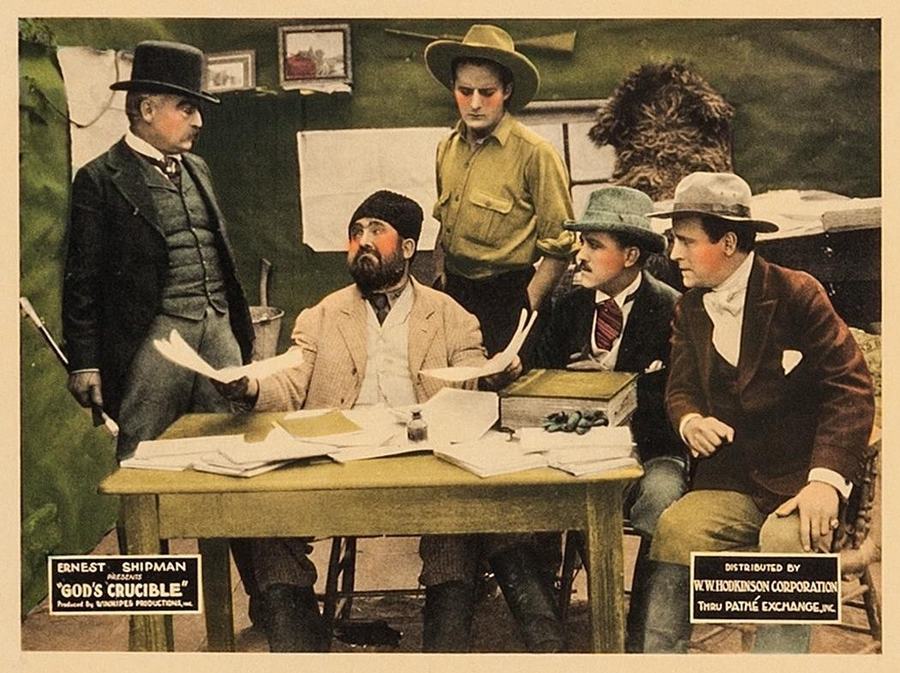
Picture celluloid as black obsidian: hold God's Crucible to the light and it reveals strata of trauma so hot they hiss ninety-three years later. The Kalmars’ odyssey—from Siberian frostbite to prairie arson—embodies the twentieth century’s first shrug at the Statue of Liberty’s promise. Director Reginald Barker, fresh from Civil War battlefields in The Coward, swaps bayonets for class resentment, yet keeps the same barometric tension: every frame feels pressurized, as though the next splice might detonate.
Unlike the pastoral balm of Gretchen the Greenhorn, Winnipeg here is a tinderbox of Orangemen taunts and “No Foreigners” placards. Cinematographer J. Roy Hunt renders snow not as innocence but as erasure: footprints of cops hunting an immigrant scapegoat, flakes slapping Irma’s cheek like wet nickels. The palette—nitrate blues, bruised violets—anticipates later Canadian winter nightmares (think Mon oncle Antoine) yet predates them by half a century.
Ivan’s Stradivarius-copy is the film’s true protagonist: an acoustic refugee papers forged in spruce. When he auditions for the Menzies soirée, Barker shoves the camera so close to the f-holes we nearly tumble inside. Each vibrato equals a plea—let me be more than your pogrom anecdote. Compare this to the piano-wire sadism in The Fettered Woman; whereas that instrument shackles, Ivan’s liberates, even as Staunton plots to snap the bow like a despot’s quill.
Wilton Lackaye essays the villain with operatic minimalism: a lifted eyebrow can deed entire tenements to flame. He embodies what historian Amina Mire calls “imperial aftershock”—the displaced despot who lands ashore recreating the cruelties that toppled him. His chandeliered salon, stuffed with mounted elk heads, feels proto-Kubrickian, a war-room where futures are carved over caviar. When he fondles Irma’s shawl, the gesture is property assessment, not seduction.
Anne Sutherland’s Irma shoulders the narrative’s most volatile scene: a sexual assault filmed only in negative space—shadows on damask, a champagne flute tumbling in slow-motion. Barker refuses the male-gaze trope later fetishized in Das Mädchen aus der Opiumhöhle; instead he cuts to Irma’s pupils dilating, registering the insult as permanent tectonic shift. Her subsequent silence isn’t passivity but magma—every averted glance rehearsing the stiletto reprisal to come.
When Michael barges into the mahogany courtroom, shackles clanging like cracked bells, the mise-en-scène erupts into chiaroscuro. Jules Cowles delivers a monologue—half King Lear, half Dostoevsky—without intertitles; the studio reportedly cut the captions after test audiences wept at the raw timbre of his voiceless face. The moment bridges silent cinema’s paradox: absence of speech birthing purer eloquence.
Production designer Milton Menasco builds the colliery on a soundstage of black velvet and mirrors, creating vertiginous depth without rear projection. When Ivan descends, the elevator cage resembles a guillotine in reverse—every clank a countdown to proletarian epiphany. The ensuing sabotage sequence, cross-cut with a child’s baptism upstairs, rivals later Soviet montage yet predates Eisenstein’s Strike by three years.
Makaroff’s demise—hoist by his own petard down a sooty shaft—plays like karmic ballet. Barker cranks the camera to 12 fps then double-exposes the blast with footage of a nova, so the conflagration blooms twice: once in earth, once in sky. The moral ledger balances without moralizing: capital’s greed literally undermines itself.
Some scholars argue the clemency granted Michael feels tacked on, a sop to censors wary of anarchist overtones. Yet the servant’s confession—spoken off-camera—preserves the film’s ethic: history’s voiceless, not its masters, will arbitrate justice. Ivan’s engagement to Marjorie, bathed in harvest-gold light, refrains from fairy-tale closure; their clasped hands tremble, aware that tomorrow’s headlines could still spell “Deportation.”
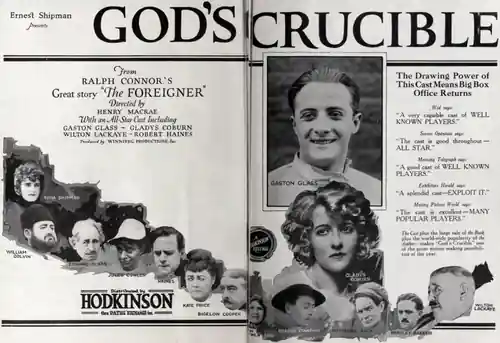
Gaston Glass’s Ivan oscillates between Byronic pallor and soot-smeared virility, his cheekbones recording every calorie of privation. Edna Shipman’s Marjorie, often dismissed as mere ingénue, layers micro-aggressions of privilege—note how she pockets Ivan’s pay envelope “for safekeeping,” a rehearsal of colonial caretaking. Even bit players—Kate Price’s babushka landlady, Bigelow Cooper’s tubercular miner—carry entire Homeric backstories in a single reaction shot.
Novelist Ralph Connor marketed himself as the Kipling of the prairies, yet scenarist Faith Green’s fingerprints pulse through the domestic textures—Irma’s hand-stitched vyshyvanka, the Ukrainian lullabies transcribed into orchestral leitmotifs. Their tug-of-war yields a hybrid voice: missionary uplift swirled with proto-feminist nuance, a cocktail you’ll taste nowhere else in early Canadian cinema.
If Children of Eve moralizes urban squalor, and The Spirit of '17 weaponizes patriotism, then Barker’s film is the ghost that haunts both: a reminder that North America imports tyrannies as eagerly as it exports democracy. Its DNA resurfaces in The Wall Between (1930) and even in contemporary refugee road movies like Sin Nombre.

Only two 35 mm prints are known: one nitrate positive at Library and Archives Canada (nitrate level: red), the other a lavender print in a private Montana collection. Rumor suggests a 4K scan funded by Ukrainian-Canadian philanthropists, pending rights clearance from the elusive Connor estate. Until then, most cinephiles piece the narrative together from souvenir programs and a 1923 Moving Picture World synopsis—film archaeology at its most maddening.
Watch Ivan’s fingers trill the Chanson boheme and notice how Hunt’s camera vibrates in sympathetic resonance; the image itself seems to emit sound. Modern viewers conditioned to THX might rediscover synaesthesia—cinema as ventriloquist that throws its voice into your cranium.
As detention centers sprout along frontiers worldwide, the Kalmars’ saga feels less allegory than prophecy. Their crucible is ours: every visa queue, every midnight deportation flight, every bureaucrat who asks but where are you really from? The film’s plea is simple yet radioactive: freedom is not a destination but a daily insurgency against those who hoard belonging.
Rating: 9.2/10
See it for the mine-cage inferno, stay for the quiet devastation in Irma’s blink. Then ask yourself: which side of the crucible are we standing on today?
IMDb 6.4
1921
Community
Log in to comment.