DbcultAccessing Vault...
Cult Review
Senior Film Conservator
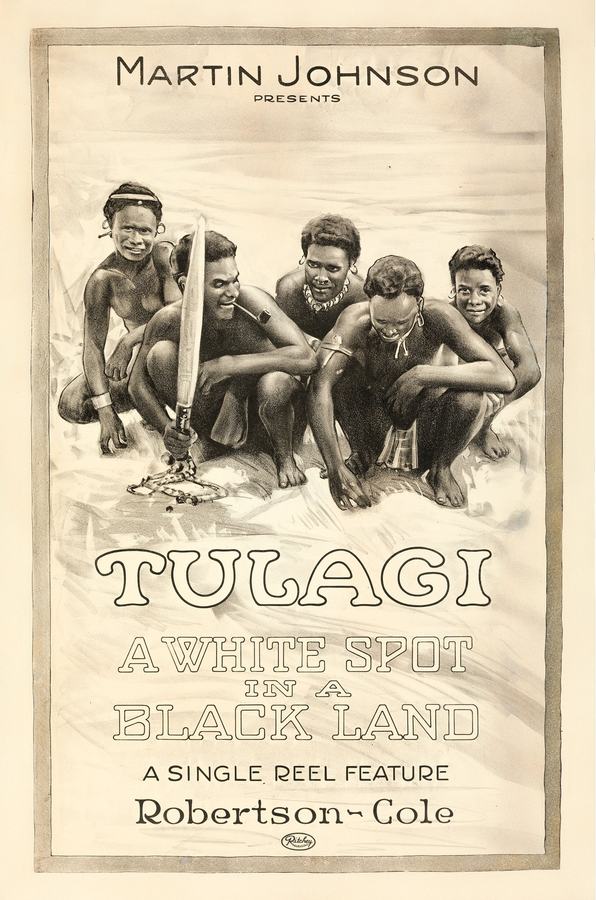
There are films that entertain, and then there are films that confront. 'Tulagi: A White Spot in a Black Land' unequivocally belongs to the latter category, a cinematic experience that doesn't just ask questions but demands a reckoning. From its evocative, almost provocatively charged title, one senses a narrative fraught with tension, a story poised on the precipice of cultural collision. And indeed, the film delivers, presenting a meticulously crafted, albeit deeply unsettling, portrayal of early 20th-century colonialism in the Solomon Islands. This isn't a swashbuckling adventure or a romanticized tale of discovery; it's a slow, agonizing dissection of cultural imperialism, a somber meditation on the cost of 'progress' when measured against the erosion of identity.
The narrative anchors itself around Reverend Alistair Finch, a character whose complexity is both his strength and his ultimate undoing. Portrayed with a nuanced conviction by an uncredited but memorable actor, Finch is not a villain in the conventional sense. He is a man of unwavering faith, genuinely believing in the righteousness of his mission to bring Christianity and European 'civilization' to the indigenous people of Tulagi. His zeal, however, is a double-edged sword, blinding him to the inherent value and intricate beauty of the culture he seeks to transform. The film masterfully avoids caricature, presenting Finch as a product of his time, a man whose benevolence is inextricably linked to a profound, if unconscious, arrogance. This portrayal elevates the film beyond a simple good-versus-evil dichotomy, forcing the audience to grapple with the more insidious nature of colonialism, often cloaked in the guise of altruism.
The arrival of Finch and his modest mission outpost, the titular 'white spot,' acts as a catalyst, initiating a chain of events that slowly, inexorably, dismantles the existing social and spiritual order of Tulagi. We witness the subtle, yet devastating, impact on Chief Kaelo, the venerable leader whose authority is derived from generations of ancestral wisdom and a profound connection to the land and its spirits. Kaelo, also brought to life by an uncredited but profoundly empathetic performance, represents the enduring resilience of tradition, yet also its vulnerability in the face of an alien, technologically superior, and ideologically unyielding force. The film uses visual metaphors with striking effectiveness: the encroaching mission buildings, stark and angular, against the organic curves of the traditional dwellings; the crisp, starched white collars of the missionaries contrasting with the earthy, natural adornments of the islanders. These visual cues are not merely aesthetic; they are narrative devices, speaking volumes about the clash of worlds.
One of the film's most potent achievements lies in its depiction of the generational divide that emerges. The younger inhabitants of Tulagi, particularly those drawn to the mission's promises of education, new technologies, and a different kind of 'power,' begin to drift away from the ways of their elders. This internal schism is heartbreaking to behold, illustrating how colonial influence isn't just an external imposition but also an internal fracturing. The film doesn't shy away from showing the allure of the new, the genuine curiosity and hope that some islanders harbored for Finch's teachings. This complexity prevents the narrative from becoming a simplistic polemic, instead presenting a multifaceted examination of human agency and vulnerability in the face of overwhelming external pressures. It reminds one of the subtle, yet powerful, cultural shifts explored in films like The Call of Her People, though 'Tulagi' delves into a more direct, almost clinical, examination of colonial impact rather than a personal journey of self-discovery within a specific cultural context.
The cinematography, though undoubtedly a product of its era, manages to convey a powerful sense of place and atmosphere. The lush, oppressive beauty of the Solomon Islands jungle is captured with an almost ethnographic gaze, creating a vivid backdrop against which the human drama unfolds. The use of natural light, the long, lingering shots of the villagers engaged in their daily rituals, all contribute to a feeling of authenticity and an almost elegiac quality, as if we are witnessing a world on the cusp of irreversible change. The sound design, too, plays a crucial role, juxtaposing the rhythmic sounds of traditional life—chanting, drumming, the rustle of leaves—with the jarring imposition of church bells and hymn singing. This auditory clash is a constant reminder of the cultural dissonance at play.
The film's thematic depth is where it truly distinguishes itself. It's a profound exploration of identity, belief systems, and the often-destructive nature of cultural exchange when one culture assumes inherent superiority. It forces us to question the very notion of 'civilization' and 'savagery,' challenging the Eurocentric perspectives prevalent during the period it depicts. While it shares a certain historical lens with films like Frank Gardiner, the King of the Road in its portrayal of a specific historical moment, 'Tulagi' delves far deeper into the psychological and cultural ramifications, moving beyond mere historical recounting to a more philosophical inquiry.
The film's ending is not one of explosive drama or clear resolution, but rather a quiet, devastating elegy. The 'white spot' of the mission has indeed grown, but at what cost? The vibrant, distinctive culture of Tulagi, once so rich and self-sufficient, now bears the indelible scars of assimilation. The final shots, lingering on faces that once held a defiant pride now tinged with a subtle melancholy, are incredibly powerful. There's a sense of something irreplaceable having been lost, a spiritual autonomy eroded, replaced by a veneer of foreign customs and beliefs. This isn't a victory for Finch; it's a testament to the enduring tragedy of cultural erasure. It leaves the viewer with a lingering sense of unease, a discomfort that is precisely the film's intention.
Unlike the more straightforward adventure or crime narratives of its contemporaries, such as The Strangler's Grip or Burglar by Proxy, 'Tulagi' operates on a different plane entirely. It's a film that demands intellectual engagement, inviting contemplation on global histories and their enduring legacies. It's a stark reminder that the most profound changes often occur not through grand battles, but through the incremental, often well-intentioned, imposition of one worldview upon another. The film's message, though delivered through the lens of a specific historical context, remains remarkably relevant in discussions of cultural preservation, indigenous rights, and the ongoing impact of colonial mindsets.
While 'Tulagi: A White Spot in a Black Land' may not be a film for those seeking escapism, it is an essential piece of cinema for anyone interested in the complexities of human history and cultural interaction. Its unflinching gaze at the often-unacknowledged consequences of well-meaning intervention makes it a powerful educational tool and a profound artistic statement. The raw, unvarnished depiction of cultural erosion, rather than overt conflict, is what makes its impact so deeply resonant. It's a film that stays with you long after the credits roll, prompting introspection and a deeper understanding of the delicate balance between progress and preservation. It stands as a stark counterpoint to idealized narratives of exploration, instead offering a more somber, yet ultimately more truthful, account of the profound and often damaging imprint left by the 'white spots' on the 'black lands' of our shared global history.
In an era where many films of its vintage focused on simpler moral tales, 'Tulagi' dared to delve into the moral ambiguities of its time, presenting a narrative that challenges the very foundations of colonial thought. Its lasting power lies in its ability to provoke thought, to stir discomfort, and to illuminate the often-invisible wounds inflicted by cultural domination. It's a film that, despite its age, feels remarkably contemporary in its critique and its empathetic portrayal of a people grappling with the loss of their heritage. A truly significant work, it deserves to be rediscovered and re-evaluated for its enduring relevance and its courageous, if heartbreaking, narrative.

IMDb —
1912
Community
Log in to comment.