DbcultAccessing Vault...
Cult Review
Senior Film Conservator
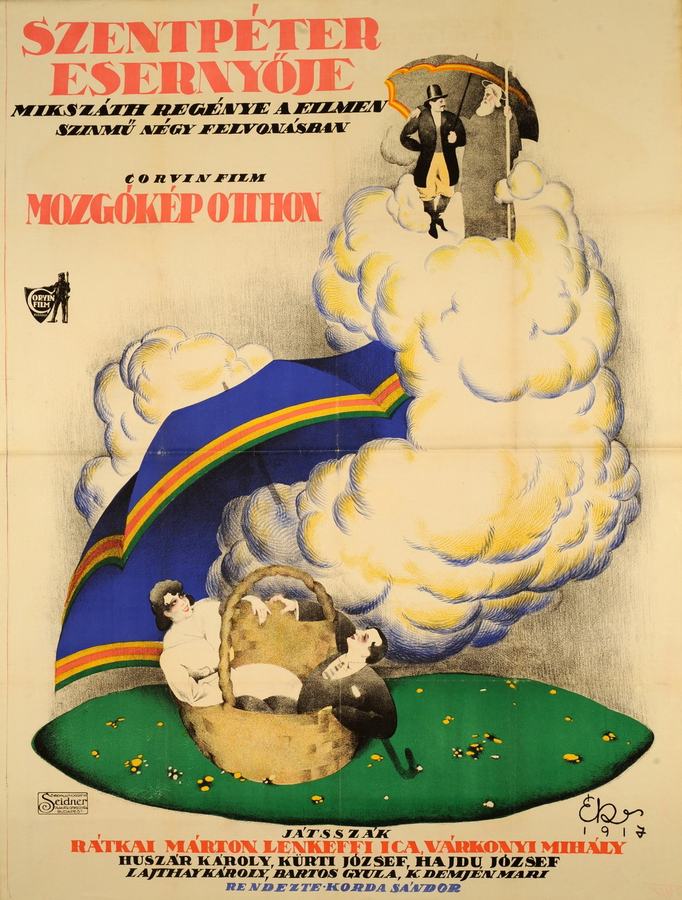
The year 1917 remains a pivotal juncture in the global cinematic consciousness, yet few artifacts from that era possess the whimsical longevity of Alexander Korda’s Szent Péter esernyöje. Based on the celebrated novel by Kálmán Mikszáth, this film is not merely an adaptation; it is a visual distillation of the Hungarian soul, caught between the archaic superstitions of the 19th century and the burgeoning modernity of the 20th. Korda, who would later become a titan of British cinema, displays here an early mastery of narrative pacing and atmospheric world-building that transcends the technical limitations of the silent era.
Korda’s direction utilizes the Hungarian landscape not just as a backdrop, but as a silent participant in the drama. The cinematography captures the rugged beauty of the Glogova region with a clarity that feels almost tactile. Unlike the claustrophobic, stage-bound feel of many contemporary productions like The Vampires: The Terrible Wedding, this film breathes. The scenes involving the torrential rain—the catalyst for the titular 'miracle'—are executed with a rhythmic intensity that underscores the sheer vulnerability of the characters against the elements.
The framing of the umbrella itself is masterful. It is treated with a reverent luminescence that shifts depending on who is viewing it. To the villagers, it is a glowing totem of divine protection; to the cynical treasure hunters, it is a mere vessel for hoarded wealth. This duality is central to the film’s charm. While some films of the period, such as La loca del monasterio, leaned heavily into religious melodrama, Korda maintains a light, ironic touch that honors Mikszáth’s literary voice.
Victor Varconi (credited here as Mihály Várkonyi) delivers a performance of remarkable restraint. As György Wibra, his journey from a driven, somewhat detached seeker of fortune to a man captivated by the ethereal beauty of Veronka is charted through subtle shifts in his facial expressions. In an era where histrionics were the norm, Varconi’s naturalism is refreshing. He provides a grounded center to a story that often flirts with the fantastic.
Ica von Lenkeffy, as Veronka, embodies the archetypal 'innocent' without descending into the saccharine. Her chemistry with Varconi is palpable, providing the emotional stakes necessary to carry the final act. The supporting cast, featuring stalwarts like József Kürthy and Márton Rátkai, populates the village with a gallery of eccentrics that feel lived-in and authentic. Their interactions evoke the social stratification seen in The Upstart, though Korda treats his characters with a more forgiving, pastoral warmth than the sharp societal critiques found in The Law of Nature.
At its core, Szent Péter esernyöje is a meditation on the nature of value. The MacGuffin—the hidden bank notes in the umbrella handle—serves as a critique of the obsession with material legacy. Pál Gregorics’ life was consumed by the protection of his wealth, leading to a legacy of paranoia and isolation. In contrast, the 'miracle' of the umbrella, though based on a misunderstanding, brings a community together and provides a foundation of faith for the Bélyi family.
This thematic interplay between the sacred and the profane is handled with a sophistication that rivals the dramatic weight of La crociata degli innocenti. However, where that film leans into the tragic, Korda’s work finds resolution in the comedic and the romantic. The moment the umbrella is finally located, only to reveal that the 'treasure' has been compromised, is a masterclass in narrative irony. It forces the characters—and the audience—to re-evaluate what was truly gained during the journey.
One cannot discuss this film without acknowledging its place in the technical evolution of the medium. The editing, while rudimentary by today’s standards, shows a clear understanding of continuity and emotional build-up. The use of intertitles is sparse but effective, allowing the visual storytelling to take precedence. This is a stark contrast to the dialogue-heavy structures seen in some American exports of the time, such as After Five.
The lighting, particularly in the interior scenes of the priest’s humble home, creates a Rembrandt-esque chiaroscuro that emphasizes the spiritual and domestic peace of the setting. This visual style contrasts sharply with the more urban and frantic aesthetics of films like Lights of New York, highlighting the unique cultural identity that Hungarian cinema was carving out for itself during the Great War.
When placed alongside other rural dramas like Miss Peasant, Korda’s work stands out for its lack of cynicism. While Miss Peasant often highlights the harshness of agrarian life, Szent Péter esernyöje leans into the magical realism of the countryside. It shares a certain narrative DNA with The Conquest of Canaan in its depiction of a small town’s collective psyche, but it remains uniquely European in its blend of Catholicism and pagan-adjacent folklore.
Furthermore, the film’s exploration of identity and parentage—specifically György’s status as an illegitimate son—touches on themes prevalent in Uden Fædreland. Yet, Korda avoids the heavy-handed moralizing often associated with these topics, opting instead for a story about the personal reclamation of one's future. The umbrella, in the end, is not just a relic or a safe; it is a bridge between a fractured past and a hopeful future.
For decades, the full brilliance of Korda’s 1917 version was obscured by the passage of time and the physical degradation of film stock. However, recent restoration efforts have breathed new life into these frames. The textures of the costumes, the grain of the wooden village structures, and the expressive eyes of the actors are now visible with a clarity that honors the original vision. It serves as a vital reminder of the sophistication of the Hungarian film industry before the diaspora of its greatest talents to Hollywood and London.
To watch Szent Péter esernyöje today is to witness the birth of a cinematic language. It is a film that understands the power of a symbol—be it an umbrella or a smile—to carry the weight of a nation’s stories. It lacks the nihilism found in Treason or the domestic claustrophobia of Jack and Jill, offering instead a timeless narrative of faith rewarded in the most unexpected of ways.
As we navigate an era of hyper-digital effects and fragmented narratives, there is a profound pleasure in returning to the coherent, heartfelt storytelling of Alexander Korda’s early work. The film does not rely on spectacle; it relies on the human face and the universal desire for belonging. The 'umbrella' may be a piece of cloth and wood, but in Korda’s hands, it becomes a testament to the enduring power of myth.
Whether you are a scholar of silent cinema or a casual viewer seeking a story that resonates across generations, this film is an essential piece of the puzzle. It captures a fleeting moment in history where the world was changing, yet the fundamental truths of love, greed, and faith remained as steadfast as the Glogova hills. It is, quite simply, a masterpiece of early European narrative art, standing tall alongside the greats of its time and continuing to cast a long, protective shadow over the history of Hungarian film.
IMDb —
1918
Community
Log in to comment.