DbcultAccessing Vault...
Cult Review
Senior Film Conservator
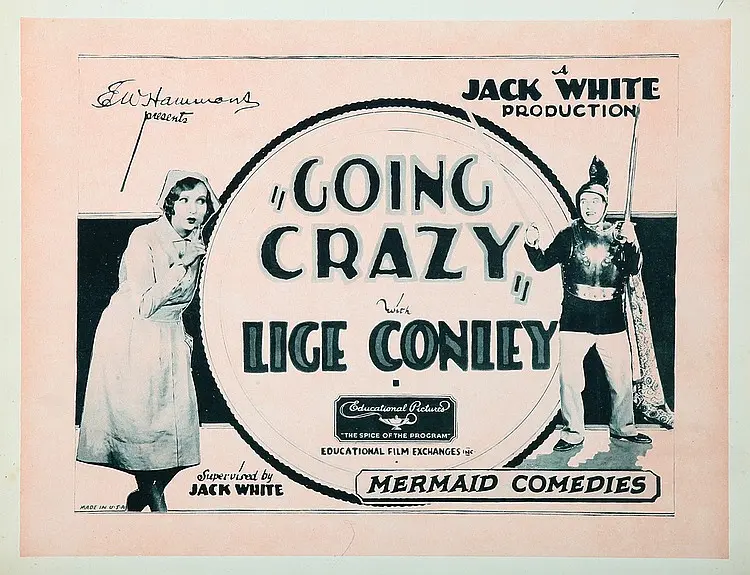
Can a century-old silent film still resonate with a modern audience, or is it merely an academic curiosity? Short answer: yes, Going Crazy is absolutely worth watching today, but with specific caveats. This early cinematic offering is a potent, if somewhat predictable, melodrama that delivers surprising emotional depth for its era.
This film is for those who appreciate the foundational storytelling of cinema, silent film enthusiasts, and anyone curious about the roots of classic dramatic tropes. It is likely not for viewers seeking fast-paced action, complex narrative twists, or a departure from the stylistic conventions of the 1920s.
At its heart, Going Crazy is a testament to the timeless power of a compelling human story. Directed by Phil Dunham, who also penned the screenplay, this film leans heavily into the melodramatic structure popular in its time, yet manages to transcend mere historical artifact status through sheer narrative force.
The premise — a young man unjustly committed to an asylum to be stripped of his inheritance — is a trope that has echoed through cinema for decades, from Apartment 29 to modern psychological thrillers. Here, it feels fresh in its original context, unburdened by the cynicism that later iterations might carry.
This film works because of its straightforward, emotionally charged narrative and the earnest performances that anchor its central conflict. It embraces its melodramatic nature without apology, allowing the audience to fully invest in the protagonist's plight. The simplicity, far from being a weakness, becomes a strength, stripping away distractions to focus on raw human drama.
This film fails because its pacing, while deliberate, can feel sluggish by contemporary standards, and its plot, while effective, offers few surprises for a seasoned viewer of classic cinema. Some of the silent film conventions, such as exaggerated acting and title card dependence, might also prove a barrier for casual audiences.
You should watch it if you are a cinephile keen on understanding the evolution of storytelling, a fan of classic melodramas, or someone who appreciates the unique artistry of silent cinema. It offers a fascinating window into a bygone era of filmmaking, proving that compelling narratives don't need sound to captivate.
The success of any silent film hinges almost entirely on the ability of its cast to communicate complex emotions without dialogue. Going Crazy largely succeeds in this regard, thanks to a committed ensemble.
Lige Conley, as the wrongfully committed young man, carries the film's emotional weight with commendable grace. His wide-eyed confusion and eventual despair, followed by a glimmer of hope, are conveyed through subtle facial shifts and a physicality that never descends into mere caricature. One particular scene, where he first realizes the true nature of his confinement, sees Conley subtly slump, his shoulders dropping, his gaze distant, effectively portraying the crushing weight of his predicament without a single spoken word.
Estelle Bradley, playing the sympathetic nurse, offers a compelling counterpoint. Her performance is imbued with a quiet strength and empathy, providing the emotional anchor for both the protagonist and the audience. Her hesitant glances, often filled with a mix of concern and burgeoning affection, are beautifully understated. Her character's defiance of the asylum's oppressive rules, conveyed through her actions rather than grand gestures, is a standout element.
Phil Dunham, pulling double duty as writer and actor, embodies the conniving villain with a relish that borders on pantomime but remains effective for the genre. His smirks and furtive glances are classic silent film villainy, and while not nuanced, they serve the plot's clear moral lines. Otto Fries, in a supporting role, adds texture, though his character is less central to the film’s emotional core.
The chemistry between Conley and Bradley is palpable, building slowly and genuinely. It’s not a whirlwind romance, but a bond forged in adversity, making their eventual collaboration against the plotters feel earned and believable. This authenticity in their connection is perhaps the film's strongest acting triumph.
Phil Dunham's direction is straightforward and functional, prioritizing clear storytelling over stylistic flourishes. This is not a film that experiments with avant-garde camera angles or intricate montage; rather, it adheres to the established visual language of early cinema. The camera largely remains static, allowing the actors' performances and the mise-en-scène to tell the story.
Yet, within these constraints, Dunham manages to create moments of genuine tension and pathos. The claustrophobic interiors of the asylum are effectively rendered, even with minimal set design, primarily through careful blocking and the oppressive presence of the guards. The visual contrast between the protagonist's initial freedom and his later confinement is stark and immediately understood.
The screenplay, also by Dunham, is a masterclass in direct, impactful storytelling. Every scene serves the central plot, pushing the narrative forward without unnecessary detours. The exposition is handled efficiently through title cards, which, while sometimes lengthy, are well-integrated into the flow of the story. The plot’s predictability is less a flaw and more a characteristic of the genre, where the audience often knew the general trajectory but reveled in the dramatic unfolding.
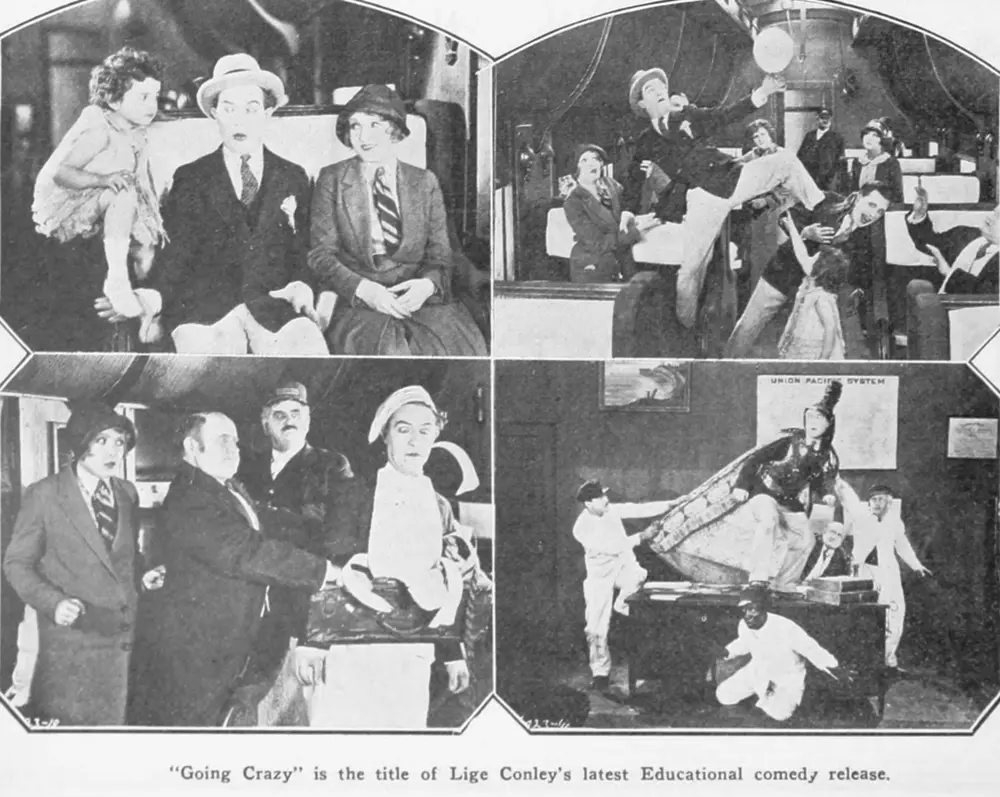
One particular strength of the writing is its clear delineation of good versus evil. While this might seem simplistic to modern sensibilities, it allows for an immediate emotional investment. The audience is never left guessing about who to root for, making the protagonist's struggles all the more impactful. It's an honest, unpretentious piece of writing that understands its audience and its medium.
The cinematography of Going Crazy, while standard for its time, effectively conveys the film's mood and setting. Shot in black and white, the lighting is generally flat but occasionally uses shadows to underscore the darker aspects of the asylum. There are no grand sweeping shots or elaborate visual metaphors; instead, the focus is on clear, legible imagery that supports the narrative.
The film’s visual language is consistent, ensuring that key actions and emotional beats are always visible. Close-ups are used sparingly but effectively to emphasize crucial expressions, particularly those of Conley and Bradley. This restraint makes those moments of visual intimacy all the more powerful.
Pacing is where modern viewers might find the most adjustment necessary. Silent films, generally, operated at a different rhythm than contemporary cinema. Going Crazy is no exception. It takes its time, allowing scenes to unfold and emotions to register without the rapid-fire cuts common today. This deliberate pace can feel slow initially, but it also allows for a deeper immersion into the characters' experiences.
The film’s tone is consistently melodramatic. It builds tension through the protagonist's escalating predicament and the slow burn of his romance with the nurse. While there are moments of lightheartedness, the underlying current of injustice and peril keeps the audience engaged. The resolution, while expected, is delivered with a satisfying emotional punch that rewards the viewer's patience.
Beyond its surface plot, Going Crazy touches upon themes that remain relevant. The most prominent is the fragility of individual liberty in the face of institutional power and corruption. The ease with which the protagonist is stripped of his rights and confined highlights a societal anxiety about unchecked authority.
The film also explores the transformative power of human connection. The relationship between the young man and the nurse is not just a romantic subplot; it's the engine of his survival and eventual triumph. It speaks to the idea that even in the darkest of places, empathy and alliance can spark hope and facilitate resistance.
Furthermore, the film subtly critiques the medical and legal systems of its time, portraying them as susceptible to manipulation by those with wealth and influence. While not overtly political, the narrative implicitly questions the integrity of institutions meant to protect the vulnerable. It's a surprisingly sharp observation for a film designed primarily for entertainment.
Yes, Going Crazy is absolutely worth seeking out for specific audiences. It’s more than just a historical artifact; it’s a genuinely engaging piece of early cinema that showcases the enduring power of a well-told story.
For silent film aficionados, it's a solid example of the genre's capabilities, particularly in character performance and narrative clarity. For those new to silent films, it serves as an accessible entry point, with a plot that is easy to follow and emotional beats that translate across generations.
It works. But it’s flawed. Its pacing might test modern patience, and its dramatic conventions are distinctly of its era. However, its strengths — the heartfelt performances, the clear narrative, and the compelling central conflict — far outweigh these minor drawbacks.
It offers a unique window into the past, not just into filmmaking techniques, but into the social anxieties and entertainment values of the 1920s. It’s a film that reminds us that the core elements of compelling drama haven't changed much, even as the technology around them has.
Going Crazy is not merely an artifact from cinema's nascent years; it is a surprisingly robust and emotionally engaging melodrama that stands the test of time. While it adheres to the conventions of its era, its clear narrative, strong central performances, and timeless themes of injustice and perseverance make it a compelling watch. It may not reinvent the wheel, but it demonstrates with quiet confidence how effectively a simple story can be told. For those willing to embrace the pace and style of silent cinema, this film offers a rewarding glimpse into the enduring power of human drama. It proves that a compelling story, told with sincerity, needs no sound to be heard.

IMDb 5.9
1931
Community
Log in to comment.