DbcultAccessing Vault...
Cult Review
Senior Film Conservator
Is 'Going Great' worth your time in the modern era of cinema? Short answer: No, unless you are a dedicated historian of silent-era slapstick or a completist of 1920s short-form comedy. This film is a relic of a time when the boundaries of 'funny' were often defined by who was holding the paddle and who was receiving the blow, making it a difficult watch for those who prefer their humor with a side of empathy.
This film is specifically for academic researchers interested in the evolution of the 'frat movie' genre and fans of Bob Kortman’s physical presence. It is absolutely NOT for casual viewers looking for a laugh or anyone sensitive to the depiction of class-based bullying. It is a harsh, often repetitive exercise in physical comedy that feels more like a document of social hierarchy than a piece of entertainment.
1) This film works because it captures the raw, unrefined energy of 1920s physical comedy, offering a glimpse into the specific sets and costumes of the era that felt authentic to the collegiate experience of the time.
2) This film fails because its central premise relies entirely on the humiliation of the working class, lacking the 'underdog' charm found in the works of Chaplin or Keaton.
3) You should watch it if you want to trace the DNA of fraternity-based cinema back to its most primitive and mean-spirited roots.
When we ask if a film like 'Going Great' is worth watching, we have to look past the grain of the 35mm stock and into the heart of the narrative. In 1926, the idea of privileged college students terrorizing a tailor might have been seen as harmless fun. Today, it feels like watching a group of bullies pick on the kid with the least lunch money. The film lacks the narrative complexity found in contemporary shorts like Our Alley, which managed to find heart amidst the chaos.
The pacing is frantic, which is typical for the era, but the repetition of the 'initiation tricks' becomes exhausting. Unlike the high-stakes drama of The Leap of Despair, there are no real consequences here. The janitor and the tailor are merely props for Eddie Nelson’s antics. If you value technical proficiency over emotional resonance, you might find something to admire in the stunt work, but for most, the novelty will wear off within the first five minutes. It works as a museum piece. But it’s flawed as a comedy.
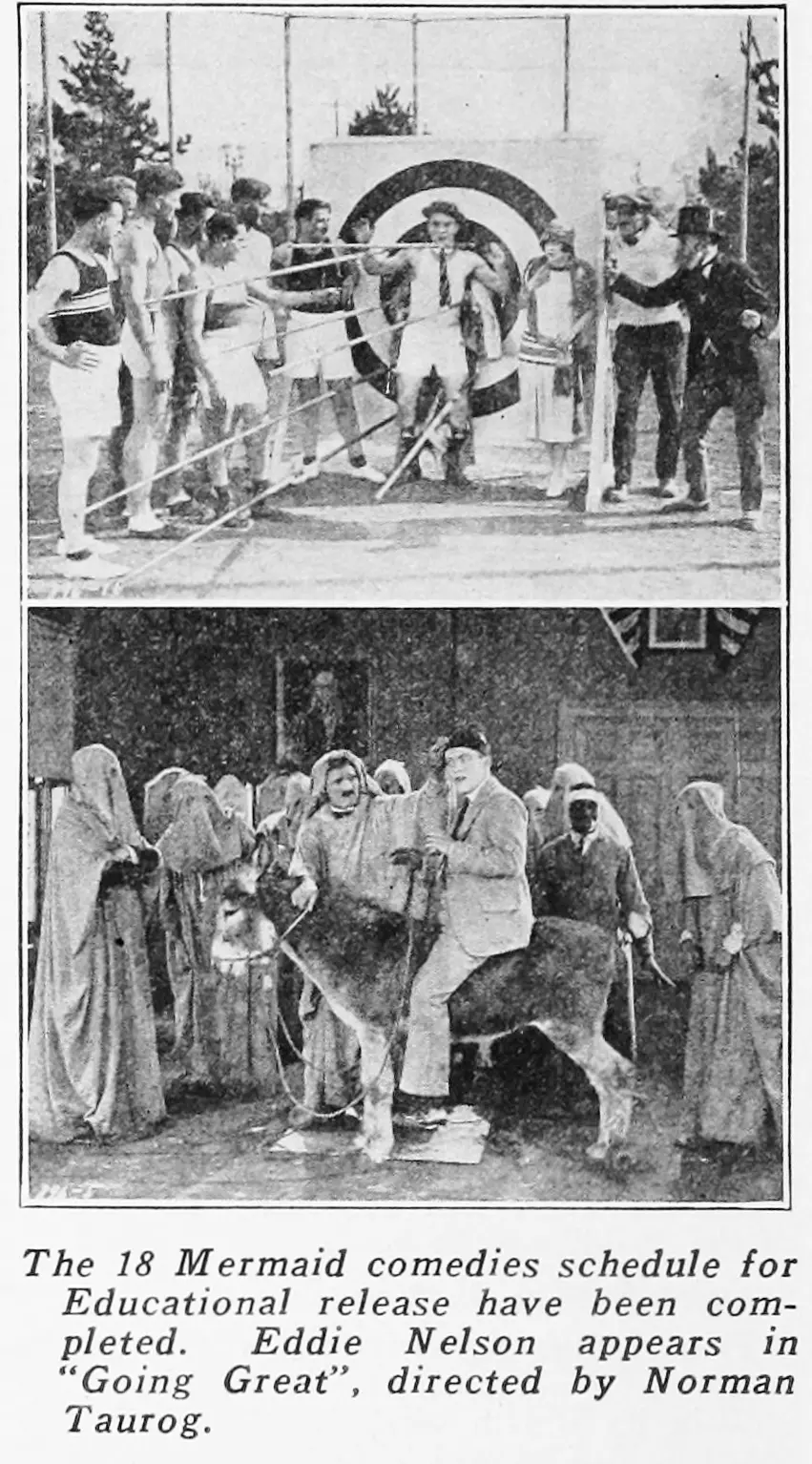
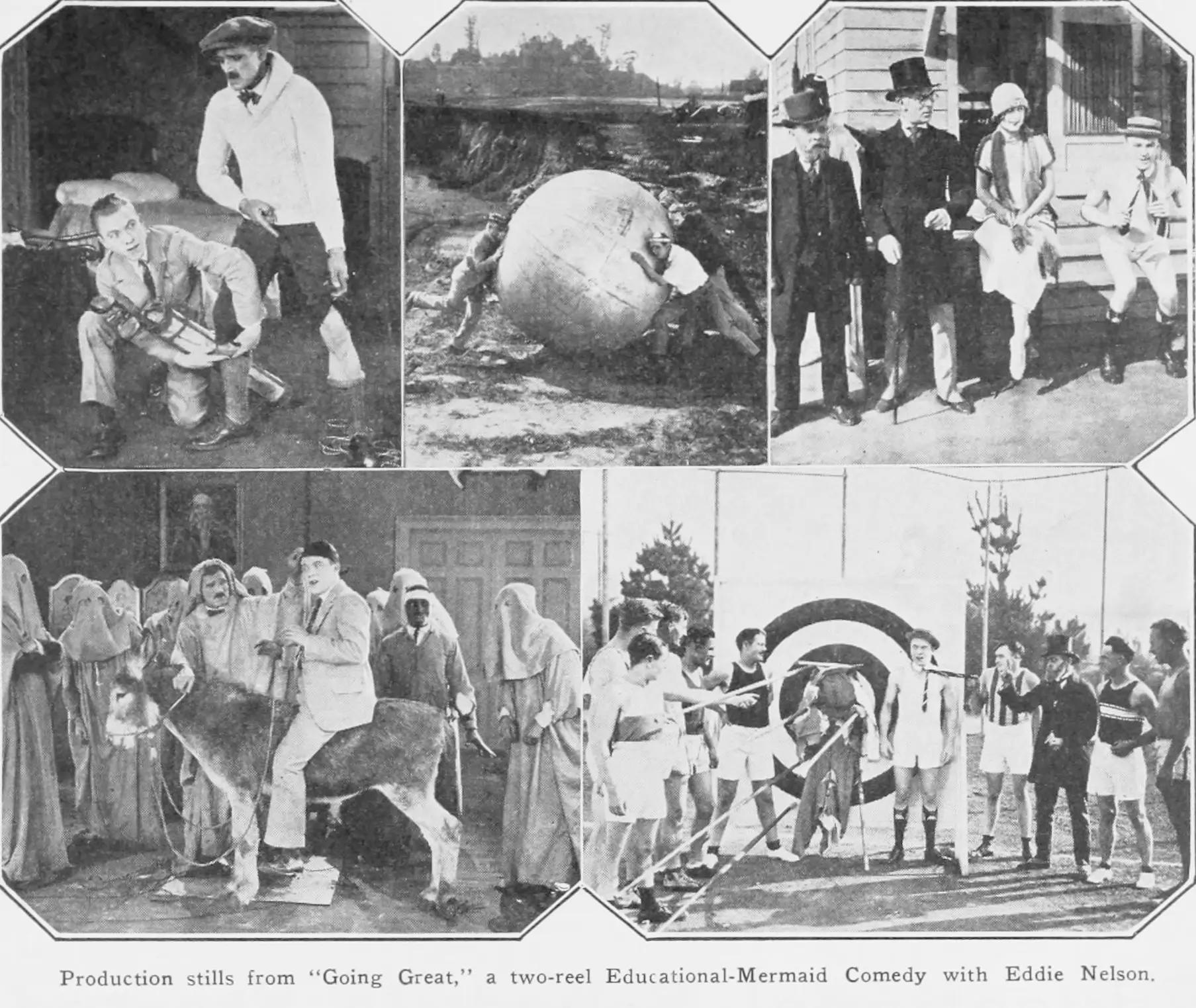
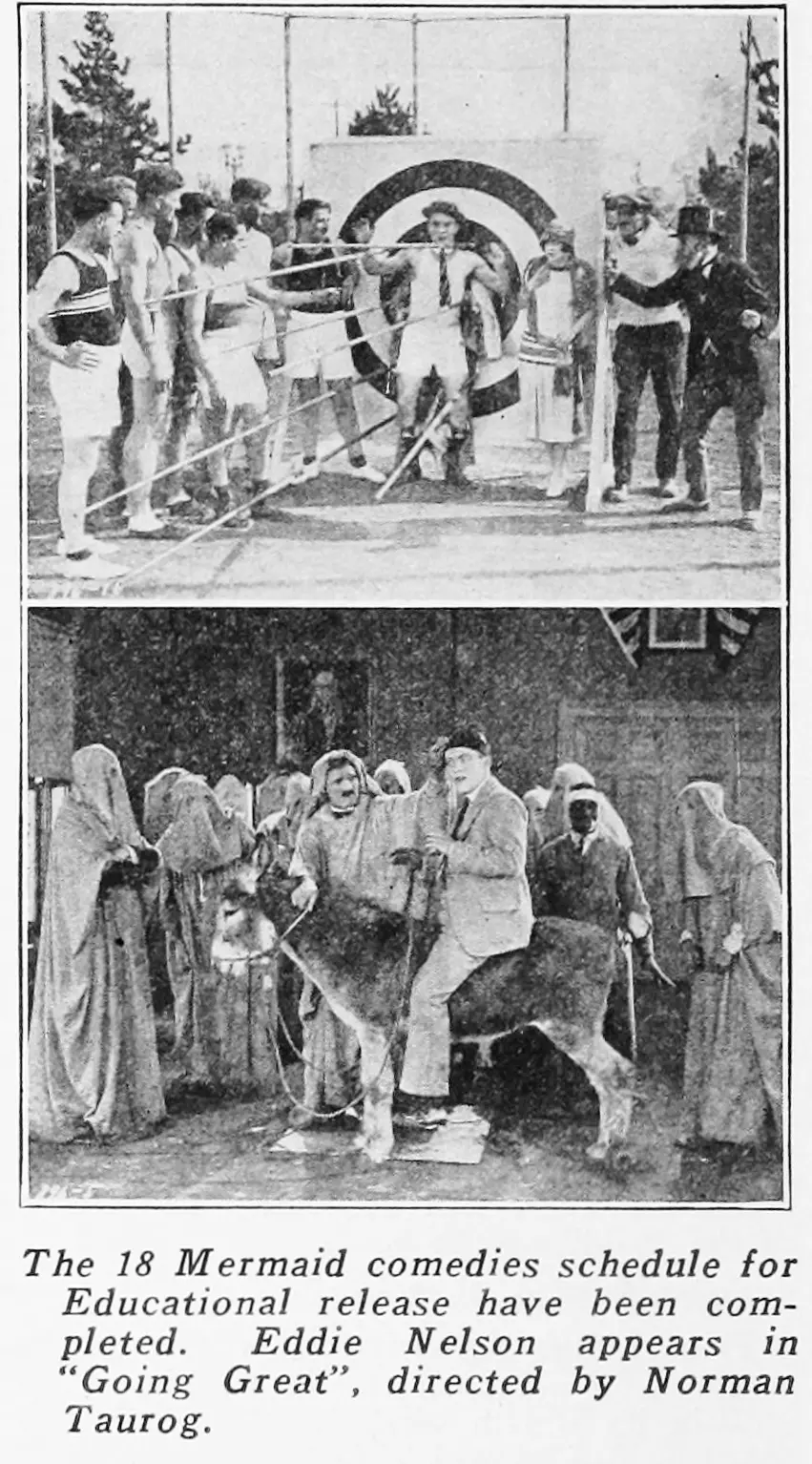
The 1920s saw a boom in collegiate-themed entertainment, but 'Going Great' sits on the darker end of that spectrum. The film's treatment of the 'poor boy' tailor is particularly striking. In one scene, the fraternity members systematically dismantle his workspace under the guise of a 'trick.' The camera stays static, capturing the tailor's frantic attempts to save his livelihood while the brothers laugh in the background. It is a stark contrast to the more whimsical adventures found in The Adventures of Ruth.
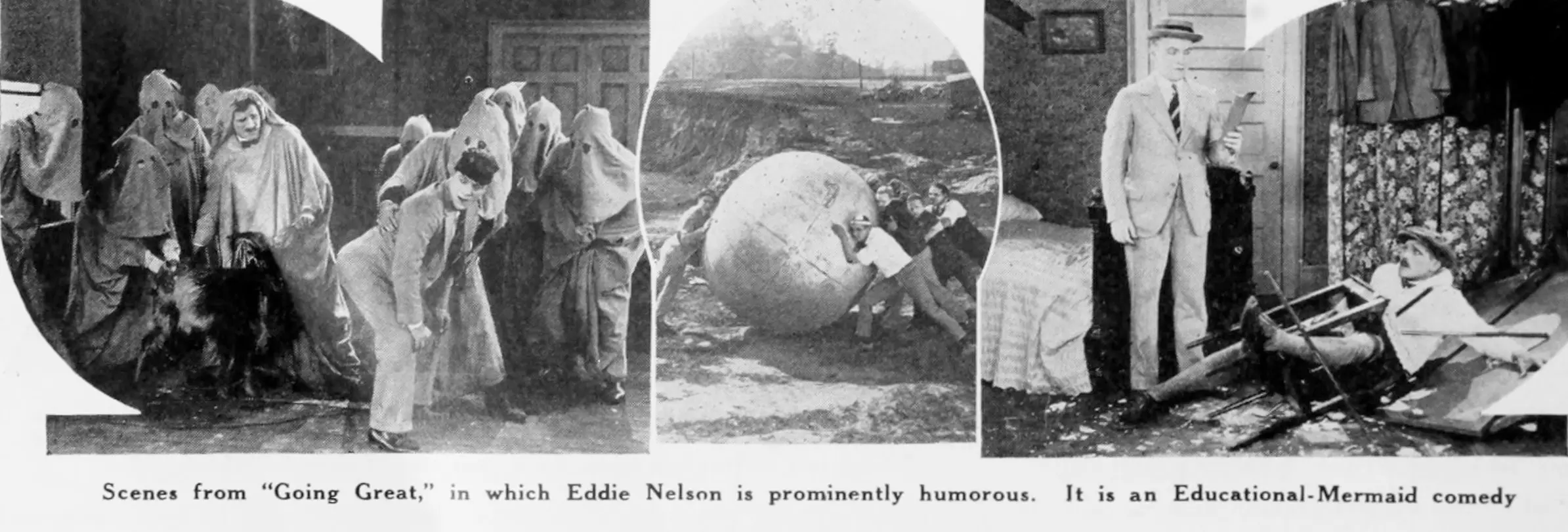
There is a debatable opinion here: I would argue that this film is actually a proto-horror movie disguised as a comedy. The way the fraternity members move as a single, faceless unit to harass individuals is genuinely unsettling. They don't have distinct personalities; they are just a force of collective privilege. This lack of individual characterization makes the 'comedy' feel anonymous and cold.
Eddie Nelson leads the charge with a performance that is high on energy but low on nuance. He possesses a rubbery face that was the stock-in-trade of the era, but he lacks the expressive depth to make his character likable. He isn't a 'lovable rogue'—he's just a rogue. Virginia Vance is largely wasted here, relegated to the sidelines while the boys engage in their destructive play. It’s a recurring issue in films of this ilk, where the female lead is more of an accessory than a participant, a sharp contrast to the character-driven roles in Brass Buttons.
Bob Kortman, known for his later work in Westerns, provides a solid physical foil. His height and imposing frame make the 'pranks' feel more like genuine threats. In the scene where the janitor is 'initiated,' Kortman’s physical presence creates a genuine sense of peril that the script likely didn't intend. The slapstick mechanics are precise—a bucket falls exactly when it should, a tripwire is hit with frame-perfect accuracy—but the technical skill doesn't translate to joy.
The cinematography in 'Going Great' is functional at best. The camera rarely moves, acting as a proscenium arch for the physical comedy. This was standard for low-budget shorts of the mid-20s, but it feels particularly restrictive here. The lighting in the tailor shop is flat, failing to utilize the shadows that could have added depth to the cramped space. If you compare this to the visual flair of Cupid the Cowpuncher, the lack of ambition in 'Going Great' becomes even more apparent.
One surprising observation is how the film uses the 'tailor shop' as a metaphor for the fragility of the working class. Every time a garment is ripped or a sewing machine is jammed, we are seeing the destruction of the tailor's only means of survival. The film doesn't realize it's making a profound social statement; it thinks it's just showing a funny mess. This disconnect between the intent and the impact is what makes the film so fascinating to analyze from a modern perspective.
Pros:
- High-energy performances by the lead cast.
- Interesting historical look at 1920s campus fashion and decor.
- Short runtime ensures it doesn't overstay its welcome too long.
Cons:
- Repetitive gags that lose their impact quickly.
- Fundamentally unlikable protagonists.
- Static and uninspired cinematography.
'Going Great' is a 1926 silent comedy short about a college fraternity that uses its initiation pranks on a janitor and a poor student tailor. The film focuses on physical slapstick and the social friction between wealthy students and working-class employees. It is primarily known today as an example of early 20th-century collegiate humor and silent-era physical comedy.
'Going Great' is a difficult film to recommend for pleasure. It is a loud, aggressive, and ultimately hollow piece of entertainment that relies on the misfortune of others for its laughs. While the physical technicality of the gags is impressive, the lack of a moral center makes the experience feel oily. It is a fascinating historical artifact that shows how far we have come in our understanding of comedy and empathy. Watch it for the history, but don't expect to leave with a smile. It is a punch to the gut that the film thinks is a pat on the back.
IMDb —
1936
Community
Log in to comment.