DbcultAccessing Vault...
Cult Review
Senior Film Conservator
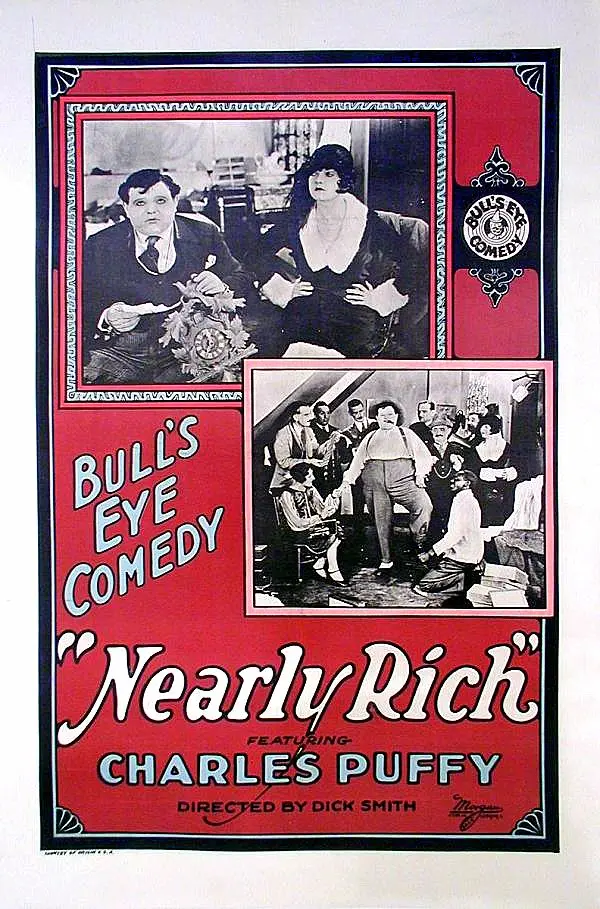
Is 'Nearly Rich' a hidden gem of the silent era worth your time today? Short answer: yes, but only if you appreciate the frantic, slightly mean-spirited energy of 1920s slapstick shorts.
This film is for enthusiasts of early physical comedy and those who enjoy seeing the 'little man' finally get one over on his corporate overlords. It is not for viewers who require nuanced character development or a slow-burn narrative.
1) This film works because its cynicism regarding human greed and transactional relationships feels surprisingly modern even a century later.
2) This film fails because the middle act, which focuses on the makeover of Charley, relies on repetitive gags that lack the punch of the opening and closing scenes.
3) You should watch it if you want to see a textbook example of how early cinema used physical objects—like an inkwell or a cuckoo clock—to drive plot and character reversals.
Billy Engle brings a specific kind of desperate energy to the role of Charley. Unlike the poetic grace of Chaplin or the stone-faced athleticism of Keaton, Engle’s comedy is rooted in a frantic, almost nervous physicality.
When he arrives late to work and receives the 'razzberry' from his boss, his reaction isn't one of noble suffering. It is the reaction of a man who has been beaten down so many times that he expects the blow before it even lands.
The office setting is minimalist, yet it serves as a perfect stage for the power dynamics at play. We see a similar use of confined spaces in Before Breakfast, where the environment dictates the character's misery.
One standout moment is the rose sequence. Charley offers a flower to the secretary, only for the boss to toss it into the wastebasket with a casual cruelty that sets the tone for the entire film.
The transformation of the boss from a tyrant to a groveling servant is one of the film's most effective sequences. It exposes the shallow nature of respect in a capitalist framework.
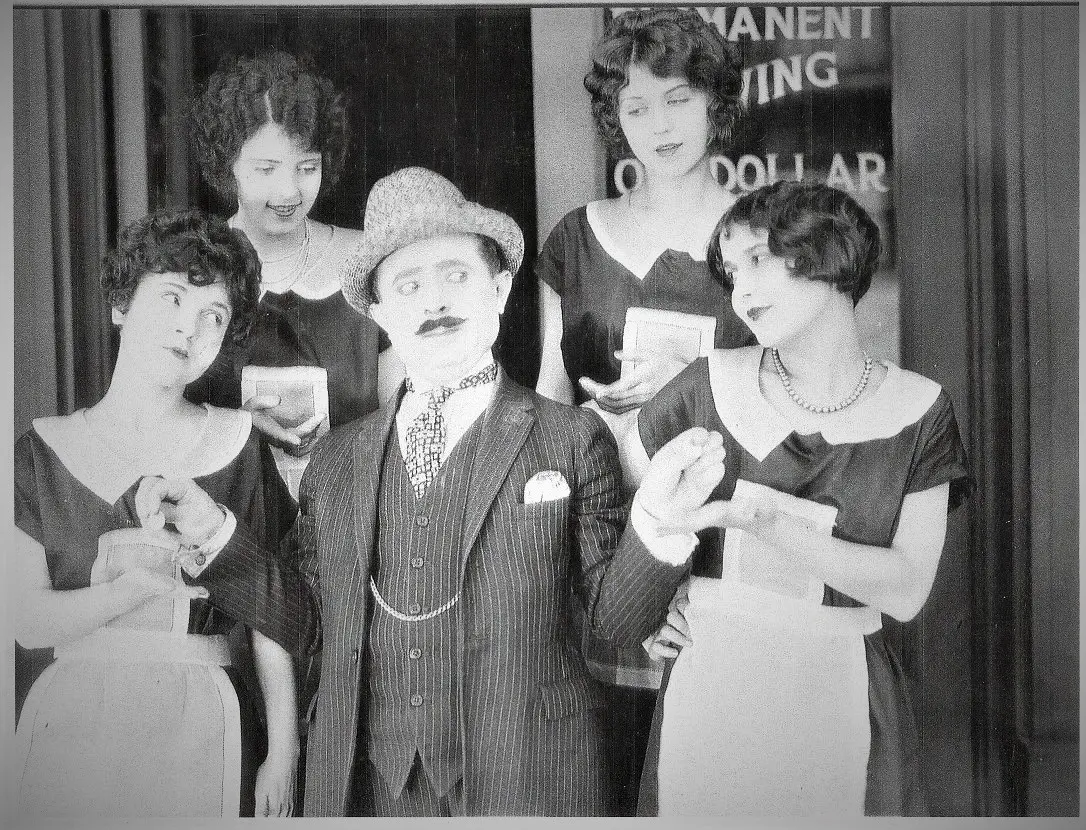
As soon as the letter arrives announcing the rich uncle's death, the boss's demeanor shifts instantly. He sends Charley to a fine tailor and haberdasher, literally dressing up his investment.
This transactional affection is a theme explored in more dramatic contexts in films like Reputation, but here it is played for laughs that have a sharp, jagged edge.
The boss's blackened face after the ink incident is a classic bit of slapstick. It serves as a visual manifestation of his internal ugliness, a trope common in shorts like Hearts and Arts.
The reading of the will introduces one of the most unconventional plot devices in silent comedy: an inheritance based on the weight of the relatives. Each relative receives a dollar for every pound they weigh.
This is a fascinating, if bizarre, commentary on early 20th-century social hierarchy. It literally equates physical mass with financial value, mocking the idea of 'worth' in a literal sense.
Charley, being the 'big fat boob' (as the boss calls him, despite his actual stature), is left with only a cuckoo clock. It is a moment of profound public humiliation that reflects the cruelty of the era's humor.
The secretary’s immediate dismissal of Charley once she realizes he isn't wealthy is brutal. It’s a punchy, unsentimental look at romantic prospects in the 1920s.
Directorially, the film follows the standard grammar of the time. However, the pacing during the tailor shop sequence feels significantly slower than the high-octane office scenes.
The cinematography by the uncredited crew is functional but lacks the experimental shadows seen in Eye for Eye. It remains grounded in the clarity required for physical gags.
The editing is sharpest during the finale. The transition from the tradespeople reclaiming their clothes to Charley’s ultimate discovery in the clock is handled with a kinetic energy that saves the film's third act.
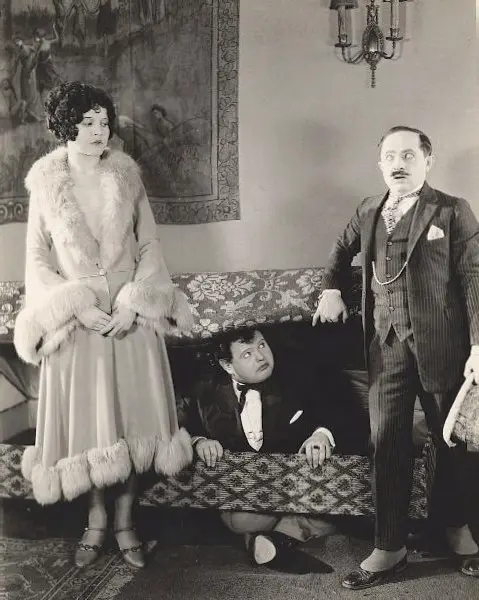
It works. But it’s flawed. The reliance on the 'cuckoo clock' as a deus ex machina feels a bit unearned, yet it provides the catharsis the audience craves.
Is 'Nearly Rich' a lost classic or a dated relic? It is a fascinating artifact that bridges the gap between pure slapstick and early social satire.
The film is worth watching for anyone interested in the evolution of the 'workplace comedy.' It captures a specific American anxiety about status and the fragility of social standing.
While it lacks the emotional depth of something like Tess of the D'Urbervilles, it succeeds in its primary goal: making the audience laugh at the absurdity of the human condition.
Pros:
Cons:
'Nearly Rich' is a loud, chaotic, and ultimately satisfying two-reeler. It doesn't aim for the stars, but it hits its target with the precision of a well-aimed cuckoo clock to the head.
The film captures the essence of 1920s comedic nihilism. Everything is for sale, everyone has a price, and luck is the only thing that truly matters. It is a brutal observation wrapped in a comedy skin.
While it may not have the name recognition of a Keaton or Lloyd feature, it remains a vital piece of the silent era's comedic puzzle. Watch it for the history, stay for the ink-stained boss.
"A sharp-edged relic that proves greed has always been the funniest thing about us."
IMDb —
1915
Community
Log in to comment.