DbcultAccessing Vault...
Cult Review
Senior Film Conservator
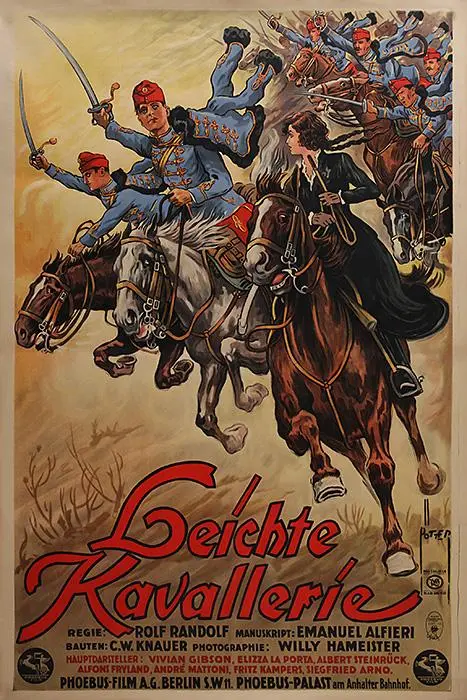
Is Leichte Kavallerie worth watching today? Short answer: yes, but with significant caveats. This film is a fascinating, if sometimes frustrating, window into a bygone era of German silent cinema, best suited for dedicated cinephiles and historians, and decidedly not for those seeking modern pacing or clear narrative resolution.
For those who appreciate the artistry and historical context of early 20th-century filmmaking, its unique charm and technical ambition offer a rewarding, albeit challenging, viewing experience. However, casual audiences accustomed to the narrative conventions and rapid-fire editing of contemporary cinema will likely find its deliberate pace and reliance on visual storytelling an acquired taste.
From its very premise, Leichte Kavallerie beckons viewers into a world of grand theatricality and intense human drama. As a product of the late silent era, it stands as a testament to the sophisticated storytelling techniques developed before the advent of sound changed cinema forever. Its narrative, centered around a traveling troupe, provides a rich backdrop for exploring universal themes of passion, rivalry, and the search for identity amidst the performative.
This film works because of its ambitious visual storytelling and the raw, unadulterated emotive power of its lead performers. The era demanded a particular kind of acting, and the cast delivers with conviction.
This film fails because its narrative can feel fragmented, relying heavily on visual cues and intertitles that, while poetic, sometimes leave critical plot points ambiguous for a modern audience. The pacing, typical of its time, can also feel sluggish.
You should watch it if you possess a genuine curiosity for the evolution of cinema, appreciate the unique acting styles of the silent era, and are willing to engage with a film on its own historical terms.
The directorial hand behind Leichte Kavallerie, while often bold, is unmistakably a product of its time. There’s a palpable effort to push the boundaries of visual narrative, employing dynamic compositions and expressive camera work that belie the technical limitations of the period. The director clearly understood the power of the frame, often using deep focus to layer information or isolating characters in wide shots to emphasize their emotional solitude.
One particularly striking aspect is the use of crowd scenes. Rather than mere background filler, the director orchestrates the extras with a meticulous eye, transforming them into a living, breathing entity that reacts to the central drama. Consider, for instance, a pivotal scene within the circus tent: the camera might sweep across the faces of the audience, capturing their collective awe or gasp, effectively making them an extension of the protagonist’s emotional journey. This kind of nuanced crowd direction, especially in a silent film, is surprisingly effective.
However, this ambition occasionally overreaches, leading to moments where the narrative clarity suffers in favor of visual spectacle. Some sequences, while aesthetically pleasing, feel protracted, hinting at a director still grappling with the nascent language of film editing. It's a fascinating study in the development of cinematic grammar.
The cast of Leichte Kavallerie delivers performances that are, by turns, captivating and occasionally overwrought – a hallmark of silent cinema. André Mattoni, likely in a leading role, embodies a certain melancholic intensity that is deeply compelling. His physicality, from the subtle slump of his shoulders to the sharp, decisive turn of his head, conveys layers of unspoken emotion. There’s a scene where his character grapples with a difficult decision, and Mattoni’s internal struggle is conveyed almost entirely through a series of increasingly agitated hand gestures, culminating in a moment of quiet despair that resonates profoundly.
Elizza La Porta, a prominent figure of the era, brings a vibrant energy to her role, her expressive eyes and animated gestures dominating the screen. Her ability to switch from joyful exuberance to heart-wrenching sorrow within a single sequence speaks volumes of her craft. One particularly memorable moment sees La Porta's character reacting to a betrayal, her initial shock quickly morphing into a blaze of fury, communicated through a rapid succession of close-ups on her face and a dramatic, almost balletic, recoil. It's pure, unadulterated silent film acting.
Yet, the very nature of silent acting, with its reliance on exaggerated expressions and gestures to convey emotion without dialogue, can sometimes feel alien to modern sensibilities. While effective for its time, some supporting performances, particularly those designed for comic relief, can veer into caricature, pulling the viewer out of the more serious dramatic threads. It’s a trade-off inherent to the genre, but one that demands a certain patience from today’s audience.
The cinematography in Leichte Kavallerie is arguably its strongest suit, offering a visual feast that showcases the artistic prowess of the era's camera operators. The film revels in dramatic chiaroscuro lighting, creating stark contrasts between light and shadow that heighten the emotional tenor of many scenes. The interiors of the circus tents, for instance, are bathed in a soft, ethereal glow during performances, only to be plunged into deep, oppressive shadows during moments of private turmoil.
The set design and costuming also contribute significantly to the film's immersive quality. The opulent, yet slightly worn, costumes of the performers speak volumes about their lives – a facade of glamour masking underlying struggles. A particular sequence featuring a grand parade, with its meticulously crafted sets and richly detailed costumes, feels like a living painting. The meticulous attention to detail in these visual elements is a clear indicator of the production's ambition, aiming for a grand spectacle that transcends the limitations of the medium.
However, the sheer visual density, while impressive, can sometimes distract from the narrative. There are moments where the aesthetic seems to take precedence over clarity, leading to scenes that are beautiful to behold but somewhat opaque in their storytelling. It’s a common critique of expressionistic silent films, but here it occasionally feels like a missed opportunity to anchor the narrative more firmly.
The pacing of Leichte Kavallerie is decidedly deliberate, a characteristic feature of silent films that often surprises modern viewers. The narrative unfolds with a stately rhythm, allowing scenes to breathe and emotions to slowly build. This can be incredibly effective, particularly in moments of heightened drama or tender intimacy, where the sustained gaze of the camera allows the audience to truly absorb the emotional weight of a situation.
Consider a scene of a clandestine meeting between lovers: the cuts are long, the camera holds on their faces, allowing the subtle shifts in their expressions to convey their longing and apprehension. This slow burn allows for a deeper emotional connection, provided the viewer is patient enough to engage with it. It’s a stark contrast to the rapid-fire editing prevalent in today’s blockbusters, like The Society Bug or Sweet Daddy, which often prioritize momentum over nuance.
The tone of the film oscillates between grand theatricality and poignant realism. While there are moments of lightheartedness and spectacle, a pervasive sense of melancholia underpins much of the narrative, reflecting the inherent transience of a performer's life and the bittersweet nature of ambition. This tonal complexity is one of the film's strengths, preventing it from becoming a mere spectacle and imbuing it with a deeper emotional resonance. It works. But it’s flawed.
Yes, Leichte Kavallerie is absolutely worth watching for specific audiences.
It offers a unique window into silent German cinema.
Historians and film students will find its techniques fascinating.
Those seeking fast-paced entertainment might struggle.
Its value lies in its historical and artistic merit, not its modern accessibility.
Leichte Kavallerie is a compelling, if imperfect, relic of the silent era. It demands patience and an appreciation for the unique storytelling language of its time, but rewards those who offer it with a rich visual tapestry and powerful, if sometimes theatrical, performances. It is not a film for everyone, nor should it be approached with modern expectations. Instead, it serves as a valuable historical document, showcasing the ambitious artistic spirit that thrived in German cinema during the 1920s, a spirit that would influence countless films, from The Ne'er Do Well to Dangerous Waters. Its flaws are inextricable from its charm, making it a challenging but ultimately enriching experience for the discerning cinephile. To truly appreciate it, one must surrender to its rhythm and accept its visual poetry as the primary mode of communication. It's a journey back in time, and while the path isn't always smooth, the destination is undeniably fascinating.
IMDb —
1920
Community
Log in to comment.