DbcultAccessing Vault...
Cult Review
Senior Film Conservator
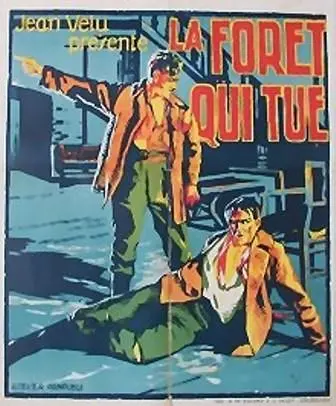
Is La Forêt Qui Tue worth watching today? Short answer: yes, but with significant caveats. This early French cinematic endeavor, an atmospheric and often unsettling plunge into the heart of a malevolent wilderness, offers a fascinating glimpse into the nascent stages of horror cinema. It’s a film for cinephiles, genre historians, and those with a high tolerance for slow burns and ambiguous dread, but it is decidedly not for audiences seeking modern jump scares, rapid pacing, or clearly defined villains.
It works. But it’s flawed. The film’s commitment to its central, terrifying premise — a forest that actively kills — is admirable, yet its execution often stumbles under the weight of its own ambition and the limitations of its era. Nevertheless, its unique vision leaves an indelible, if somewhat murky, impression.
This film works because it dares to personify nature as an antagonist, creating an oppressive, all-encompassing sense of dread that is genuinely unsettling. Its atmosphere is its greatest asset.
This film fails because its narrative can feel meandering and its character development sparse, leaving some viewers detached from the human struggle at its core.
You should watch it if you appreciate early experimental horror, atmospheric tension, and films that challenge traditional storytelling structures, especially if you have a keen interest in the evolution of the genre.
The title, La Forêt Qui Tue, leaves little to the imagination regarding its central conceit: a forest that kills. What it doesn't prepare you for is the sheer, suffocating dread that director Jean Vélu manages to conjure from this simple premise. From the opening frames, there's an immediate sense of unease, a feeling that this isn't merely a backdrop but a character in itself, lurking, watching, waiting. The film establishes its tone with a deliberate, almost hypnotic slowness, allowing the weight of the forest's presence to settle over the audience.
Vélu's direction leans heavily into mood over overt action, a choice that, for some, will be a test of patience, but for others, a masterclass in sustained tension. There are no sudden shocks in the conventional sense. Instead, the horror is a creeping, psychological one, built from the rustling leaves, the sudden snapping of twigs, and the pervasive silence that often follows. It’s a constant, low-frequency hum of danger that never truly dissipates, making every step deeper into the woods feel like a fatal error.
One particularly effective sequence involves a lone explorer, portrayed with admirable vulnerability by Lucien Richez, navigating a particularly dense section of the forest. The camera, often held at a slightly askew angle, seems to mimic the character's growing disorientation, the trees closing in like skeletal fingers. The lack of conventional dialogue (or its early cinema equivalent) forces the viewer to interpret every gesture, every wide-eyed glance, amplifying the sense of isolation and imminent peril. This early example of environmental horror is strikingly effective, even by modern standards, because it taps into a primal fear of the unknown and the unconquerable wild.
Given the film's emphasis on atmosphere, the performances in La Forêt Qui Tue are necessarily broad, relying on exaggerated expressions and physicality to convey internal states. Lucien Richez, as the primary protagonist, carries much of the film's emotional weight. His journey from wary curiosity to abject terror is palpable, even if occasionally melodramatic. Richez’s wide, haunted eyes become a window into the forest’s psychological toll, a silent scream against the encroaching madness.
Georges Melchior, in a supporting role, brings a more stoic, perhaps even cynical, presence to the ensemble. His initial skepticism serves as a useful counterpoint to the growing panic of others, only to be slowly eroded by the forest's relentless assault. This arc, while simple, grounds the more fantastical elements of the plot in a relatable human experience of disbelief giving way to terror. Simone Alma, as a character whose fate is intertwined with the forest's mystique, delivers a performance that is both ethereal and tragic, embodying the alluring danger of the natural world.
However, the limitations of the era's acting styles are evident. Some performances, particularly in moments of extreme distress, can feel overly theatrical, occasionally pulling the viewer out of the immersive dread the film works so hard to build. Robert Bogaert and Mona Simonix, while committed, sometimes struggle to imbue their characters with enough specificity to make their struggles truly resonate beyond their immediate predicament. It's a minor quibble, perhaps, but one that prevents the film from achieving deeper emotional investment in its human elements, choosing instead to prioritize the terror of the environment.
Jean Vélu, credited also as a writer, clearly had a singular vision for La Forêt Qui Tue. His directorial choices are bold and often ahead of their time, particularly in his use of cinematography to personify the forest itself. Vélu doesn't just shoot trees; he frames them as menacing sentinels, their branches reaching, their shadows consuming. The camera often adopts a low, ground-level perspective, making the human characters appear small and vulnerable against the towering, indifferent landscape.
One striking example is a sequence where the camera slowly pans across a dense thicket, lingering on details like twisted roots and gnarled bark, almost as if the forest itself is observing the protagonists. This intelligent use of the frame transforms the setting from mere background to an active participant in the horror. The interplay of light and shadow, especially in the deeper parts of the forest, creates a chiaroscuro effect that amplifies the mystery and danger, reminiscent of early German Expressionist techniques, though perhaps less stylized. Vélu understands that what is hinted at, what remains unseen, can be far more terrifying than any explicit reveal.
Comparatively, while films like The Cyclist might have explored human vulnerability through physical strain, Vélu delves into a more existential dread. His approach to pacing is also noteworthy; he allows scenes to breathe, building suspense through duration rather than rapid cuts. This patient, deliberate rhythm might feel alien to contemporary audiences, but it is integral to the film's unique brand of creeping horror. Vélu's ambition to craft a truly terrifying natural antagonist sets this film apart from many of its contemporaries, even if the execution isn't always polished. It feels less like a conventional narrative and more like an experiential nightmare.
The narrative of La Forêt Qui Tue is, by design, less about a linear plot progression and more about a descent into a nightmarish state. The story, as crafted by Vélu, is intentionally sparse, focusing on the psychological impact of the forest rather than intricate plot twists or character backstories. This minimalist approach allows the environmental threat to take center stage, but it also means that the human drama sometimes feels underdeveloped. Characters enter the forest, they face its dangers, and their fates are decided, often abruptly.
The film's strength lies in its ability to maintain a consistent tone of dread, even when the specific events unfolding are ambiguous. The 'killing' aspect of the forest is often implied rather than overtly shown, leading to an unsettling uncertainty about the exact nature of the threat. Is it supernatural? Is it a metaphor for nature's indifference? Or is it simply a heightened, malevolent reality? This ambiguity is one of the film's most compelling features, forcing the audience to grapple with the unknown.
However, this narrative choice can also be its biggest weakness. For viewers accustomed to clear motivations and resolutions, the film's refusal to provide easy answers can be frustrating. The pacing, while effective for building atmosphere, occasionally drags, particularly in the mid-section where the characters' struggles sometimes feel repetitive without significant narrative progression. One could argue that this repetition is intentional, mirroring the inescapable nature of the forest, but it still tests the audience's engagement. Despite these narrative limitations, the film's central theme of humanity's insignificance against a powerful, indifferent natural world resonates powerfully, even today.
Yes, La Forêt Qui Tue is absolutely worth watching today, especially for those with a specific interest in the evolution of cinematic horror and the art of atmospheric storytelling. It offers a unique, if challenging, viewing experience that stands apart from many genre films of its era. This isn't a film for a casual Friday night, nor is it one to recommend to someone seeking the comfort of conventional narratives. It demands patience and a willingness to engage with its particular brand of slow-burn terror.
The film serves as an important historical artifact, showcasing early attempts to personify environmental threats and explore psychological horror long before such concepts became commonplace. Its influence, though perhaps subtle and unacknowledged in mainstream cinema, can be felt in later works that explore nature as an antagonist. It’s a film that asks you to surrender to its mood, to let the forest envelop you, and to embrace the unsettling quietude it offers.
For those who appreciate the foundational works of cinema and enjoy dissecting the building blocks of genre tropes, La Forêt Qui Tue provides rich material for discussion and analysis. It’s a testament to the power of suggestion and the enduring fear of the untamed wilderness. Don't go in expecting a modern blockbuster, but rather a haunting, historical whisper from the woods.
La Forêt Qui Tue is a fascinating, if imperfect, expedition into the heart of cinematic horror. It’s a film that, despite its age and limitations, manages to craft a genuinely unsettling experience through sheer atmospheric power and a daring central concept. Jean Vélu’s vision of a malevolent wilderness is ambitious, and while the execution occasionally falters with a meandering pace and broad performances, its commitment to dread is unwavering. This isn't a film for everyone; it demands a certain appreciation for the nuances of early cinema and a willingness to embrace ambiguity over explicit scares. Yet, for those who answer its call, it offers a haunting, unique experience that lingers long after the final frame. It's a reminder that some fears are as old as the trees themselves, and just as difficult to escape.

IMDb —
1935
Community
Log in to comment.