DbcultAccessing Vault...
Cult Review
Senior Film Conservator
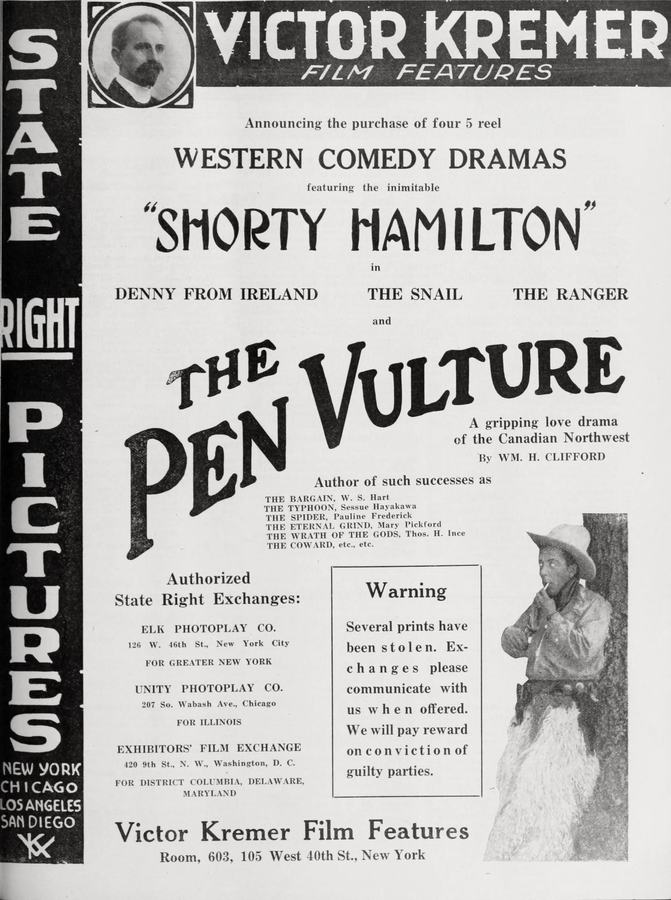
There are certain cinematic artifacts that, even when glimpsed through the hazy lens of time and perhaps a few missing reels, possess an undeniable resonance. 'The Pen Vulture' stands as one such phantom, a silent-era commentary that, were it fully preserved, would undoubtedly be lauded for its audacious exploration of media ethics long before the term became a commonplace academic pursuit. This is not merely a film; it is a trenchant social critique, a moral fable etched onto celluloid, daring to question the very foundations of public discourse and the often-perilous power wielded by the written word. It's a journey into the moral labyrinth where ambition often eclipses integrity, and the pursuit of truth becomes a hazardous undertaking.
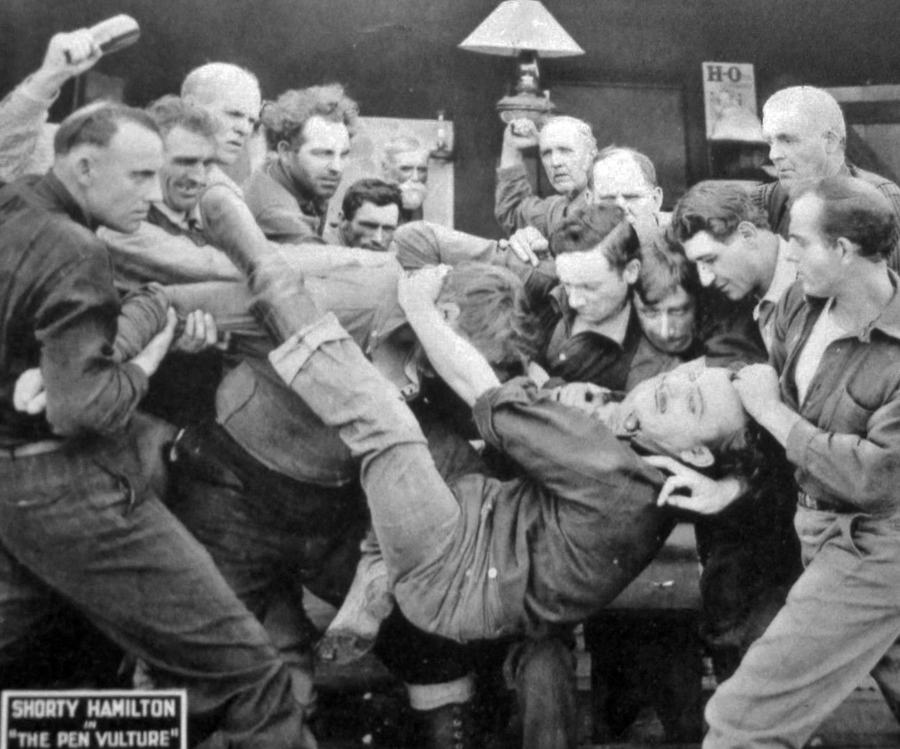
'The Pen Vulture' plunges us headlong into a bustling, turn-of-the-century metropolis, a city ostensibly built on progress and decorum, yet seething with undercurrents of ambition, jealousy, and moral compromise. At its heart lies the enigmatic figure of Silas Thorne, a man whose literary aspirations soured into a corrosive bitterness, transforming him into the titular 'Pen Vulture.' Portrayed with a nuanced menace that hints at deeper psychological wounds, Thorne, in a role that allows Shorty Hamilton to stretch beyond his typical comedic or sidekick fare, embodies the destructive potential of an unchecked press. His column, a venomous fount of innuendo and outright fabrication, serves not as a beacon of truth but as a weapon, systematically tearing down reputations for his own twisted gratification. The film brilliantly captures the era's nascent understanding of media's pervasive influence, demonstrating how a single, well-placed article could shatter a life as effectively as any physical assault. One cannot help but draw parallels to the sensationalist 'yellow journalism' that defined the period, a phenomenon 'The Pen Vulture' dissects with surgical precision, albeit through a fictional lens.
The film's initial dramatic thrust centers on Judge Markham, a character crafted as the epitome of civic virtue, whose distinguished career and spotless reputation make him an irresistible target for Thorne's malevolent pen. The Vulture's insidious campaign begins not with outright accusations, but with subtle, corrosive suggestions, planting seeds of doubt that blossom into public suspicion. This gradual erosion of trust is masterfully depicted, showcasing the insidious nature of character assassination. The audience is invited to witness the slow, agonizing unraveling of a man's life, not through grand gestures or overt villainy, but through the relentless drip-drip-drip of printed lies. It’s a chilling reminder that the most potent weapons are often those wielded in silence, or in this case, through the ubiquitous, unassuming medium of newsprint. The thematic echoes are surprisingly contemporary, resonating with modern discussions about misinformation and the weaponization of information, making 'The Pen Vulture' a surprisingly prescient work.
Enter Elara Markham, brought to vivid life by the expressive Ruth King. Elara is no mere damsel in distress; she is a formidable force of will, a woman whose fierce loyalty to her father propels her into a dangerous quest for justice. King imbues Elara with a compelling blend of vulnerability and steely determination, making her an instantly empathetic and admirable protagonist. Her journey to unmask the anonymous 'Pen Vulture' forms the narrative backbone of the film, transforming it from a mere social commentary into a gripping detective story. We follow Elara as she navigates the city's labyrinthine social strata, from the opulent drawing rooms of the elite to the grittier, shadowed alleys where secrets fester. Each encounter, each subtle clue, builds a mosaic of Thorne's machinations, revealing the far-reaching consequences of his journalistic terror. Her resilience in the face of societal pressure and the formidable, unseen enemy is truly inspiring, a testament to the power of individual courage against systemic malevolence.
Elara's path soon intersects with Arthur Sterling, a young journalist whose own ethical compass remains stubbornly fixed, despite the prevailing winds of sensationalism. Their alliance is forged in a shared disdain for the Vulture's methods and a mutual commitment to journalistic integrity. This dynamic duo offers a refreshing counterpoint to Thorne's cynicism, representing the hope for a more responsible press. Their collaborative investigation, a thrilling cat-and-mouse game against an unseen adversary, is executed with commendable pacing, building suspense through well-placed revelations and close calls. The film subtly suggests that true heroism often lies not in grand, dramatic gestures, but in the quiet, persistent pursuit of truth, even when the odds are stacked against you. The narrative's focus on their combined efforts highlights the importance of collective action in challenging entrenched corruption, a theme that resonates powerfully even today. The tension is palpable as they inch closer to the truth, risking everything to expose the man behind the malevolent pen.
While specific directorial credits are often obscured by the mists of early cinema, the execution of 'The Pen Vulture' speaks to a keen understanding of visual storytelling. The cinematography, even in its surviving fragments, demonstrates an astute use of light and shadow, particularly in depicting Thorne's clandestine activities and Elara's nocturnal investigations. The stark contrasts create a palpable sense of danger and moral ambiguity, enhancing the film's noir-like atmosphere long before the genre was formally recognized. The editing, too, appears deliberate and effective, maintaining a brisk pace that belies the inherent challenges of silent film exposition. The use of intertitles is judicious, never overwhelming the visual narrative but augmenting it with crucial insights into character motivation and plot development. It’s a masterclass in conveying complex ideas through economy of expression, a hallmark of the finest silent cinema.
Shorty Hamilton, stepping into the role of Silas Thorne, delivers a performance that is both chilling and tragically human. He avoids caricaturing the villain, instead imbuing Thorne with a palpable sense of grievance and a warped justification for his actions. This complexity prevents him from becoming a one-dimensional antagonist, instead presenting him as a product of his environment, a man consumed by his own failures and resentments. His silent portrayal, relying heavily on subtle facial expressions and body language, communicates a depth of character that many contemporary actors would struggle to achieve without dialogue. Ruth King, on the other hand, radiates an inner strength and moral clarity that anchors the film. Her expressive eyes convey a spectrum of emotions, from despair to determined hope, making Elara a truly unforgettable heroine. The supporting cast, though perhaps less prominent, provides solid foundations for the central drama, creating a believable and bustling world against which the main conflict unfolds. The chemistry between King and the actor playing Arthur Sterling, though understated, is effective in conveying their shared purpose and growing mutual respect.
Placing 'The Pen Vulture' within the broader tapestry of early cinema reveals its unique contributions. While other films of the era might have focused on more overt criminality, such as the shadowy machinations depicted in The Strangler's Cord, or the raw emotional turmoil found in A Naked Soul, 'The Pen Vulture' boldly tackles the abstract yet devastating crime of character assassination. It's less about physical violence and more about psychological warfare, a battle waged in the court of public opinion. The film's emphasis on exposing corruption from within the media itself offers a more sophisticated critique than many of its contemporaries, which often painted morality in starker, less nuanced shades.
The film's exploration of a woman's agency in seeking justice also sets it apart. Unlike some narratives where female characters are relegated to passive roles, such as the more conventional romantic arcs seen in films like He Fell in Love with His Wife or the societal constraints explored in The Girl from Outside, Elara is a proactive, driving force. Her intellect and courage are the primary engines of the plot, making her a compelling precursor to stronger female characters that would emerge in later decades. This focus on an empowered female protagonist is a subtle yet significant aspect of the film's progressive leanings, reflecting a nascent shift in societal perceptions of women's roles. The film also skirts the overt melodrama sometimes found in films like The Fatal Wedding, opting instead for a more grounded, investigative tension.
Furthermore, 'The Pen Vulture' can be seen as an early cinematic precursor to the muckraking journalism films that would gain prominence later. It shares a thematic kinship with works that sought to expose societal ills, even if its focus is on the *exposers* themselves. The film's concern with the ethical responsibilities of those who shape public perception is a timeless one, a conversation that continues to evolve. While it might not share the overt action of Bare Fists or the expansive scope of The Greatest Thing in Life, its intellectual and moral weight is undeniable. It's a film that asks profound questions about accountability, integrity, and the enduring struggle between truth and sensationalism, questions that remain acutely relevant in our hyper-connected, information-saturated age. Its thematic depth rivals even more overtly dramatic pieces like The Devil-Stone, demonstrating that moral quandaries can be just as gripping as supernatural threats.
The film builds inexorably towards a thrilling climax, where Elara and Arthur, armed with irrefutable evidence, confront Thorne. This confrontation is not merely a physical struggle but a battle of wits and wills, a powerful dramatic crescendo that sees the forces of truth finally triumph over the corrosive influence of lies. The unmasking of the 'Pen Vulture' is handled with suitable dramatic flair, a satisfying resolution that delivers justice without resorting to overly simplistic moralizing. The film understands that the damage done by Thorne's actions, while rectified, leaves lasting scars, a poignant reminder of the fragility of reputation and the enduring impact of malicious intent.
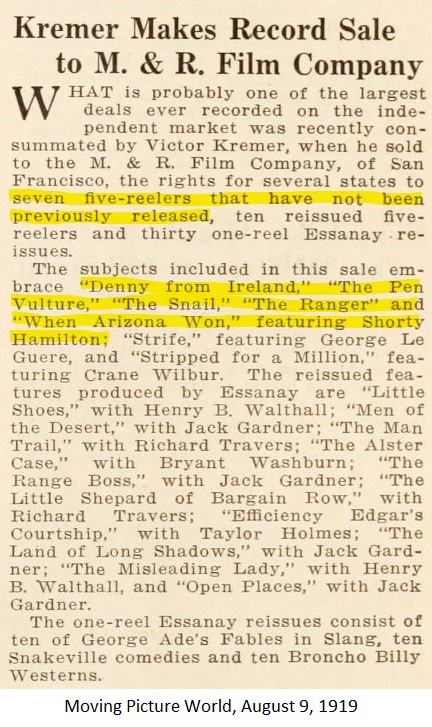
In its ultimate message, 'The Pen Vulture' champions the enduring power of truth and the courage required to defend it. It serves as a potent reminder that while the tools of communication may evolve, the ethical responsibilities of those who wield them remain constant. In an age grappling with 'fake news' and the rapid dissemination of unverified information, this silent film's warnings about the dangers of unchecked media power feel remarkably contemporary. It's a testament to the foresight of its writers, William H. Clifford, and the collaborative artistry of its era, that a film from so long ago can still speak so directly to our present concerns. The film's legacy, even if its complete form remains elusive, is one of profound insight and an unflinching look at the darker side of human nature and the institutions we create. It’s a compelling argument for vigilance, a cinematic call to scrutinize not just the message, but the messenger, ensuring that the pen, indeed, remains mightier than the sword, but only when wielded with integrity and purpose. Its narrative sophistication and thematic depth ensure its place as a crucial, if perhaps underappreciated, piece of cinematic history, inviting comparison to the nuanced character studies found in films like The Man Above the Law or the social justice themes of The District Attorney. It transcends its silent origins to deliver a message that is both timeless and urgently relevant, proving that true artistry, even in its earliest forms, possesses an uncanny ability to pierce through the noise of any era.
IMDb 6.6
1928
Community
Log in to comment.