DbcultAccessing Vault...
Cult Review
Senior Film Conservator
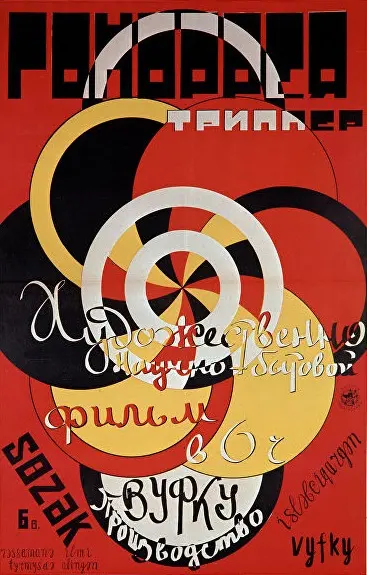
Is 'Gonoreya' worth watching today? Short answer: absolutely, but with a significant caveat. This isn't a film for casual viewing; it's a stark, uncompromising social drama from the 1920s that demands attention and offers a profound, if sometimes uncomfortable, glimpse into a historical public health crisis.
It's a film best suited for cinephiles, historians, and those with a keen interest in early Soviet cinema or social realism, especially students of public health messaging through art. Conversely, if you seek light entertainment, escapism, or polished modern storytelling, 'Gonoreya' is unequivocally not for you. Its raw, often didactic tone and silent film aesthetics require a particular appreciation.
Solomon Furmanov's 'Gonoreya' is more than just a film; it's a historical artifact, a stark societal mirror from a century ago. Released in an era grappling with nascent public health campaigns and the devastating silence surrounding venereal diseases, this silent picture delivers a potent, if at times heavy-handed, message. It’s a film that doesn’t just tell a story; it issues a warning, echoing the anxieties of its time with startling clarity.
The film centers on Ivan, played with a compelling blend of youthful swagger and eventual despair by Ivan Kononenko-Kozelskiy. His journey from carefree factory worker to ostracized victim of syphilis (a common euphemism for various STIs in early cinema, though the title specifies gonorrhea) forms the backbone of a narrative steeped in moral instruction. This isn't subtle filmmaking; it's a blunt instrument wielded with purpose.
Yet, within its didactic framework, 'Gonoreya' manages to excavate genuine human suffering and societal hypocrisy. It forces its audience to confront uncomfortable truths about judgment, compassion, and the often-ignored consequences of personal actions. The film's power lies in its unflinching gaze, a characteristic that makes it both challenging and profoundly rewarding for the discerning viewer.
This film works because of its raw, uncompromising social commentary, delivering a powerful historical document that transcends mere entertainment to become a piece of vital public health discourse. The performances, particularly Kononenko-Kozelskiy's descent, are surprisingly nuanced for the era.
This film fails because its didacticism can occasionally overshadow its dramatic potential, leading to moments that feel more like a lecture than organic storytelling. The pacing, typical of silent cinema, can also test modern audiences' patience.
You should watch it if you appreciate historical cinema, social realism, or want to understand the anxieties and public health efforts of the early 20th century. It's a valuable piece of cinematic history.
The acting in 'Gonoreya' is a fascinating study in silent film dramaturgy. Ivan Kononenko-Kozelskiy, as the unfortunate Ivan, carries the film's emotional weight with remarkable intensity. His initial portrayal of a carefree, slightly arrogant young man is convincing, but it's his gradual physical and emotional deterioration that truly captivates. The subtle changes in his posture, the growing shadows under his eyes, and the increasing desperation in his gestures speak volumes without a single uttered word.
There's a particularly powerful sequence where Ivan attempts to hide his condition from Olga, his respectable love interest. Kononenko-Kozelskiy conveys a palpable sense of shame and fear, his eyes darting, his body language stiff and evasive. This scene, devoid of intertitles, communicates the immense personal cost of his secret more effectively than any dialogue could.
Mikhail Smolenskiy, as Dr. Petrov, provides a steady, authoritative counterpoint. He embodies the scientific, yet empathetic, voice of reason, a beacon of hope against the prevailing ignorance and moral panic. His interactions with Ivan, though brief, are impactful, portraying a doctor genuinely invested in his patient's well-being, even amidst the societal condemnation. This nuanced portrayal elevates Dr. Petrov beyond a mere plot device, making him a truly memorable character.
Aleksei Kharlamov, playing Ivan's loyal friend Sergei, offers a glimpse into unconditional friendship. His quiet concern and attempts to support Ivan, even when others turn away, highlight the film's exploration of human connection amidst adversity. Nikolai Nademsky, as Elder Morozov, perfectly embodies the rigid, judgmental societal forces at play, his stern gaze and disapproving gestures serving as a constant reminder of Ivan's pariah status. The ensemble, though constrained by the stylistic conventions of silent cinema, manages to breathe life into their archetypal roles.
Solomon Furmanov's direction is stark, direct, and unmistakably purposeful. He employs a visual language that prioritizes clarity of message over stylistic flourish, a common trait in films designed for social impact. The camera often lingers on faces, capturing the raw emotion of the actors, a technique that maximizes the expressive power of silent film performance.
There’s a deliberate use of contrast throughout the film. Early scenes depicting the bustling, vibrant factory and lively urban streets quickly give way to more claustrophobic, dimly lit interiors as Ivan's condition worsens. This visual shift effectively mirrors Ivan's internal state and growing isolation. Furmanov understands the power of framing to convey meaning; an overhead shot of Ivan alone in a vast, empty room subtly underscores his profound loneliness.
One particularly striking directorial choice is the recurring motif of public health posters or pamphlets integrated into the narrative. These aren't just background elements; they become almost characters in themselves, silently reinforcing the film's educational agenda. While some might find this heavy-handed, it's a fascinating example of early cinematic propaganda, showcasing how film was harnessed as a tool for societal change.
Furmanov’s vision for 'Gonoreya' is undeniably ambitious. He doesn't shy away from the ugliness of the disease or the severity of societal reaction, presenting a narrative that is both educational and emotionally resonant. His pacing, while slow by modern standards, allows the audience to fully absorb Ivan's tragic journey, building a sense of dread and inevitability that is genuinely unsettling.
The cinematography in 'Gonoreya' is typical of its era, yet effective in its simplicity. The use of natural light and stark contrasts helps to convey the somber mood of the narrative. Shots are often static, allowing the actors' expressions and body language to carry the dramatic weight, but there are moments of surprising dynamism.
Consider the scene where Ivan, in a moment of desperate denial, attempts to dance and socialize despite his pain. The camera, through a series of quick cuts and slightly off-kilter angles, conveys his internal turmoil and the facade he's struggling to maintain. This brief burst of energy quickly dissipates, returning to longer, more contemplative shots that highlight his eventual collapse. The film doesn't rely on elaborate camera movements, but rather on the strategic placement of the camera to emphasize character and theme.
The use of shadows is particularly noteworthy. As Ivan's condition progresses, the lighting becomes harsher, casting deeper shadows that visually represent his descent into darkness and isolation. This visual metaphor, while simple, is incredibly potent, particularly in the film's climactic sequences. The film effectively uses its black and white palette to evoke a sense of stark realism, enhancing the gravity of its subject matter.
The pacing of 'Gonoreya' is deliberate, a slow and steady march towards Ivan's inevitable fate. This isn't a film that rushes its narrative; it takes its time to establish characters, build tension, and allow the audience to witness the gradual unraveling of Ivan's life. While this might feel slow to contemporary viewers accustomed to rapid-fire editing, it's essential to the film's immersive quality.
The tone is overwhelmingly somber and cautionary, yet punctuated by moments of genuine human interaction – the camaraderie of the factory workers, the initial tenderness of Ivan's courtship with Olga, the steadfast loyalty of Sergei. These fleeting glimpses of normalcy serve to heighten the tragedy of Ivan's downfall, emphasizing what he has lost and what he stands to lose.
There's an undeniable undercurrent of moralizing, a characteristic common to many social dramas of the era. The film doesn't shy away from depicting the harsh consequences of Ivan's actions, nor does it soften the societal judgment he faces. This unflinching honesty, while potentially off-putting to some, is precisely what gives the film its enduring power as a historical document and a piece of social commentary.
Perhaps the most striking and unconventional observation about 'Gonoreya' is how its silence amplifies its message. In an age of constant sonic input, the absence of spoken dialogue forces a different kind of engagement. Every gesture, every facial expression, every intertitle becomes imbued with amplified meaning.
The film's silent nature also allows for a universal interpretation of its themes. While rooted in a specific time and place (early Soviet Russia), the core human experiences of shame, fear, social ostracization, and the search for help transcend language barriers. This makes 'Gonoreya' surprisingly accessible, even a century later, to audiences willing to engage with its unique form.
It's a brutal film. It works. But it’s flawed. The lack of a nuanced female perspective, particularly regarding the source of infection or Olga's reaction beyond a simple rejection, feels like a missed opportunity to explore the broader implications of the disease on women in that era.
'Gonoreya' is not an easy watch, nor is it meant to be. It is a demanding piece of cinema that operates less as pure entertainment and more as a historical document and a powerful social statement. Solomon Furmanov's film is a testament to the early power of cinema to educate, to warn, and to confront uncomfortable truths. While its didactic nature and silent film conventions may prove challenging for some, its raw honesty and the compelling central performance by Ivan Kononenko-Kozelskiy make it an essential viewing experience for those interested in the intersections of film, history, and public health.
It’s a film that resonates not just for its historical context but for its timeless exploration of human frailty, societal judgment, and the desperate search for redemption. Much like Ingeborg Holm, which explored social welfare issues, 'Gonoreya' solidifies its place as a significant, albeit niche, work in the canon of early social realism. It stands as a stark reminder of how far we've come in public health, and how some human struggles remain eternal. This is a film that deserves to be seen, studied, and discussed, even if it leaves you with a lingering sense of unease.

IMDb 6.8
1929
Community
Log in to comment.