DbcultAccessing Vault...
5.2/10
Senior Film Conservator
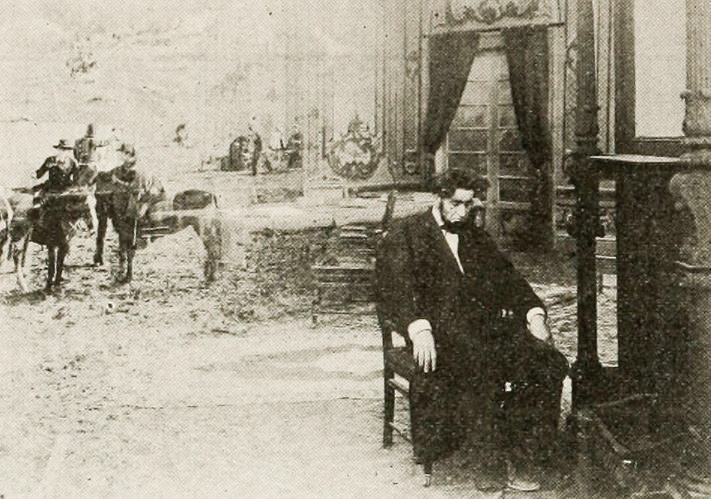
A definitive 5.2/10 rating for a film that redefined the boundaries of cult cinema. The Heart of Lincoln remains a cornerstone of transgressive art.
Step right up, fellow cinephiles, and prepare to journey back to an era when flickering images on a silver screen could stir the deepest human emotions without a single spoken word. Today, we’re unearthing a true gem from the vaults of cinematic history: The Heart of Lincoln. This isn’t just a film; it’s a poignant historical artifact, a silent testament to the enduring power of narrative, and a profound exploration of morality amidst the brutal crucible of war. Directed by Francis Ford, and penned with a nuanced hand by Grace Cunard, this 1915 drama captures the agonizing personal costs of the American Civil War with remarkable clarity and emotional depth.
At its core, The Heart of Lincoln masterfully weaves a narrative that forces its characters, and by extension, its audience, to grapple with an unbearable moral dilemma. We are introduced to a young man, a protagonist whose name, though unvoiced, resonates with the silent anguish of a nation torn asunder. He is a steadfast Union soldier, committed to the cause of preserving the fractured republic. Yet, the war's tendrils of division reach into his most intimate relationships, as his sweetheart's brother, in a cruel twist of fate, dons the grey uniform of the Confederacy. This immediate setup establishes a powerful, almost Shakespearean conflict, where personal loyalties clash violently with national allegiances.
The narrative escalates rapidly, plunging us into the chaos of battle. It’s here, amidst the smoke and fury, that the two men—one fighting for the Union, the other for the Confederacy—are thrust into a direct, harrowing encounter. The Confederate brother is captured, brought before the very Union officer who holds his sister’s heart. Imagine the crushing weight of that moment: the recognition, the surge of familial connection, the stark reality of their opposing uniforms. Lew Short, as the conflicted Union officer, delivers a performance that, even in its silent grandeur, conveys a maelstrom of internal struggle. His eyes, his posture, the subtle tremor of his hands – every gesture becomes a window into a soul ripped between military duty and personal compassion.
What transpires next is the film’s central, most agonizing pivot. The Union officer, driven by a profound surge of empathy, or perhaps a desperate plea from his own conscience, allows his sweetheart's brother to escape. This act of mercy, born of a deeply personal connection, is immediately perceived as an unforgivable betrayal by the unforgiving machinery of war. He is apprehended, tried for treason, and, as the grim wheels of justice turn, convicted and sentenced to hang. The sheer audacity of this narrative choice, particularly for its time, is remarkable. It doesn't shy away from the brutal consequences of humanizing the enemy, even when that 'enemy' is family.
And so, the stage is set for the ultimate moral reckoning, one that elevates the film beyond a mere wartime drama to a meditation on the very essence of leadership and justice. The young officer’s fate rests in the hands of President Abraham Lincoln himself. All that remains is for the iconic leader to affix his signature to the death warrant, a seemingly simple act that carries the crushing weight of a nation’s ideals, a soldier’s life, and the very definition of mercy. Elmer Morrow's portrayal of Lincoln, though perhaps brief, is imbued with the solemn gravitas befitting the historical figure. It’s less about a physical resemblance and more about capturing the spirit of a man constantly wrestling with the immense responsibilities of his office.
The title itself, The Heart of Lincoln, is a stroke of genius. It doesn't merely refer to the President's physical presence but rather to his moral compass, his capacity for empathy, and his agonizing decisions that shaped a nascent nation. The film asks us to ponder: what does it mean to be a leader when the law demands one thing, and the human spirit cries for another? It’s a question that transcends the Civil War setting, resonating through every era where justice and compassion find themselves at odds.
In an age before synchronized sound, the power of performance rested entirely on the actors' ability to convey complex emotions through facial expressions, body language, and pantomime. The cast of The Heart of Lincoln rises to this challenge admirably. Lew Short, in the pivotal role of the Union officer, carries the emotional weight of the film with remarkable gravitas. His internal conflict, the agony of his choice, and the despair of his impending doom are all eloquently articulated without a single spoken word. It’s a masterclass in silent film acting, where every flicker of an eye, every clench of a jaw, tells a story.
Francis Ford, who also directed, takes on a significant role, though details of his specific character are less prominent in the plot summary. However, his presence undoubtedly lends a certain authority and experienced hand to the production. William Quinn and Elmer Morrow, too, contribute to the ensemble, grounding the narrative in believable human reactions. But it is Grace Cunard, the film’s writer, who truly shines. Not only did she craft this intricate and emotionally resonant narrative, but her on-screen presence, likely as the sweetheart caught between her lover and her brother, would have undoubtedly added layers of heartbreaking pathos. Cunard was a prolific and influential figure in early cinema, often credited with pushing boundaries and creating strong female characters, and her touch is evident in the profound emotional core of this story. Her ability to sculpt such a compelling narrative, one that hinges on moral ambiguity and presidential mercy, speaks volumes about her talent as a storyteller.
Grace Cunard's contribution to The Heart of Lincoln cannot be overstated. As the sole credited writer, she crafted a narrative that, while ostensibly a Civil War drama, transcends its genre to become a universal tale of human dilemma. Cunard, often celebrated for her work as an actress and director, demonstrates here her profound understanding of dramatic structure and character motivation. She understood that even in the grand sweep of historical conflict, it is the individual's struggle that truly captivates. Her screenplay doesn't merely recount events; it delves into the psychological toll of war, the impossible choices it forces upon ordinary people, and the enduring power of compassion.
Consider the narrative arc: a simple act of mercy, born of kinship, spirals into a charge of treason. This intricate plotting, demanding a resolution from the highest office, showcases Cunard's skill in escalating stakes and creating profound tension. Her writing imbues the story with a sense of moral urgency, making the audience keenly feel the weight of the Union officer's predicament and the immense burden placed upon Lincoln. This depth of storytelling sets The Heart of Lincoln apart from many contemporaneous films that might have opted for simpler heroics or more straightforward patriotic messaging. Cunard dared to explore the grey areas, the human cost, and the complexities of justice.
While the cinematic techniques of 1915 might seem rudimentary by today's standards, The Heart of Lincoln likely employed the visual language of its time with great effect. Intertitles would have conveyed crucial dialogue and exposition, guiding the audience through the narrative. The director, Francis Ford, would have relied on strong compositions, evocative lighting (where possible), and the expressive power of his actors to tell the story. The pacing, often slower than modern films, would have allowed audiences to absorb the emotional weight of each scene, building suspense towards the inevitable confrontation with Lincoln.
The film's impact lies not just in its plot, but in its ability to evoke profound questions about loyalty, duty, and humanity. It reminds us that war, while fought on grand battlefields, ultimately plays out in the hearts and minds of individuals. The Union officer's act of mercy, however costly, challenges the very notion of 'enemy' and highlights the enduring ties that bind us, even across ideological divides. This theme of personal sacrifice for a greater, or perhaps more humane, good can be seen echoed in other films of the era, such as Sam Davis, the Hero of Tennessee, which also explored the moral complexities of Civil War heroism and tragic choices. Both films, in their own ways, grapple with the profound costs of conviction and the agonizing decisions individuals face when caught in the maelstrom of conflict.
The Civil War remained a potent subject for filmmakers for decades after its conclusion, offering rich dramatic possibilities for exploring themes of division, reconciliation, heroism, and the human condition. The Heart of Lincoln stands as an early, impactful example of this tradition. It doesn't glorify war; instead, it exposes its devastating personal toll. The film’s focus on Lincoln’s ultimate decision elevates it from a mere melodrama to a historical commentary on the nature of executive power and the moral responsibilities that accompany it.
The questions it poses are timeless: Can mercy exist within the rigid confines of military law? What is the true meaning of treason when one's heart is torn between conflicting loyalties? These are not easy answers, and the film, through its silent yet powerful narrative, compels us to confront them. This moral ambiguity is a hallmark of truly great storytelling, distinguishing it from simpler narratives like Reporter Jimmie Intervenes, which might focus more on straightforward good-versus-evil scenarios, or even romantic comedies like Young Romance, where the stakes are entirely different.
The film’s exploration of justice and its potential inflexibility also brings to mind other dramas of the era that grappled with legal and ethical quandaries. One might draw thematic parallels to films like The Scales of Justice, which, as its title suggests, directly confronts the machinery of the legal system, or even Divorced, which, while focusing on marital law, still delves into the personal anguish caused by legal decrees. However, The Heart of Lincoln adds the unique layer of wartime exigency, amplifying the moral stakes to an almost unbearable degree.
In conclusion, The Heart of Lincoln is far more than a historical curiosity. It is a powerful, emotionally charged drama that speaks to the timeless conflicts of duty versus compassion, law versus mercy, and the devastating personal toll of war. Grace Cunard’s masterful writing, combined with the compelling performances of Lew Short, Francis Ford, William Quinn, and Elmer Morrow, creates a cinematic experience that, even in its silence, resonates with profound intensity. It’s a stark reminder of the human element at the heart of every conflict and the immense burden placed upon those who must make impossible decisions.
This film, like a faded photograph, offers a window into the past, not just of early cinema, but of a nation grappling with its own identity and the enduring questions of justice and humanity. It compels us to reflect on the nature of leadership and the profound impact of a single signature. For anyone interested in the evolution of dramatic storytelling, the history of the Civil War on screen, or simply a deeply moving human story, The Heart of Lincoln is an essential viewing experience. Its quiet power echoes across the decades, proving that some stories, told with genuine heart, never truly fade.
While comparisons to films like Marc-Antonio e Cleopatra or The Royal Imposter might highlight different facets of historical drama or identity, The Heart of Lincoln distinguishes itself through its intimate focus on an individual's moral crucible within a pivotal national conflict. It’s a testament to the fact that even without grand spectacles, profound human drama can captivate and challenge its audience. The quiet heroism and tragic sacrifice explored here are far more impactful than the more straightforward narratives seen in films such as Ten Nights in a Barroom, which, while socially conscious, operates on a different emotional register. The Heart of Lincoln remains a powerful, often overlooked, piece of cinematic heritage, richly deserving of renewed attention.
IMDb 6.3
1931
Community
Log in to comment.