DbcultAccessing Vault...
Cult Review
Senior Film Conservator
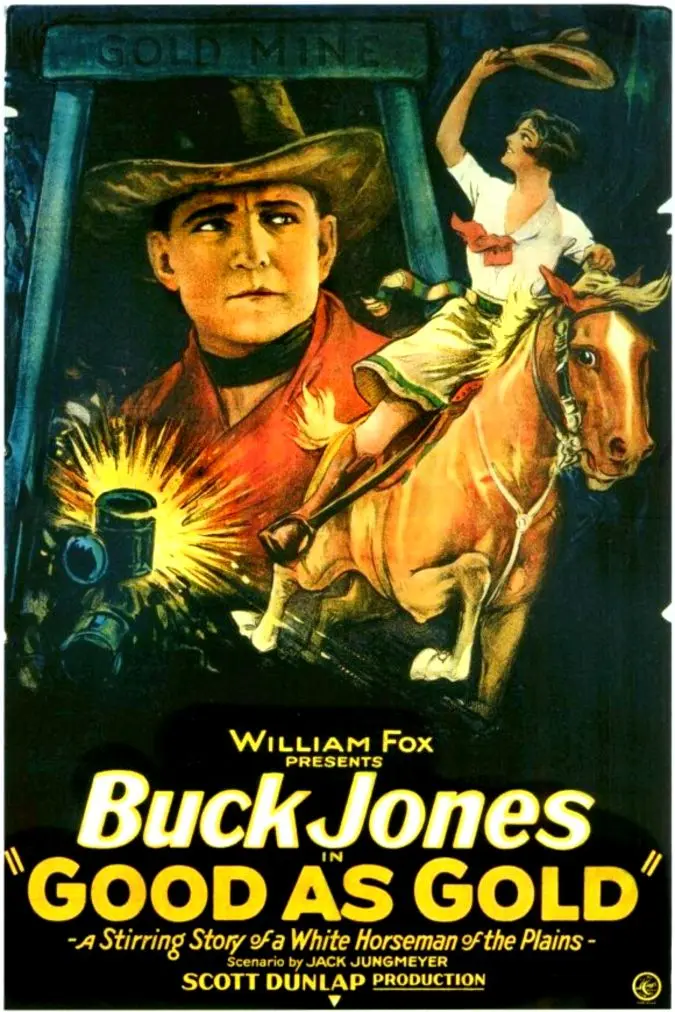
Is Good as Gold a film you should track down today? Short answer: yes, but only if you value visceral, high-stakes stunt work over complex narrative layering. This film is a prime artifact for those who enjoy the transition from the traditional horse-and-saddle Western to the more modern, mechanized action of the late 1920s. It is not for viewers who demand a nuanced exploration of morality or those who cannot look past the broad-strokes characterization typical of the silent era.
1) This film works because Buck Jones possesses a rugged, physical screen presence that makes the outlaw-to-hero pipeline feel earned rather than scripted. 2) This film fails because the romantic subplot involving Janet Laurier relies on a series of coincidences so thin they threaten to break the viewer's immersion. 3) You should watch it if you want to see the exact moment the Western genre realized that cars were just as dangerous as horses.
Yes, Good as Gold is a highly effective piece of genre filmmaking. It prioritizes movement and physical conflict over dialogue-heavy exposition. While the plot is a standard revenge tale, the execution of the action sequences—particularly the final fight—remains impressive nearly a century later. It serves as a bridge between the rustic charm of earlier Westerns and the high-octane thrills of the coming sound era.
Buck Jones wasn't just a cowboy; he was a force of nature. In Good as Gold, he plays Buck Brady with a simmering resentment that feels more modern than many of his contemporaries' performances. Unlike the polished, almost theatrical heroism found in The Rag Man, Jones brings a grit that suggests his character has actually spent nights sleeping in the dirt. When he robs the payroll messengers, there is no flourish. It is a business transaction of vengeance.
Take, for instance, the scene where Buck first observes the mine from a distance. The way the camera captures his silhouette against the rugged terrain emphasizes his isolation. He isn't part of the town; he is a ghost haunting the industry that killed his father’s dreams. This isn't just acting; it's iconography. Jones understands that in a silent film, your posture tells the story. His shoulders are heavy with the past, yet his movements are explosive when the action starts.
The physicality here is a stark contrast to the more melodramatic tone of films like The Man from Hell's River. While that film relied on the atmosphere of the North, Good as Gold relies on the sheer velocity of its lead actor. Jones does his own stunts, and it shows. There is a texture to the dust and a weight to the punches that you simply don't get in modern, CGI-heavy spectacles. It works. But it’s flawed.
The film stumbles when it tries to force a heart into a body that only wants to fight. The introduction of Janet Laurier (played with enough charm by Frances Lee) feels like a mandate from the studio rather than a natural progression of the story. The "meet-cute" between an outlaw and the woman who unknowingly owns his stolen birthright is a trope that was already tired by 1927. It’s a narrative shortcut that robs the film of its darker, more interesting potential.
I found myself wishing the film had stayed in the shadows of the mine. The tension between Buck and the crooked foreman, Tilford, is far more compelling than the flirtatious glances exchanged in the second act. Tilford represents the industrial corruption that the Western genre often struggled to reconcile. He isn't just a bad guy; he's a middle manager with a killer instinct. This dynamic is handled with much more nuance than the romantic entanglement, which feels like it belongs in a different movie entirely, perhaps something closer to Mile-a-Minute Romeo.
However, the romance serves one crucial purpose: it raises the stakes for the climax. Without Janet, Buck is just a man fighting for money. With her, he’s fighting for the future. It’s a sentimental pivot that works on a basic level, even if it feels intellectually cheap. The film doesn't care about your logic; it cares about your pulse.
Director Jack Jungmeyer, working from a story by the prolific Murray Leinster, understands pacing. The film doesn't linger on scenery. It uses the camera to track movement. The cinematography during the payroll robberies uses wide angles to show the scale of the pursuit, but the camera tightens significantly when the conflict becomes personal. This shift in perspective is subtle but effective in keeping the audience anchored to Buck’s emotional state.
The real star of the show, however, is the final sequence. The fight on the moving car is a masterclass in silent action. In an era before safety harnesses and green screens, the sight of two men brawling on a vehicle as it nears the edge of a cliff is genuinely terrifying. There is no trick photography here. When that car goes over the edge, you feel the impact. It’s a brutal, simple, and effective ending that justifies the hour of buildup.
"The car stunt in Good as Gold isn't just a gimmick; it's a declaration that the Western had moved beyond the horse and into the terrifying speed of the 20th century."
Comparing this to the stage-bound dramas of the time, such as Exit the Vamp, highlights just how progressive the location work in Good as Gold actually was. The dust is real, the danger is palpable, and the payoff is immense. This is filmmaking at its most primal.
Pros:
- Buck Jones delivers a powerful, physical performance.
- Exceptional location shooting that captures the scale of the West.
- A climax that still delivers a genuine adrenaline rush.
- Concise runtime that respects the viewer's time.
Cons:
- The "coincidence" of meeting the mine owner is hard to swallow.
- Character depth for the supporting cast is virtually non-existent.
- Some of the early mine scenes suffer from poor interior lighting.
Good as Gold is a lean, mean, and surprisingly modern actioner. It doesn't waste time with philosophical musings on the nature of theft or legacy; it simply shows you a man who wants his due and is willing to drive off a cliff to get it. While the romance is a bit of a slog, the surrounding action is so well-executed that it’s easy to forgive. If you want to understand why Buck Jones was a superstar, this is the film to watch. It’s not a deep film, but it is a visceral one. And sometimes, that’s exactly what cinema should be. It’s raw. It’s fast. It’s worth the ride.
IMDb 6.2
1935
Community
Log in to comment.