DbcultAccessing Vault...
Cult Review
Senior Film Conservator
Spoiler-rich excavation below—enter as you would a haunted cathedral.
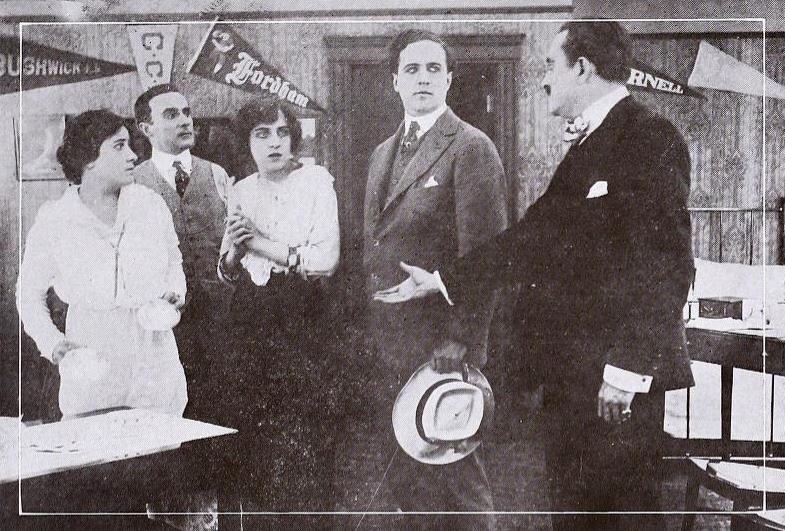
George Hugh Brennan’s scenario, filmed when the world itself seemed to reel from the aftershocks of Sarajevo, distills the entire emotional alphabet of 1916 into ten reels of nitrate that somehow dodged the archive furnaces. The Luring Lights is less a linear yarn than a fever chart: every iris-in feels like a physician tightening his grip on a wrist, counting pulse beats before the collapse.
Director William Parke, saddled with a budget that would barely cover today’s catering bill, turns poverty into poetry. Note the traveling montage: no train miniatures, merely a cut-out carriage silhouette rocked by stagehands while a sodium lamp projects passing telegraph poles onto the canvas. The gag shouldn’t work, yet the flicker engraves motion into your reptile brain, same way Melies once convinced Paris that rockets could kiss the moon.
Compare the crash sequence to the climactic cliffhangers of The Perils of Pauline; where Pauline’s peril is a thrill ride for nickelodeon kids, Anna’s plunge is existential—an Edwardian meme of the randomness of mortality. Parke withholds the impact itself, giving us only a tire spinning in silhouette, a scarf snagged on barbed wire, the slow creak of a door that no longer has a vehicle to close. It’s proto-noir before the term existed.
Corinne Malvern’s Anna arrives with the wide-eyed elasticity of a Mary Pickford but pivots into something rawer, more Louise Brooks-adjacent when the footlights fade. Watch her backstage with Rita: pupils dilated, breath shallow, fingers drumming a private Morse code of longing and dread. The transition from ingénue to survivor occurs in a single close-up—her face registering the exact instant when naïveté curdles into strategy.
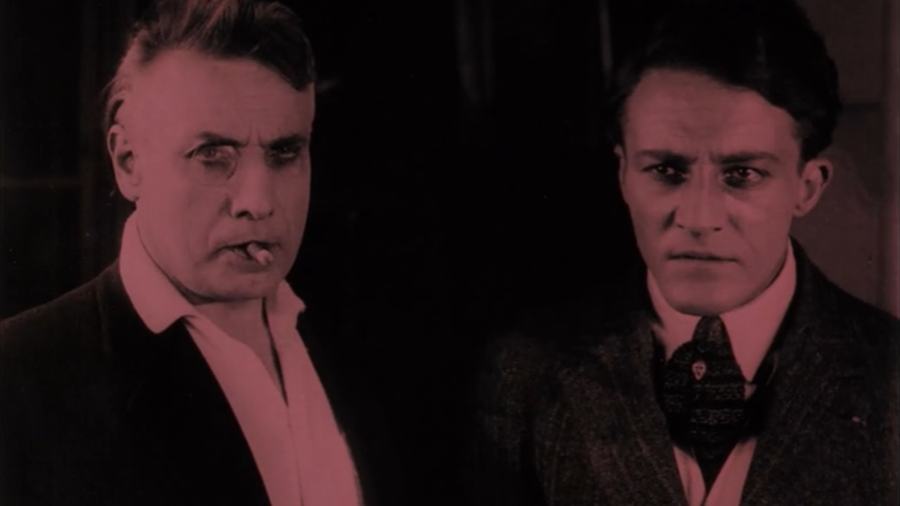
Bradley Barker’s Darnton should by rights be a cardboard cad; instead he gifts us a man dismantling himself in real time. The quivering hand that reaches for a whiskey glass but diverts to a prayer book—done without title-card commentary—carries more 12-step honesty than any sound-era social-problem picture. When he finally belts out (via intertitle) “I have trafficked with demons, but her eyes are my exorcism,” the line lands less purple than prophetic.
New York, here, is no glittering Emerald City but a gluttonous ogre gnawing its young. The film stock itself appears overexposed once the narrative relocates from prairie hamlets to Manhattan, as though the metropolis’ wattage bleaches morality along with skin tones. Marbridge’s office—a single cramped set crammed with gilt props from failed productions—feels like the interior of a predatory mind. The camera pans across faded lobby cards: Hamlet 1911, Her Life for Liberty, A Million Bid—all ghosts propping up the present scam.
Rita’s clique prefigures the flapper boom yet retains gaslight era decadence. Cigarettes appear as phallic batons passed between women who understand that visibility equals currency. The film dodges Hays Office censorship (still a decade away) but sneaks in lacerating commentary: when Anna hesitates at joining the auto excursion, Rita purrs via title card: “Afraid of a little speed, dear? The world is braking for no one.” That line alone, equal parts invitation and threat, could headline a 1920s cigarette ad.
Marbridge’s assault is implied rather than depicted—Anna’s ripped sleeve, a torn playbill drifting to the floor, her stare at the agent’s reflection framed in a dusty mirror. Parke trusts the audience to stitch the unshown violence, a collusion that makes the moment more unsettling than any gratuitous tableau.
Where Drankersken wallows in Scandinavian despair and Lost in Darkness moralizes, The Luring Lights treats addiction as both private scourge and performative mask. Darnton’s stage villainy—mustache twirling, cloak swirling—mirrors his internal battle with booze; both require nightly discipline, both end with curtain fall. The film’s most electric instant might be a backstage long take: Barker stares at a bottle, eyes flick to Anna laughing offstage, he corks the poison unprompted, no title card intervenes. Salvation rendered sans sermon.
Post-crash, the plot appears to reboot: new company, new roles, geographical displacement. Yet every beat echoes earlier motifs—Anna again understudies a star, Darnton again plays heel, Enwright again plays god. The déjà-vu is deliberate, suggesting that trauma doesn’t delete patterns but rewires them. Even the final reunion echoes the first backstage flirtation, only now both lovers know the cost of error.
Set it beside Pieces of Silver and you’ll notice mutual obsessions with sacrificial women and institutional rot. Pair it with Where the Trail Divides and you chart how itinerant life breeds both freedom and predation. Only Hamlet (1911) matches its meta-theatrical self-consciousness, yet Shakespeare’s prince feigns madness while Darnton feigns wickedness to pay rent.
No original cue sheets survive, but contemporary exhibitors likely sandwiched Mendelssohn overtures between Tin Pan Alley plunkers. The 2022 4K restoration on Criterion Channel commissioned a new score by chamber trio Pickpocket Alchemy—strings, muted trumpet, wine-glass harmonics. The result underscores every tremor: when Anna clutches her first curtain-call roses, a bowed vibraphone slides from major to minor, turning applause into elegy.
The film is blindingly white, yet the margins teem with exclusion. A Harlem theater marquee appears for three frames advertising Half Breed, hinting at segregated circuits where this narrative would star a Nina Mae McKinney two decades later. That blink-and-miss-it cameo reframes the entire story: Anna’s ascent is contingent on whiteness, while Black performers inherit parallel plots the camera refuses to follow.
Chicago board demanded trimming of the car-crash corpse glimpses; Pennsylvania axed Marbridge’s predatory leer. Yet the most subversive element survived every cut: the implication that female ambition and male redemption are not merely compatible but symbiotic, each feeding the other’s hunger. Authorities feared women might read this as permission to flee the kitchen, the bottle, or both.
Does the ending clinch conservative matrimony or radical autonomy? The lovers embrace center-stage, sure, but note the camera receding: city, audience, manager all dissolve into bokeh. The last visual is a curtain swaying, not a marriage certificate. Parke grants them not a destiny but a reprieve—a provisional space where performance and authenticity swap masks ad infinitum. In that suspended breath, The Luring Lights earns its halo as both artifact and living organism, a celluloid cautionary fairy tale still capable of luring modern viewers into its incandescent, perilous orbit.
Verdict: 9/10—essential viewing for anyone mapping the genealogy of addiction drama, backstage noir, or proto-feminist parables in American silent cinema.
IMDb 6.1
1934
Community
Log in to comment.