DbcultAccessing Vault...
Cult Review
Senior Film Conservator
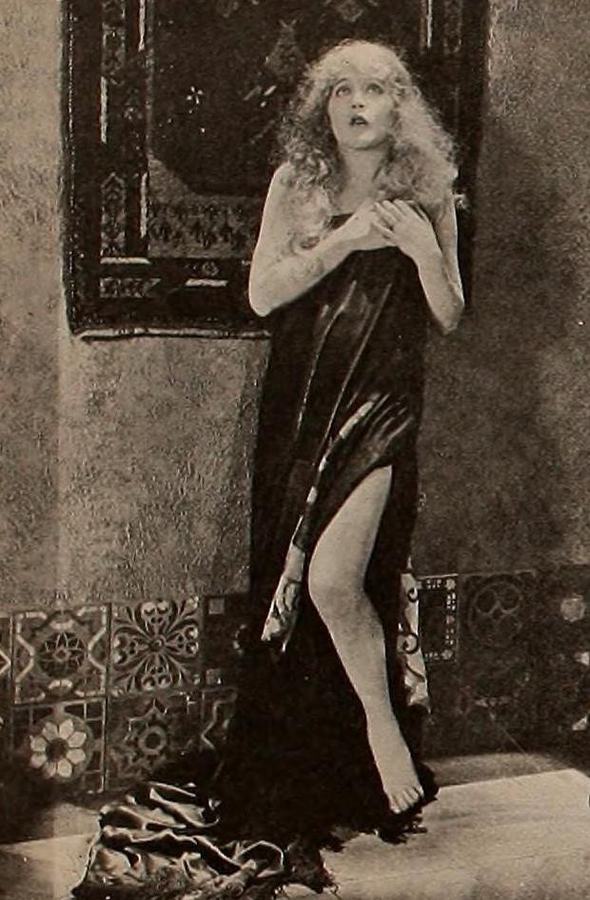
The year 1918 remains a pivotal meridian in the history of the moving image, a time when the grammar of cinema was shedding its primitive skin and adopting a more sophisticated, psychological vernacular. Amidst this transformation, Modern Love emerges not merely as a relic of the silent era but as a startlingly prescient examination of the performative nature of intimacy. Directed by Robert Z. Leonard and co-written by the luminescent Mae Murray, this film serves as a crucible for exploring the friction between public persona and private desperation. While contemporary audiences might initially perceive the silent medium as a series of pantomimed exaggerations, Modern Love demands a more nuanced reading, one that acknowledges the subtle interplay of shadow, gesture, and the burgeoning 'star system' that Murray so expertly navigated.
At the heart of the narrative are Della and Julian, portrayals that demand a dual consciousness from the actors. They are thespians by trade, specialized in the art of the 'one-night stand'—a term that, in the context of the 1910s theatrical circuit, carried a weight of transience and moral ambiguity. This meta-theatrical layer adds a profound depth to the proceedings. When we see Della on stage, we are seeing Murray playing a character who is, in turn, playing a role. This nesting doll of identity creates a sense of vertigo that mirrors the characters' own existential drift. Unlike the more rigid moralism found in The Family Cupboard, Modern Love refuses to provide a comfortable ethical anchor, instead allowing its protagonists to flounder in a sea of professional and personal uncertainty.
The inciting incident—the missed train—is a classic trope of the era, yet Leonard utilizes it to strip away the protective veneer of the troupe. In the silent era, the train was a symbol of relentless progress and collective identity. By missing it, Della and Julian are effectively exiled from the safety of the group and forced into a static environment where they must confront one another without the distraction of a rehearsal schedule. The hotel room they inhabit becomes a character in its own right: a claustrophobic, liminal space that stands in stark contrast to the expansive, albeit cold, landscapes seen in Rescue of the Stefansson Arctic Expedition. In the hotel, there is no external enemy to fight; there is only the encroaching realization that their relationship may be as ephemeral as the stages they perform upon.
"The silent screen did not lack a voice; it possessed a visual eloquence that spoke directly to the subconscious, where the flicker of a candle or the tightening of a jaw conveyed more than a thousand words of dialogue ever could."
Mae Murray, often remembered for her 'bee-stung' pout and her later career as a dance icon, provides a performance here that is surprisingly grounded in physical realism. Her Della is not a damsel in distress but a woman grappling with the exhausting demands of her profession. There is a weariness in her movements that suggests the toll of constant travel and the repetitive nature of performance. In comparing her screen presence to the more stylized, almost operatic gestures found in Judith of Bethulia, one can see the evolution of film acting toward a more naturalistic, interiorized style. Murray's ability to communicate internal conflict through the tilt of her head or the way she handles a costume piece is a testament to her mastery of the medium.
Philo McCullough, as Julian, provides the necessary foil to Murray’s kinetic energy. His Julian is a man of the era—stoic, yet prone to outbursts of possessiveness that highlight the patriarchal undercurrents of the 'modern' romantic ideal. The tension between them simmers through the middle act, built not through dialogue intertitles, but through the spatial arrangement of the actors within the frame. Leonard frequently places them at opposite ends of the room, or separates them with pieces of furniture, visually articulating the emotional chasm that has opened between them. This use of blocking to convey psychological distance is reminiscent of the sophisticated visual storytelling in The Eyes of the Mummy, where the gaze itself becomes a tool of entrapment.
The climactic fight that breaks out in the hotel room is a revelation of raw physicality. In an era where many screen conflicts were heavily choreographed and sanitized, the brawl in Modern Love feels dangerously uncoordinated. It is a messy, desperate scramble that signals the total breakdown of the characters' social masks. This is no longer the polished drama of the stage; this is the ugly reality of two people who have reached their breaking point. The camera, usually static in this period, seems to vibrate with the intensity of the struggle. The shadows cast on the wallpaper become jagged and threatening, echoing the fractured psyches of the combatants. This sequence elevates the film from a mere melodrama to a gritty character study, predating the psychological intensity of later noir films.
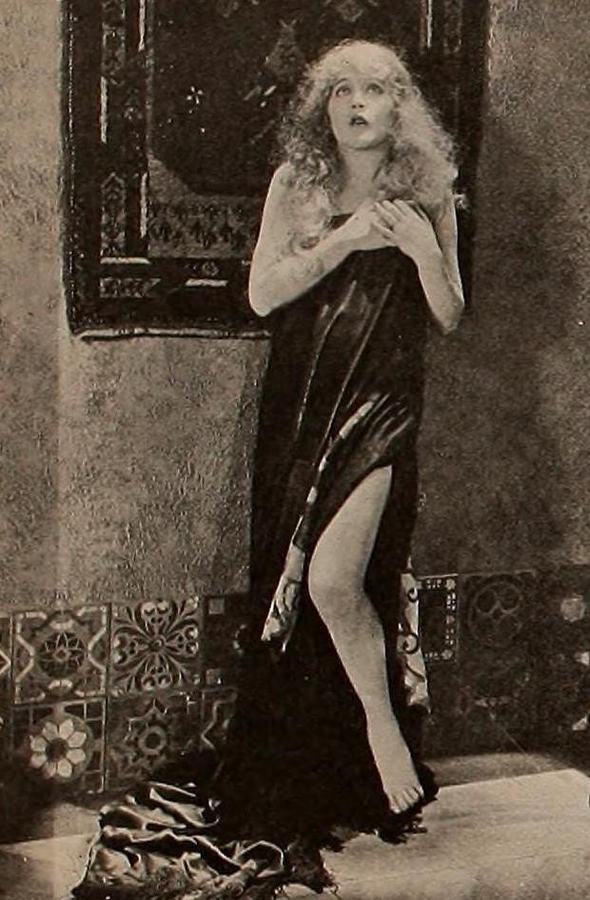
Interestingly, the film’s exploration of domestic strife mirrors the societal anxieties of the post-WWI era. The 'modern' in the title is both a promise and a threat. It suggests a liberation from the Victorian moral codes, yet it also implies a lack of stability. We see similar themes of societal breakdown and the vulnerability of the family unit in What Becomes of the Children?. However, where that film focuses on the generational impact of divorce, Modern Love remains laser-focused on the immediate, visceral experience of the couple. It asks whether love can survive the transition from the idealized spotlight to the harsh, gray light of a Tuesday morning in a cheap hotel.
Technically, Modern Love showcases the high production values of the Universal Film Manufacturing Company during its formative years. The lighting, while primitive by today’s standards, is utilized with great intent. There is a specific use of high-contrast lighting during the hotel sequences that emphasizes the textures of the room—the peeling paint, the worn carpet—making the environment feel as exhausted as the characters. This attention to detail is what distinguishes a Leonard-Murray production from the more assembly-line features of the time, such as The Smugglers. There is a deliberate attempt to create an atmosphere of 'theatrical realism,' a contradiction in terms that perfectly describes the film's unique aesthetic.
The writing, credited to Murray, Leonard, and F. McGrew Willis, avoids the overly flowery prose that often plagued silent film intertitles. Instead, the titles are used sparingly, allowing the visual narrative to carry the weight of the story. This trust in the audience's ability to interpret visual cues is a hallmark of great silent cinema. It places the film in the same league as international works like La morte che assolve, which relied heavily on atmospheric tension rather than expository text. The pacing is deliberate, building a sense of dread that pays off in the final act, ensuring that the audience is as trapped in that hotel room as Della and Julian are.
When placed alongside its contemporaries, Modern Love stands out for its refusal to indulge in easy sentimentality. While films like Polly Put the Kettle On offered a more whimsical, domestic view of life, Modern Love leaned into the shadows. It shares a certain DNA with The Silent Witness in its use of suspense, but it applies that suspense to the internal workings of a marriage rather than a traditional mystery. Even when compared to the more fantastical elements of The Queen's Jewel, Murray’s film feels more relevant to the modern viewer because its conflicts—the struggle for autonomy, the fear of stagnation, the blurring of professional and personal lives—are universal.
The film also serves as a fascinating precursor to the 'marriage-in-crisis' subgenre that would flourish in the decades to follow. One can see the seeds of 1920s sophisticated comedies and 1940s domestic dramas in the way Della and Julian’s fight is framed. It is a far cry from the slapstick violence of early shorts or the grand, historical conflicts of Damon and Pythias. This is a small, intimate war, fought with words (implied) and hands, in a room that nobody will remember. That anonymity is what makes it so haunting. It suggests that these 'modern' tragedies are happening in every hotel room, behind every closed door, away from the prying eyes of the camera—unless, of course, you are Trapped by the Camera.
Ultimately, Modern Love is a testament to the power of silent film to capture the complexities of the human condition. It is a film that rewards close viewing, inviting the spectator to look past the grain of the film stock and see the timeless struggle for connection in a world that is constantly moving on to the next town, the next show, the next train. It avoids the simplistic moralizing of The Scales of Justice and instead offers a messy, unresolved, and deeply human portrait of love in the modern age. As we look back from a century later, the film remains a vital piece of the cinematic puzzle, a reminder that while technology changes, the fundamental conflicts of the heart remain stubbornly the same. Whether through the lens of a 1918 camera or a digital sensor, the sight of two people trying to find their way back to one another after the lights go down is a story that will never lose its resonance.
IMDb 6.1
1934
Community
Log in to comment.