DbcultAccessing Vault...
Cult Review
Senior Film Conservator
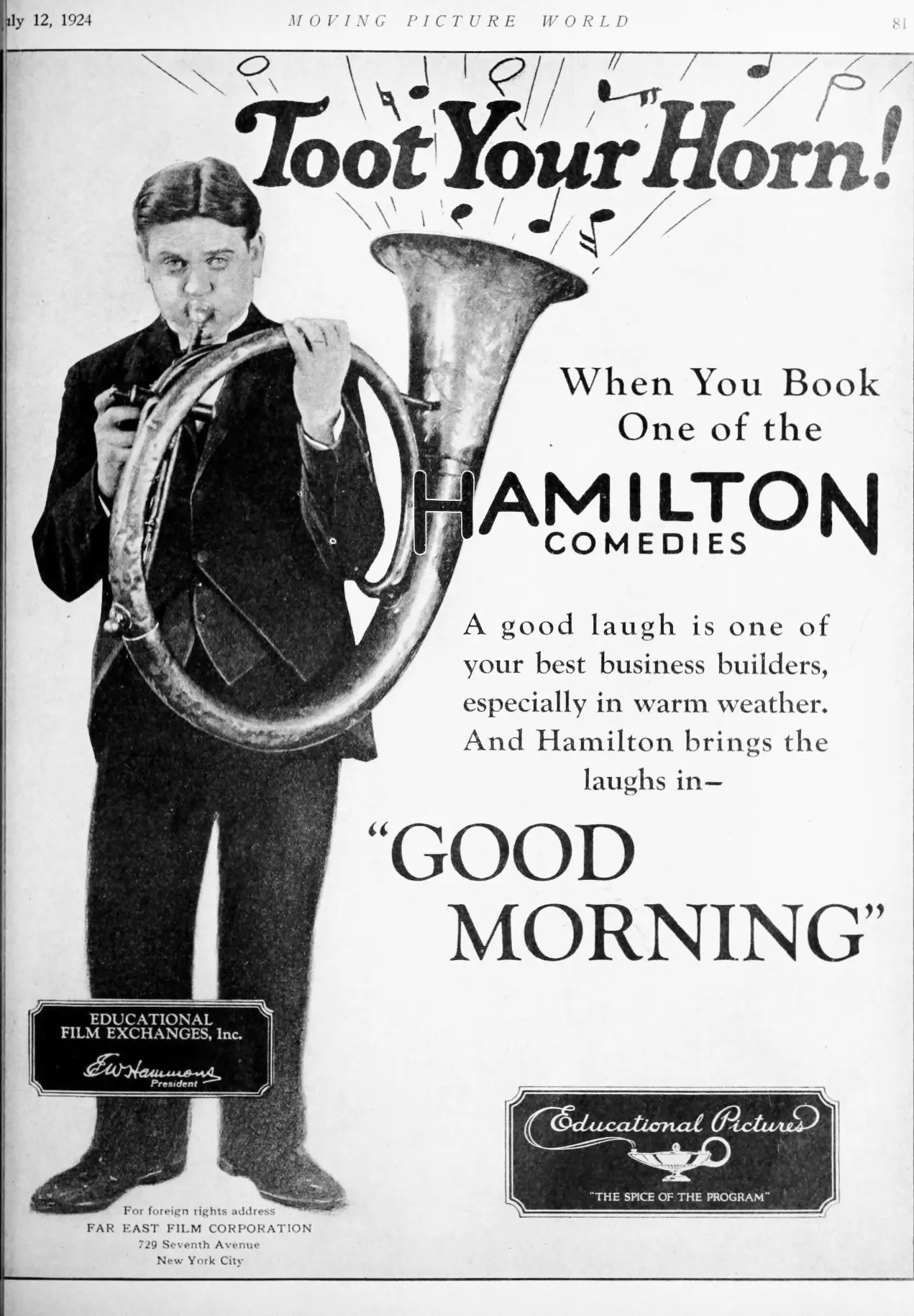
To discuss the silent era without a deep reverence for Lloyd Hamilton is to ignore one of the most sophisticated architects of physical comedy. In Good Morning (1924), Hamilton eschews the frantic athleticism of Keaton or the saccharine pathos of Chaplin, opting instead for a characterization defined by a peculiar, lumbering dignity. As the newspaper boy, Hamilton embodies a sort of everyman whose very existence seems to be an affront to the clockwork precision of modern life. Unlike the energetic protagonists found in An Overall Hero, Hamilton’s character in this short is a master of the slow burn, a man whose reactions to the world around him are delayed just long enough to create a rhythmic tension that is uniquely his own.
The premise—a simple dog rescue leading to a high-society invitation—serves as a scaffolding for Hamilton to deconstruct the class barriers of the Roaring Twenties. While films like The Little Church Around the Corner might lean into moralistic sentimentality, Good Morning remains refreshingly cynical. The charity bazaar is not presented as a place of genuine altruism, but as a theater of vanity where the debutante and her peers perform their goodness for an audience of their own kind. Hamilton, thrust into this lion's den of silk and perfume, becomes the ultimate catalyst for a very specific brand of cinematic chaos.
The brilliance of Good Morning lies in its spatial awareness. The early scenes, featuring Hamilton’s interaction with the runaway dog, utilize the urban sprawl with a documentarian’s eye, capturing the grit of the streets before transitioning to the manicured lawns of the elite. This transition mirrors the thematic shifts found in Taxi Please, where the protagonist must navigate the literal and figurative roadblocks of a burgeoning metropolis. In Good Morning, the "roadblock" is the debutante’s world, a place where Hamilton’s oversized clothes and idiosyncratic gait are viewed as exotic novelties rather than signs of poverty.
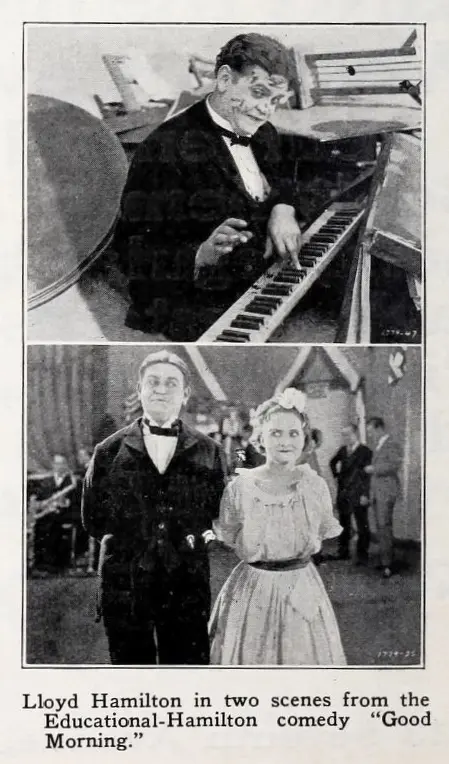
Ruth Hiatt provides an excellent foil to Hamilton’s deadpan delivery. Her debutante is not merely a prize to be won, but a gatekeeper to a world that Hamilton neither understands nor particularly desires. The chemistry between them is built on a foundation of mutual bewilderment. When she invites him to the bazaar, the film shifts gears into a series of set pieces that rival the complexity of Playmates. The bazaar itself is a labyrinth of fragile objects and rigid social protocols, every corner a potential disaster for a man whose physical presence is inherently disruptive.
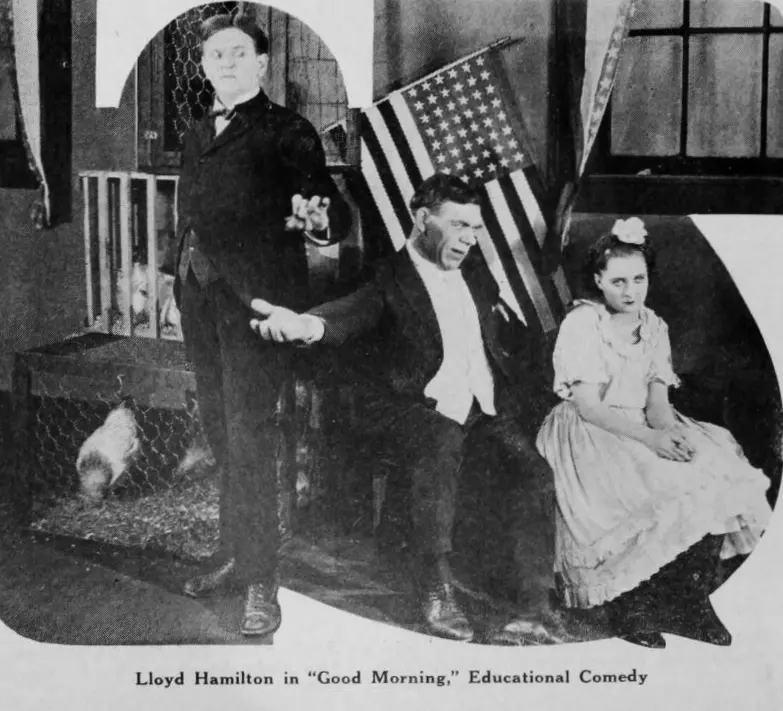
At its core, Good Morning is a study in escalation. The writers (though uncredited in many contemporary prints, their influence is palpable) understand the economy of the short film format. Every gag serves a dual purpose: to elicit a laugh and to push the newspaper boy further into the absurdity of the upper class. We see echoes of this tight narrative structure in Wanted: A Baby, yet Hamilton’s film feels more grounded in a tangible reality. There is a weight to the world here; the dog isn't just a plot device, but a living creature that anchors the initial action in something relatable.
Dick Sutherland’s presence adds a layer of physical menace that heightens the stakes. His imposing frame creates a visual contrast with Hamilton, much like the disparate social forces at play. This isn't just a comedy of manners; it's a comedy of survival. In the same way that The Door Between explores the psychological barriers between people, Good Morning explores the physical barriers—the velvet ropes, the etiquette, the sheer cost of entry into a world that purports to be "charitable."
The cinematography in Good Morning deserves significant praise. The use of natural light in the street scenes provides a stark contrast to the staged, almost theatrical lighting of the bazaar. This visual dichotomy reinforces the film’s central theme of authenticity versus artifice. While it may not possess the grand scale of a National Red Cross Pageant, its intimacy is its greatest strength. We are forced to look at the micro-expressions on Hamilton’s face—the flickering of doubt, the momentary spark of pride when he rescues the dog, and the eventual resignation as he realizes he is being treated as a mascot.
The film also touches upon the concept of the "reward." In the transactional world of 1924, a good deed is expected to be met with a financial or social boon. However, the film subverts this by making the reward—the invitation—more of a punishment than a prize. It’s a sophisticated narrative choice that elevates the short above the standard fare of the era, such as Youthful Cheaters, which often relied on more conventional moral payoffs.
When we look at the broader context of international cinema from this period, such as the French drama Trompe-la-Mort or the Japanese sensitivity of Miyama no otome, Good Morning stands out for its uniquely American obsession with upward mobility. It shares a certain DNA with The Princess of Patches in its depiction of the "worthy poor," but Hamilton’s delivery is far too acerbic to be purely sentimental. He isn't trying to belong; he's just trying to get through the day.
Even when compared to the high-society dramas like His House in Order or the exoticism of A Prisoner in the Harem, Good Morning feels remarkably modern. It understands that the funniest thing in the world is a man trying to maintain his composure when the entire universe is conspiring to make him look like a fool. Lloyd Hamilton didn't just play a character; he played a philosophy. His newspaper boy is a testament to the resilience of the human spirit in the face of overwhelming social absurdity.
In the grand tapestry of 1920s cinema, shorts like Good Morning are often overlooked in favor of sprawling epics like Le nabab. However, there is more truth in Hamilton’s fumbling attempts to navigate a charity bazaar than in a dozen costume dramas. The film captures a specific moment in time where the gap between the haves and the have-nots was widening, and it does so with a laugh that carries a sharp, satirical edge. It is a film that demands to be rediscovered, not just as a curiosity of the silent era, but as a masterclass in comedic timing and social observation.
Whether you are a fan of the subtle character work in Miss Peasant or the broad slapstick of other Hamilton shorts, Good Morning offers a perfect synthesis of both. It is an effervescent, intelligent, and ultimately touching piece of filmmaking that proves that sometimes, the best way to say "good morning" to the world is with a well-timed stumble and a dignified tip of the hat.
IMDb 6.3
1914
Community
Log in to comment.