
DbcultAccessing Vault...
Cult Review
Senior Film Conservator
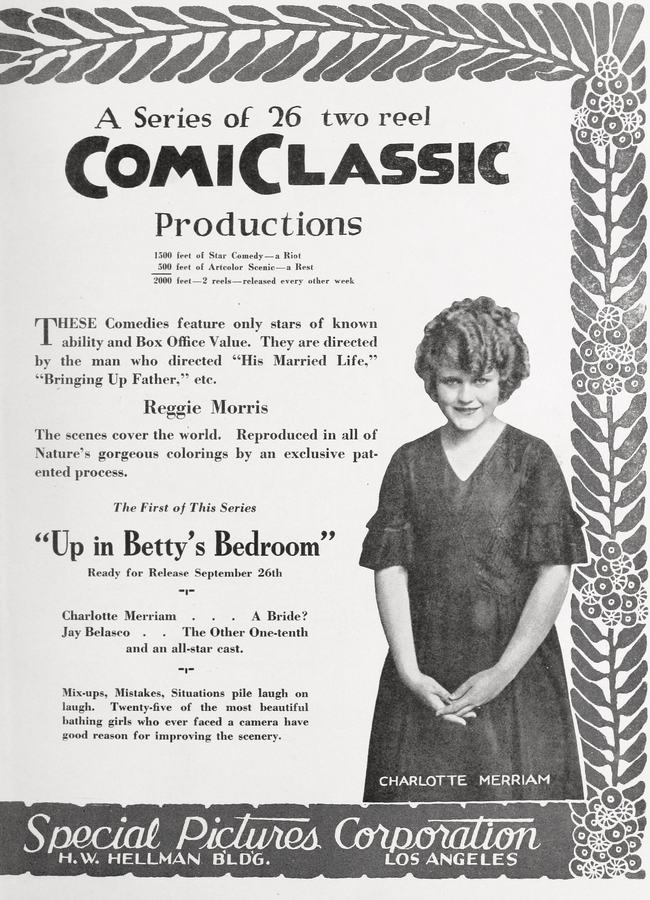
There is a moment, roughly two reels before the Alpine dawn bleaches the screen, when Charlotte Merriam’s Betty—fingers trembling like tuning-forks—presses her back against a pine-paneled door and listens to two different heartbeats through the wood: one belonging to the fiancé she intends to abandon, the other to the ex-wife she’s never met. The door itself, scarred by decades of passkeys, becomes a palimpsest of all the promises ever broken in transit. In that quivering hush, Up in Betty’s Bedroom achieves what few surviving silent one-reelers dare: it makes architecture complicit in adultery.
Director Wesley Ruggles, fresh off comedy shorts for Sennett and still a year away polishing The Spender, treats the eponymous inn like a camera obscura of cracked desires. Exterior shots—snowflakes smacking the lens, horse-drawn sleighs reduced to ink-blots—were filmed on a rooftop in Fort Lee with asbestos batting for drifts; interiors, all skewed Dutch angles and looming cuckoo clocks, anticipate the Kammerspiel jitters of Die lachende Seele by a full decade. The resulting clash of textures—white glare outside, nicotine amber inside—turns every corridor into a moral thermometer.
Strip away the slapstick of swapped overcoats and you find a narrative that keeps erasing its own ink. Jay Belasco’s character signs the register as “Mr. Lang,” a nod both to Fritz Lang’s forthcoming Shackled and to the way language itself shivers under scrutiny. Minutes later, the house detective amends the entry to “Mr. Languor,” because ennui is easier to prosecute than fraud. Each retitling nudges the story toward farce, yet the emotional stakes stay scalding.
Compare this to the symmetrical reconciliations in The Law of Compensation, where every sin earns a tidy moral rebate. Ruggles refuses such bookkeeping. His couples ricochet off walls, miss redemption by inches, and exit the frame still owing interest on their lies.
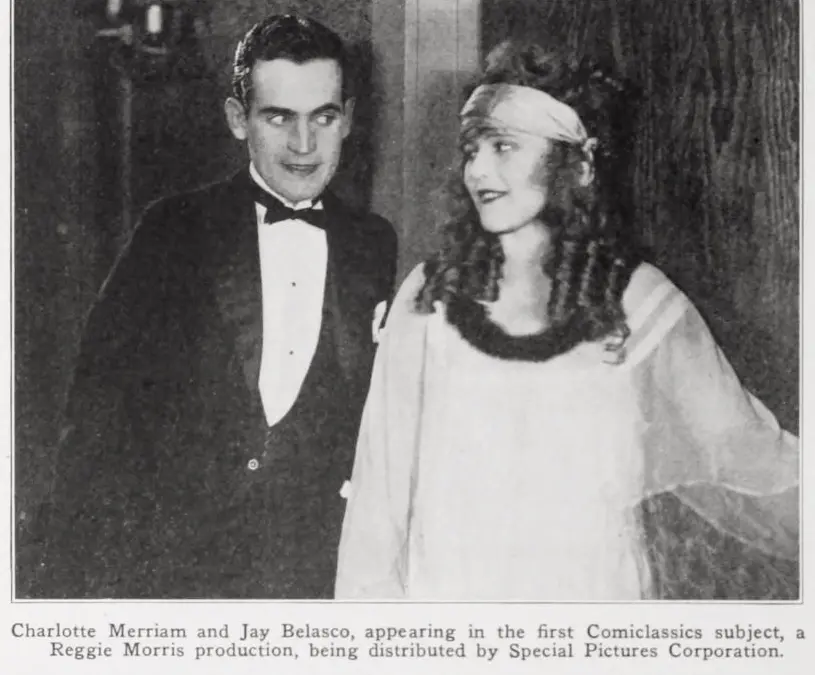
Jay Belasco, often derided as a pretty placeholder, weaponizes his baby-fat here. Watch him calculate: eyes drop to the register, tongue wets the pencil stub, shoulders rise like a guilty semaphore. The performance is all micro-gesture, a kinetic Morse code that silent-era audiences could read from the balcony without intertitles.
Charlotte Merriam, saddled with the thankless “good girl” arc in Johnny-on-the-Spot, finally gets to play the compass with the needle snapped off. Her Betty flips between seduction and panic so fluidly you can’t spot the seam; when she hides inside the armoire, her pupils reflect the crack of light like twin cinema projectors screening two different futures.
Then there’s the house detective—credited only as “Hawk-eye” and played by rotund character stalwart William Courtright. He wields his monocle like a private surveillance satellite, twisting it to distort faces into guilt-masks. The gag never stalls because Courtright roots it in loneliness: he intercepts love letters not for blackmail but for the fleeting intimacy of reading someone else’s longing aloud to an empty lobby.
Notice how often the camera lingers on sealing wax—crimson blobs cooling into miniature craters. They rhyme with the snow pelting the windows: both substances preserve and obliterate footprints, evidence that melts or hardens beyond recognition. Ruggles’ fondness for mirror-shots—characters watching reflections that lag a half-second behind—doubles every moral lapse into slapstick. When Belasco practices a confession in the wardrobe mirror, his reflection keeps grinning after his real mouth has soured, as if the cosmos itself is a petty gagman.
Color tinting on the only surviving 16 mm print (rescued from a shuttered Montana church in 1978) alternates between cobalt night and sulfur dawn. The amber sequences—rumored to be hand-painted by a teenage Virginia Fox—bleed into the highlights of faces, giving pores the look of gold leaf corroding. It’s the sort of accidental alchemy modern colorists try to simulate with LUTs and miss by miles.
Though released two years before the first synchronized score, exhibitors received a cue sheet suggesting “Chopin’s Waltz in C-sharp minor, but played slightly off-tempo, as if the pianist too has been misdirected by the bellboy.” Contemporary journals report audiences humming the nonexistent refrain on streetcars, proof that absence can be orchestrated as deftly as presence.
Listen closely to the intertitles: they stutter with ellipses, commas that feel like handcuff clicks. When Betty whispers “I—can’t—,” the dash stretches across the card like a horizon she refuses to cross. Typography becomes breath.
While What Women Want would later reduce female desire to telepathic punchlines, Ruggles lets women’s wants stay contradictory. Betty wants escape and safety; the ex-wife wants apology and revenge; the chambermaid wants overtime pay and maybe a kiss behind the linen shelves. No one gets all of it, but each walks away recalibrated, like compass needles struck by lightning.
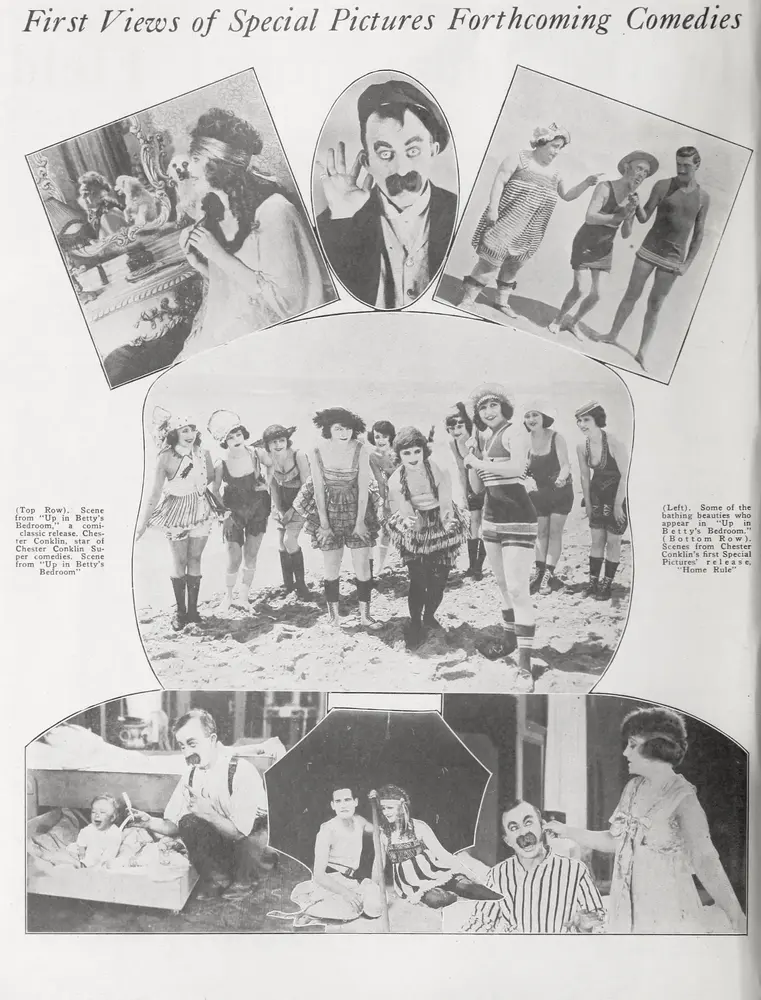
The men fare worse. Belasco’s clerk ends the film clutching a suitcase full of newspaper clippings about himself—publicity as hollow currency. The ex-husband, stripped to union suit and dignity, rides the funicular downward framed like a descent into dime-novel hell. Masculinity here is something you misplace between floorboards.
Shot during the post-WWI recession, the film’s Alpine setting is pure cardboard escapism, yet it oozes imperial fatigue. Hotel staff speak a pidgin of Bavarian and Broadway; the cook serves goulash with a side of canned California peaches. The geopolitical melt mirrors the romantic one: borders erased by debt, passports forged by nightfall. When the detective mutters, “No one is where they claim,” he’s diagnosing a continent as much as a couple.
Track the motif of surveillance sideways and you land in The Master Key, where detectives chase industrial spies through identical corridors. Ruggles shrinks that macro-paranoia to the micro of heartbreak. Or follow the motif of mistaken identity to The Man Who Stayed at Home; Ruggles keeps the farce but swaps spy-thriller stakes for erotic roulette.
Even further afield, the Russian exile drama Isterzannye dushi shares this film’s conviction that exile can be a room you never leave. Betty’s bedroom isn’t a place; it’s a state of perpetual checkout.
The extant print is a 9-minute condensation from what trade papers advertise as a 5-reel feature. Nitrate decomposition nibbled the wedding scenes; emulsion rot erased the detective’s backstory. What remains feels like remembering a dream mid-afternoon—spots missing, emotions heightened. The Montana church that stored it had used the film can as a doorstop; the sprocket holes bear scuffs from Sunday school shoes. Yet those scars amplify the text: love as found object, history as splinter.
Digital scans by the University of Wisconsin add a Philip Glass-style optional score. Skip it. Instead cue a playlist of crackling shellac: a 1919 foxtrot slowed to 33 rpm, the wheeze of an asthmatic accordion, the hush that feels like snowfall on vinyl. That negative space is where Betty’s Bedroom still breathes.
Why resuscitate this one-reeler? Because modern rom-coms, bloated with therapy-speak and product placement, have forgotten how to make desire look dangerous. Ruggles knew that every slammed door is also a mirror; every monocle, a private eclipse. In 2024, when dating apps turn intimacy into slot-machine swipes, the image of a woman listening through wood for a future she can’t name feels radical. The film ends on an unresolved chord: a suitcase carted off by the wrong lover, a detective left holding a single glove that fits no one we remember. Fade to white—not the moral white of redemption, but the overexposed white of a photograph forgotten on a windowsill.
Watch Up in Betty’s Bedroom for the same reason you re-read half-torn postcards in thrift shops: to eavesdrop on strangers who once thought they could outrun the century, only to find the century waiting in the corridor with a master key and a grin.