DbcultAccessing Vault...
5.2/10
Senior Film Conservator
A definitive 5.2/10 rating for a film that redefined the boundaries of cult cinema. Pretty Ladies remains a cornerstone of transgressive art.
The year 1925 was a watershed moment for the cinematic medium, a period where the silent film had matured into a sophisticated language of shadows and subtle gestures. At the heart of this evolution stands Pretty Ladies, a film that functions as both a celebration of the Ziegfeld Follies’ opulence and a biting critique of the domestic expectations placed upon women during the Jazz Age. Directed by Monta Bell, a filmmaker whose background as a journalist lent a certain gritty observational quality to his work, the film eschews the typical melodrama of the era in favor of something far more psychologically resonant.
Norma Shearer, before she became the 'First Lady of MGM,' delivers a performance here that is startling in its vulnerability. As Maggie, she is the engine of the Follies' humor, a woman who must deconstruct her own beauty to earn a paycheck. This thematic preoccupation with the 'mask' of the performer is handled with a dexterity that reminds one of the emotional stakes in Eyes of Youth. Maggie is not merely a caricature; she is a woman acutely aware that her husband, Al Cassidy (Tom Moore), fell for a version of her that was defined by her vivacity on stage, yet he demands a version of her that is silent and subservient at home.
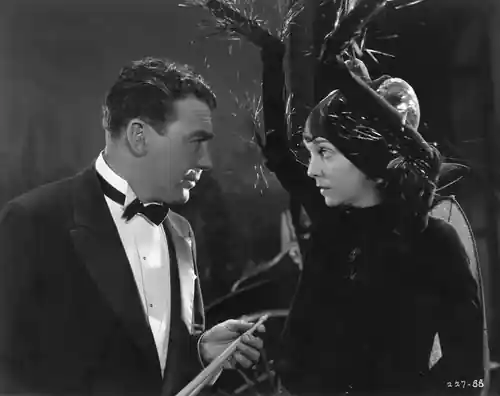
The tension between the public persona and the private self is a recurring motif. When Al begins to write for the 'most beautiful star' of the Follies, the film pivots into a study of obsession. The music Al composes is no longer for the hearth, but for the spotlight—a shift that mirrors the narrative trajectory of The Third Generation, where the sins of the past and the desires of the present collide with devastating precision. The cinematography captures this descent into infidelity not through grand gestures, but through the lingering shots of Al’s sheet music and the cold, expansive spaces of their home that Maggie can no longer fill.
What makes Pretty Ladies an essential artifact for any cinephile is its staggering ensemble of uncredited or early-career talent. To see Joan Crawford and Myrna Loy as Follies girls is to witness the primordial soup of Hollywood stardom. They represent the 'Pretty Ladies' of the title—the aesthetic ideal that Maggie can never quite reach, yet the film subtly suggests that their beauty is a commodity as fleeting as a stage light. This exploration of the ephemeral nature of fame and beauty is a concept Bell explored with similar vigor in The Seven Swans, though here it is grounded in the sweat and sequins of New York City.
The presence of Zasu Pitts and Conrad Nagel further elevates the production, providing a texture to the world-building that is often missing from contemporary studio features. Unlike the more linear progression found in The West~Bound Limited, Pretty Ladies allows its characters to linger in their indecision. Al’s attraction to the starlet is portrayed not as a villainous turn, but as a tragic inevitability of a man who confuses muse with mistress.
The set designs for the Follies sequences are a masterclass in silent-era art direction. Using a palette that seems to vibrate even in black and white (though some prints utilized early Technicolor processes for these scenes), the film creates a sensory overload. This visual maximalism serves as a perfect foil to the Spartan austerity of Maggie’s kitchen. This juxtaposition of environments is a hallmark of the era’s best dramas, such as Naked Hearts, where the setting reflects the internal state of the protagonist.
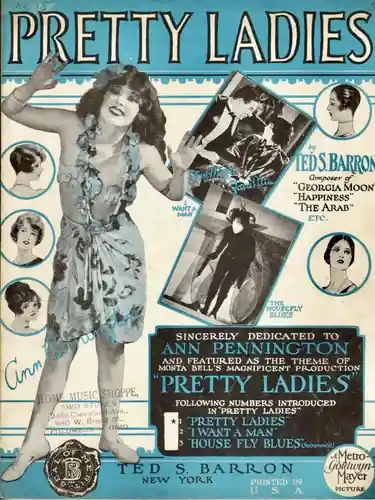
The editing by Joseph Farnham ensures that the rhythm of the film matches the syncopation of the jazz Al is supposedly writing. There is a musicality to the cuts, particularly during the rehearsals, that predates the sophisticated montage techniques of the 1930s. The film’s ability to convey sound through purely visual cues is a testament to the prowess of the writers, including Adela Rogers St. Johns. The script avoids the saccharine pitfalls of Little Italy, opting instead for a bittersweet realism that acknowledges that love is rarely enough to bridge the gap between two different worlds.
As the plot thickens and Al’s infidelity becomes a looming specter, the film delves into the politics of the 1920s household. Maggie’s attempt to reclaim her husband is not through a grand confrontation, but through a quiet, heartbreaking realization of her own worth. This narrative choice is far more sophisticated than the melodramatic resolutions seen in Charge It to Me or The Danger Line. It suggests that the 'real adventure' of life, much like the film Real Adventure implies, lies in the endurance of the spirit rather than the conquest of the heart.
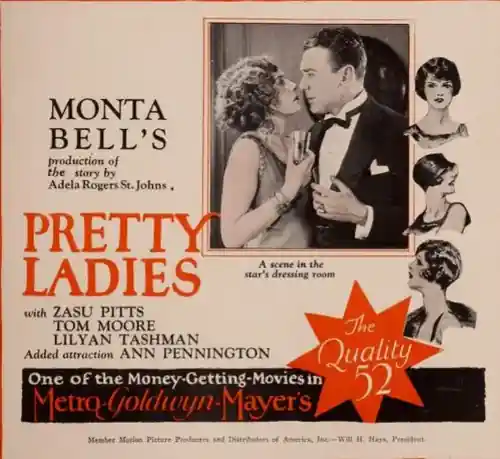
The film also touches upon the immigrant experience and class mobility, though more subtly than in A kuruzsló. Maggie is a self-made woman, a product of the grueling vaudeville circuit, whereas the 'Pretty Ladies' she competes with are often presented as effortless icons. This class struggle, manifested as a struggle for aesthetic dominance, gives the film a sociological weight that persists long after the final frame.
Ultimately, Pretty Ladies is a film about the gaze—who we look at, why we look at them, and what we lose when we stop looking. It shares a certain DNA with the haunting themes of Whispers, particularly in its depiction of how rumors and perceptions can dismantle a life. While it may lack the epic scale of The Betrothed, its intimacy is its greatest strength. It is a film that demands to be seen not just as a historical curiosity, but as a vibrant, breathing piece of art that understands the complexities of the human heart better than many of its talkie successors.
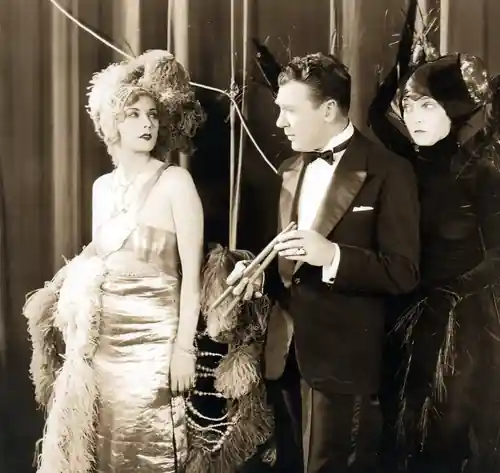
The legacy of Pretty Ladies is perhaps best understood through the lens of The Majesty of the Law or The Little Girl That He Forgot—it is a story of consequences and the indelible marks left by our choices. In the pantheon of Norma Shearer’s work, this remains a towering achievement of silent acting, a performance that bridges the gap between the grotesque and the sublime. It is a film that, much like the character of Maggie herself, finds beauty in the most unexpected places, proving that even in a world obsessed with 'pretty ladies,' it is the soul that truly commands the stage.
Technical Note: For those seeking the stylistic precursors to the modern backstage musical, Bell’s work here is foundational. The integration of performance and narrative is handled with more grace than even the highly-regarded The Brand of Lopez, marking it as a pinnacle of Metro-Goldwyn-Mayer's early silent output.
IMDb 6.5
1925
Community
Log in to comment.