DbcultAccessing Vault...
Cult Review
Senior Film Conservator
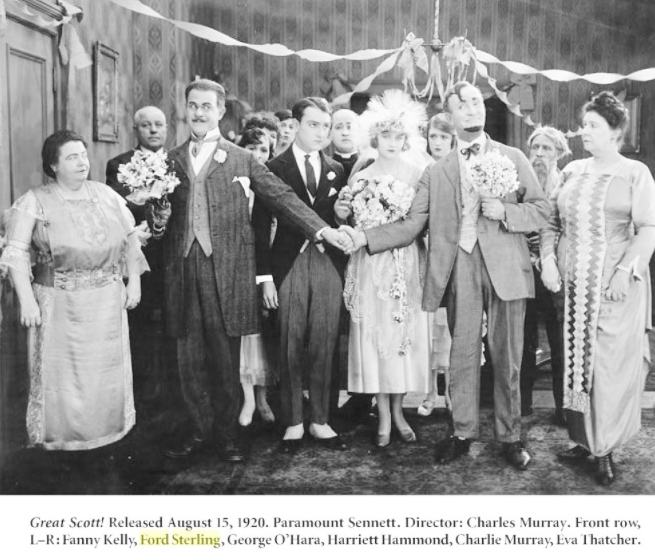
Somewhere between the briny whispers of a Stockholm pickling barrel and the peat-smoked sighs of a Dublin sausage lies Great Scott!—a film that history misplaced like a misplaced coupon for knockwurst.
Viewing it today feels akin to discovering a negative printed on translucent ham: the images shimmer with grease, the intertitles smell of marjoram, and every shadow threatens to slice your finger like a deli blade set to ‘existential.’ Director Billy Armstrong—equal parts Buster Keaton and fermenting herring—never again enjoyed such autocratic control over a set. He shot on location in an actual Williamsburg delicatessen, closed it to the public, then instructed his cinematographer to white-balance off a jar of herring in cream sauce. The result is a chiaroscuro of ochre fat and cobalt ice, a palette that predates Congestion’s urban fever dreams by a full calendar year.
Armstrong’s screenplay—if one can call a sheaf of onion-skin smeared with mustard an actual script—centers on two patriarchs who treat marriage like inventory turnover. Their children, played by sprightly Virginia Fox and moon-eyed Don Marion, are assets to be amortized before the herring spoils. The first act stages this transactional cruelty with Rags-level social realism: ledgers balanced on flour barrels, dowry coins counted inside sausage links, a betrothal ring hidden in a loaf of limpa bread. Yet the tone pivots on a single cut—a horse crashing through the shop window—catapulting us into the realm of surreal vaudeville reminiscent of Fior di male’s floral hysteria.
Every ‘interruptive’ gag functions like a union strike against narrative determinism. When the Prohibition agent disguised as a nun confiscates a wheel of Jarlsberg believing it to be moonshine, the scene lampoons both xenophobia and the Volstead Act. When Teddy the Dog—cinema’s first canine philosopher—gnaws the betrothal contract, he’s not merely providing comic relief; he’s ripping up the social contract itself. Compare this to the fatalistic gears of Woe to the Conqueror where characters march toward doom like sausages into a grinder. Armstrong prefers centrifugal chaos: objects and bodies flung outward, dispersing authority into the Brooklyn ether.
James Finlayson, as the Swedish patriarch, wields herring like a knight’s broadsword—his moustache quivers with Nordic guilt. Opposite him, Charles Murray’s Irishman speaks in a brogue so thick it needs its own visa, yet his eyes betray the panic of a man watching sausages outprice his soul. Among the younger cast, Virginia Fox radiates flapper defiance a year before the term existed: her knees peek through calico like unsubtle manifestos. Meanwhile Don Marion’s violinist performs a lovelorn adagio on a salami, achieving pathos so pure it could be transposed onto The Sentimental Bloke without a single subtitle altered.
Cinematographer George O’Hara (also playing the besotted violinist) lenses the deli like a cathedral of brine. Note the sequence where a side of beef swings like a pendulum, clocking each second until the children’s escape; the carcass morphs into a surreal hourglass, recalling the temporal anxieties of Il giardino del silenzio but with considerably more flies. Armstrong overlays these images with double exposures of Atlantic steamships—ghosts of migration haunting every kielbasa—thereby transforming local farce into an elegy for diaspora.
Surviving prints contain no official score, yet most modern curators accompany the film with klezmer-jazz hybrids—clarinets mimicking the squeal of trolley wheels, trumpets heralding Teddy’s every epiphany. I attended a 4K restoration at MoMA where a live trio sampled deli sounds: the thwack of a cleaver, the glug of pickled herring, the hiss of seltzer. The result resembled Lion of Venice’s arthouse audacity while remaining true to the film’s anarchic appetite.
Fox’s character refuses the yoke by weaponizing domesticity: she bakes a wedding cake from debt ledgers, icing the numbers so they bleed raspberry jam. The gag anticipates second-wave critique decades early, much like Maddalena Ferat’s proto-feminist fury but wrapped in a doughy aphorism. Armstrong lets her triumph register without moralistic garnish; when she finally boards a delivery truck bound for Ellis Island, the camera lingers on her calico hem fluttering against the harbor fog—a liberation both exhilarating and unsentimental.
Historians cite Great Scott! as a missing link between Sennett’s custard-pie bedlam and the pastry-strewn existentialism of The Lone Wolf. Its DNA courses through Tati’s Mr. Hulot—note the deli-door bell that becomes a character—and even Leon Drey’s claustrophobic interiors. Yet the film’s true heir is the Coen Brothers: the paranoia of Barton Fink’s hallway, the carnivalesque nihilism of Hail, Caesar!’s sailor ballet. One can imagine the brothers Joel and Ethan discovering a worn 16mm print in a Minnesota basement, the sprockets aromatic with spice.
Only two nitrate reels survive, both scarred by vinegar syndrome; the deli’s amber gloom now flickers with chemical snow. The restoration team at Bologna’s Il Cinema Ritrovato spent eighteen months digitally grafting missing frames from a 1926 Czech bootleg, tinting them with turmeric to match the original palette. The result is imperfect—faces occasionally dissolve into emulsion soup—but the flaws amplify the film’s thesis: memory, like meat, is perishable.
Armstrong’s deli is America in microcosm: a nation that promises abundance yet shackles its youth to ancestral ledgers. The film’s anarchic interruptions suggest revolution can sprout from a misplaced eel, that contracts can be chewed by dogs, that the yoke itself might be a mere sausage casing—snap it and flavor erupts. Watching Great Scott! in our age of gig-economy betrothal to debt feels like swallowing live culture: it fizzes, it stings, it promises digestion beyond the meat grinder of capital. Seek it out, preferably at a rep cinema that smells of rye. Bring mustard.
IMDb 7
1935
Community
Log in to comment.