DbcultAccessing Vault...
Cult Review
Senior Film Conservator
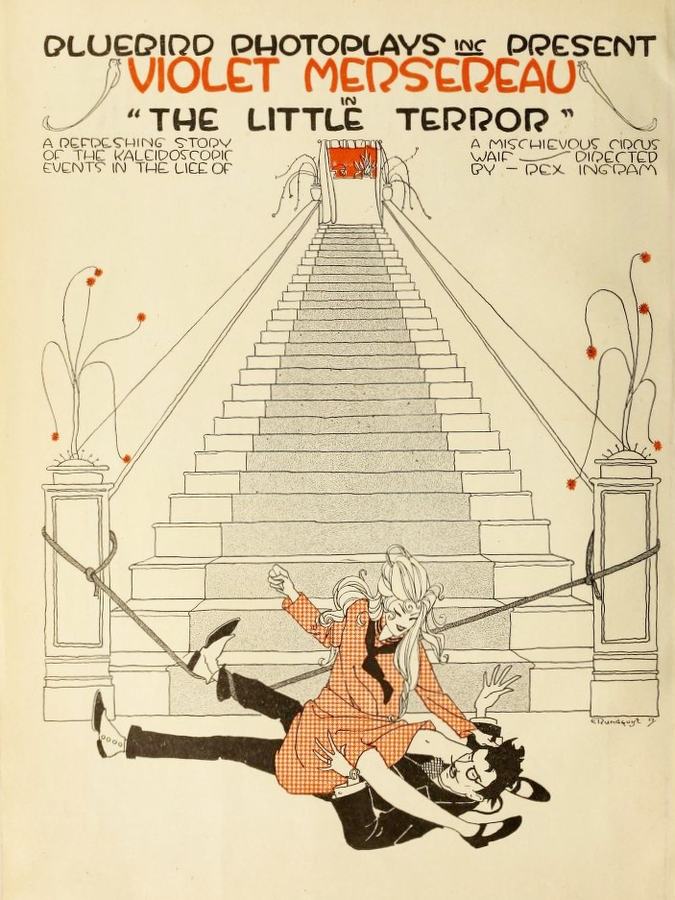
In the pantheon of early silent cinema, few figures cast as long a shadow over the visual evolution of the medium as Rex Ingram. Before he achieved immortality with his later epics, he penned and directed works like The Little Terror (1917), a film that masterfully navigates the tonal dissonance between Victorian melodrama and the burgeoning spirit of American slapstick. It is a work that demands a modern reappraisal, not merely as a relic of the Universal Film Manufacturing Company, but as a sophisticated commentary on the rigidity of the American class structure at the dawn of the 20th century.
The film opens with a classic trope: the generational schism. John Saunders, played with a starchy, formidable gravitas by Ned Finley, represents the old guard of industrial wealth. His rejection of Wallace is not merely a personal slight but a defense of a social boundary. When Wallace chooses the circus—a space of transient, physical labor and spectacle—he is effectively committing social suicide in the eyes of his father. This thematic obsession with social standing is a recurring motif in Ingram’s writing, often seen in his other works like The Trey o' Hearts, where the stakes of inheritance and identity are equally fraught.
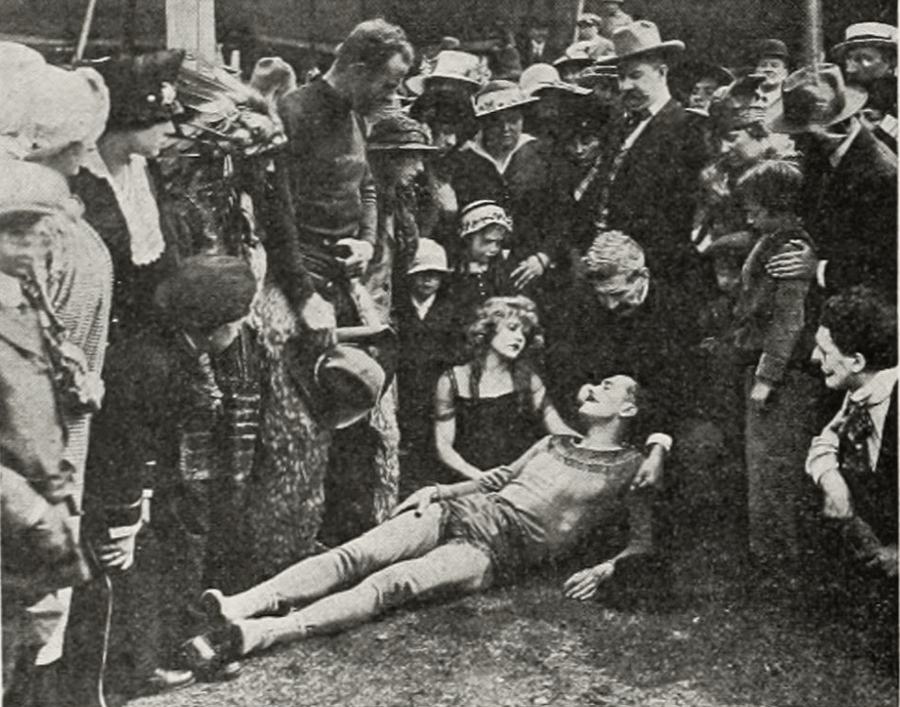
The transition from the austere mansion to the chaotic vitality of the circus is handled with a kinetic grace. Wallace’s transformation into a trapeze artist is a literalization of his leap of faith. However, Ingram refuses to let the audience wallow in a romanticized view of the bohemian life. The death of Tina during childbirth is a stark reminder of the mortality that haunts the performers. Unlike the more political machinations found in The Senator, the tragedy here is intimate and biological, setting the stage for the film’s second act: the return of the prodigal granddaughter.
Violet Mersereau’s portrayal of Alice is a tour de force of physical comedy and emotive nuance. In an era where female protagonists were often relegated to the role of the 'damsel' or the 'vamp,' Mersereau’s Alice is a refreshing agent of chaos. She is the 'Little Terror' of the title, but her terror is not born of malice; it is a manifestation of an unbridled life force that refuses to be contained by the suffocating walls of the Saunders estate. When she enters the mansion, she brings the circus with her, quite literally, in the form of Rudolph the pig.
The sequences involving Alice’s antics—sliding down the stairs on a tray and vaulting over the furniture—are more than just gags. They are acts of architectural subversion. She treats the symbols of her grandfather’s wealth as a playground, effectively devaluing the objects he holds dear. This spirit of youthful rebellion mirrors the energy found in Tom Sawyer, yet it is transplanted into a high-society setting that makes the juxtaposition even more jarring and delightful.
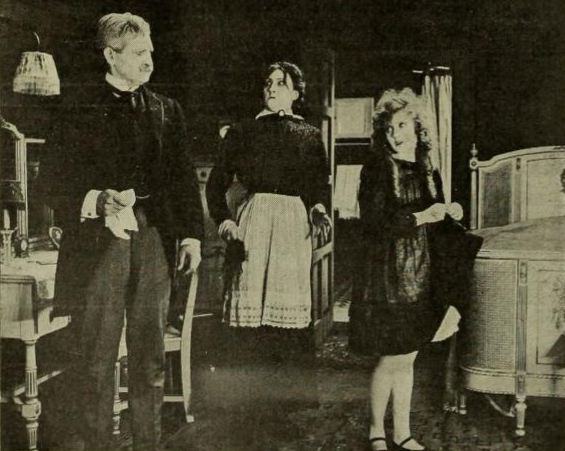
One cannot discuss this film without acknowledging Rudolph. In the lexicon of silent film animals, Rudolph serves as a brilliant foil to the 'sissified' cousin that John Saunders attempts to foist upon Alice. The pig is a symbol of the 'low' art of the circus invading the 'high' culture of the elite. When Alice uses Rudolph to frighten her suitor and his mother, she is using the very thing they find repulsive to reclaim her autonomy. It is a comedic beat that resonates with the same kind of social satire found in The Blue Mouse, albeit with a more rustic, pastoral edge.
While Ingram is often lauded for his later pictorialism in films like The Eternal City, his work in The Little Terror shows a director already experimenting with the emotional potential of the frame. The scene of Wallace’s death is a masterpiece of editing and suspense. The cross-cutting between John Saunders’ growing realization and the fatal swing of the trapeze creates a sense of inevitable doom. It is a stark contrast to the lightheartedness of the film’s later half, demonstrating Ingram’s range as a storyteller.
The film’s pacing is remarkably modern. It doesn't linger on the tragedy of the first act longer than necessary, moving swiftly into the fish-out-of-water comedy that defines the middle section. This tonal shift is difficult to pull off, but Ingram manages it by grounding both the tragedy and the comedy in the character of Alice. Her resilience is the thread that binds these disparate halves together. We see a similar narrative ambition in The Three Musketeers, where the balance of high adventure and personal stakes is meticulously maintained.
The final act introduces George Reynolds, the cartoonist. This choice of profession for the romantic lead is significant. In 1917, the cartoonist was a symbol of the burgeoning modern media landscape—a figure who bridged the gap between fine art and mass consumption. By having George prove his worth through his earnings of $1,000 a week, the film offers a reconciliation between the old money of Saunders and the new money of the creative class. It is a pragmatic ending that acknowledges the power of capital while still allowing Alice to marry for love.
This resolution is far more satisfying than the melodramatic endings of many contemporary films, such as the social tragedies depicted in Vultures of Society. Instead of Alice being crushed by her environment, she forces the environment to adapt to her. George’s success is a validation of the circus spirit—the idea that entertainment and art have a tangible, quantifiable value in the modern world.
When placed alongside other films of the era, The Little Terror stands out for its refusal to be purely one thing. It lacks the heavy-handed moralizing of Bismarck or the mythological weight of Satyavan Savitri. Instead, it feels like a precursor to the screwball comedies of the 1930s. The dynamic between the stubborn grandfather and the rebellious granddaughter prefigures the 'battle of the sexes' and generational clashes that would eventually define American cinema.
Furthermore, the film’s depiction of the circus as a place of both extreme danger and profound joy offers a more nuanced perspective than the standard 'runaway' narratives like In the Days of the Thundering Herd. Here, the circus is not just a backdrop; it is a character-building crucible. The skills Alice learns in the ring—balance, bravery, and a touch of showmanship—are the very tools she uses to navigate the treacherous waters of high-society courtship.
In conclusion, The Little Terror is a gem of the silent era that deserves a prominent place in the discussion of Rex Ingram’s filmography. It captures a specific moment in time when the world was shifting from the Victorian era to the modern age, and it does so with a sense of humor and heart that remains infectious over a century later. Violet Mersereau’s performance is a masterclass in silent acting, proving that one does not need dialogue to convey a complex, rebellious spirit.
Whether you are a fan of the domestic chaos found in Baby Mine or the adventurous spirit of The Extraordinary Adventures of Saturnino Farandola, there is something in The Little Terror for every cinephile. It is a film that reminds us that while blood might be thicker than water, the greasepaint of the circus and the ink of the cartoonist’s pen are just as vital to the human experience. It is a celebration of the 'terror' within us all—the part that refuses to sit still, refuses to be bored, and always, always chooses the pig over the pedigree.
Final Rating: A vibrant, chaotic, and ultimately touching exploration of family and freedom. A must-watch for fans of early cinema’s more adventurous side.
IMDb 5.8
1932
Community
Log in to comment.